Identification Guide
All 159 bee species at a glance.
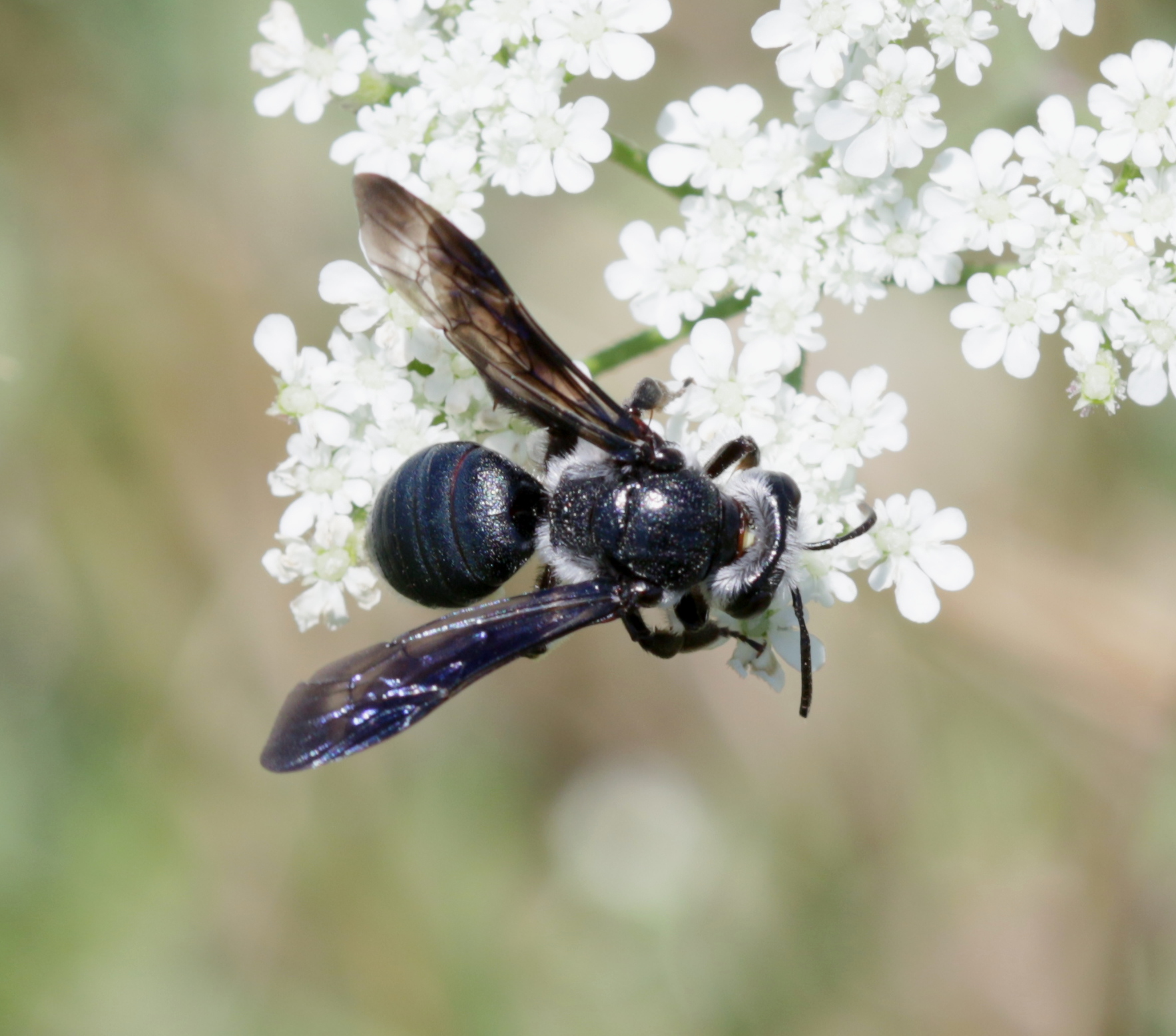
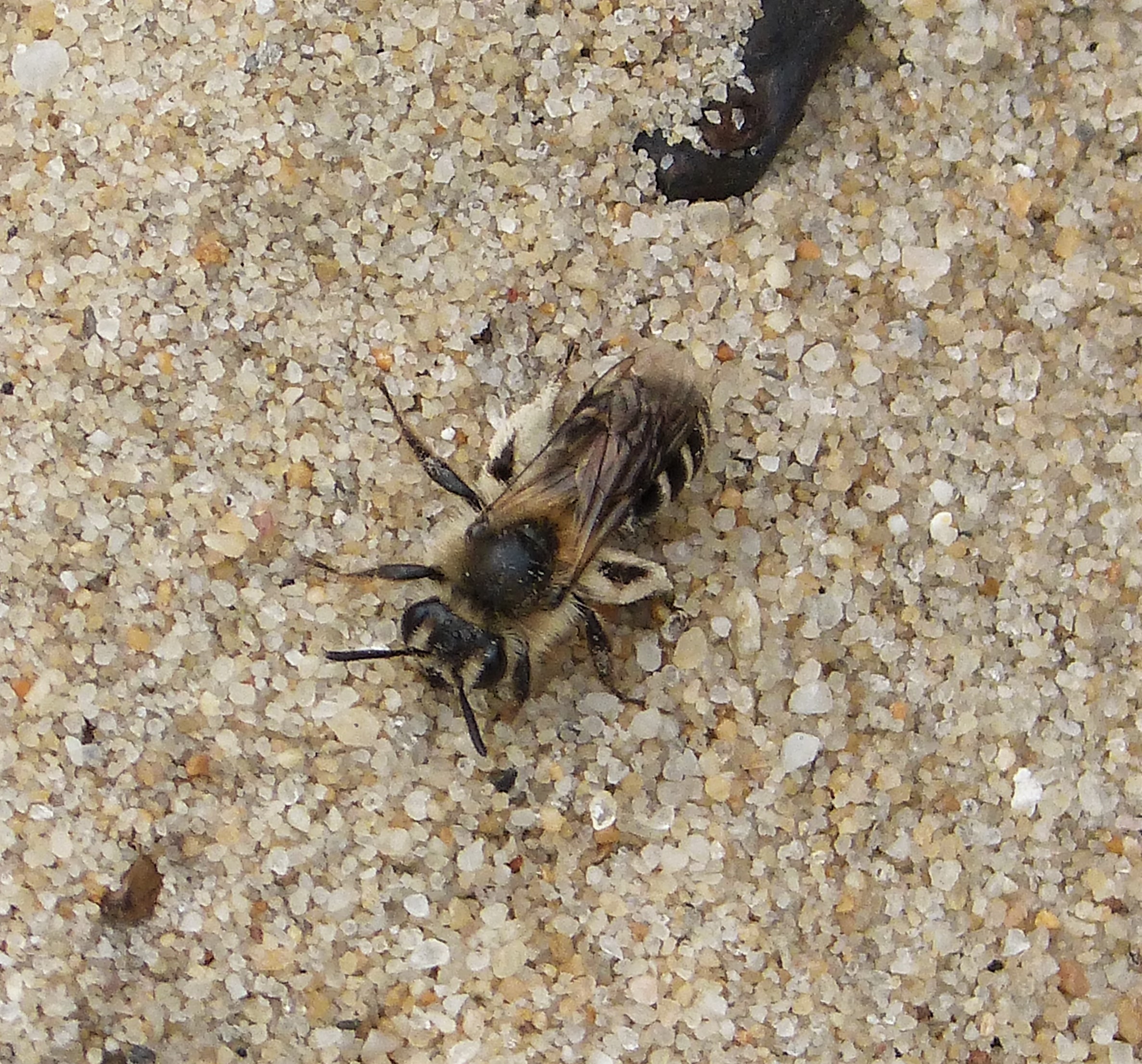
Andrena argentata
Silvery Mining BeeA small silver-grey mining bee (8–10 mm) with notably pale, whitish-grey hairs and broad white hair bands on the tergite margins. It nests in loose, well-drained sandy soil, often in small aggregations on paths and heathland. Bivoltine with two generations per year. In Switzerland it is critically endangered (CR) and restricted to a few sandy habitats in floodplains, where it depends on dynamic river dynamics.
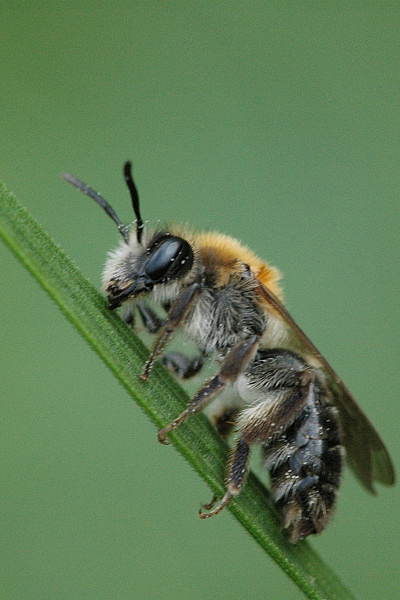
Andrena barbilabris
Sand Mining BeeA small mining bee (11–12 mm) that nests in sandy soils, often in large aggregations with dozens of nests per square metre. It is an important early-spring pollinator of willow and fruit trees, foraging on a wide range of spring flowers. It has a distinctive silvery appearance due to long pale hairs and can be observed performing a 'swimming' motion as it burrows into loose sand to reach its nest. The cuckoo bee Nomada alboguttata is its brood parasite. Swiss Red List: Least Concern (LC).
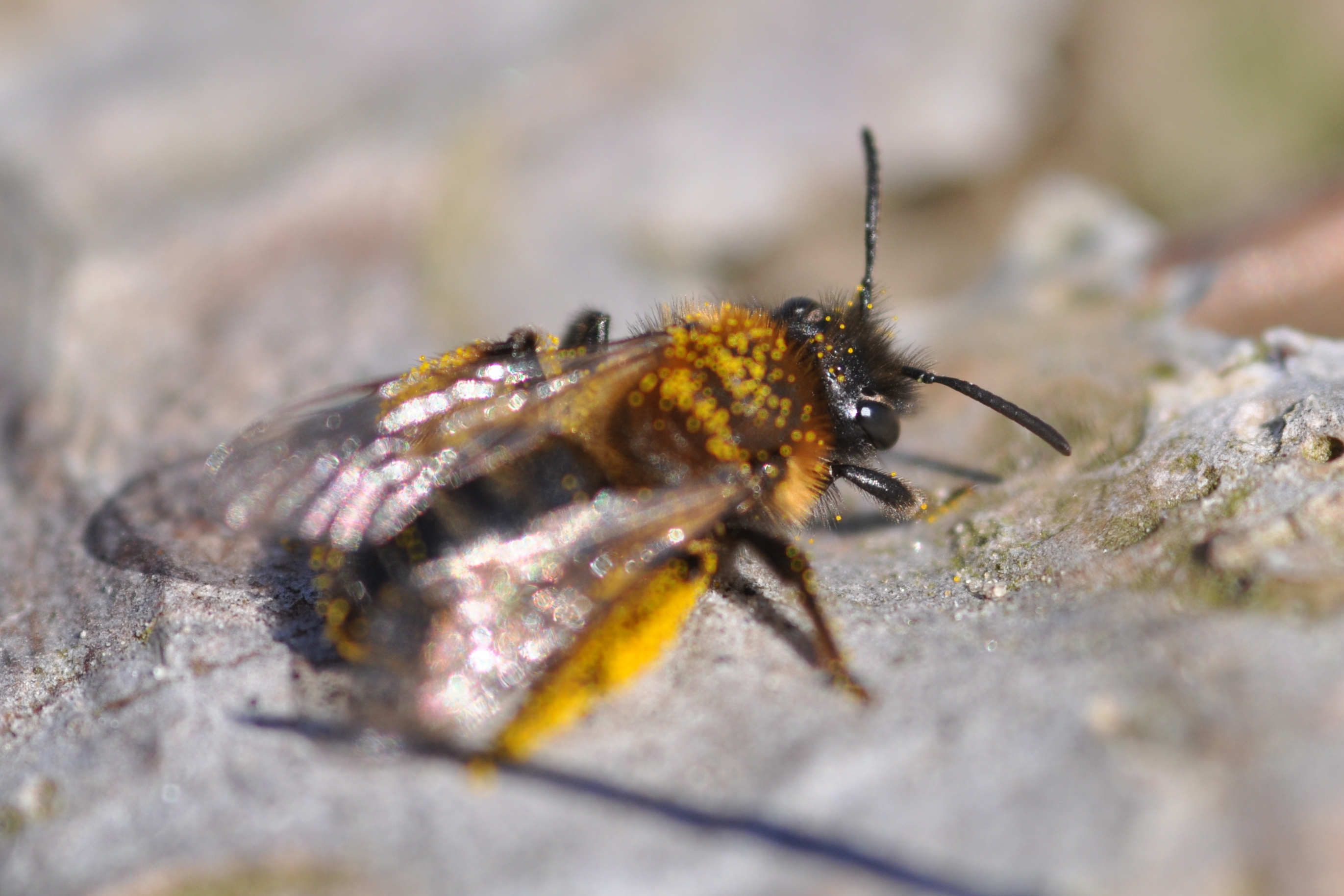
Andrena bicolor
Gwynne's Mining BeeA small bivoltine mining bee with two generations per year (March–May and June–August). Females have a black head, orange-red thoracic hair, and a reddish-brown abdomen tip with pale hair bands; males are slimmer with darker face hair. It is a generalist (polyleptic) visiting at least 14 plant families, and nests solitarily in bare ground. The cuckoo bee Nomada fabriciana is its brood parasite. Widespread across Europe and common in Switzerland up to 2100 m in the Alps. Swiss Red List: Least Concern (LC).
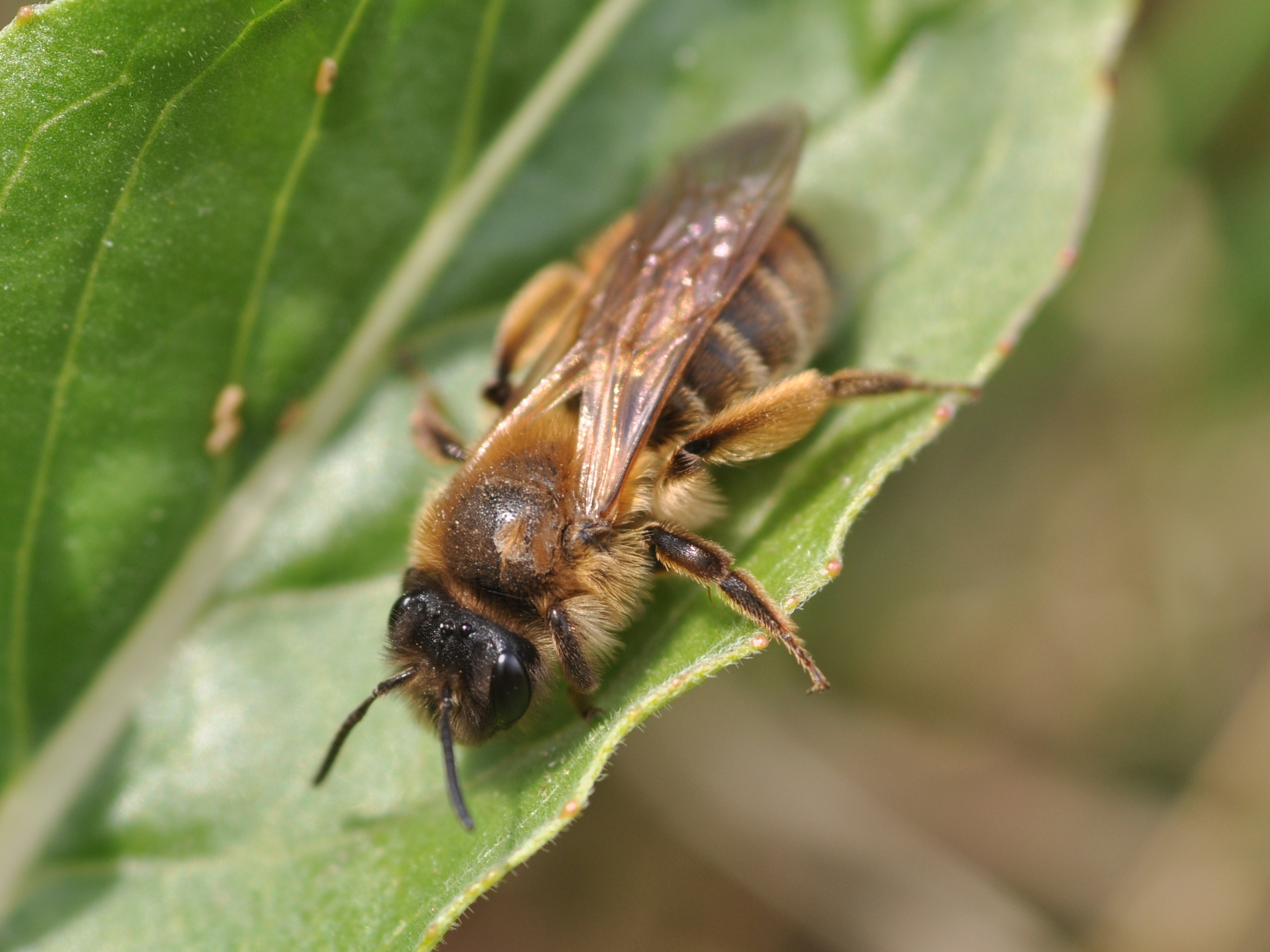
Andrena bimaculata
Large Gorse Mining BeeA medium-sized mining bee (11–14 mm) with completely black hind legs and two reddish spots on the underside of the abdomen. It nests solitarily in sandy soils and is bivoltine with two generations per year, visiting a wide range of flowers from spring into late summer. Females transport pollen on their hind legs and are often seen collecting pollen from willows, dandelions, and umbellifers in spring, followed by a second generation on later-flowering plants such as thistles and brambles. Its brood parasite is the cuckoo bee Nomada succincta. Swiss Red List: Least Concern (LC).
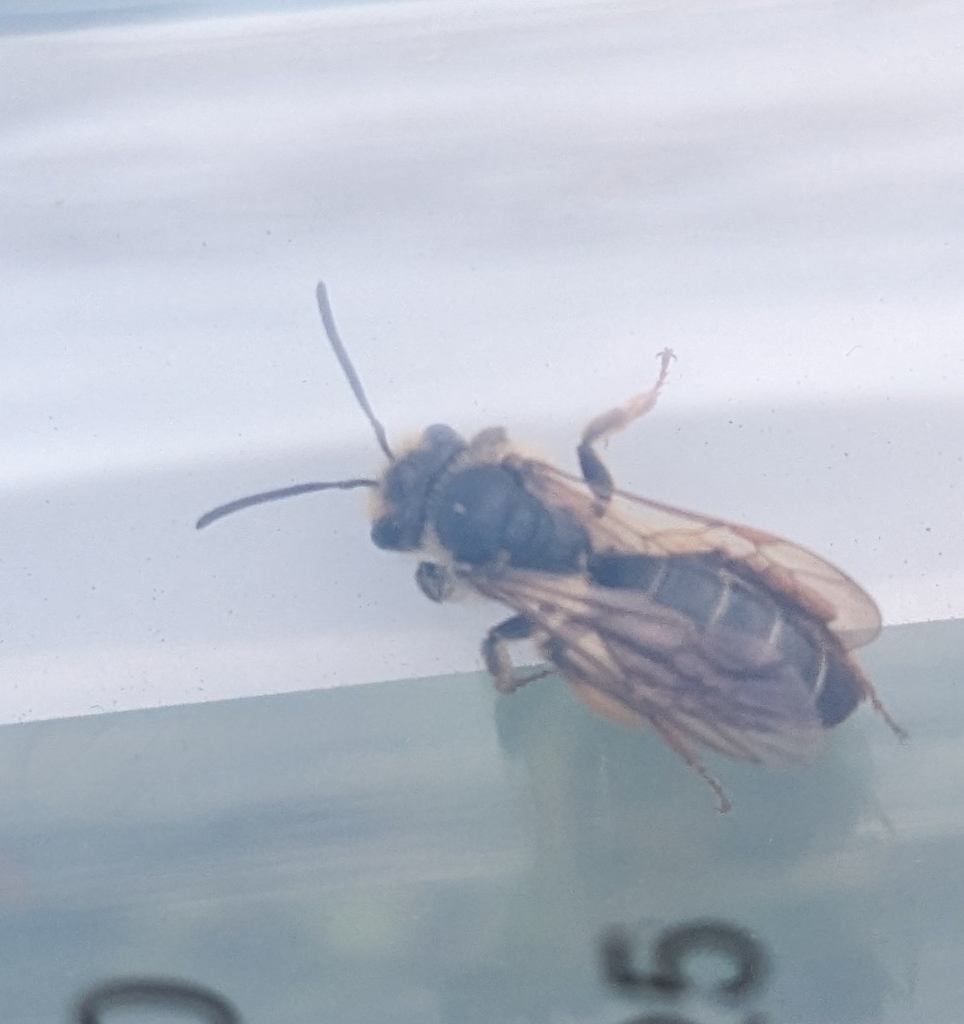
Andrena bucephala
Big-headed Mining BeeA medium-sized mining bee (12–13 mm) with an elongated black abdomen, fine white hair bands, and brownish-yellow thoracic hairs. Males have a distinctly enlarged head with long mandibles. It is notable for communal nesting: multiple females share a single nest entrance while maintaining separate brood cells. It nests in compact aggregations on sunny banks, often in calcareous grasslands and woodland edges, visiting mainly Rosaceae and Acer trees. Swiss Red List: Least Concern (LC).
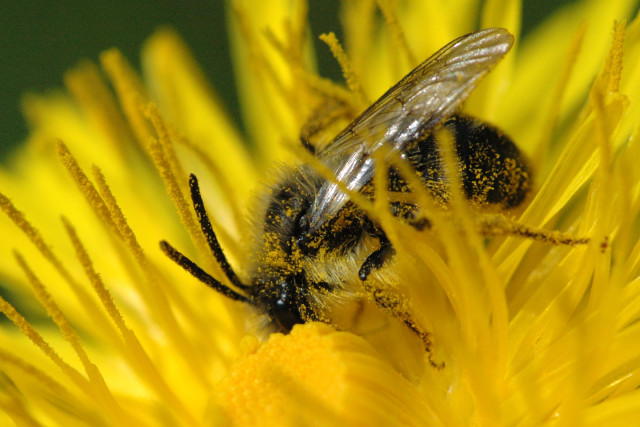
Andrena carantonica
Chocolate Mining BeeA large mining bee (12–15 mm) with rich chestnut-brown hairs on the thorax and a dark brown, almost hairless abdomen. It is notable for its communal nesting behaviour: multiple females share a single nest entrance while maintaining separate brood chambers underground. It is polylectic, foraging on a wide range of spring flowers including willow, dandelion, fruit trees, maple, and hawthorn. It is one of the most common spring Andrena species across Central Europe and an important early pollinator in orchards and gardens. Swiss Red List: Least Concern (LC).
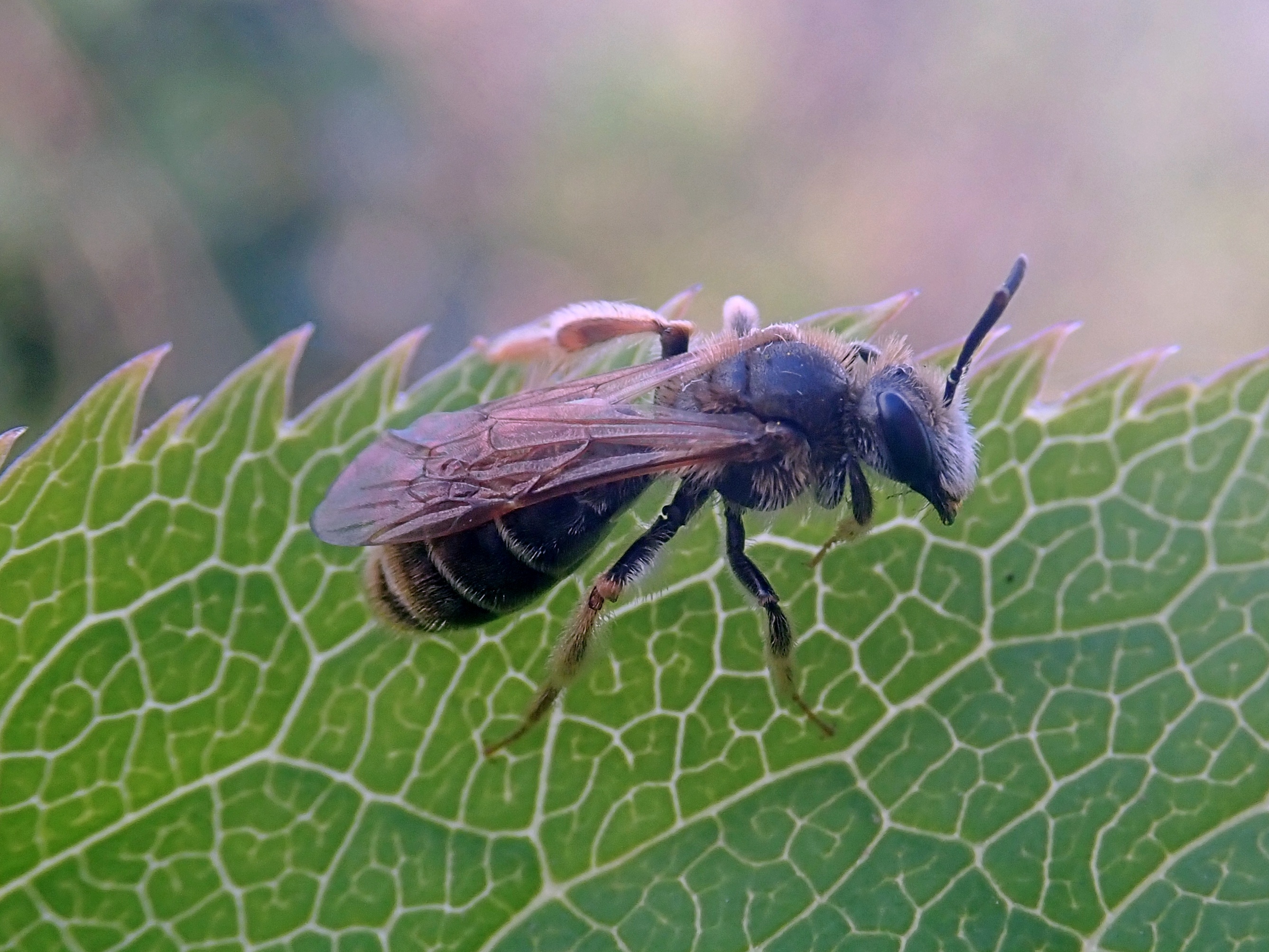
Andrena chrysosceles
Flecked Hawthorn Mining BeeA small mining bee named for its distinctive golden-yellow hairs on the hind tibiae and tarsi. The black abdomen has narrow white hair bands, giving it a superficial resemblance to a Lasioglossum sweat bee. It is a generalist forager found in dry meadows, forest edges, and gardens. Swiss Red List: Least Concern (LC).
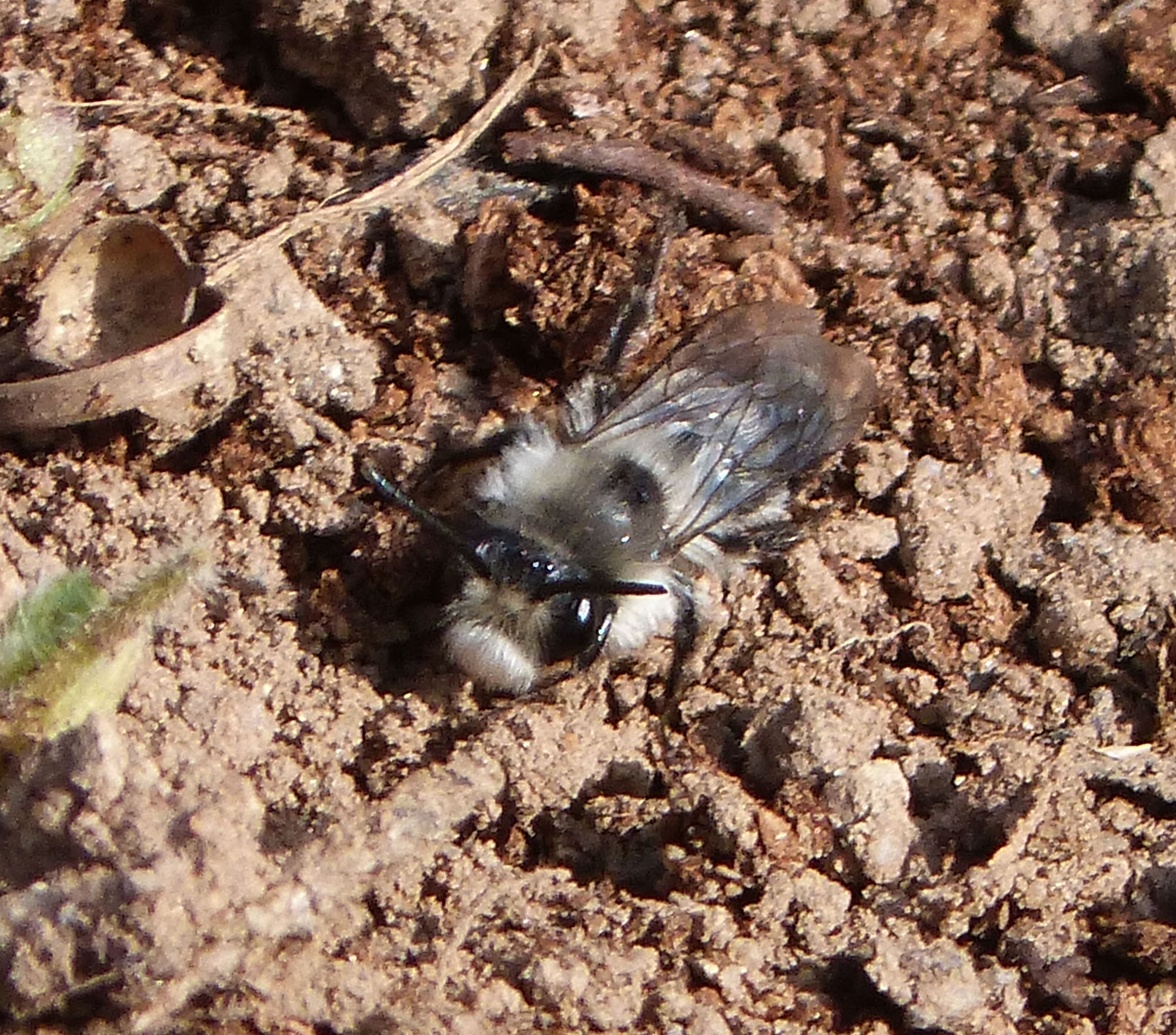
Andrena cineraria
Ashy Mining BeeA striking medium-sized mining bee with a distinctive slate-grey to ashy-white band across the thorax, contrasting with the black head and glossy black abdomen. It is a generalist that visits a wide range of spring flowers and nests in bare soil in meadows, forest edges, and alpine grasslands. Swiss Red List: Least Concern (LC).
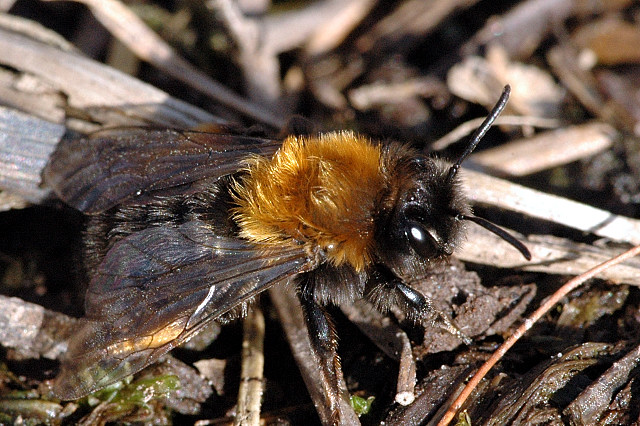
Andrena clarkella
Clark's Mining BeeOne of the earliest bees to emerge in spring, specialized on willow pollen. Females have distinctive orange-red hairs on the thorax. Swiss Red List: Least Concern (LC).
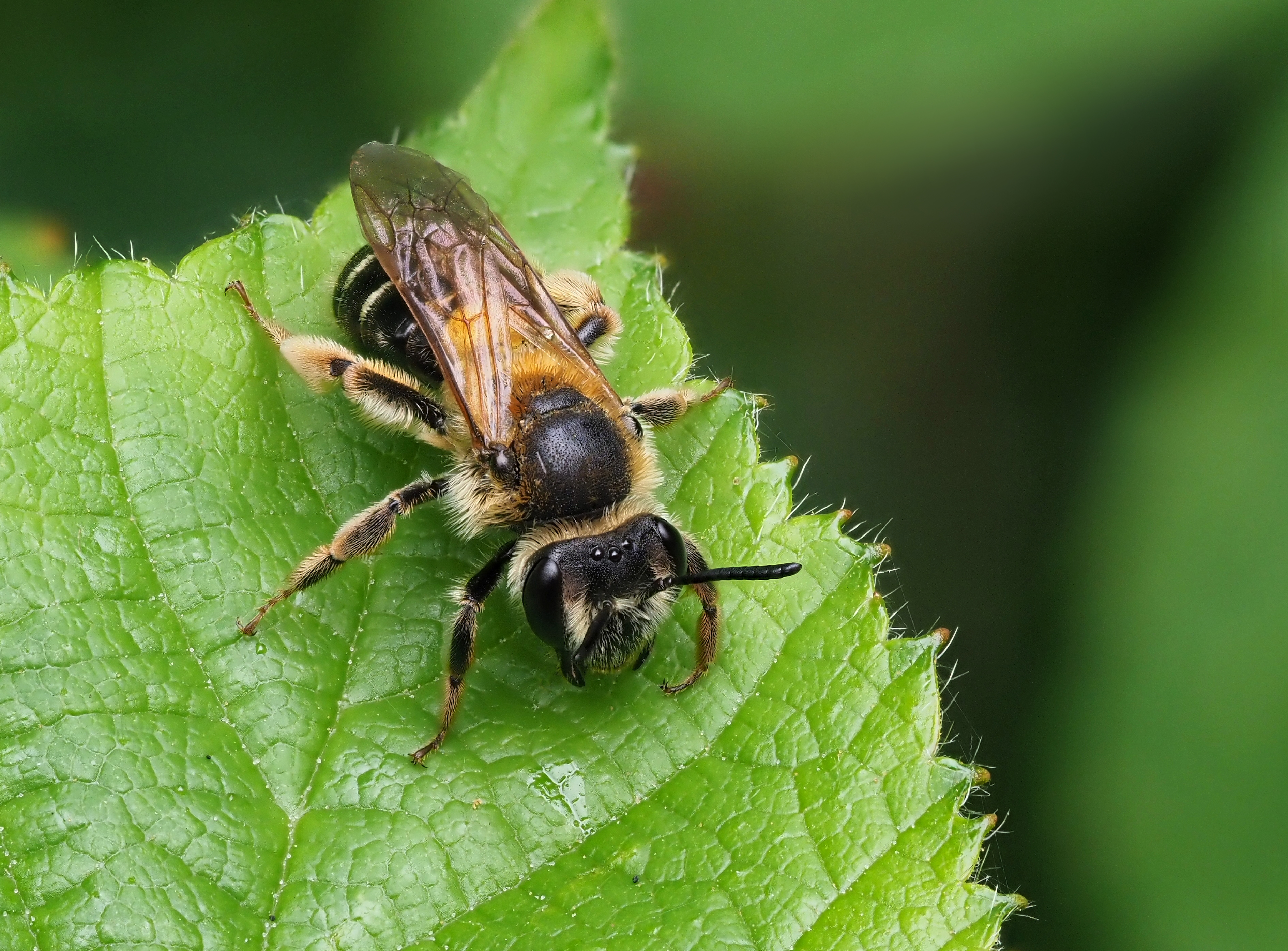
Andrena dorsata
Short-fringed Mining BeeA small mining bee (8–10 mm) with reddish-brown hair on the thorax and a broad, glossy black abdomen with narrow white hair bands. Females have distinctive red-brown hind tibiae and a red-brown scopa. It is a generalist (broadly polylectic) forager visiting Salicaceae, Asteraceae, and Rosaceae. It nests solitarily in self-excavated burrows in sparsely vegetated or bare sandy or loamy soils, often in small aggregations. It is bivoltine in warmer areas, flying from April to June and again from July to August. In Switzerland it is common and widespread from lowlands to montane elevations in gardens, meadows, vineyards, field margins, and ruderal areas. It is classified as Least Concern (LC) on the Swiss Red List.
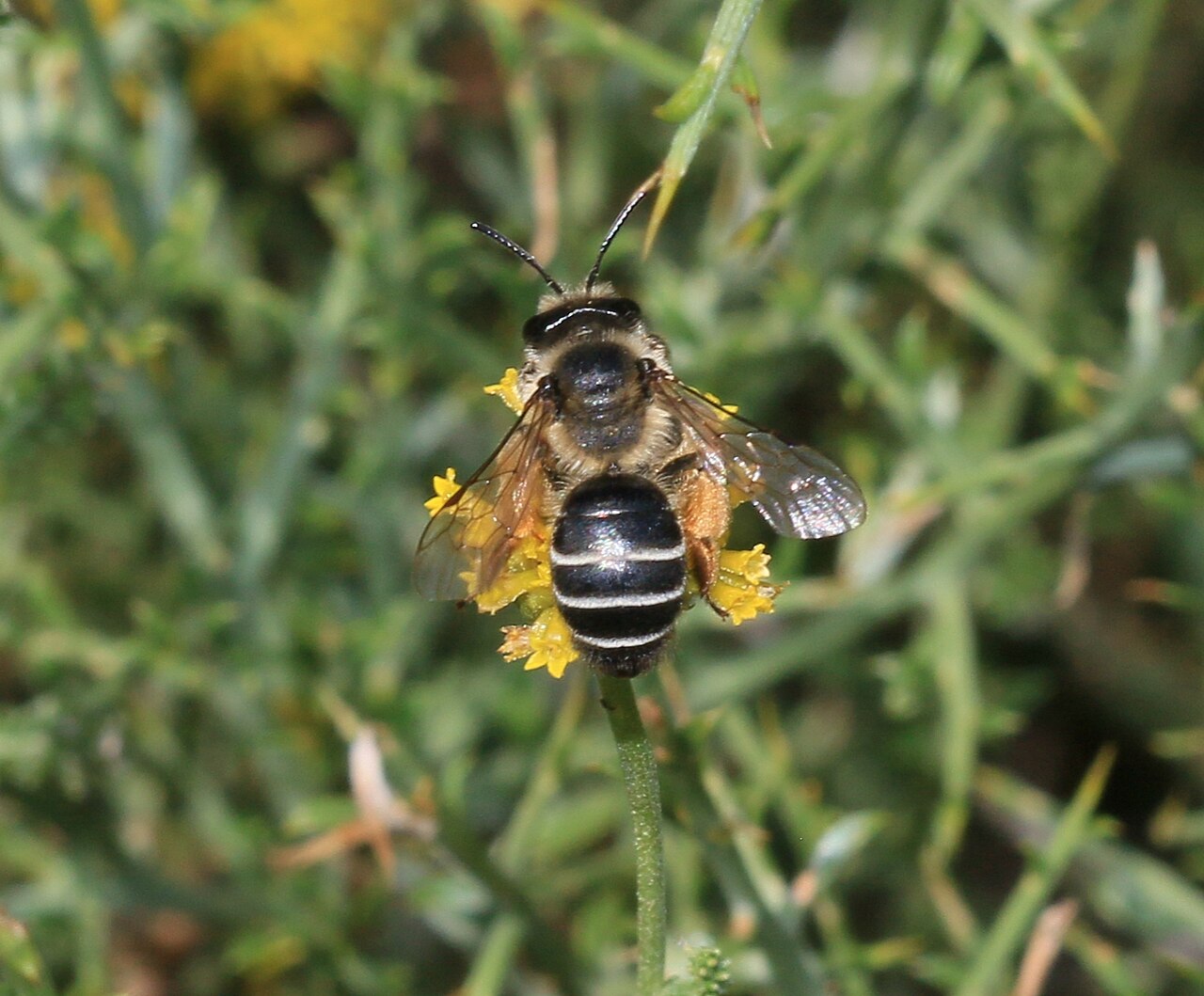
Andrena flavipes
Yellow-legged Mining BeeOne of the most common and widespread mining bees in Central Europe, easily recognised by the bright golden-yellow pollen brushes on the hind legs and broad pale brown hair bands on the abdomen. It is bivoltine, producing two generations per year, and nests in large aggregations in lawns, path edges, and bare soil in gardens and parks. Swiss Red List: Least Concern (LC).
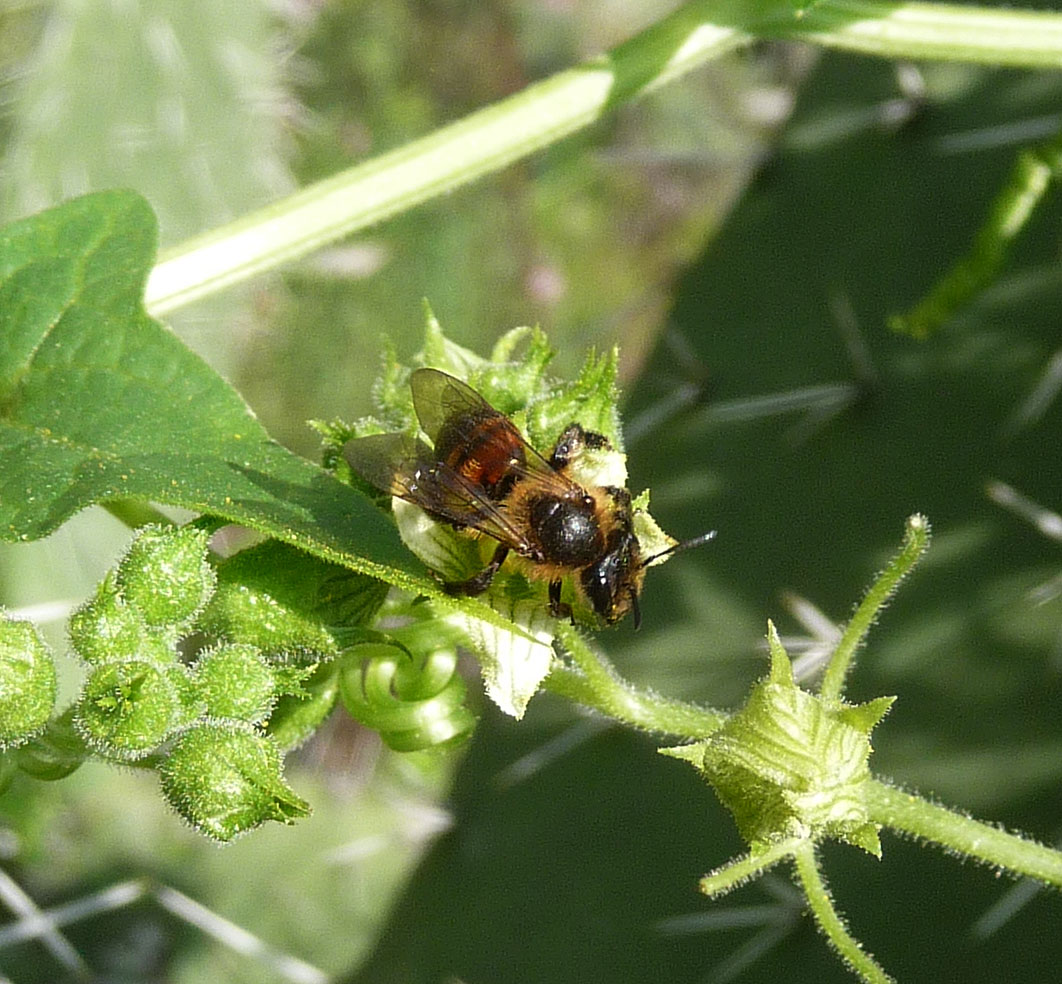
Andrena florea
Bryony Mining BeeA specialist bee that collects pollen exclusively from bryony (Bryonia species, Cucurbitaceae). Females have a black body with rusty-brown thoracic hair and narrow white abdominal bands, while males have a distinctive yellow face. It nests solitarily in the ground near its host plants. Both sexes sleep inside bryony flowers. Swiss Red List: Near Threatened (NT).
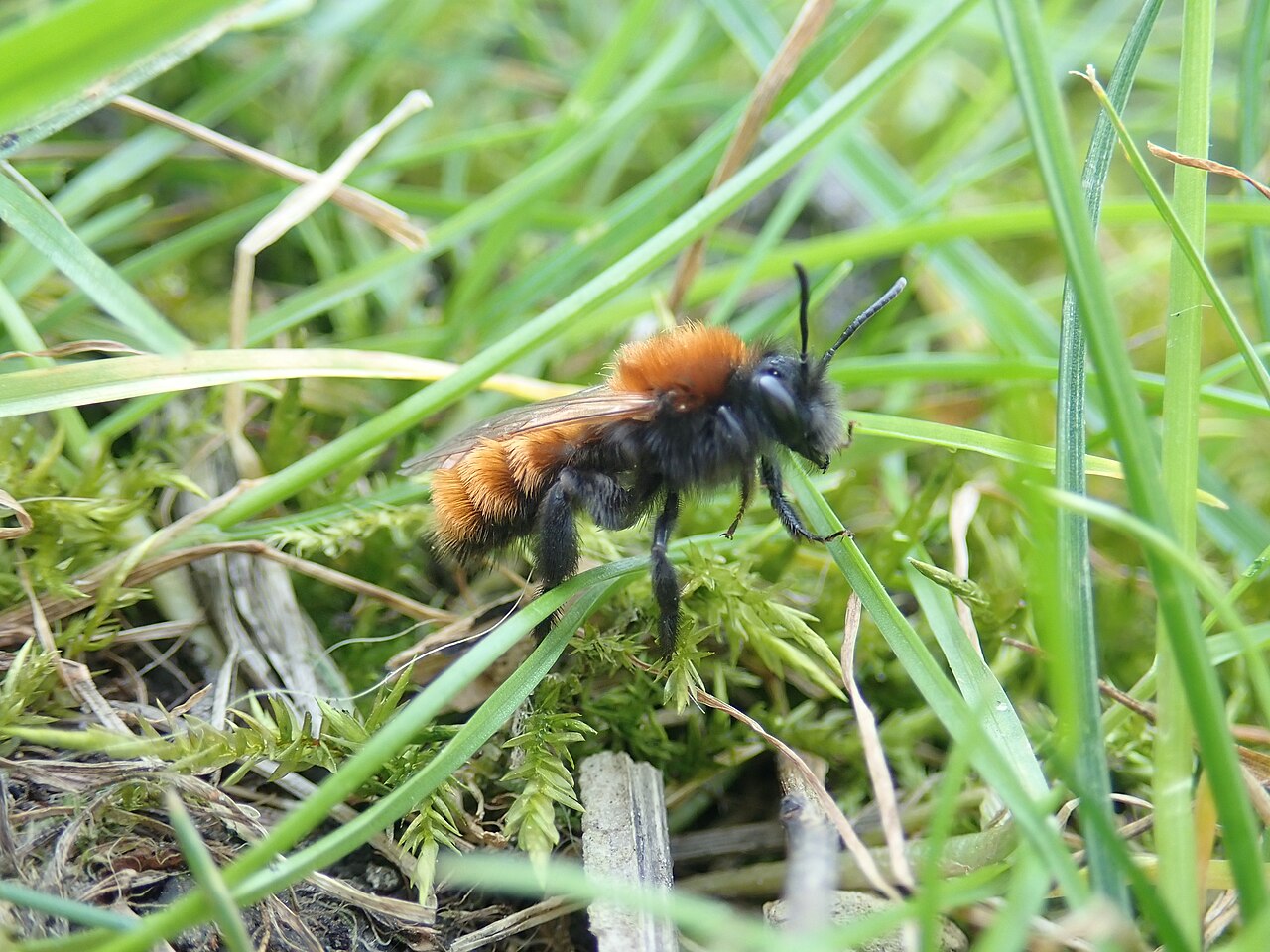
Andrena fulva
Tawny Mining BeeOne of the most striking spring bees, the female is unmistakable with its dense fox-red hair covering the entire dorsal surface of thorax and abdomen, contrasting with black head and underside. Males are smaller and more brownish with long white facial hairs. It nests in loose aggregations in short lawns, flower beds, and bare soil in gardens, parks, and open grasslands, digging vertical tunnels up to 40 cm deep with a volcano-like tumulus at the entrance. It is polylectic, visiting a wide range of spring-blossoming trees and shrubs including fruit trees, currants, willows, and hawthorn. The cuckoo bee Nomada signata is its specialist brood parasite. In Switzerland it is listed as Least Concern and occurs from the lowlands to montane elevations. Swiss Red List: Least Concern (LC).
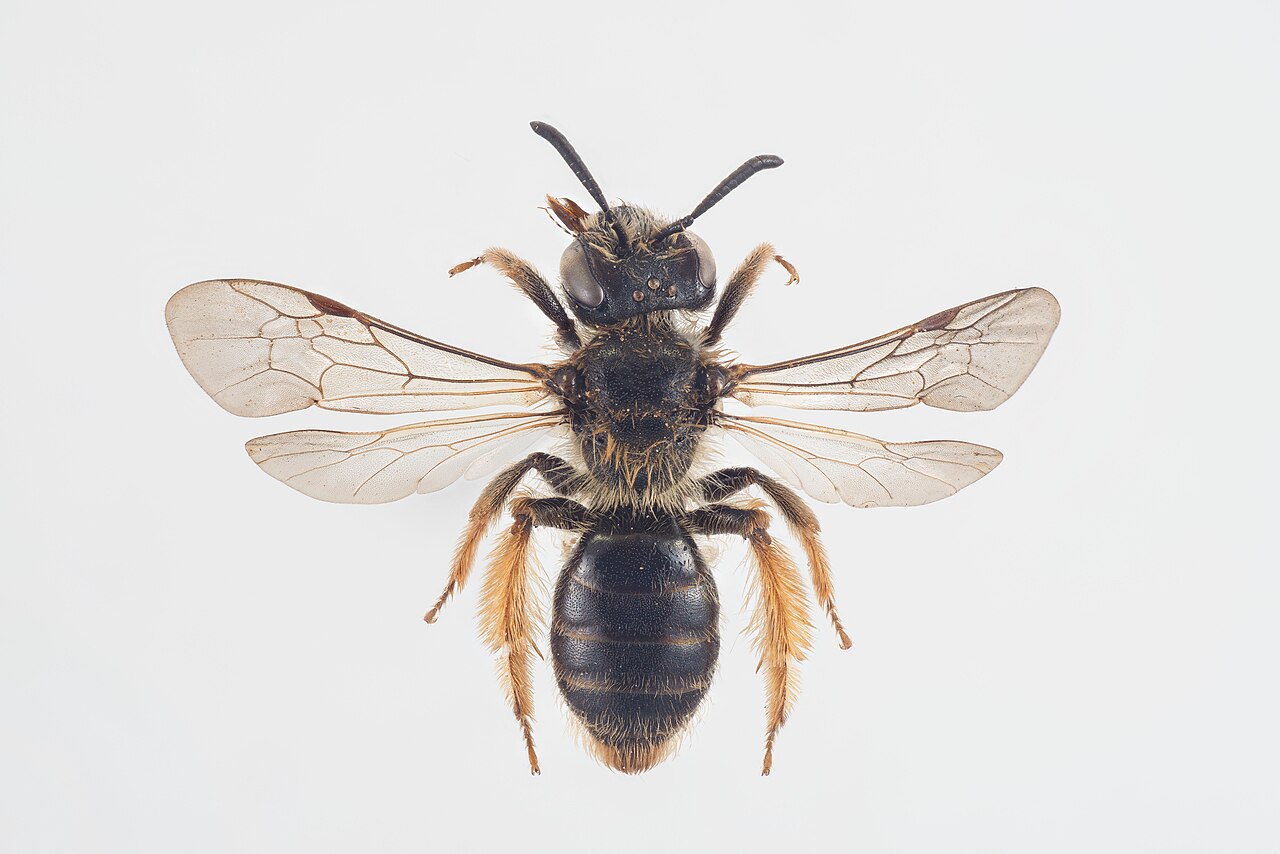
Andrena fulvago
Hawk's-beard Mining BeeA small, inconspicuous mining bee specialised on Asteraceae flowers, particularly hawk's-beard (Crepis), dandelions, and knapweeds. It has a dull brownish thorax and a black abdomen with narrow white hair bands and orange tibiae. It is univoltine and nests solitarily in sparse, sandy soils. Swiss Red List: Least Concern (LC).
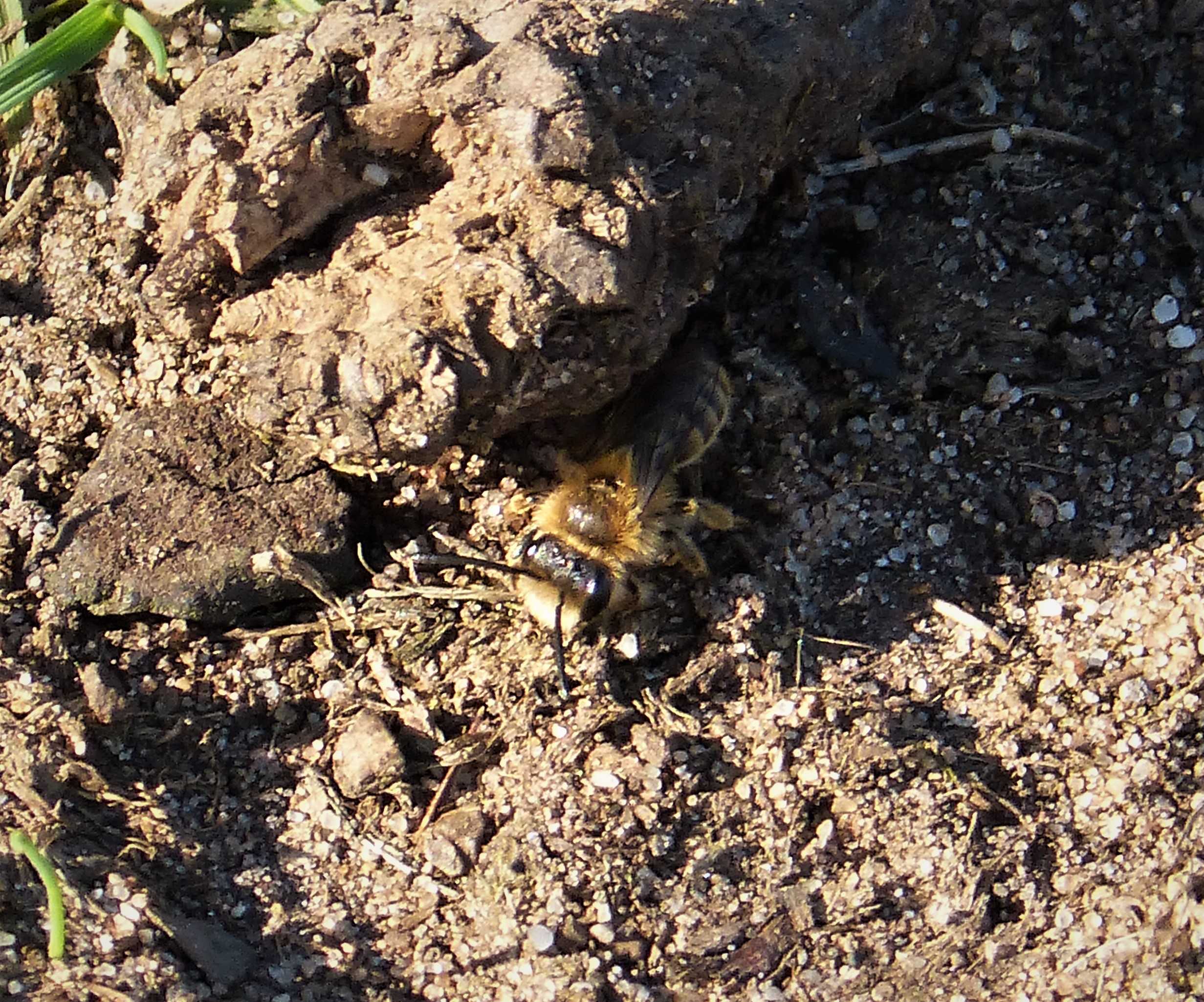
Andrena fuscipes
Heather Mining BeeA late-flying mining bee (8–11 mm) with dense orange-brown thoracic hair and very broad, yellowish-brown abdominal hair bands. It is oligolectic on heather (Calluna vulgaris, Ericaceae), appearing from late July to September when the heather blooms. It nests solitarily in sandy soils in heathlands and moorlands. In Switzerland it is confined to a few areas in Grisons, Valais, and Ticino where Calluna heath persists. Swiss Red List: Endangered (EN).
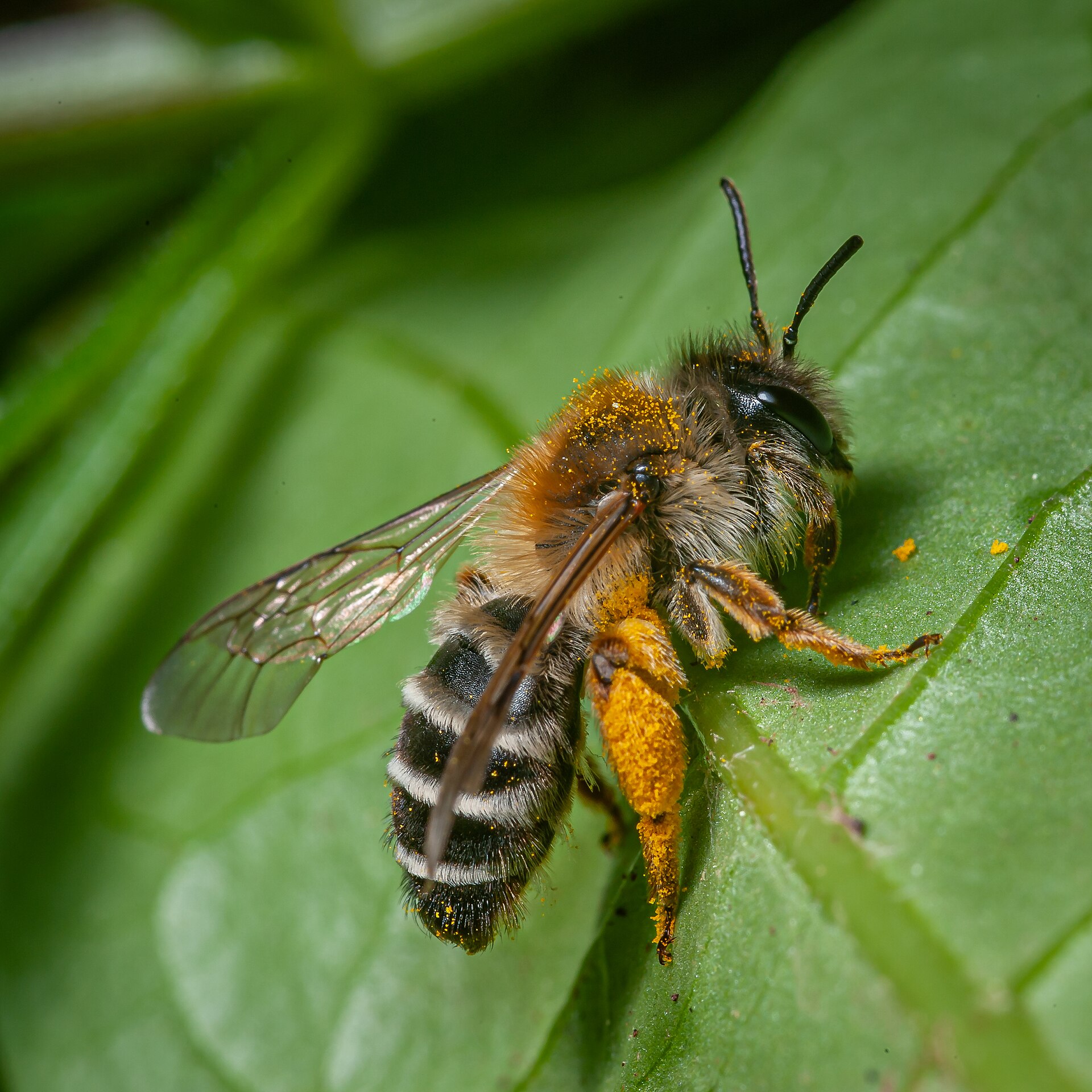
Andrena gravida
White-bellied Mining BeeA robust mining bee with striking white hairs on the face and sides of the thorax, and broad white hair bands on the abdomen. It resembles a larger, paler version of Andrena flavipes. It is univoltine, nesting in small aggregations in sparsely vegetated banks, field margins, and gardens. Swiss Red List: Least Concern (LC).
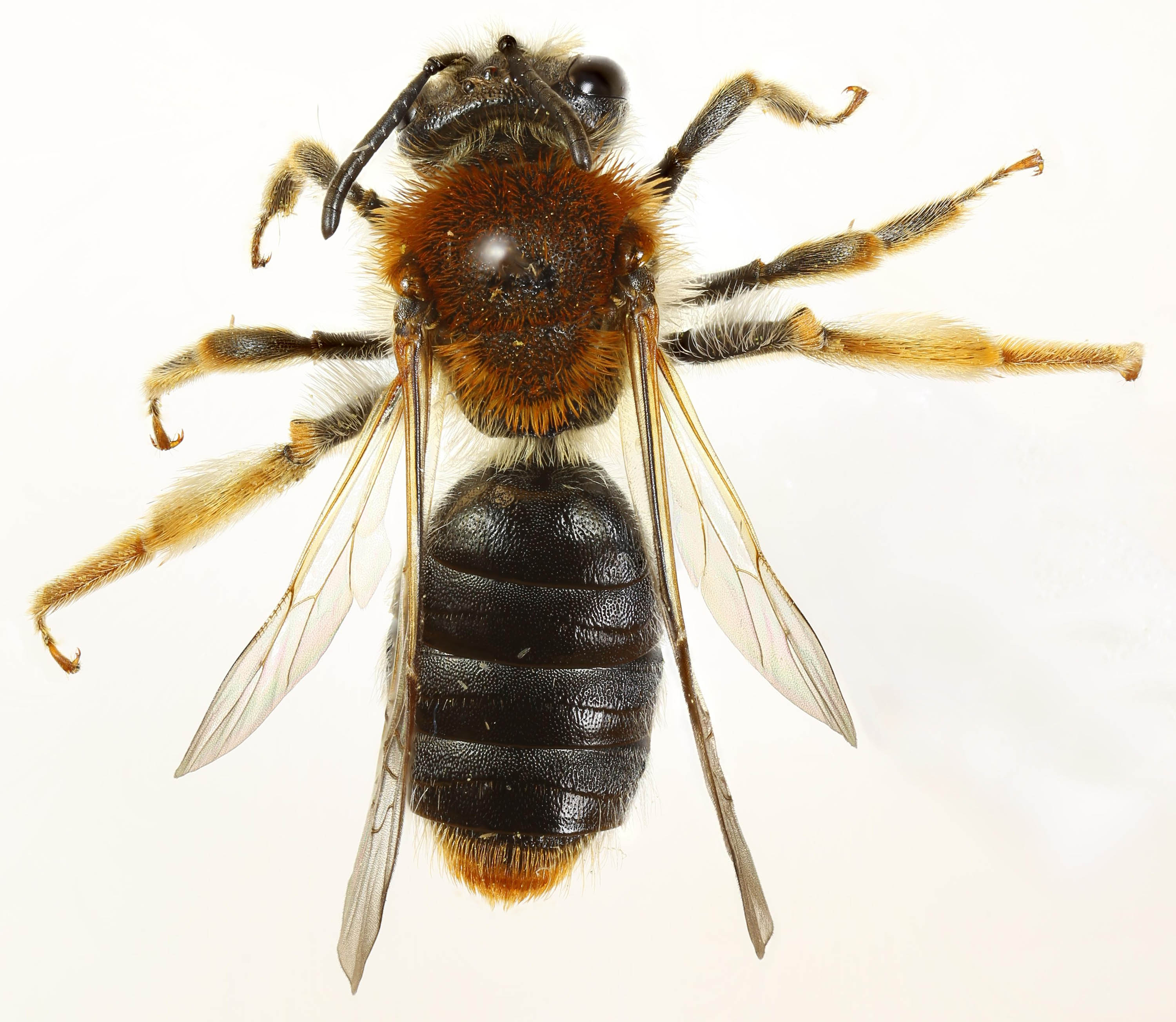
Andrena haemorrhoa
Orange-tailed Mining BeeA common spring mining bee with a distinctive orange-red tail. It visits a wide variety of flowers and nests in bare soil patches in gardens and meadows. Swiss Red List: Least Concern (LC).
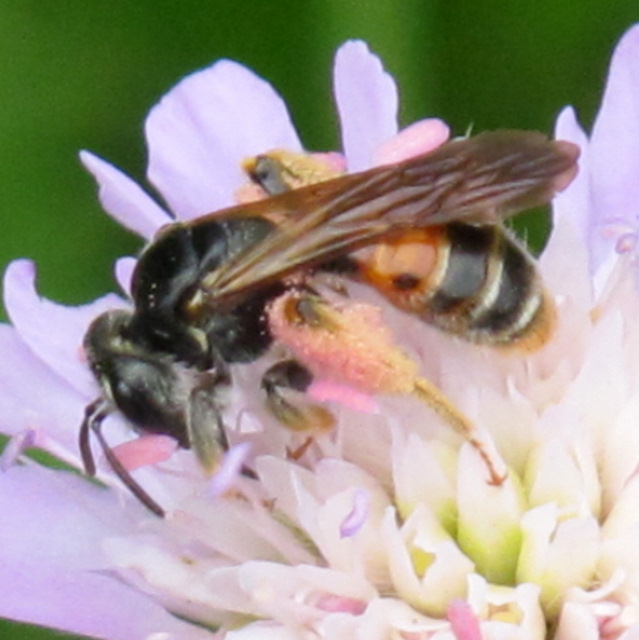
Andrena hattorfiana
Large Scabious Mining BeeA large and striking mining bee with a partly red abdomen and a specialized feeder on scabious and devil's-bit (Dipsacaceae). Females have dense brownish thoracic hair, a black head, and red-marked abdominal segments. It nests solitarily in flat, sparsely vegetated ground, often hiding the entrance beneath a plant rosette. Swiss Red List: Near Threatened (NT).
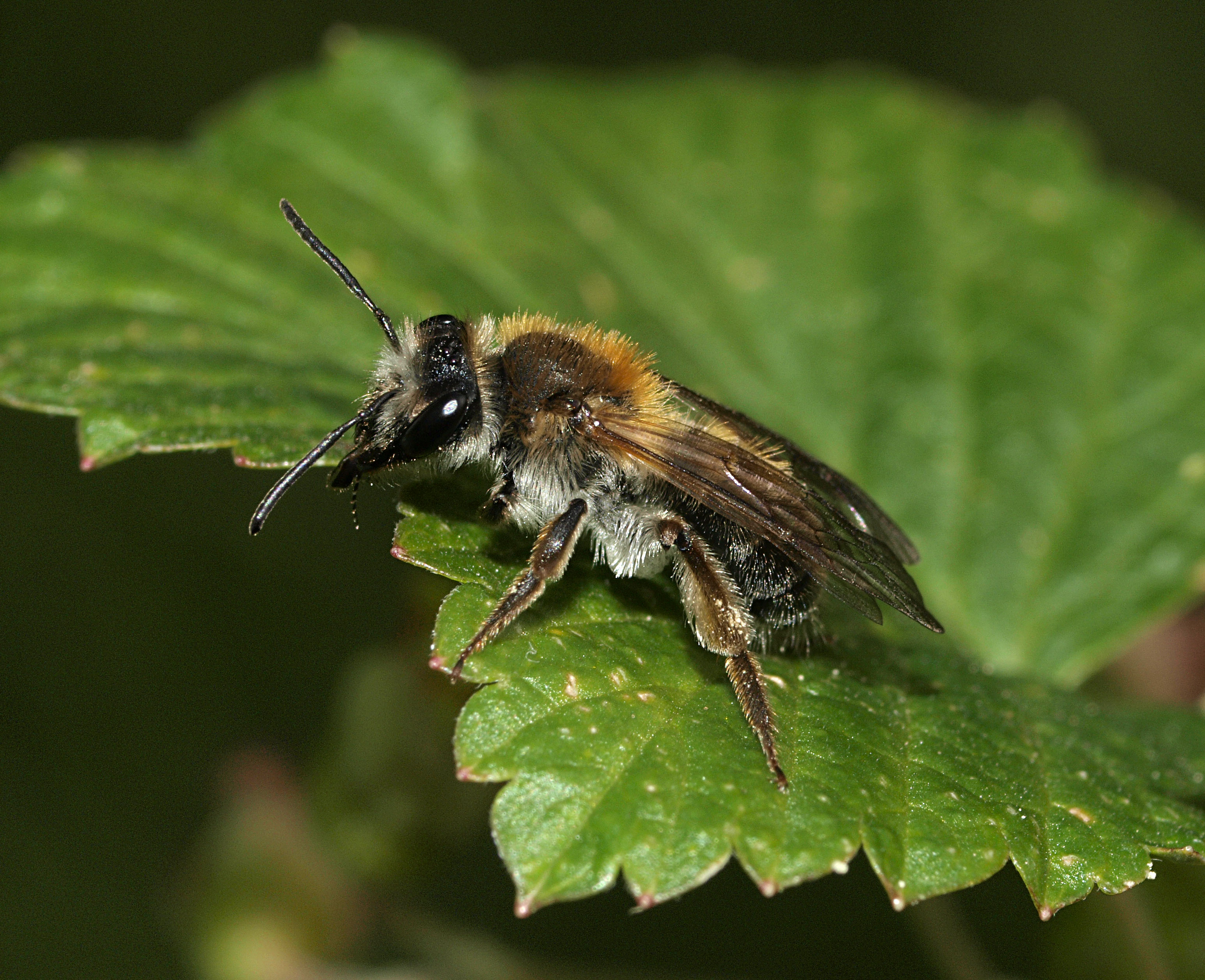
Andrena helvola
Coppice Mining BeeA medium-large mining bee (12–14 mm) with a black body and dense yellowish-brown hair on the thorax. The abdomen is glossy black with narrow white hair bands. Females have reddish-brown scopae on the hind legs. It is a generalist (polylectic) forager with a clear preference for Salicaceae, Rosaceae, and Rhamnaceae, visiting willow catkins, blackthorn, hawthorn, and fruit trees. It nests in self-excavated burrows in sparsely vegetated sandy or loamy soils in light forests, forest edges, and hedgerows. It is univoltine, flying from March to June. In Switzerland it is widespread from lowlands to montane elevations and is classified as Least Concern (LC).
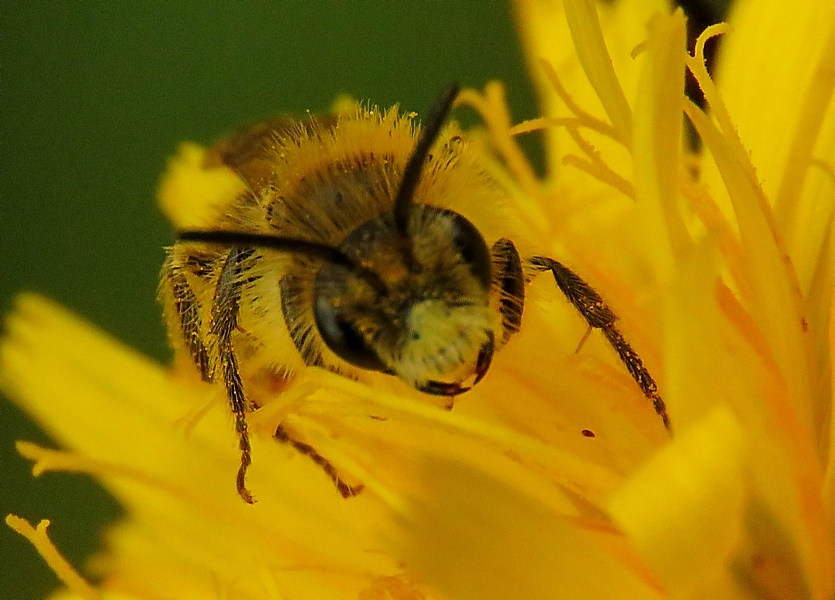
Andrena humilis
Humble Mining BeeA medium-sized mining bee (10–12 mm) with a distinctive golden-yellow hair covering on the last two tergites, giving the abdomen tip a warm orange appearance. Females have a brownish thorax and dark hind tibiae (unlike the pale-legged Andrena fulvago). Males have a yellow clypeus. It is oligolectic on yellow-flowered Asteraceae, especially hawk's-beard (Crepis), dandelions (Taraxacum), and cat's-ear (Hypochaeris). It nests solitarily in bare, firm, often sandy soils exposed to the sun, sometimes in small aggregations. In Switzerland it is found in dry meadows, ruderal areas, and field margins from lowlands to montane elevations, and is locally plentiful where its food plants occur. Swiss Red List: Least Concern (LC).
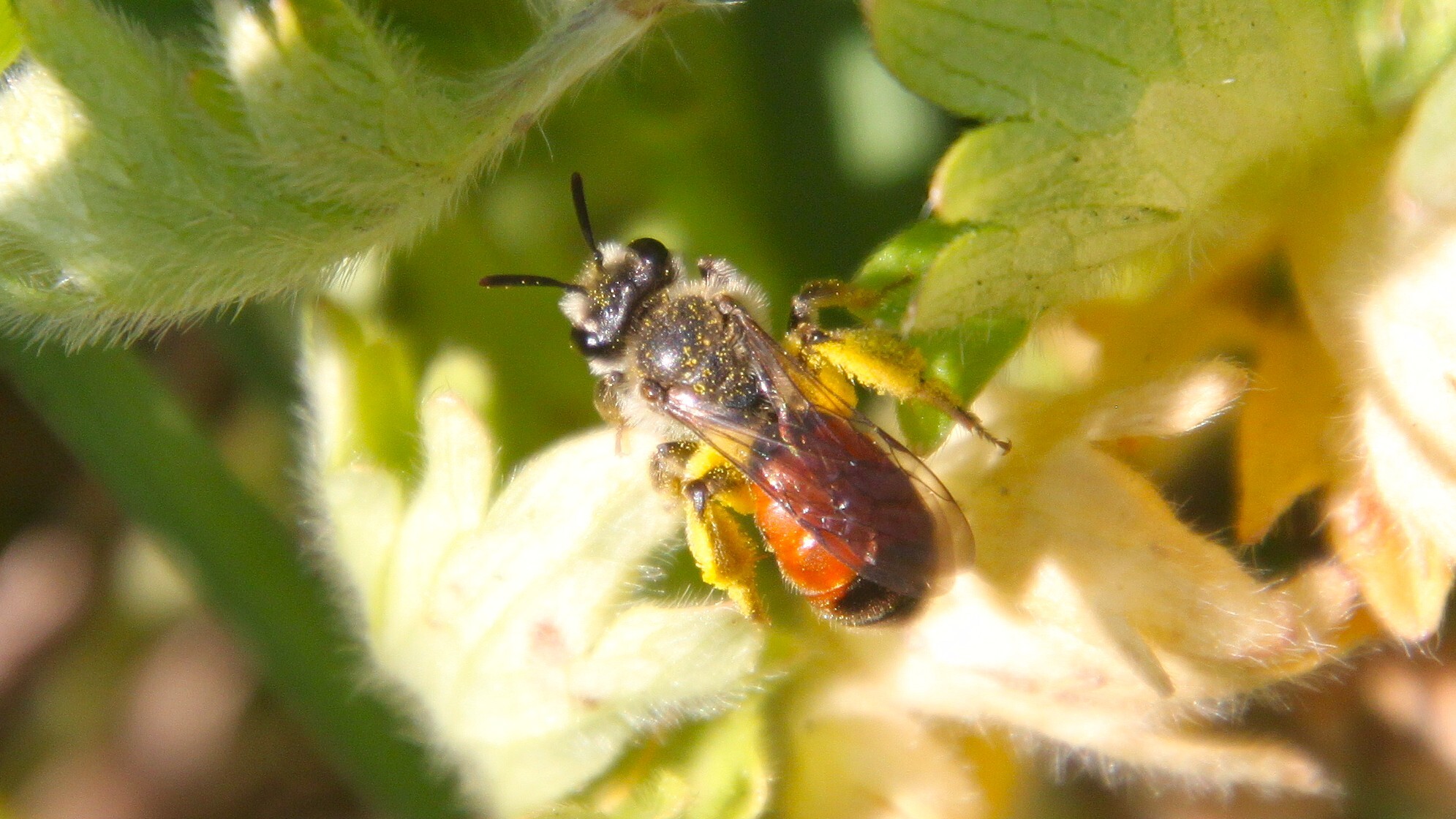
Andrena labiata
Red-girdled Mining BeeA striking small mining bee (7–9 mm) with the abdomen predominantly bright red: tergites 2 and 3 and part of tergite 4 are red, with tergite 2 having a lateral black spot. The thorax has sparse brownish hair. It is a generalist (polylectic) forager visiting flowers from at least 7 plant families including Asteraceae, Brassicaceae, Lamiaceae, and Rosaceae. It nests solitarily in self-excavated burrows in sparsely vegetated soil in dry meadows, warm forest edges, field margins, and occasionally parks and gardens. It is univoltine, flying from April to June. In Switzerland it is widespread but local, found in warm lowland and colline zones. It is parasitised by the cuckoo bee Nomada guttulata. Swiss Red List: Least Concern (LC).
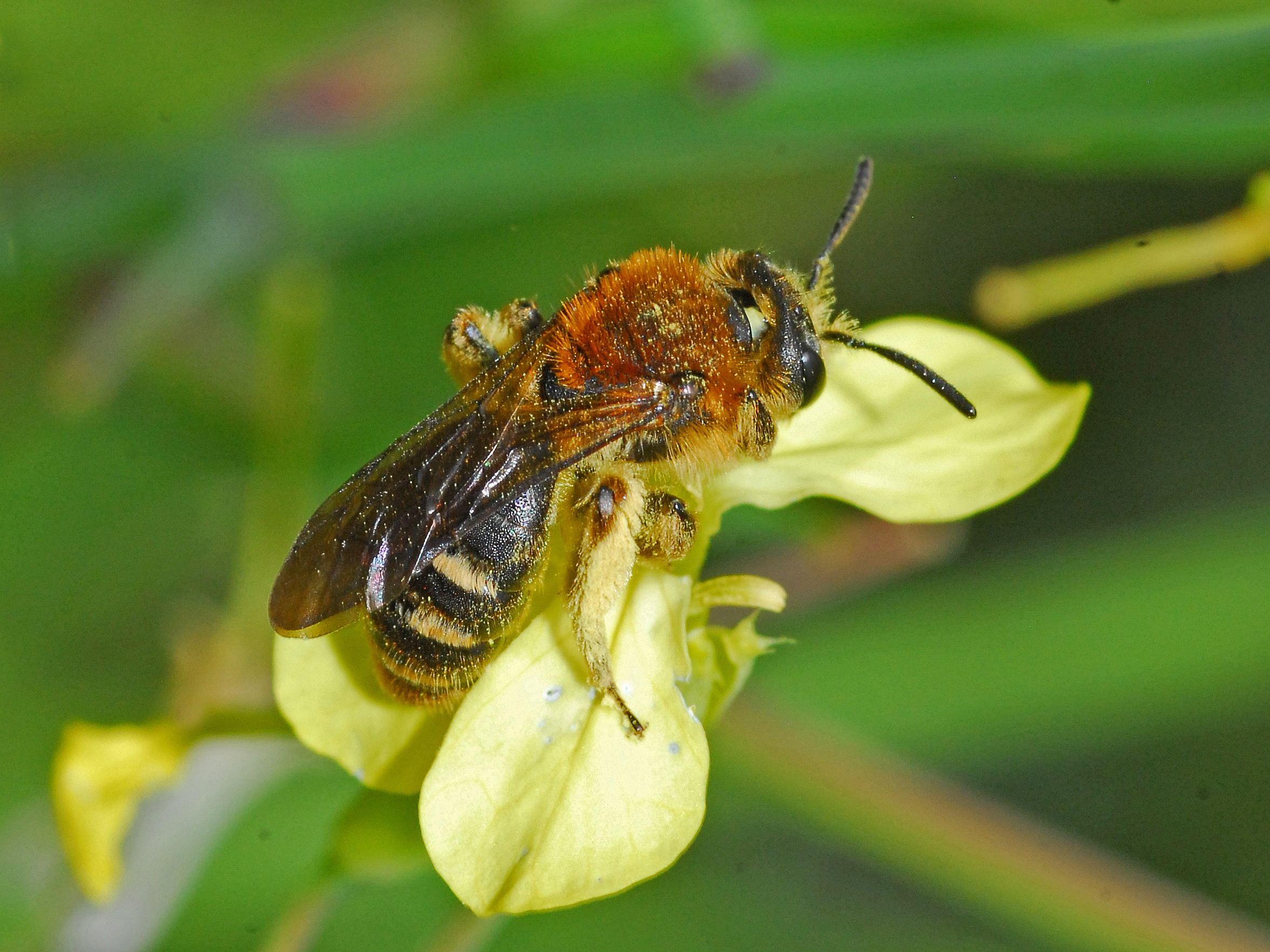
Andrena lagopus
Two-celled Mining BeeA small mining bee (8–10 mm) unique among Andrena for having only two submarginal cells in the forewing. It has a red-haired thorax and fine white hair bands on the black abdomen. It nests solitarily in sparsely vegetated ground and prefers warm lowland areas, foraging mainly on Brassicaceae and Caryophyllaceae flowers from late April to June. Swiss Red List: Least Concern (LC).
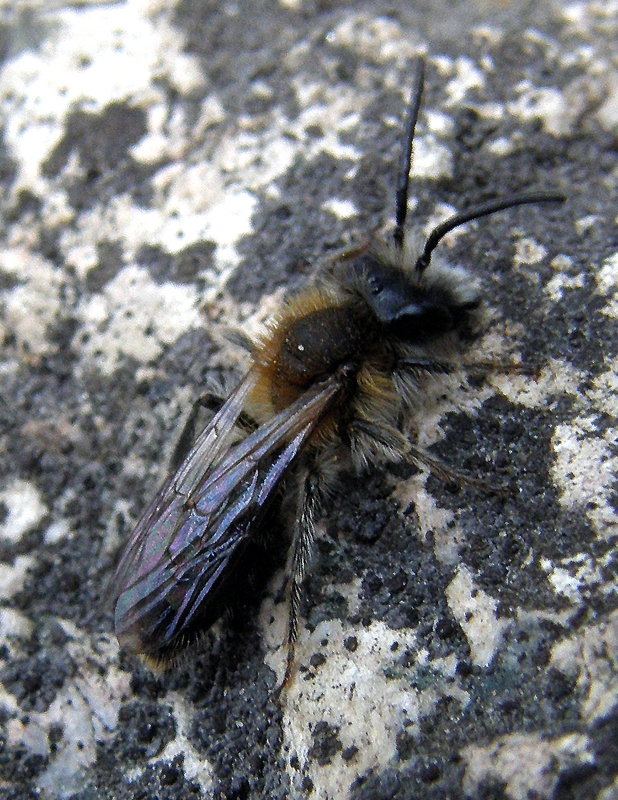
Andrena lapponica
Heather Mining BeeA specialist pollinator of blueberries and heather, this mining bee (12–13 mm) is found in acidic soils across northern regions and alpine meadows. It is oligolectic on Ericaceae, collecting pollen exclusively from bilberry (Vaccinium myrtillus), heather (Calluna vulgaris), and related plants. It nests solitarily in the ground in heathlands, moorlands, and coniferous forest clearings, often in small aggregations. Its flight period coincides with the flowering of its host plants. Swiss Red List: Least Concern (LC).
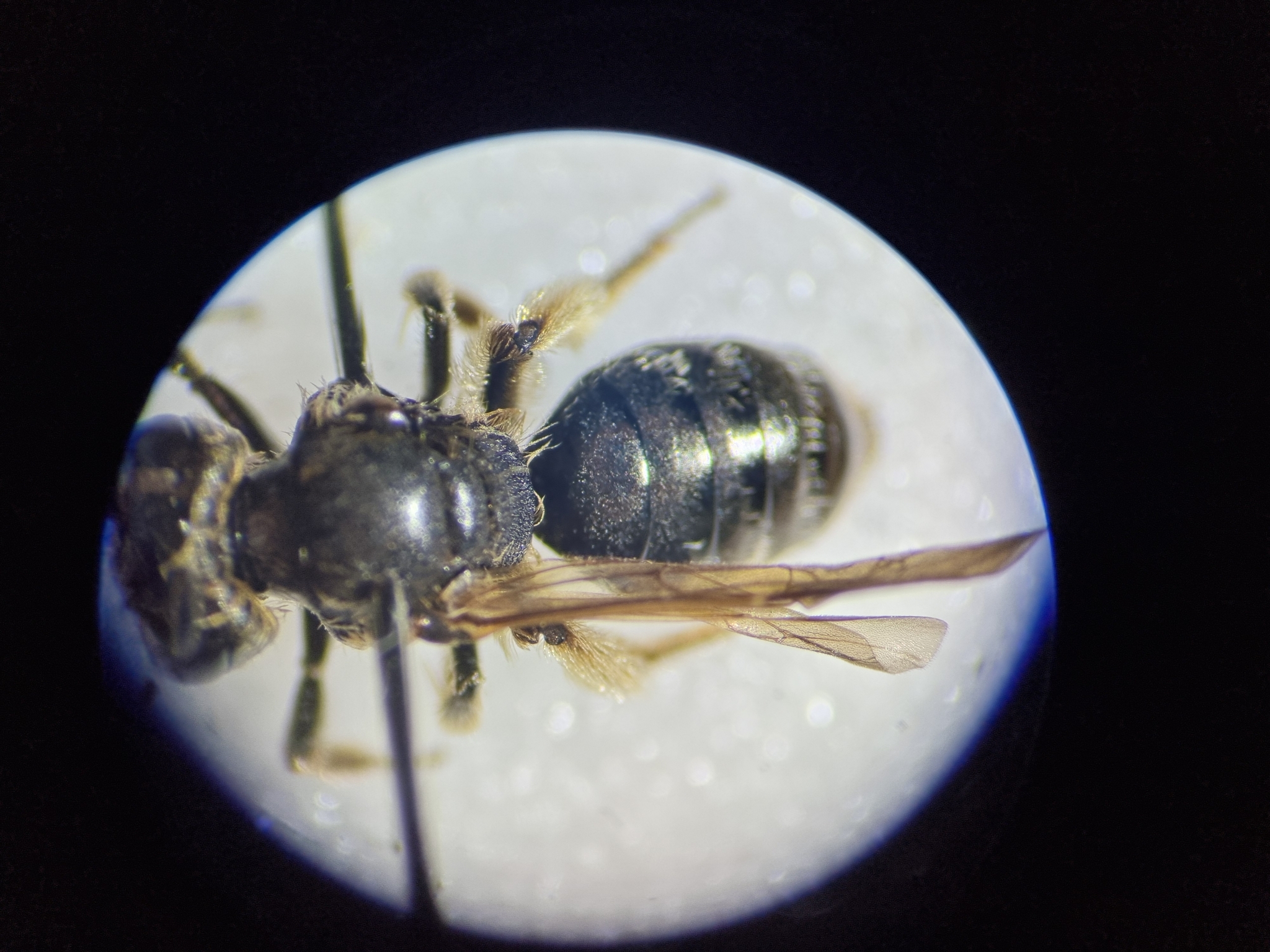
Andrena minutula
Common Mini-Mining BeeOne of the smallest Andrena species in Switzerland (5–7 mm), with a black, sparsely haired body and whitish pollen brushes and facial foveae. It is a generalist (polyleptic) foraging from at least 11 plant families including Apiaceae, Asteraceae, Brassicaceae, Rosaceae, and Salicaceae. It is bivoltine with two generations per year (April–May and June–August). It nests solitarily in self-excavated burrows in bare soil banks, path edges, and sparsely vegetated ground. It is a very common and widespread species in Switzerland, found in gardens, meadows, forest edges, and ruderal areas from lowlands to montane elevations. Its cuckoo bee is Nomada flavoguttata. Swiss Red List: Least Concern (LC).
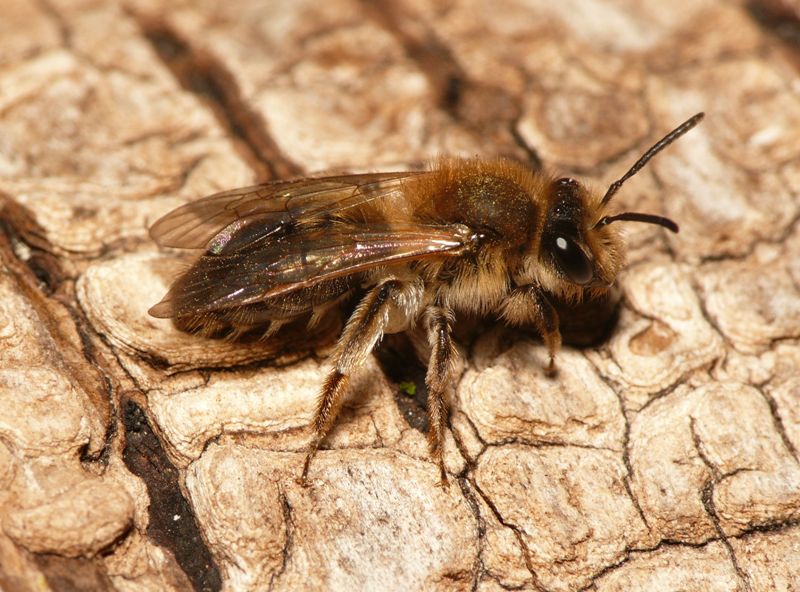
Andrena mitis
Gentle Mining BeeOne of the earliest bees to appear in spring (March–April), this medium-sized mining bee (10–12 mm) has long, dense yellowish-brown hair on the thorax and a glossy black abdomen with narrow white hair bands. It is oligolectic on willow (Salix) pollen and nests solitarily in self-excavated burrows in sandy or loamy soils in light forests and woodland edges. It overwinters as an adult. In Switzerland it is locally common in lowland and montane areas. Swiss Red List: Near Threatened (NT).
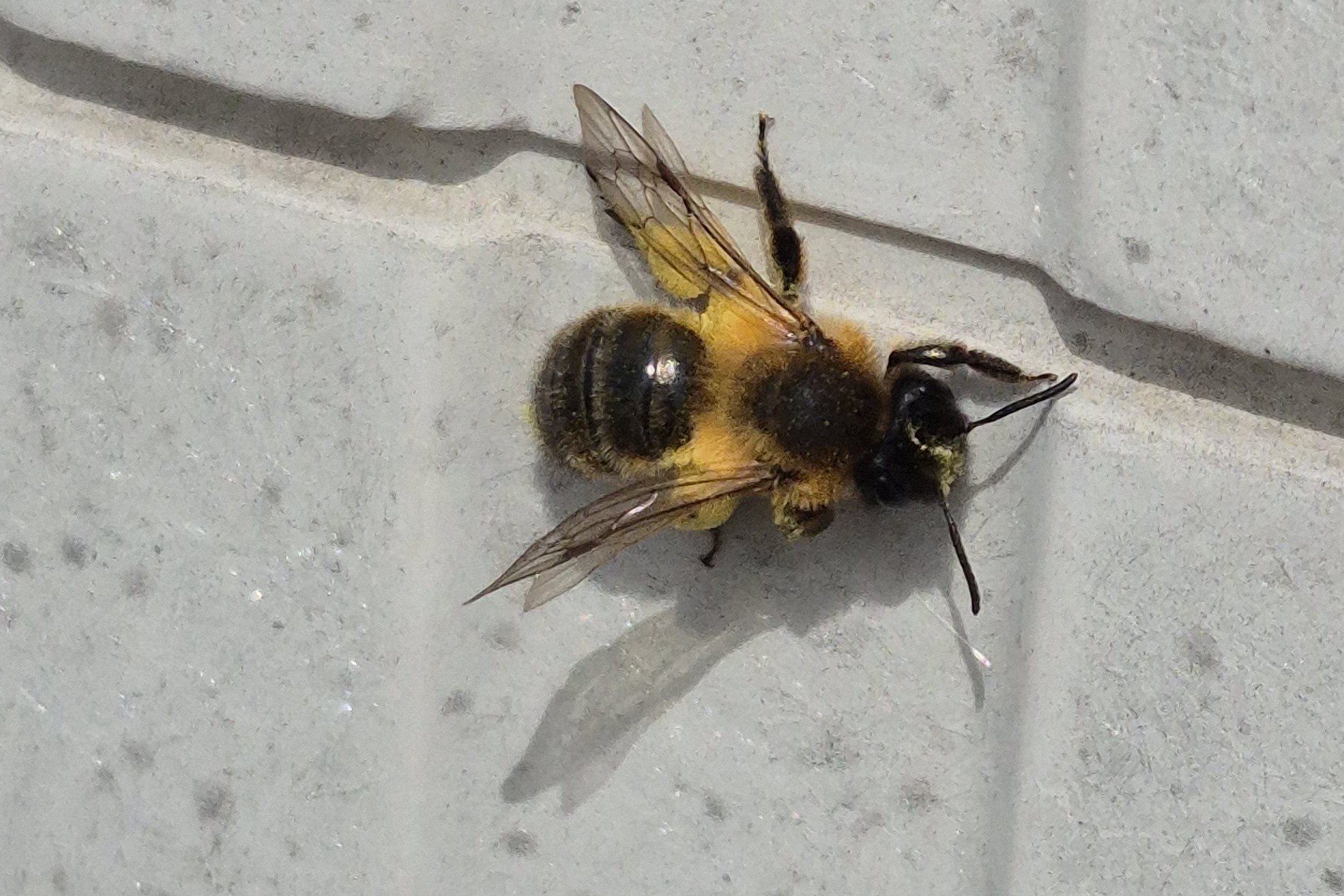
Andrena nigroaenea
Buffish Mining BeeA medium-sized mining bee with a faint metallic bronze sheen on the dark body and dense brownish hair on the thorax. The abdomen has narrow white hair bands. Females have dark scopae on the hind legs. It is a generalist forager visiting a wide range of spring flowers and nests in bare soil. In Switzerland it is common in gardens, meadows, and forest edges. Swiss Red List: Least Concern (LC).
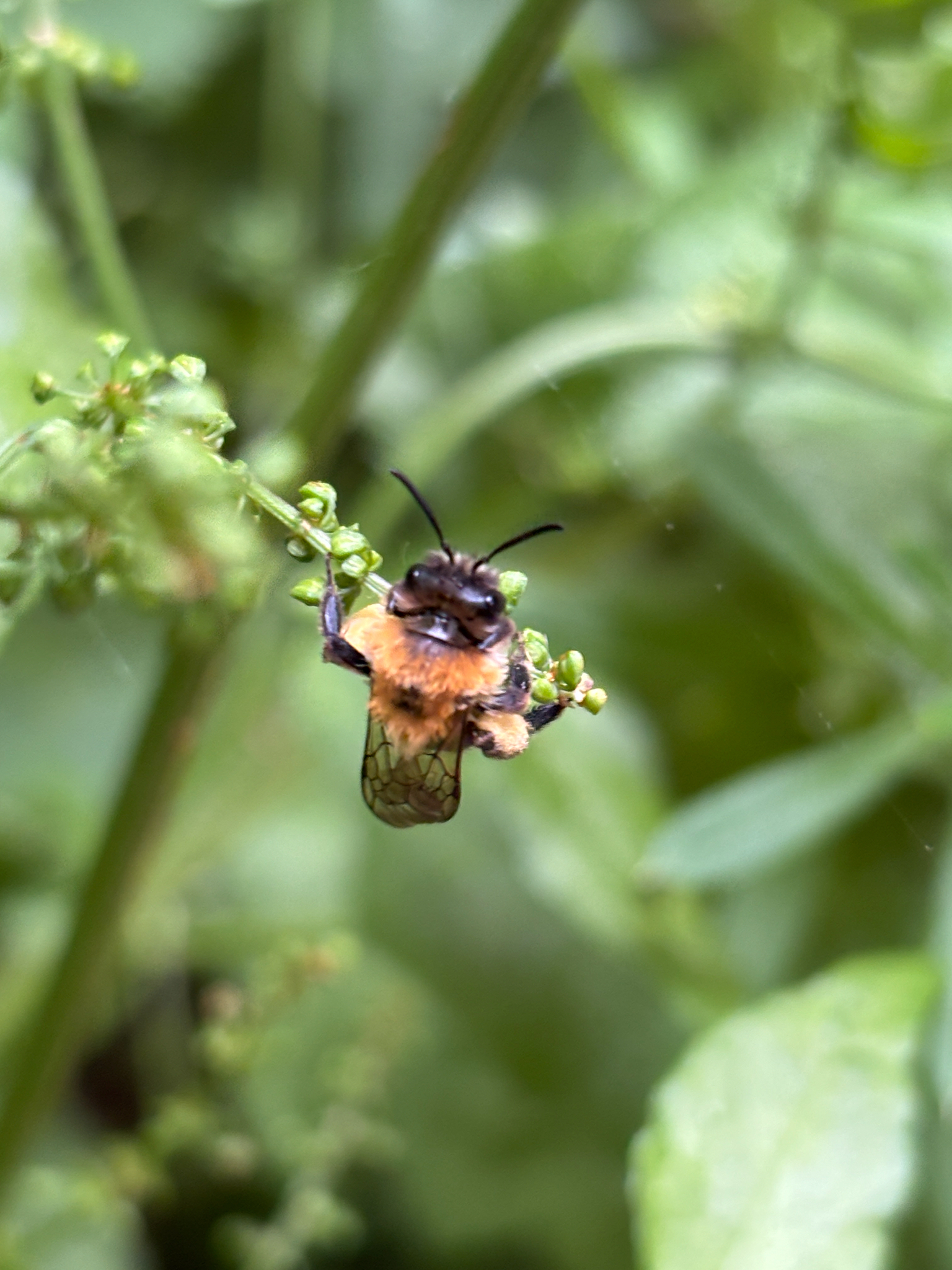
Andrena nitida
Grey-patched Mining BeeA medium-sized mining bee with a glossy, almost hairless black abdomen and dense reddish-brown hair on the thorax that fades with age. It has distinctive greyish-white hair patches on the sides of the thorax. It is a generalist forager, common in gardens and open habitats, nesting solitarily in bare soil. Swiss Red List: Least Concern (LC).
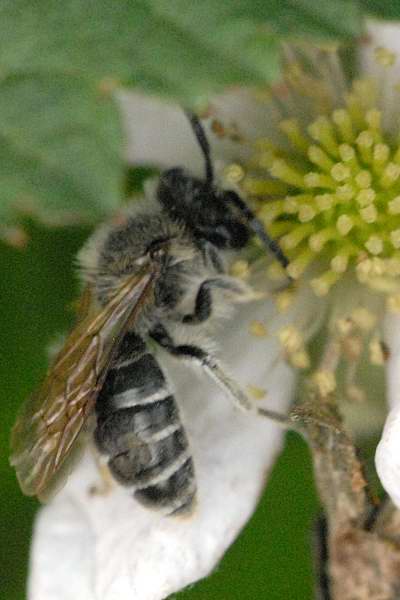
Andrena ovatula
Small Gorse Mining BeeA small mining bee (8–10 mm) with a black body and a brown-haired thorax. The abdomen has narrow white hair bands and the hind legs have pale scopae. It closely resembles Andrena wilkella but can be distinguished by the denser punctuation on the first tergite. It is oligolectic on Fabaceae (legumes), especially clovers (Trifolium), bird's-foot trefoil (Lotus), and medicks (Medicago). It nests in self-excavated burrows in bare or sparsely vegetated sandy or loamy soils, often in small aggregations. It is bivoltine in warmer regions, flying from April to June and again from July to September. In Switzerland it is widespread and locally common in dry meadows, field margins, ruderal areas, and vineyards from lowlands to montane elevations. It is one of the more frequent Andrena species in Central Europe. Swiss Red List: Least Concern (LC).
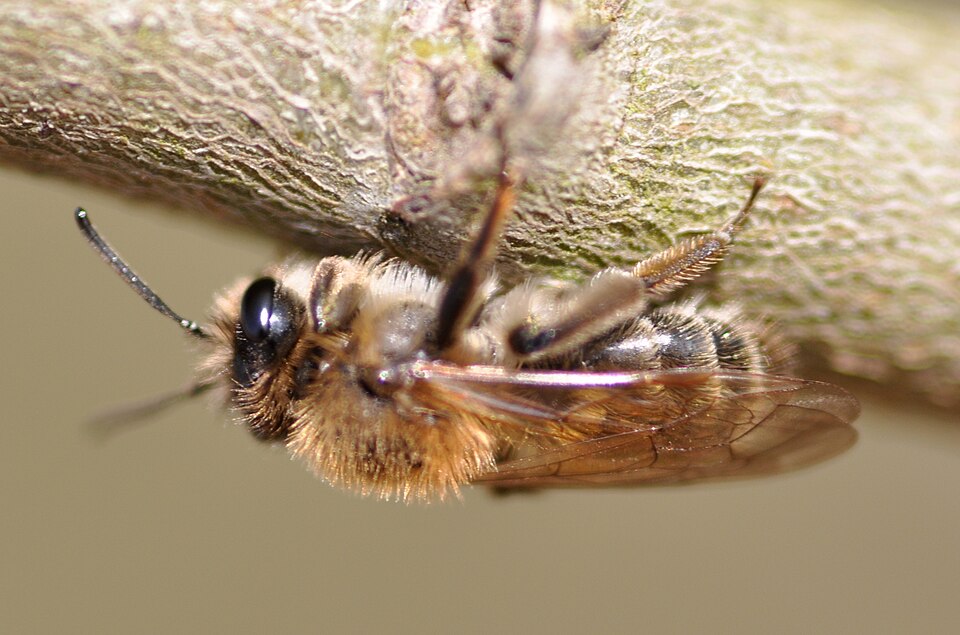
Andrena praecox
Small Sallow Mining BeeOne of the very first bees to emerge in early spring, sometimes as early as February. The thorax is densely covered with bright yellowish-brown hair giving a foxy appearance. The abdomen has yellowish hair bands. It is strictly specialised on willow (Salix) pollen. Males patrol tree trunks in swarms. In Switzerland it is widespread from lowlands up to alpine meadows. Swiss Red List: Least Concern (LC).
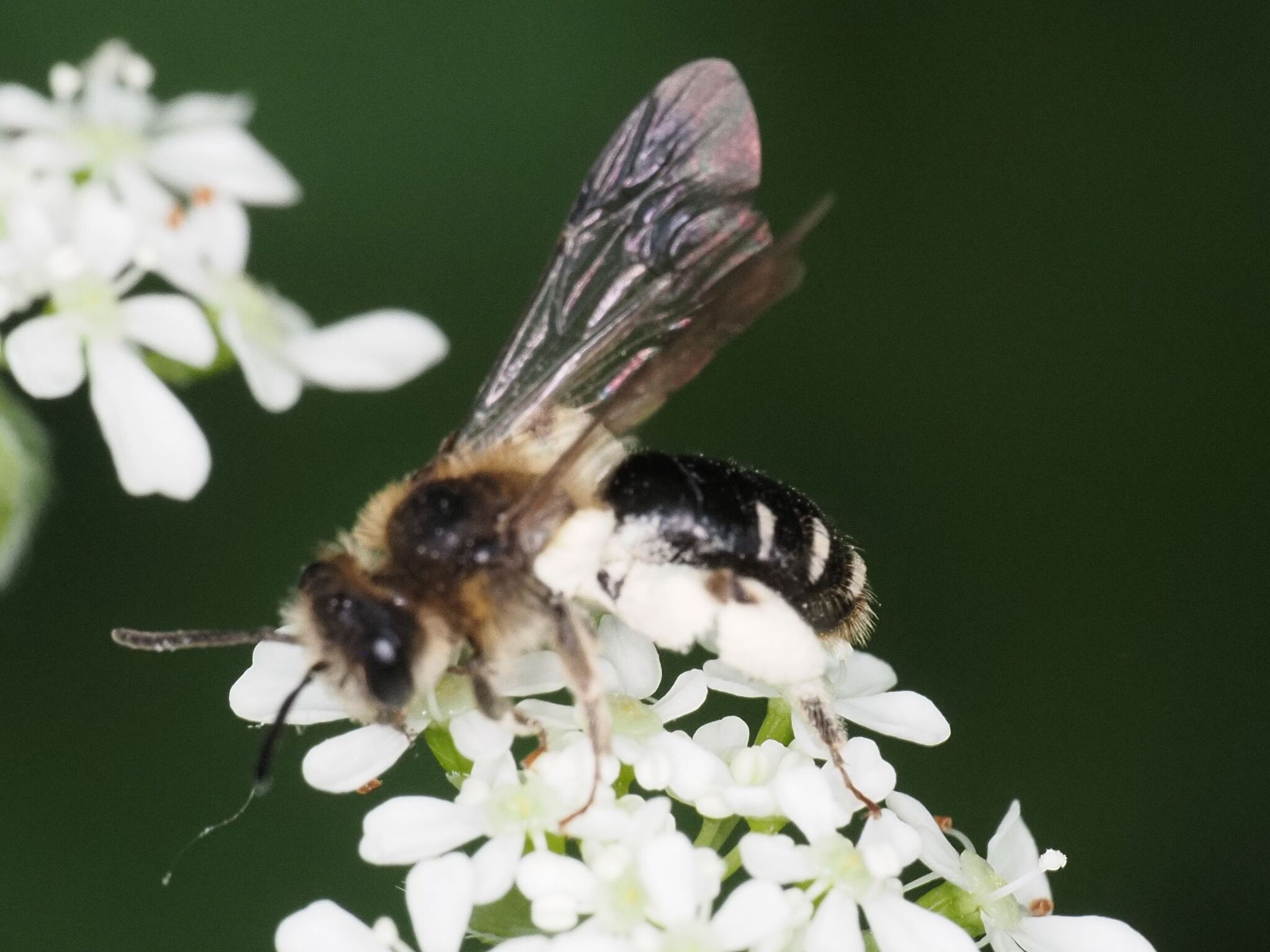
Andrena proxima
Early Umbellifer Mining BeeA medium-sized mining bee (9–11 mm) with a thinly brown-haired thorax and a black abdomen with distinctive lateral white hair patches that do not meet in the middle. It is oligolectic on Apiaceae (umbellifers), foraging on cow parsley, wild carrot, hogweed, ground elder, and other umbellifers. It nests in self-excavated burrows in sandy or loamy soils, often in small aggregations. It is univoltine, flying from May to July (males earlier). In Switzerland it is widespread from lowlands to 2000 m in the Alps, common in meadows, field margins, embankments, and ruderal areas. It is parasitised by the cuckoo bee Nomada conjungens. Swiss Red List: Least Concern (LC).
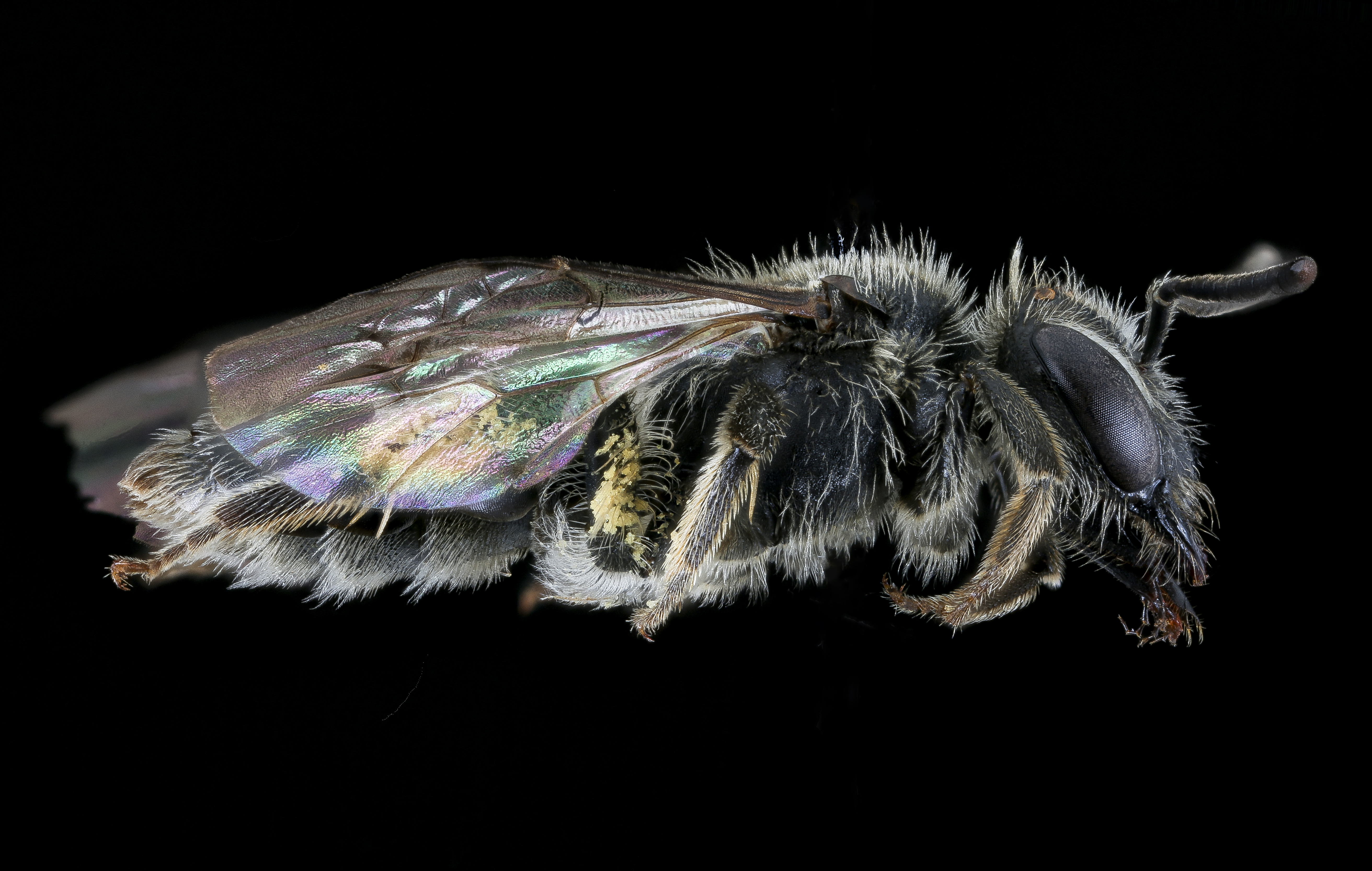
Andrena subopaca
Impunctate Mini-Mining BeeOne of the smallest Andrena species (5–7 mm), with a dull, finely sculptured black body and sparse whitish hair. It is a generalist (polylectic) forager visiting flowers from at least 5 plant families including Rosaceae, Asteraceae, and Ranunculaceae. It nests in self-excavated burrows in bare or sparsely vegetated soil, often in small aggregations. It is bivoltine in warmer areas, flying from March to June and again from July to August. In Switzerland it is very common and widespread from lowlands to 1600 m in the Alps, found in forest edges, dry meadows, parks, and gardens. It is one of the most frequently encountered mining bees in Central Europe. Swiss Red List: Least Concern (LC).
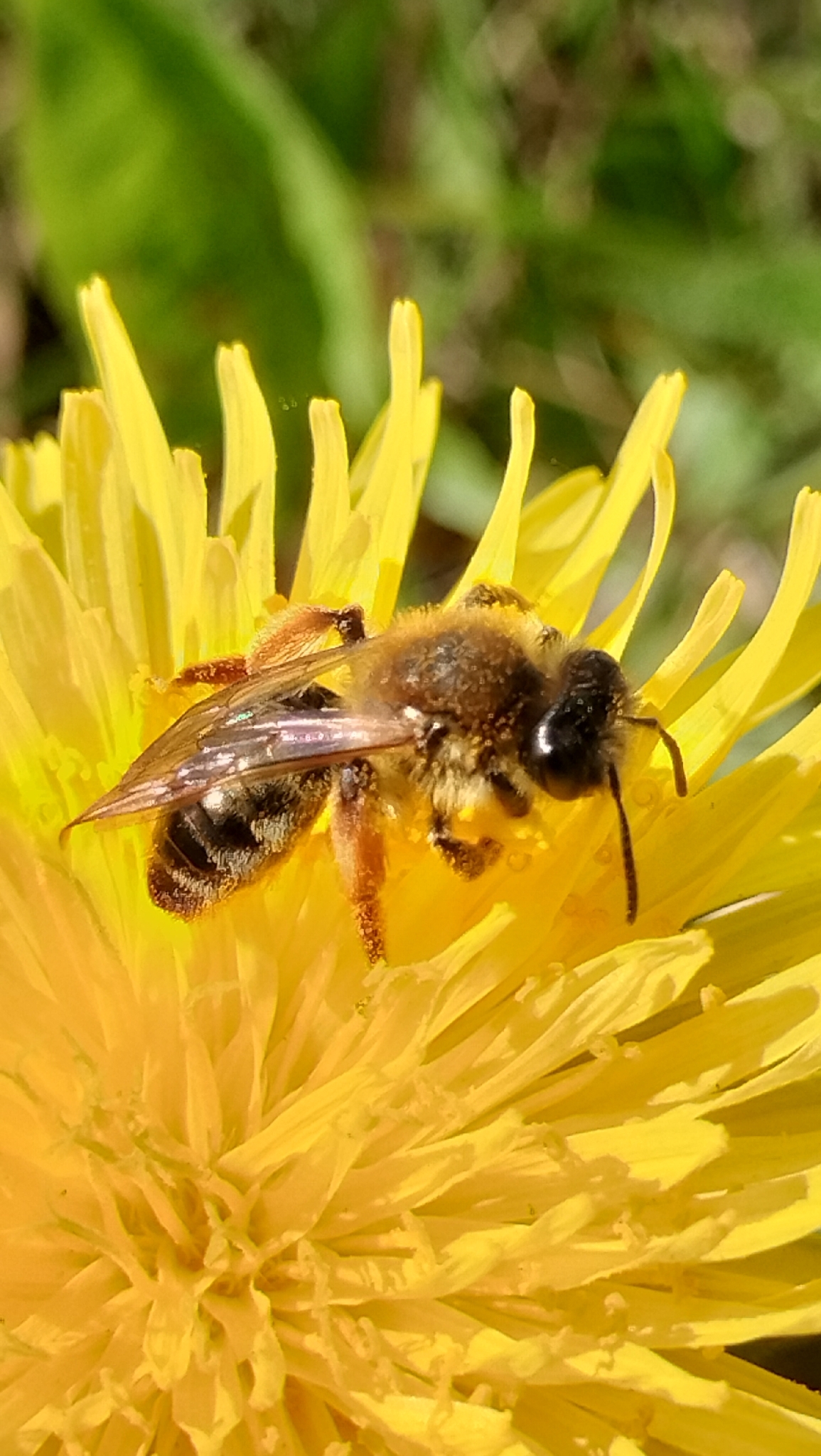
Andrena tibialis
Grey-gastered Mining BeeA medium-sized mining bee with orange-red hind tibiae and tarsi, a yellowish-brown thorax, and a black abdomen with narrow, sparse white hair bands. It flies early in spring from March, sometimes with a partial second generation in July. It nests solitarily in sparsely vegetated soil in meadows, forest edges, and ruderal areas. Swiss Red List: Least Concern (LC).
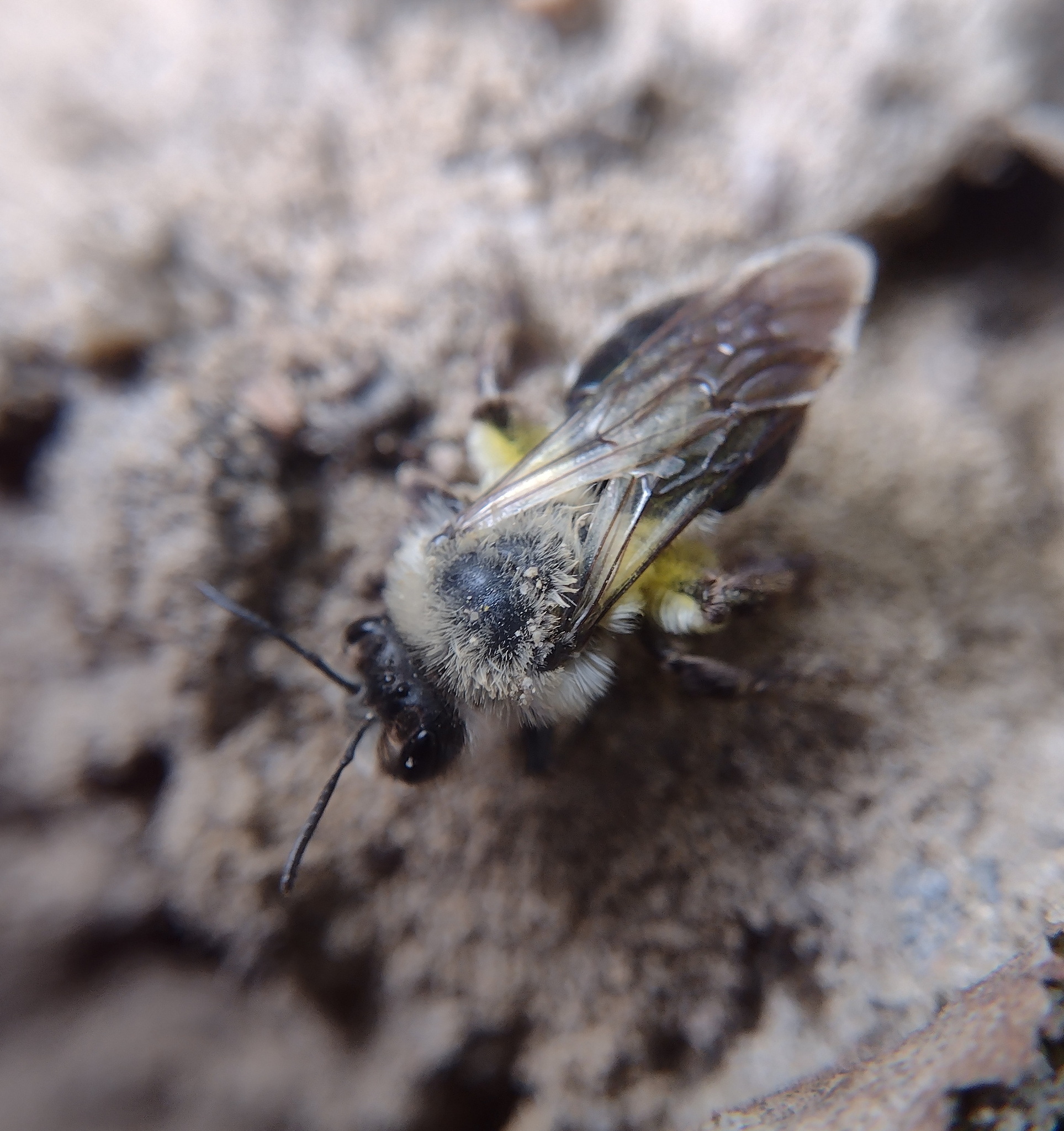
Andrena vaga
Grey-backed Mining BeeA large, early-spring mining bee with a distinctive white-grey hairy thorax and a glossy black, sparsely haired abdomen. It is strictly specialised on willow (Salix) pollen and nests in enormous aggregations of up to several thousand individuals in sandy or loamy soils, often along riverbanks. Males patrol low over the nesting area in dense swarms. Swiss Red List: Least Concern (LC).
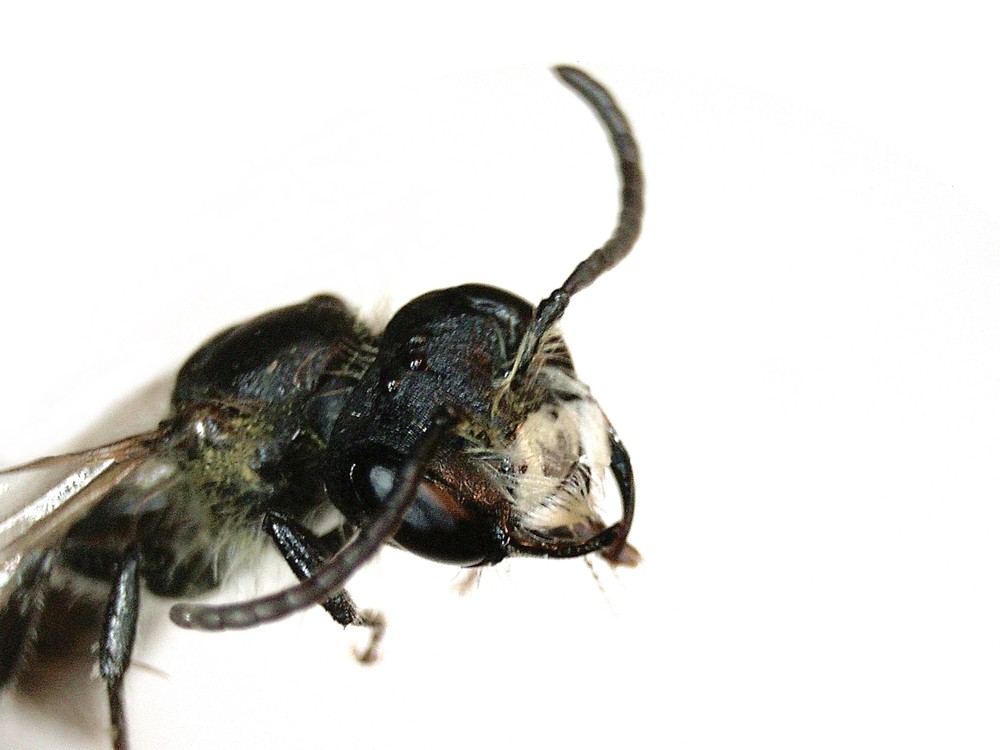
Andrena ventralis
Red-bellied Mining BeeA distinctive mining bee (9–11 mm) with a black thorax and a striking reddish-orange abdomen tip. It is an oligolectic specialist on willow (Salix) pollen and is among the earliest bees to emerge in spring, often flying as early as March. It nests solitarily in sandy or loamy soils, frequently in small aggregations along forest edges and riverbanks. Swiss Red List: Least Concern (LC).
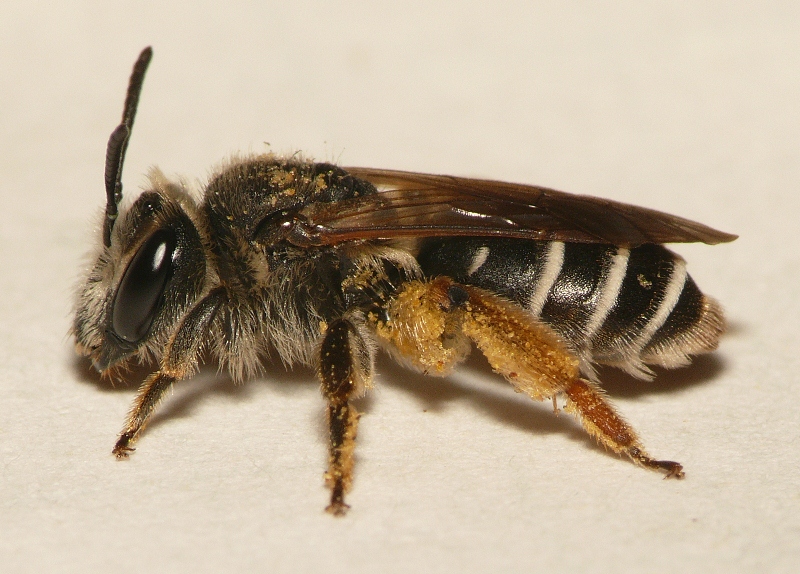
Andrena wilkella
Wilke's Mining BeeA small mining bee specialised on Fabaceae (legumes) with narrow white hair bands on the abdomen that are interrupted in the middle on the first two tergites. Females have yellowish pollen brushes and reddish hind tibiae and tarsi. It is widespread in Switzerland from lowlands to montane elevations in dry meadows, field margins, and ruderal areas. Swiss Red List: Least Concern (LC).
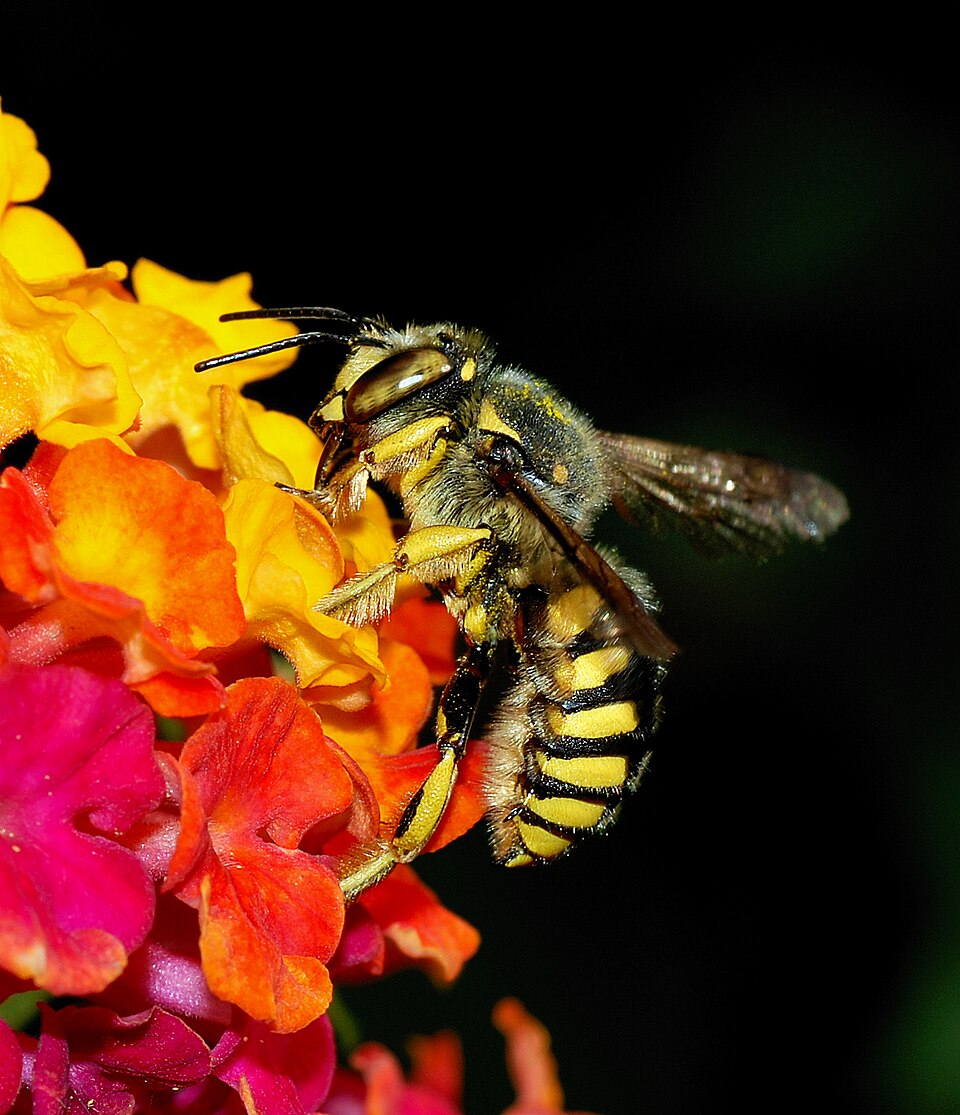
Anthidium florentinum
Large Wool Carder BeeA large, strikingly coloured wool carder bee with bold yellow bands on a black abdomen and dense brownish hair on the thorax. Males are larger than females and have three sharp spines at the tip of the abdomen used in fierce territorial battles over flower patches. It nests in pre-existing cavities, lining brood cells with plant fibres scraped from hairy leaves. In Switzerland it occurs in warm, dry lowland habitats including the Valais, Ticino, and Geneva. Swiss Red List: Least Concern (LC).
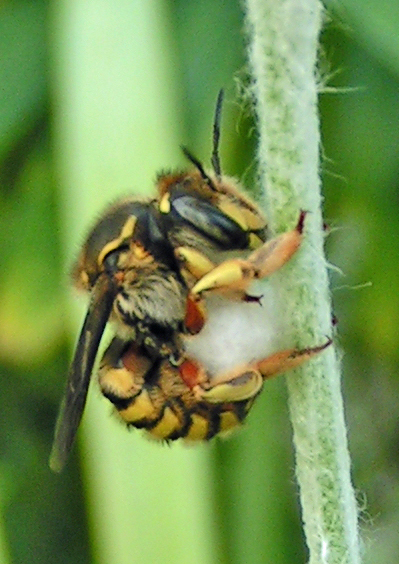
Anthidium manicatum
Wool Carder BeeA large, strikingly patterned bee with a wasp-like black-and-yellow abdomen, robust body, and dense brownish hair on the thorax. Males (14–18 mm) are significantly larger than females (11–13 mm) and possess three sharp spines at the tip of the abdomen, which they use in fierce territorial battles to defend patches of preferred flowers. Females carry pollen on a dense brush of hairs (scopa) on the underside of the abdomen. The species nests in pre-existing cavities such as cracks in dry stone walls, gaps in masonry, abandoned burrows in the ground, or hollow plant stems. The brood cells are lined with plant fibres ('wool') scraped from hairy leaves of plants like Stachys byzantina, Verbascum, and quince, then sealed with resinous secretions. It forages primarily on Fabaceae and Lamiaceae, visiting species like Stachys, Ononis, Leonurus, and Digitalis. It is widespread and often common in gardens, parks, and settlements across Switzerland, less frequent outside urban areas. On the Swiss Red List it is classified as Least Concern (LC).
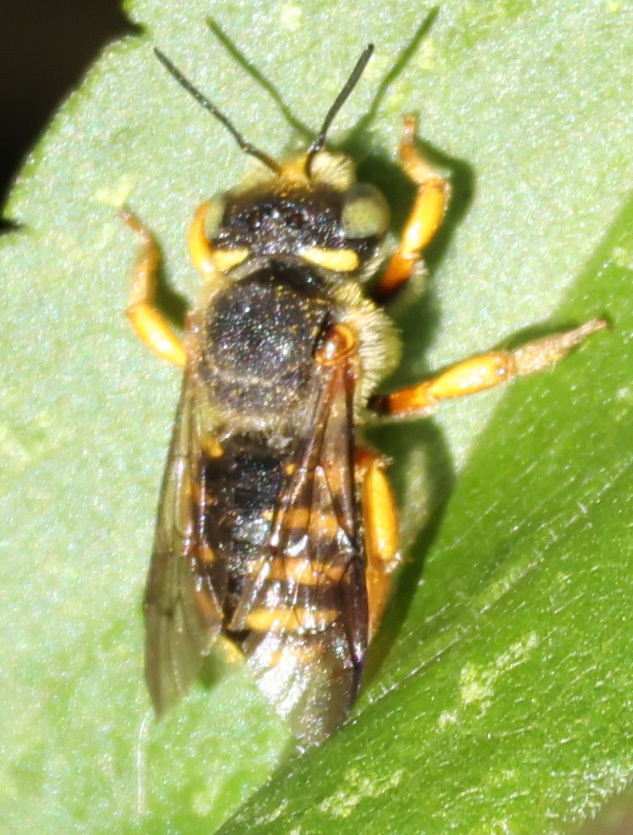
Anthidium oblongatum
Oblong Wool Carder BeeA small wool carder bee that nests in rock crevices, dry stone walls, and mortar joints. It is a warmth-loving species of dry meadows, rocky slopes, vineyards, and ruderal areas. Males patrol flower patches and defend territories aggressively. In Switzerland it is found in warm lowlands and valleys, nesting in fissures and cracks in walls and rocks. Swiss Red List: Least Concern (LC).
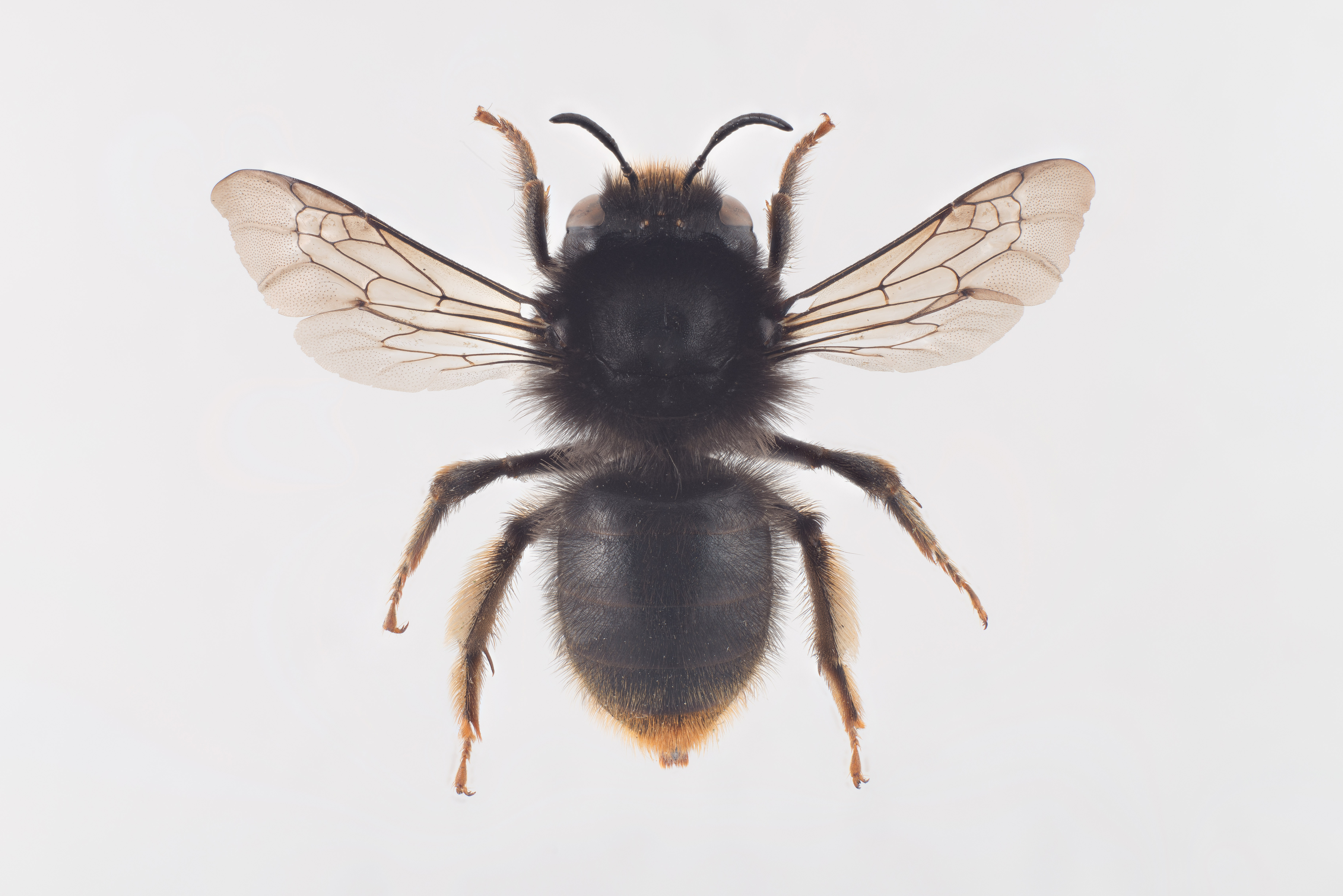
Anthophora furcata
Forked Flower BeeA medium-sized hairy bee (12–14 mm) that is unique among central European Anthophora for nesting in dead wood rather than in the ground. The female has brownish hair on the thorax and a black abdomen with a white tail brush. It shows a strong preference for Lamiaceae flowers, especially woundworts (Stachys), and flies from May to September in forests, forest edges, and orchards. Swiss Red List: Least Concern (LC).
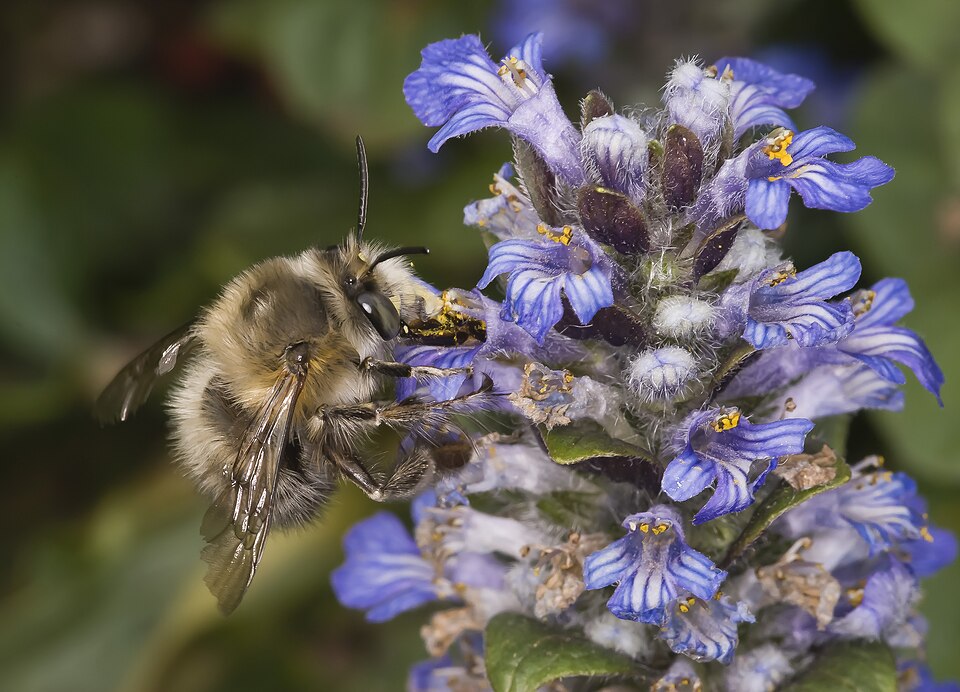
Anthophora plumipes
Hairy-footed Flower BeeOne of the largest solitary bees in Switzerland (14–15 mm) and the earliest spring Anthophora, its loud buzzy flight around lungwort, primroses, and blue cushions in March–April is a quintessential sign of spring. Males are unmistakeable with a bold yellow face and extremely long hairy fringes on the mid-tarsi (the 'hairy feet' that give the species its name). Females vary from dark grey-brown to entirely black, but always have a distinctive red-orange pollen brush (scopa) on the hind tibia and extendable tongue up to 21 mm long to reach nectar in deep flowers. It nests in self-dug burrows in steep loess and loam walls, dry stone walls, and old mortar-jointed buildings, often in large colonies of 150–300 nests. It is polyleptic but favours Boraginaceae, Lamiaceae, and Primulaceae. Its specialist brood parasite is Melecta albifrons (the Common Mourning Bee, also in this collection). In Switzerland it is the most common Anthophora, widespread from lowland gardens and parks up to 1350 m. Swiss Red List: Least Concern (LC).
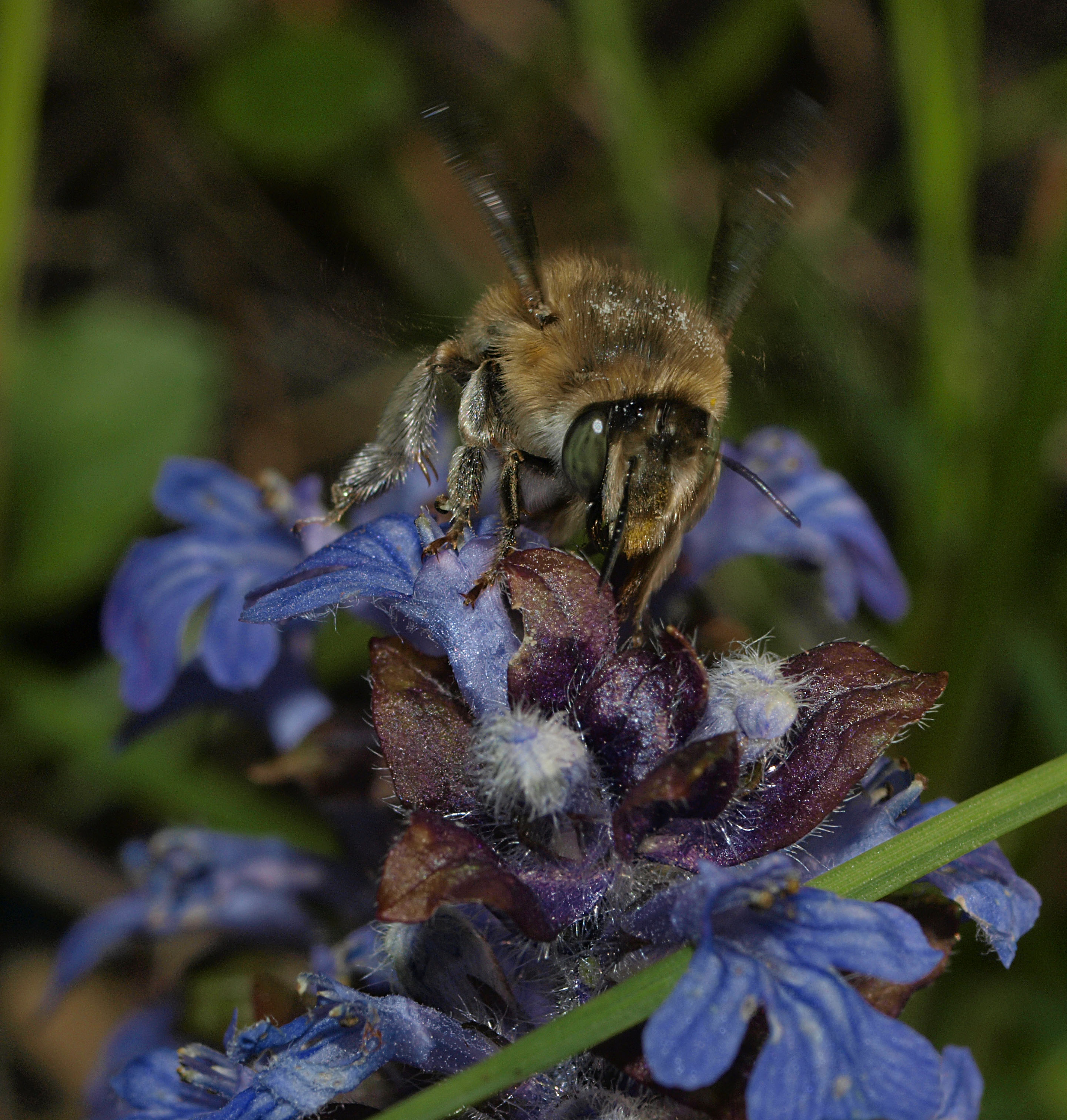
Anthophora quadrimaculata
Four-spotted Flower BeeA medium-sized flower bee (11–12 mm) with a uniformly brown-haired abdomen (without bands), a brown-haired thorax, and conspicuously greenish eyes. It is a generalist (polylectic) forager visiting flowers from at least 5 plant families, with a preference for Lamiaceae (dead-nettles, sage, catmint, woundworts). It nests in self-excavated burrows in steep loamy or sandy banks, loess walls, and mortar joints of old walls, often in small aggregations. It is univoltine, flying from May to September. In Switzerland it is moderately common in warm lowland areas, sand and clay pits, quarries, dry stone walls, vineyards, parks, and gardens. It is classified as near-threatened on the Swiss Red List. Its brood parasites are Thyreus orbatus and Coelioxys rufescens. Swiss Red List: Near Threatened (NT).
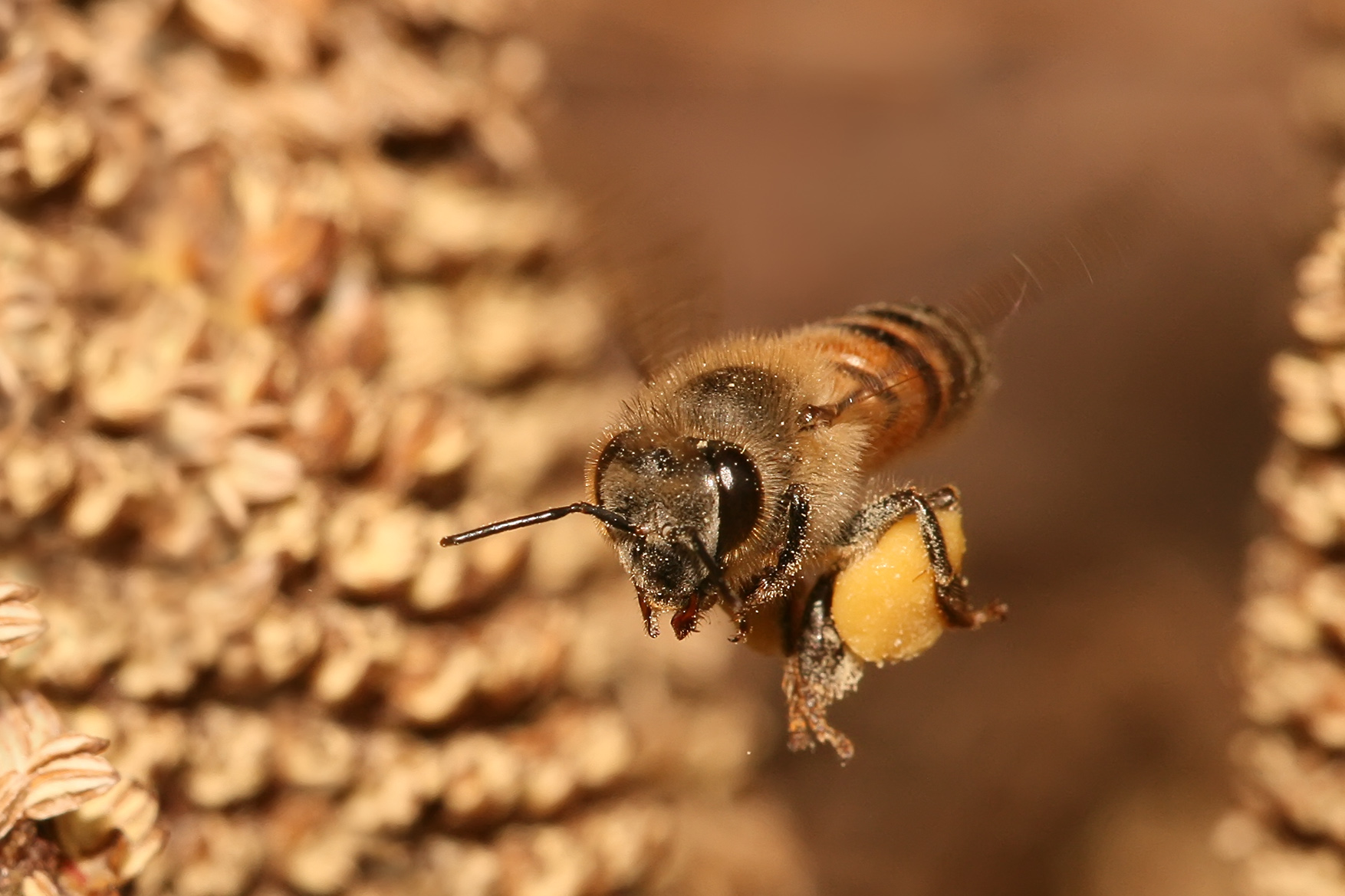
Apis mellifera
Western Honey BeeThe Western Honey Bee is the only highly eusocial bee in Central Europe, with perennial colonies consisting of a single queen, up to 80,000 workers, and seasonal drones. It nests in cavities such as hollow trees and rock crevices, building vertical wax combs. Widely kept by beekeepers across Switzerland, it also occurs in feral colonies in forests and buildings and is a generalist pollinator of immense agricultural and ecological significance. Swiss Red List: Not Evaluated (NE).
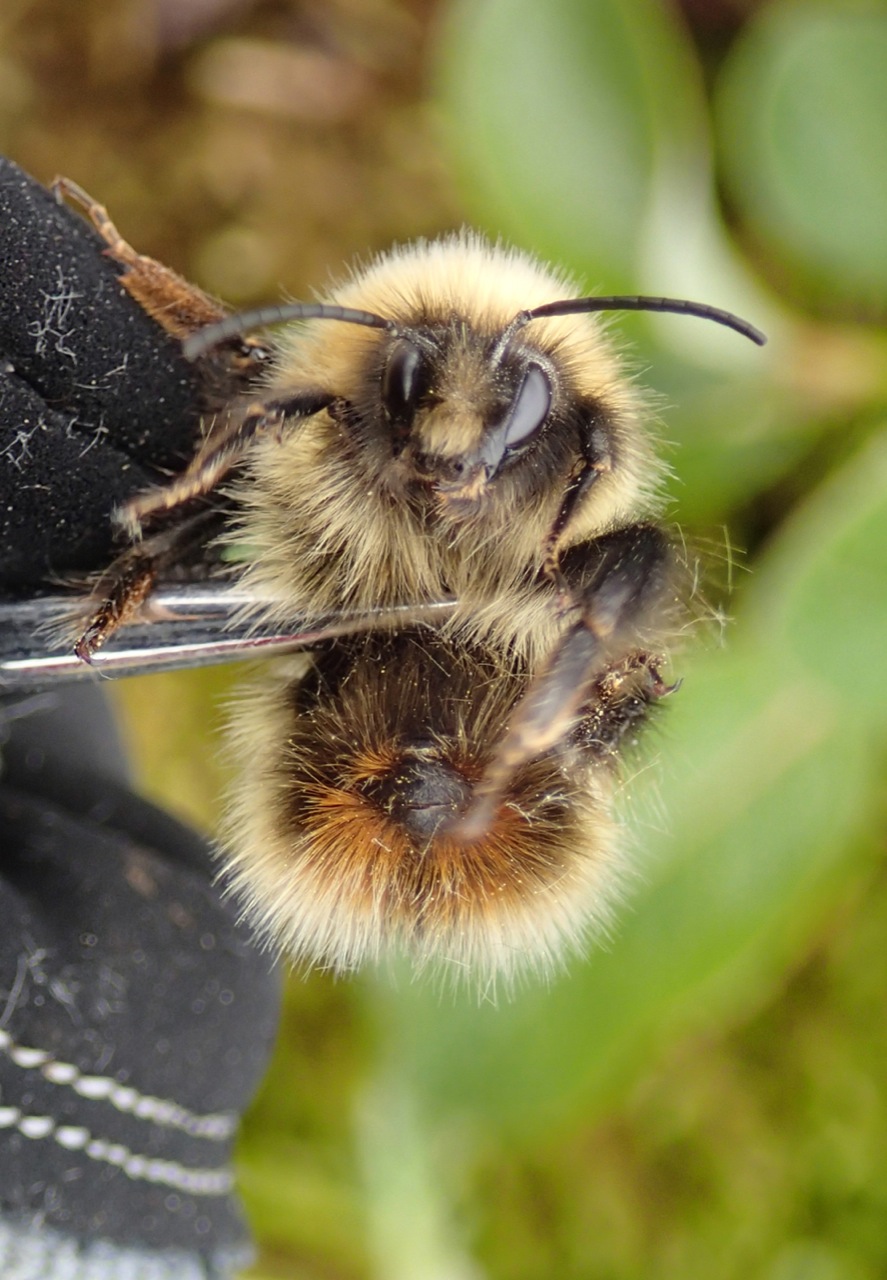
Bombus balteatus
Golden-belted BumblebeeA high-alpine bumblebee with a distinctive golden-yellow band across the thorax and a white tail, found above the treeline in the Alps. It has a circumpolar Arctic-alpine distribution. In Switzerland it occurs in alpine meadows and screes from about 1800 m to over 3000 m, foraging on a range of alpine flowers. It nests in abandoned rodent burrows or under rocks. Swiss Red List: Least Concern (LC).
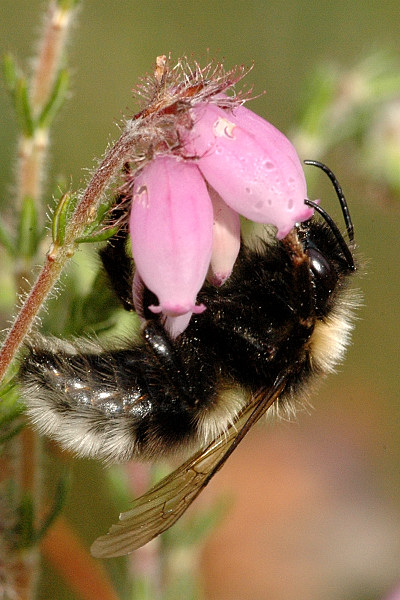
Bombus barbutellus
Barbut's Cuckoo BumblebeeA cuckoo bumblebee (16–17 mm) that parasitizes nests of garden bumblebees (Bombus hortorum) and similar species. The female has a pale yellow collar, a white tail, and lacks pollen baskets since it does not collect pollen for its young. It emerges in April to search for host nests, and males are seen from June to August visiting a variety of flowers for nectar. Swiss Red List: Least Concern (LC).
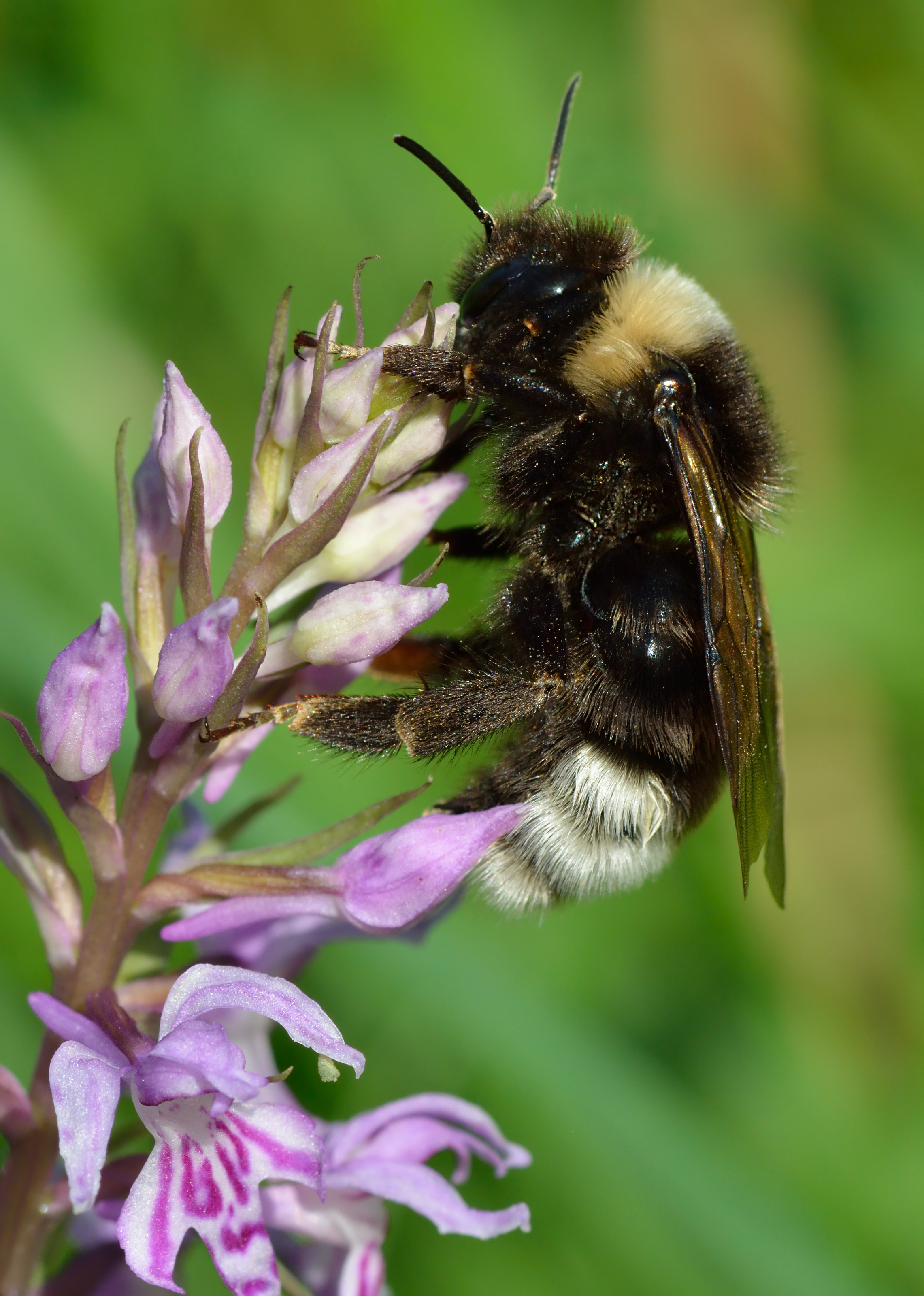
Bombus bohemicus
Gypsy Cuckoo BeeA cuckoo bumblebee that parasitises nests of the Bombus lucorum complex. It has no pollen-collecting apparatus and produces no workers; the female invades a host nest, kills the resident queen, and forces host workers to rear her offspring. It resembles its host but has a stouter body, darker wings, and more extensive yellow bands. In Switzerland it is common and widespread from lowlands to alpine elevations. Swiss Red List: Least Concern (LC).
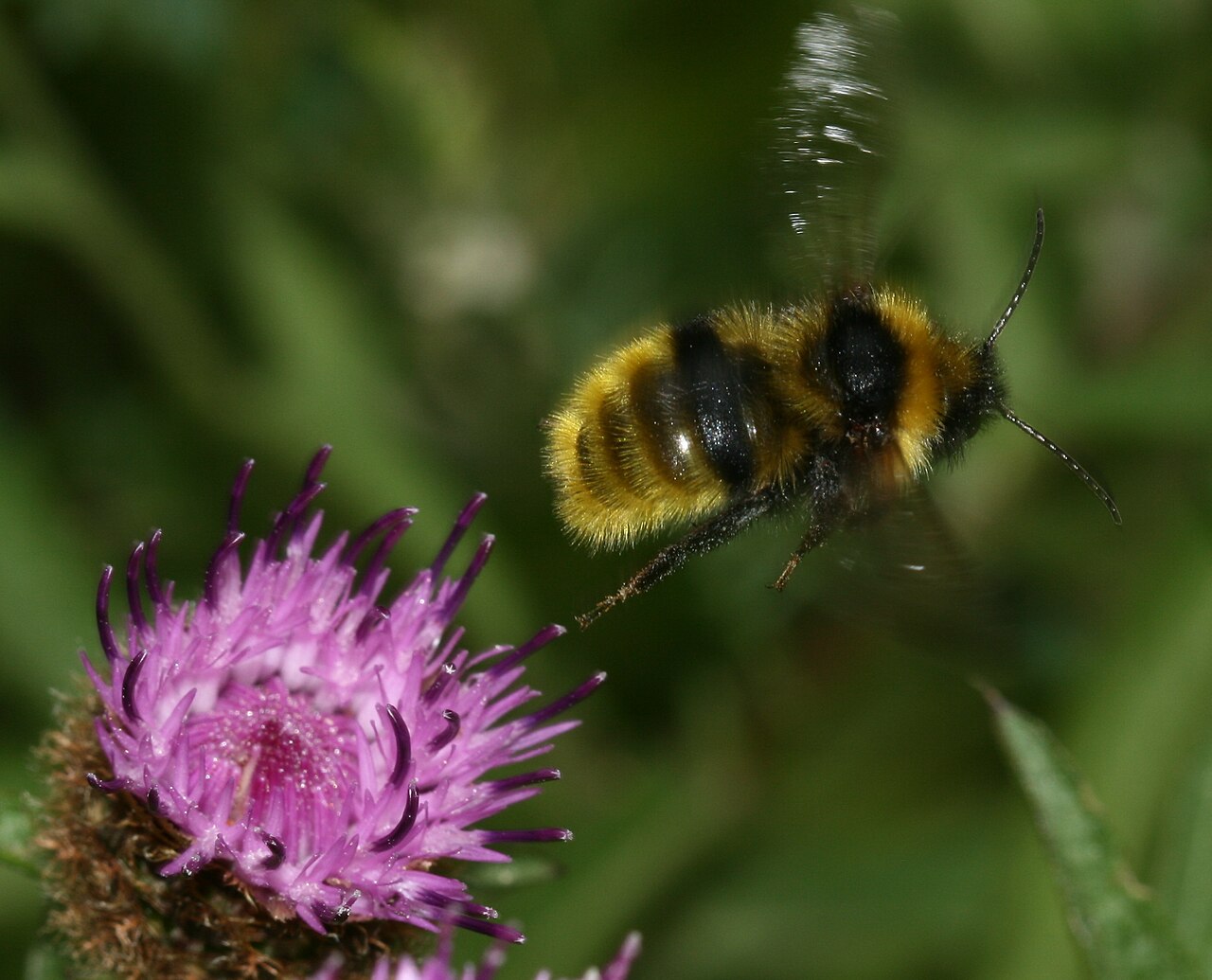
Bombus campestris
Field Cuckoo BumblebeeA medium-sized cuckoo bumblebee (15–18 mm) with no worker caste and no pollen-collecting apparatus. Females have a black body with two yellow bands (one at the front, one at the back of the thorax) and a yellowish tail, with dark-tinted wings. Males are more variable but generally similar. It is a brood parasite primarily of Bombus pascuorum (Common Carder Bee), and also of B. humilis, B. pratorum, B. ruderarius, and B. pomorum. It has a short tongue and feeds on thistles, scabious, knapweeds, and dandelions. Overwintered females appear from April, new females and males from July to September. In Switzerland it is widespread from lowlands to montane elevations in gardens, meadows, and open habitats wherever its hosts occur. Swiss Red List: Least Concern (LC).
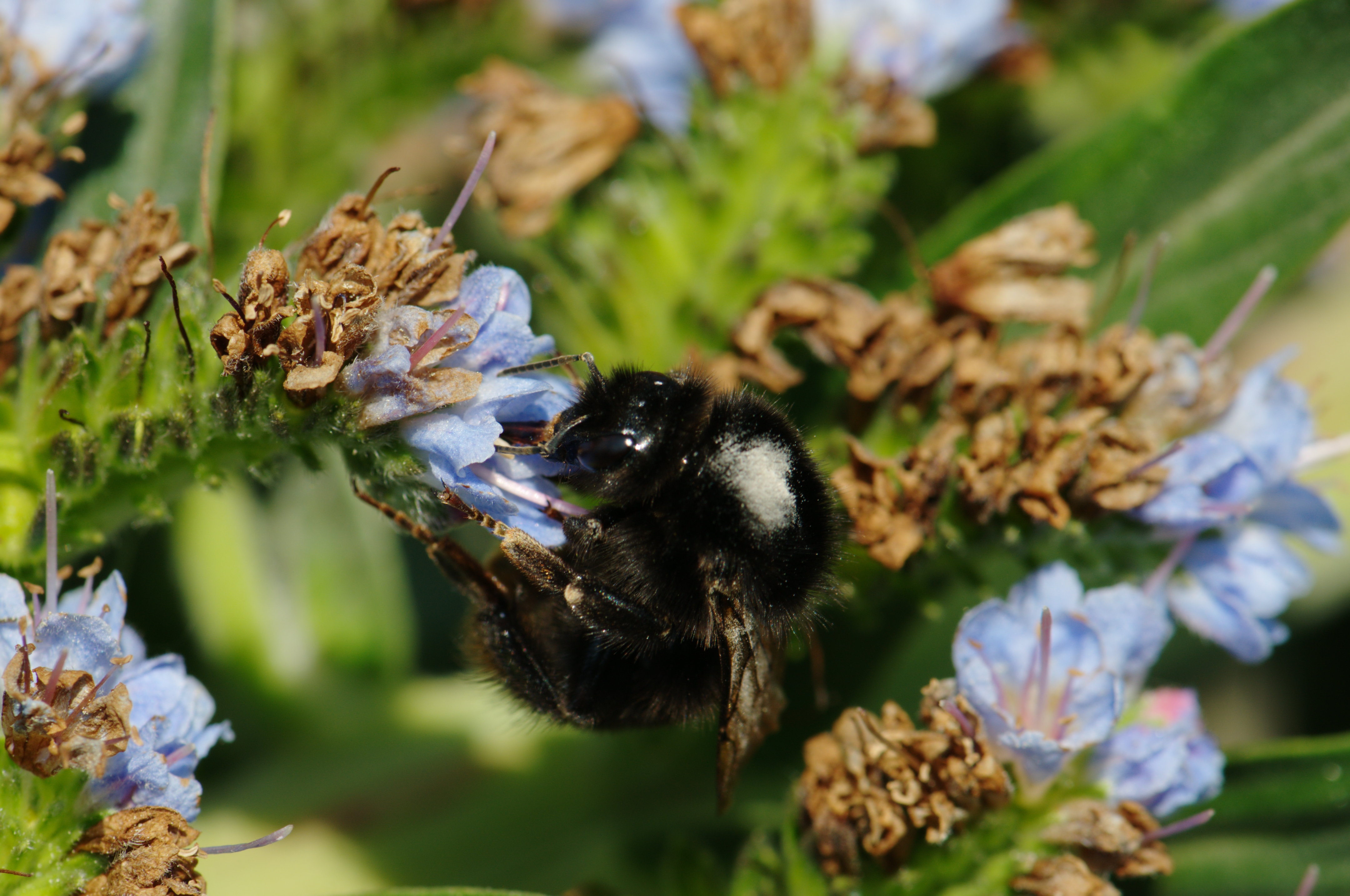
Bombus confusus
Confusing BumblebeeA medium-large bumblebee (12–20 mm) with velvety short black hair and an orange-red tail, resembling Bombus lapidarius but appearing later (from May). Males have conspicuously large compound eyes. It is a generalist forager found in warm, dry, flower-rich grasslands and ruderal areas. It nests underground in abandoned rodent burrows, forming small colonies. In Switzerland it is rare and declining due to habitat loss, confined to a few warm inner-alpine valleys. Swiss Red List: Regionally Extinct (RE).
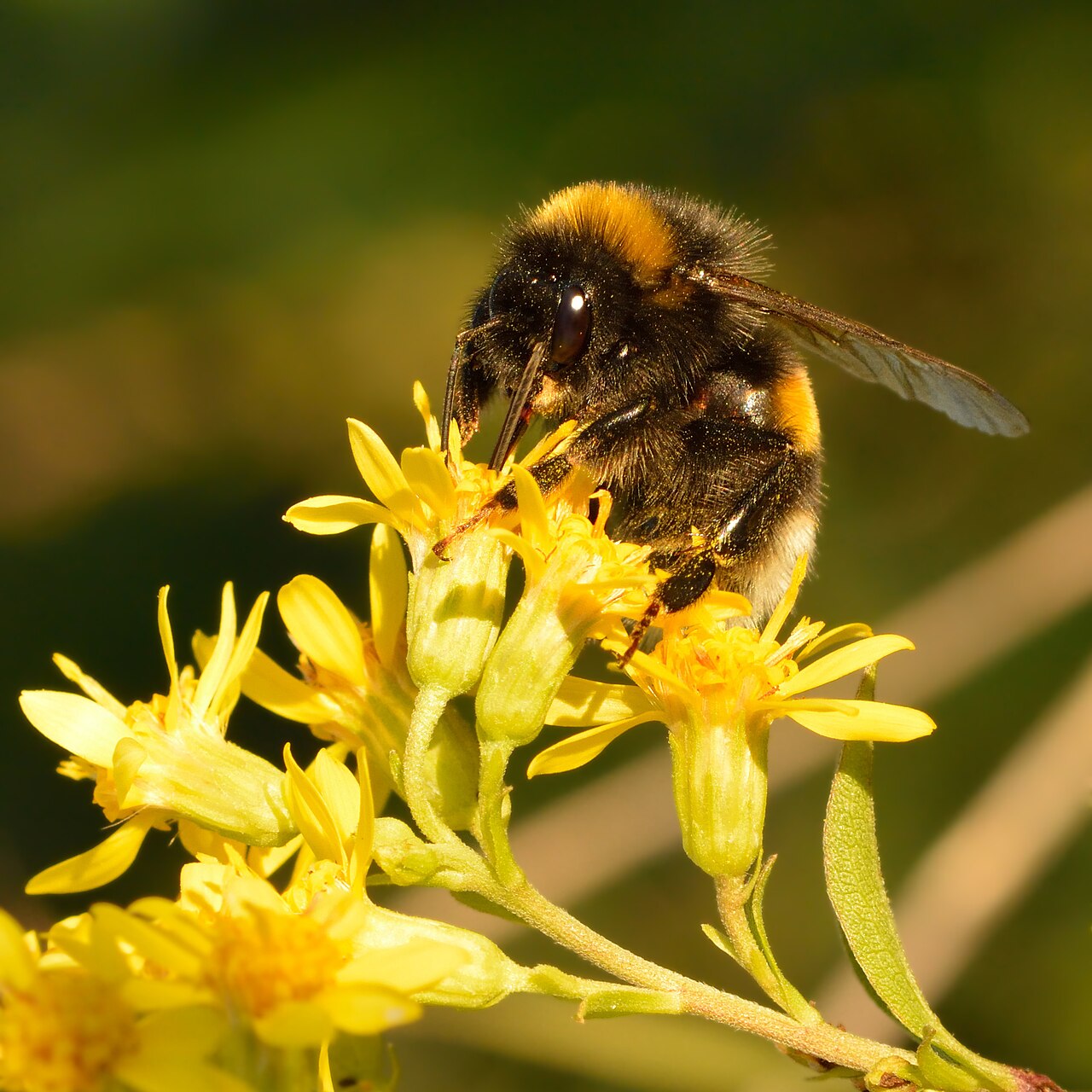
Bombus cryptarum
Cryptic BumblebeeA large bumblebee belonging to the Bombus lucorum complex, from which it was separated on the basis of genetic and chemical characters. It has a black body, two yellow bands (one on the thorax, one on the abdomen), and a white tail — extremely similar to B. lucorum. In northern areas it lives in heathland and moorland; in southern Europe it occurs in mountain habitats. In Switzerland it is part of the cryptic species complex and occurs in both lowland and alpine regions, often sympatric with Bombus lucorum and Bombus terrestris. It is a generalist forager visiting a wide range of flowers and nests underground in abandoned rodent burrows. Swiss Red List: Least Concern (LC).
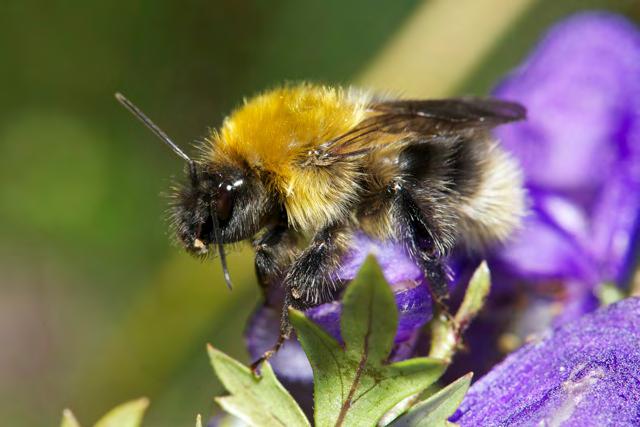
Bombus gerstaeckeri
Gerstaecker's BumblebeeA large montane bumblebee with a very long tongue, specialised almost exclusively on monkshood (Aconitum, Ranunculaceae). Queens (20–26 mm) have a yellowish-grey thorax, black abdominal band, and a white tail. It nests underground in abandoned rodent burrows or rock crevices, with colonies of up to 100 workers. In Switzerland it occurs in the Alps and Jura from 800 to 2500 m, foraging on Aconitum in mountain meadows and tall-herb communities. Swiss Red List: Least Concern (LC).
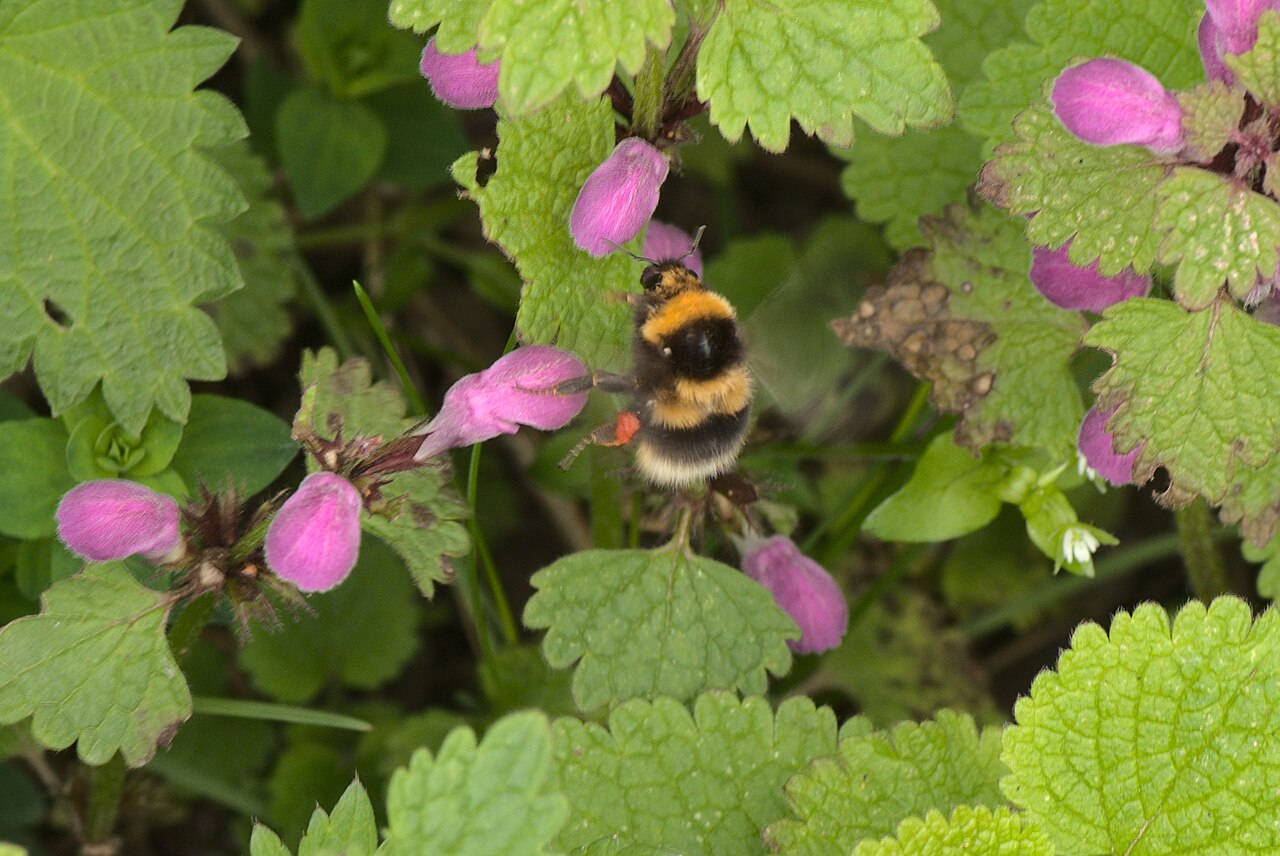
Bombus hortorum
Garden BumblebeeA large bumblebee with an exceptionally long tongue, enabling it to visit deep tubular flowers such as dead-nettles, clovers, vetches, and foxgloves. It has a characteristic banding pattern of yellow on the thorax and abdomen with a white tail. It nests in old mouse burrows, bird nests, or underground cavities. In Switzerland it is common from lowland gardens to alpine meadows. Swiss Red List: Least Concern (LC).
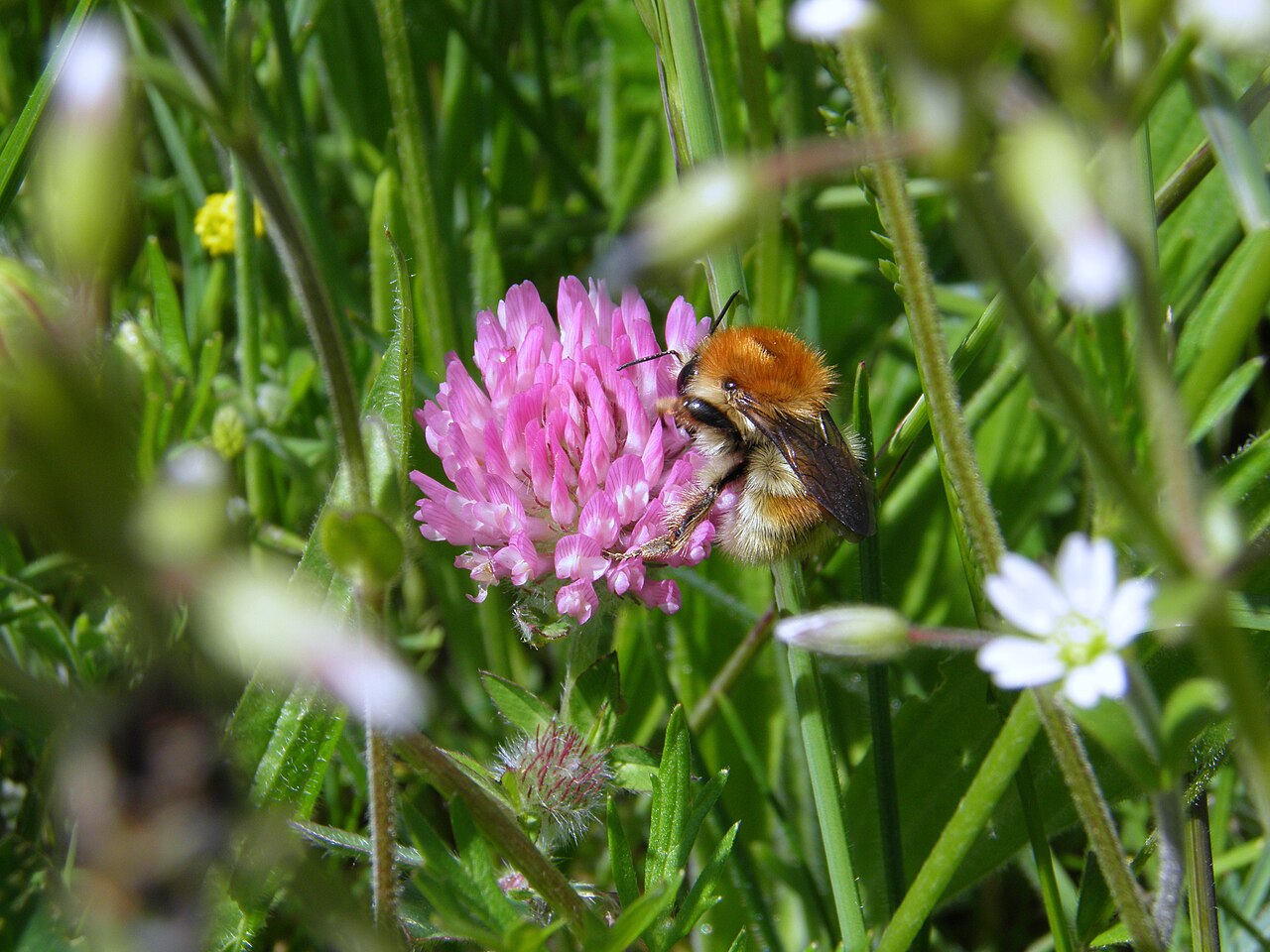
Bombus humilis
Brown-banded Carder BeeA medium-sized carder bee with a distinctive broad dark brown band across the front of the abdomen, though colouration is highly variable. The thorax is typically yellow-orange on top with beige flanks. It has a long tongue and favours deep flowers like clover and vetches. It nests above ground in grass tussocks and is found across Switzerland in species-rich meadows and grasslands. Swiss Red List: Least Concern (LC).
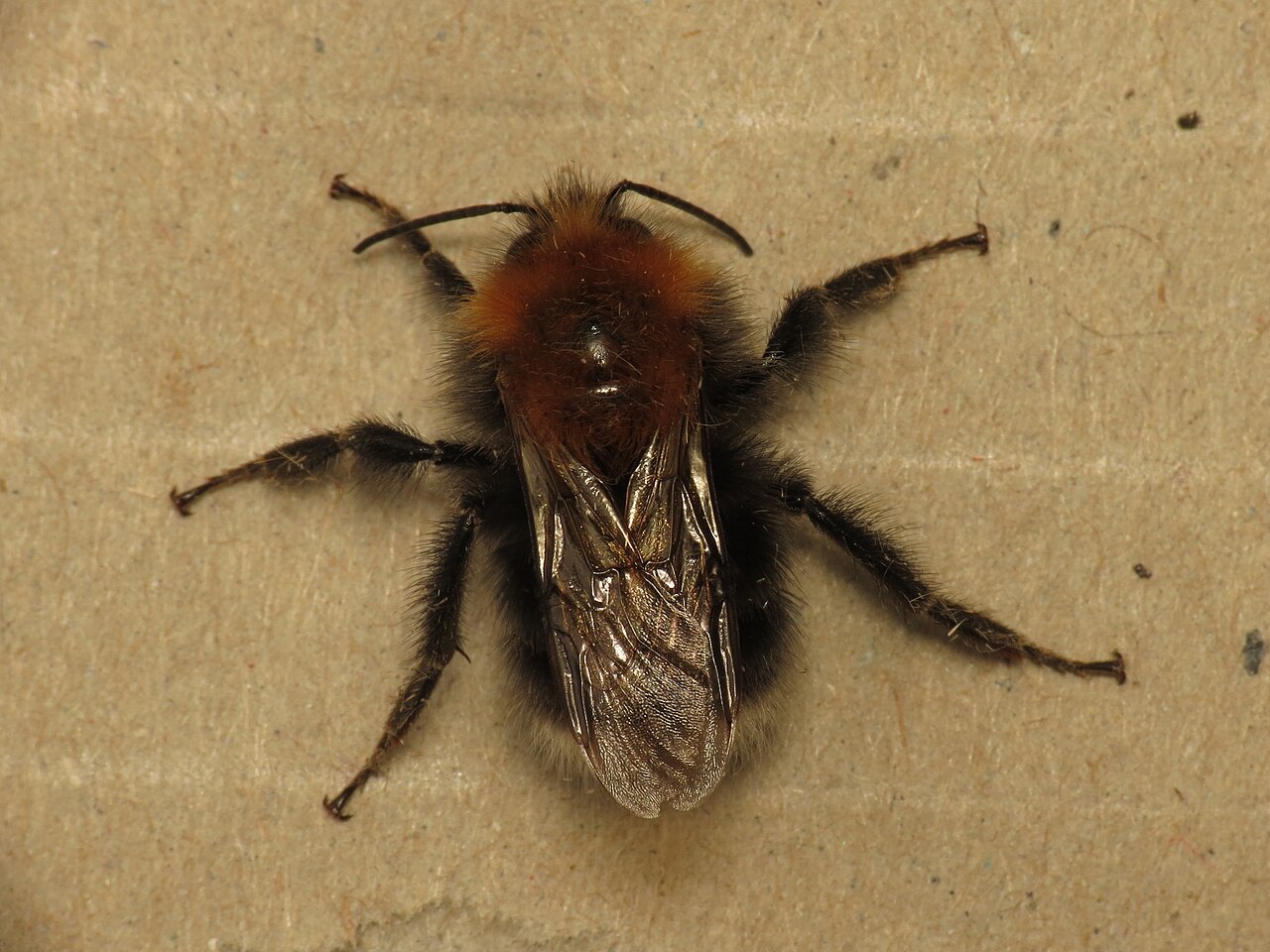
Bombus hypnorum
Tree BumblebeeA distinctive bumblebee with a ginger-brown thorax, black abdomen, and white tail. It nests exclusively above ground in cavities such as old bird nests, tree holes, roof spaces, and nest boxes, often in urban settings. Colonies can reach 400 workers. It is a common and expanding species in Switzerland, found from lowland gardens up to montane elevations, visiting a wide range of flowers. Swiss Red List: Least Concern (LC).
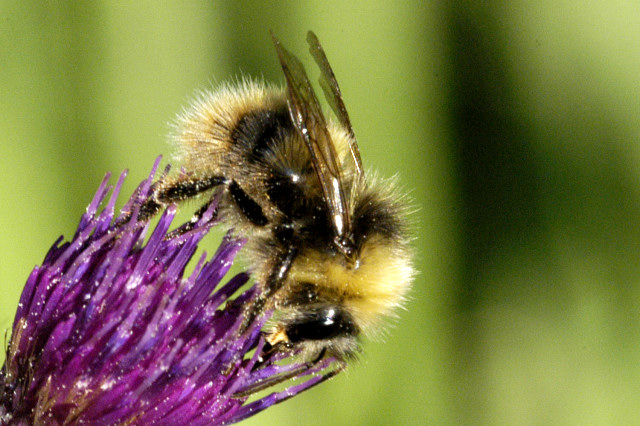
Bombus jonellus
Heath BumblebeeA small bumblebee with three yellow bands and a white tail, closely resembling the Garden Bumblebee but smaller and with a shorter tongue. It prefers heathland, moorland, and mountain habitats, foraging on heathers, bilberry, and Vaccinium species. It nests above ground in old bird nests, under moss, or in grass tussocks. In Switzerland it occurs locally in alpine and subalpine regions as well as moorland areas. Swiss Red List: Least Concern (LC).
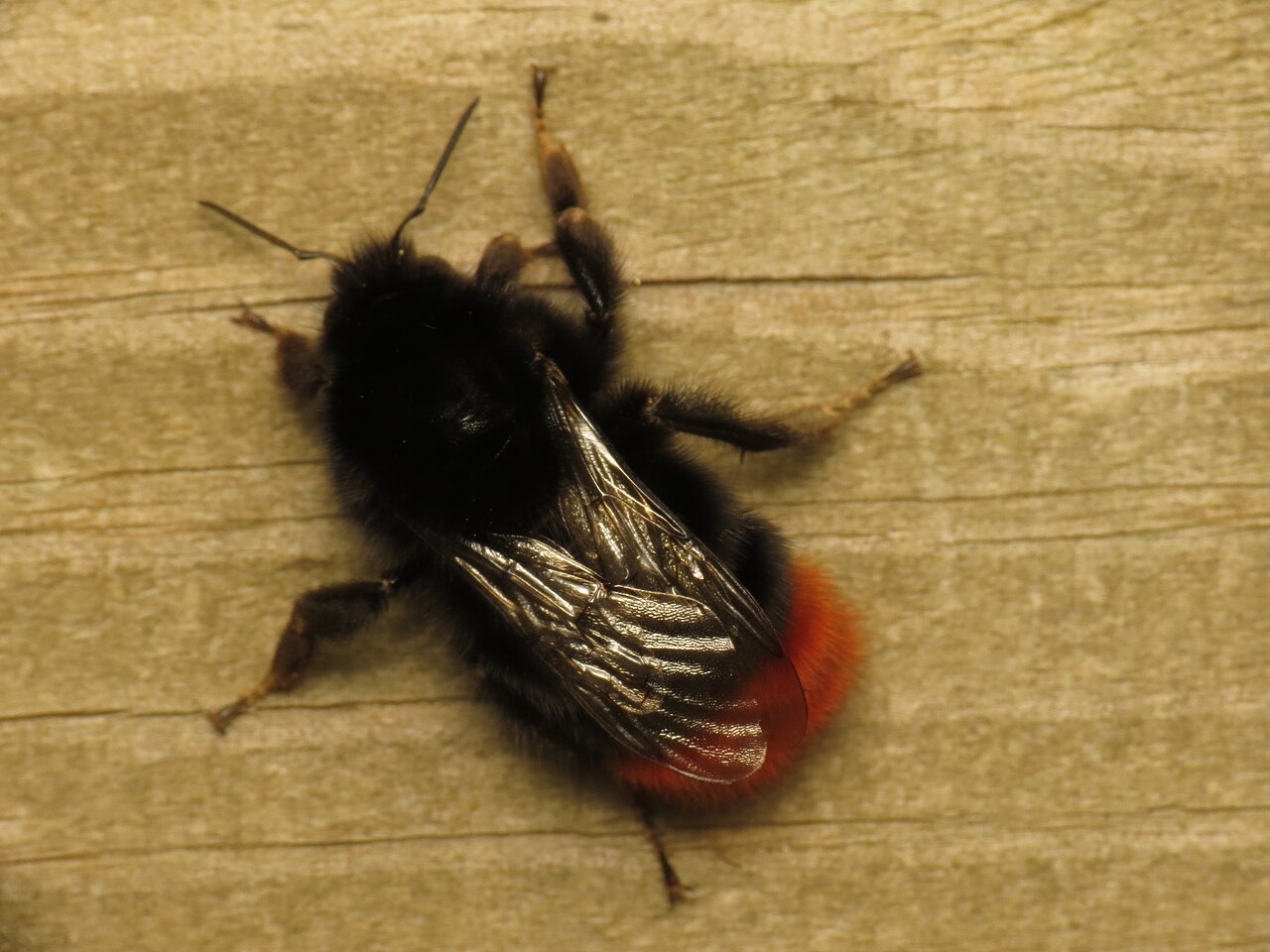
Bombus lapidarius
Red-tailed BumblebeeA large, distinctive bumblebee with a velvety black body and a bright orange-red tail. Queens (20–22 mm) emerge early in spring and establish colonies of up to 300 workers in cavities underground, typically under stones, in old rodent burrows, or at the base of dry stone walls — the species name 'lapidarius' means 'dwelling among stones'. Males are smaller with yellow facial hair and faint yellow bands on the thorax. One of the 'Big Eight' common bumblebees across Europe, it is widespread in Switzerland from lowland gardens and parks up to alpine meadows at 2400 m. It has a medium-length tongue and visits a wide range of flowers including dandelions, knapweeds, clovers, thyme, and lavender. The cuckoo bumblebee Bombus rupestris is its specialist brood parasite. In Swiss cities such as Zurich it is very common and widely distributed in gardens, parks, orchards, and ruderal areas. Swiss Red List: Least Concern (LC).
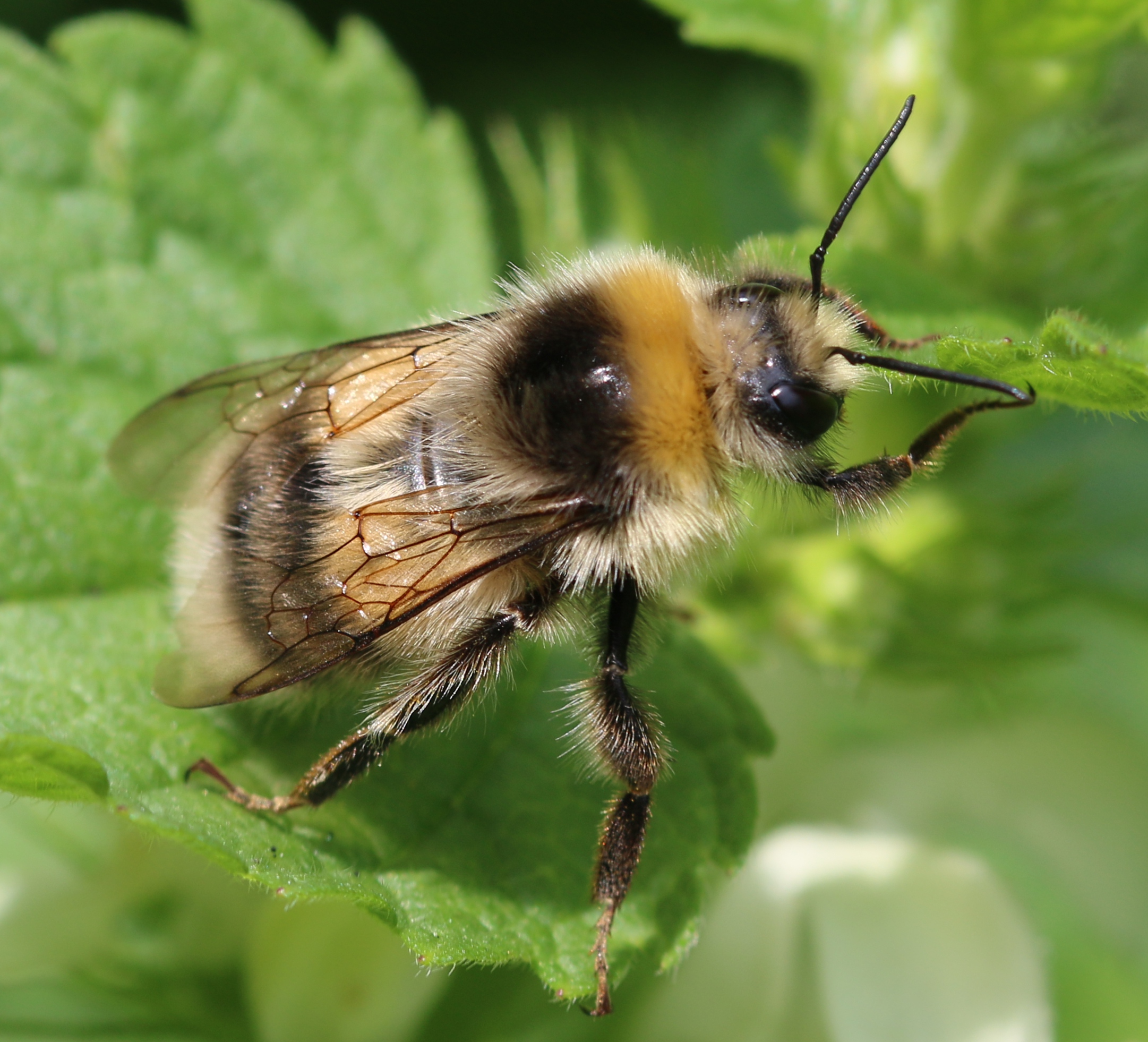
Bombus lucorum
White-tailed BumblebeeA large, early-flying bumblebee belonging to the Bombus lucorum complex, with a black body, a bright yellow collar and thoracic band, and a white tail. Queens emerge as early as February and establish underground colonies in abandoned rodent burrows. It is one of the most common bumblebees across Switzerland from lowlands to over 2500 m in the Alps. A generalist forager visiting a vast range of flowers, it is parasitised by Bombus bohemicus. Swiss Red List: Least Concern (LC).
Bombus mesomelas
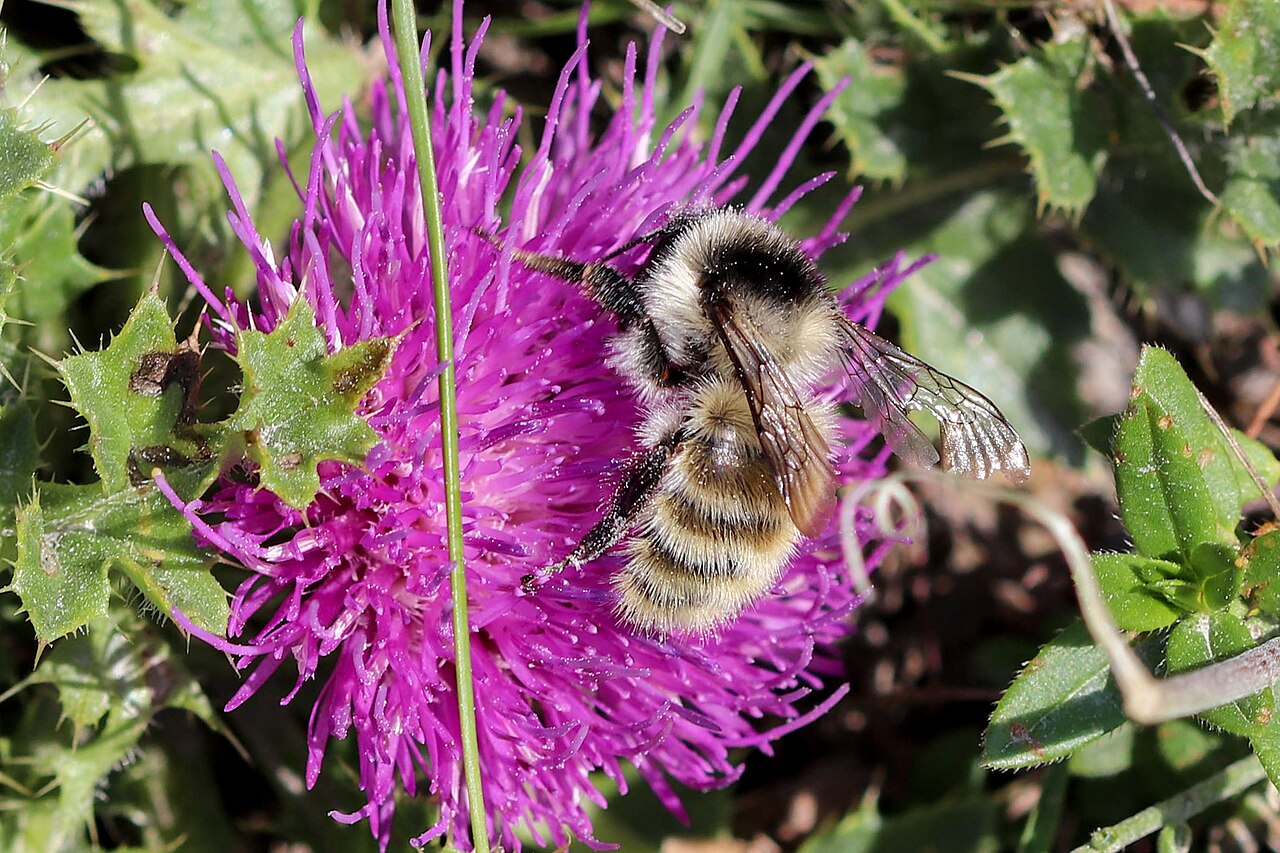
Mountain BumblebeeA medium-sized alpine bumblebee with a distinctive colour pattern: the thorax is entirely orange-brown and the abdomen is black with an orange-brown tip. It has a relatively short tongue. It occurs in montane to alpine meadows in the Alps and Jura from 1000 to 2800 m, foraging on bilberry, clovers, and thistles. It nests underground in abandoned rodent burrows, forming small colonies. In Switzerland it is locally common in suitable high-elevation habitats and classified as Least Concern. Swiss Red List: Least Concern (LC).
Bombus monticola
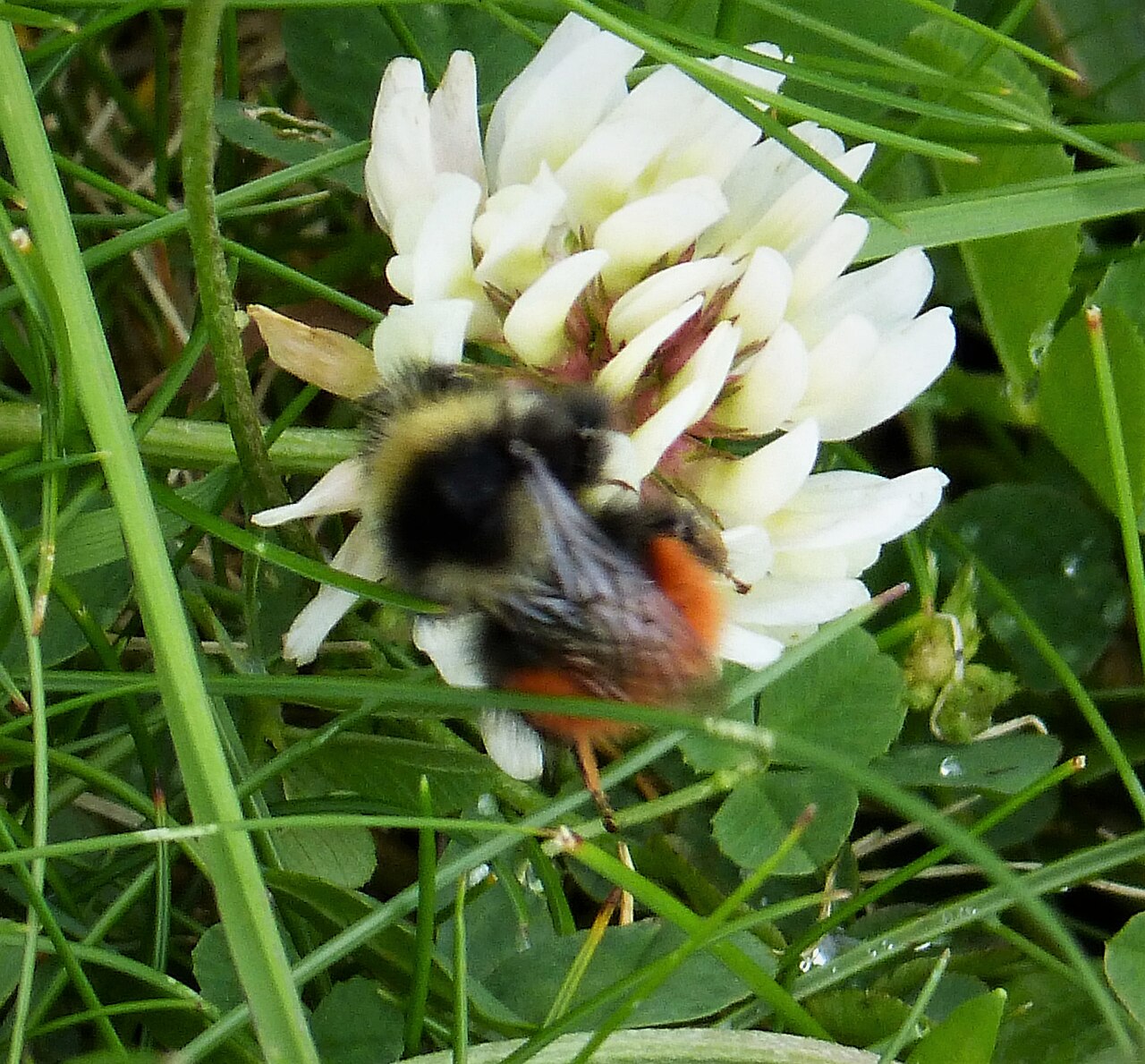
Bilberry BumblebeeA small, compact mountain bumblebee with a broad head and short tongue. Queens (up to 16 mm) have a black thorax with a yellow collar and scutellum edge, a black first tergite, and a yellow to orange-red abdomen tip. It is a boreo-alpine species found in high-elevation habitats. In Switzerland it occurs in the Alps from about 1500 m to over 2500 m in alpine meadows, foraging on bilberries (Vaccinium), clovers, and asters. It nests underground in abandoned small mammal burrows, forming small colonies of fewer than 50 workers. It is parasitised by Bombus sylvestris. Swiss Red List: Least Concern (LC).
Bombus muscorum
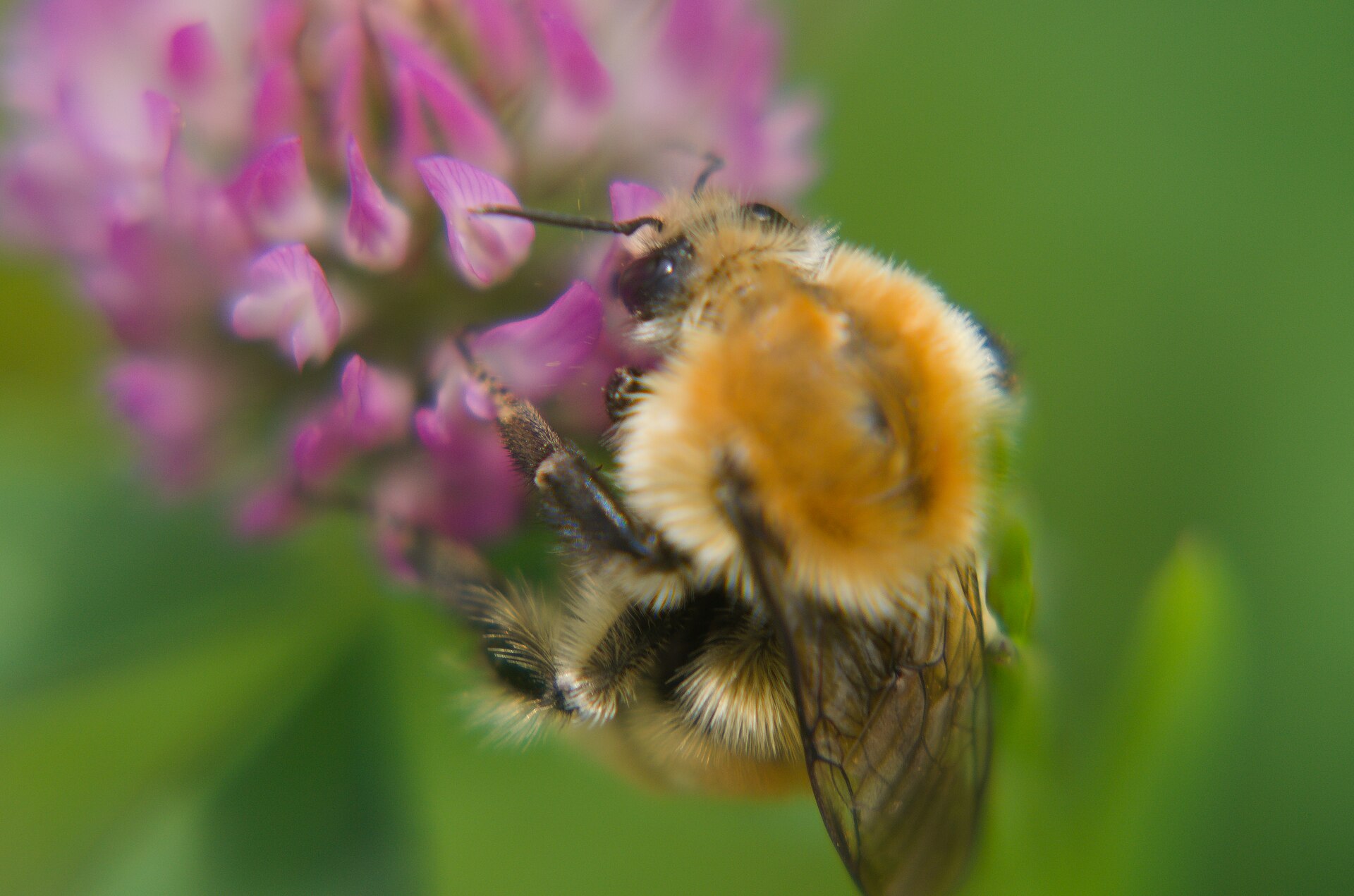
Moss Carder BeeA medium-sized carder bumblebee (14–18 mm) with uniformly orange-brown hair covering the entire body, lacking dark bands — one of the most distinctive bumblebee colourations. It has a long tongue and favours deep flowers like clovers and vetches. It nests above ground in grass tussocks or moss, carding nesting material together. Colonies have 50–120 workers. In Switzerland it is endangered (EN), practically confined to fen meadows and extensively managed wet grasslands, with strongholds in a few valleys.
Bombus pascuorum
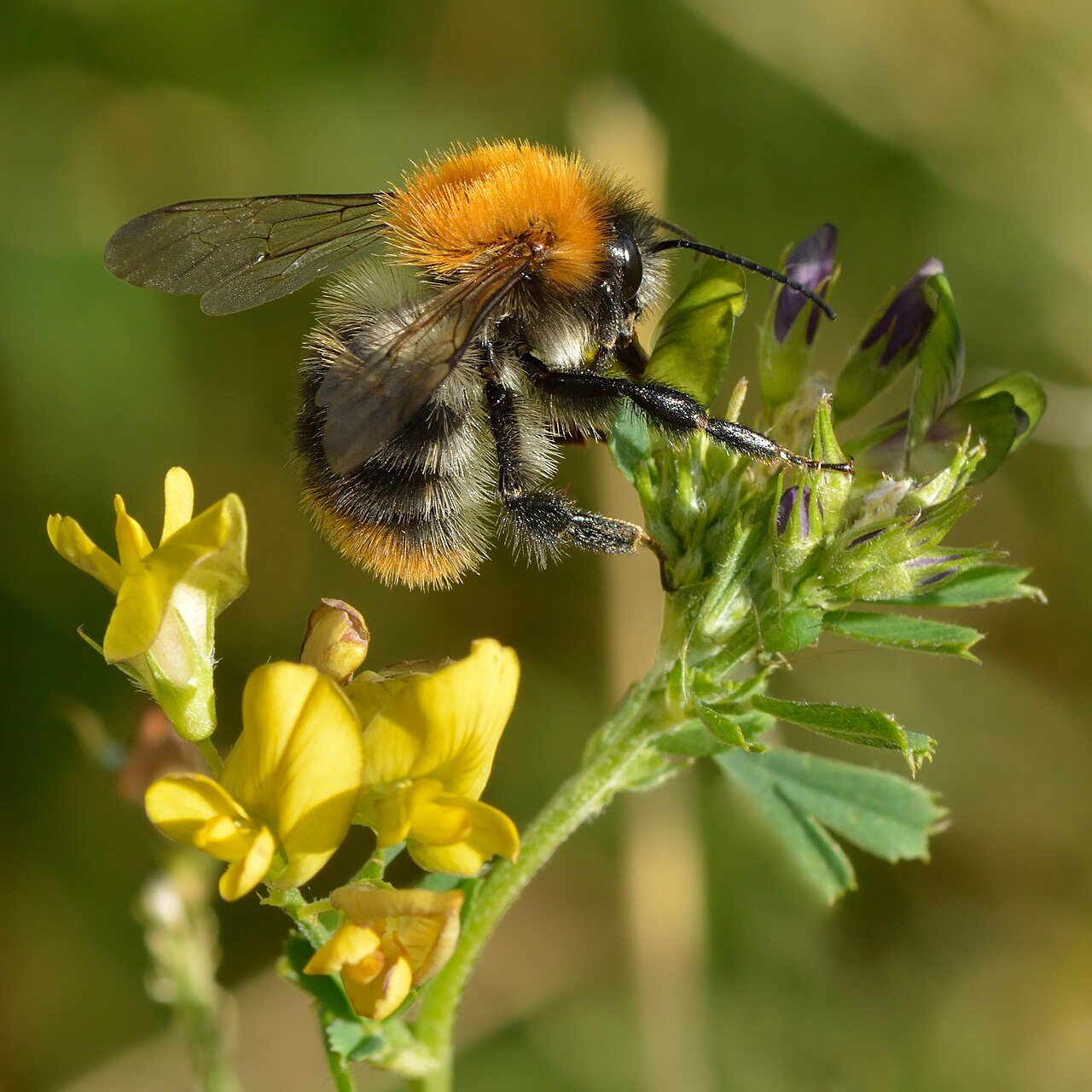
Common Carder BeeThe Common Carder Bee is one of the most widespread and frequently encountered bumblebees in Switzerland. It has a distinctive ginger-brown thorax and a greyish-brown abdomen with a variable dark band, though coloration varies greatly. It has a notably long tongue and favours deep flowers like dead-nettles, clovers, and vetches. Its nest is built on or near the ground surface in grass tussocks, moss cushions, or abandoned small mammal nests, roofed with gathered grass and moss. Colonies are modest with 30–130 individuals. It has an exceptionally long flight period lasting from March well into November, visiting a vast range of flowers. It is parasitised by the cuckoo bumblebee Bombus campestris. In Switzerland it is found from lowland gardens and parks up to alpine meadows. Swiss Red List: Least Concern (LC).
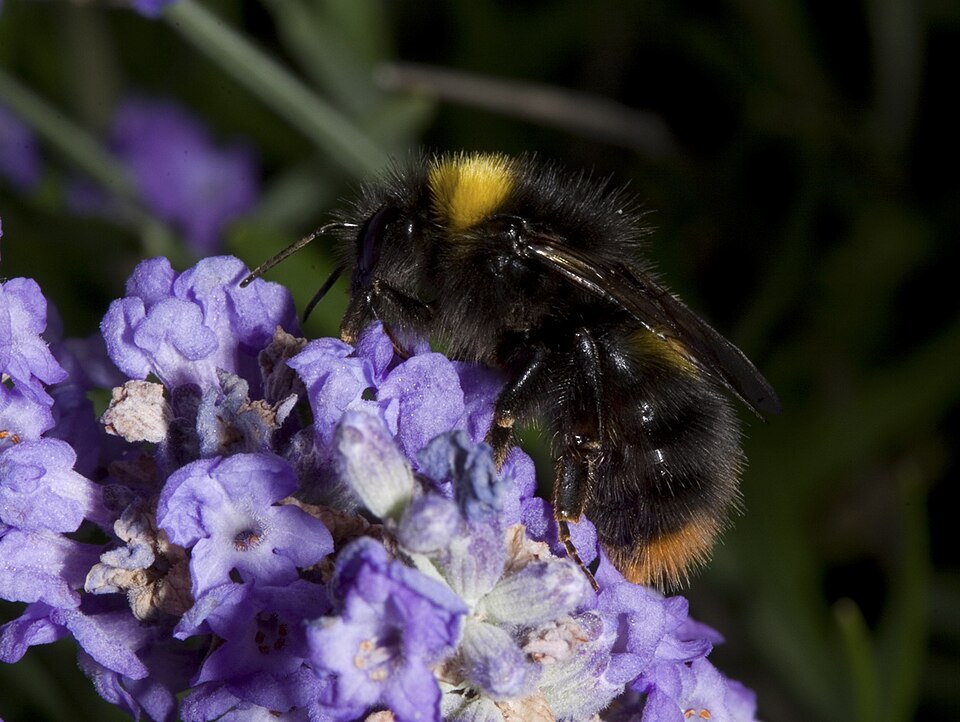
Bombus pratorum
Early BumblebeeA small, early-flying bumblebee with a distinctive orange-red tail, a yellow collar, and a yellow band on the abdomen. It is the first bumblebee to establish colonies in spring, with workers appearing from early April. It has a short colony cycle and nests above ground in grass tussocks, bird nests, wall cavities, and nest boxes. One of the most common bumblebees in Swiss gardens, parks, and meadows from lowlands to 2300 m. Swiss Red List: Least Concern (LC).
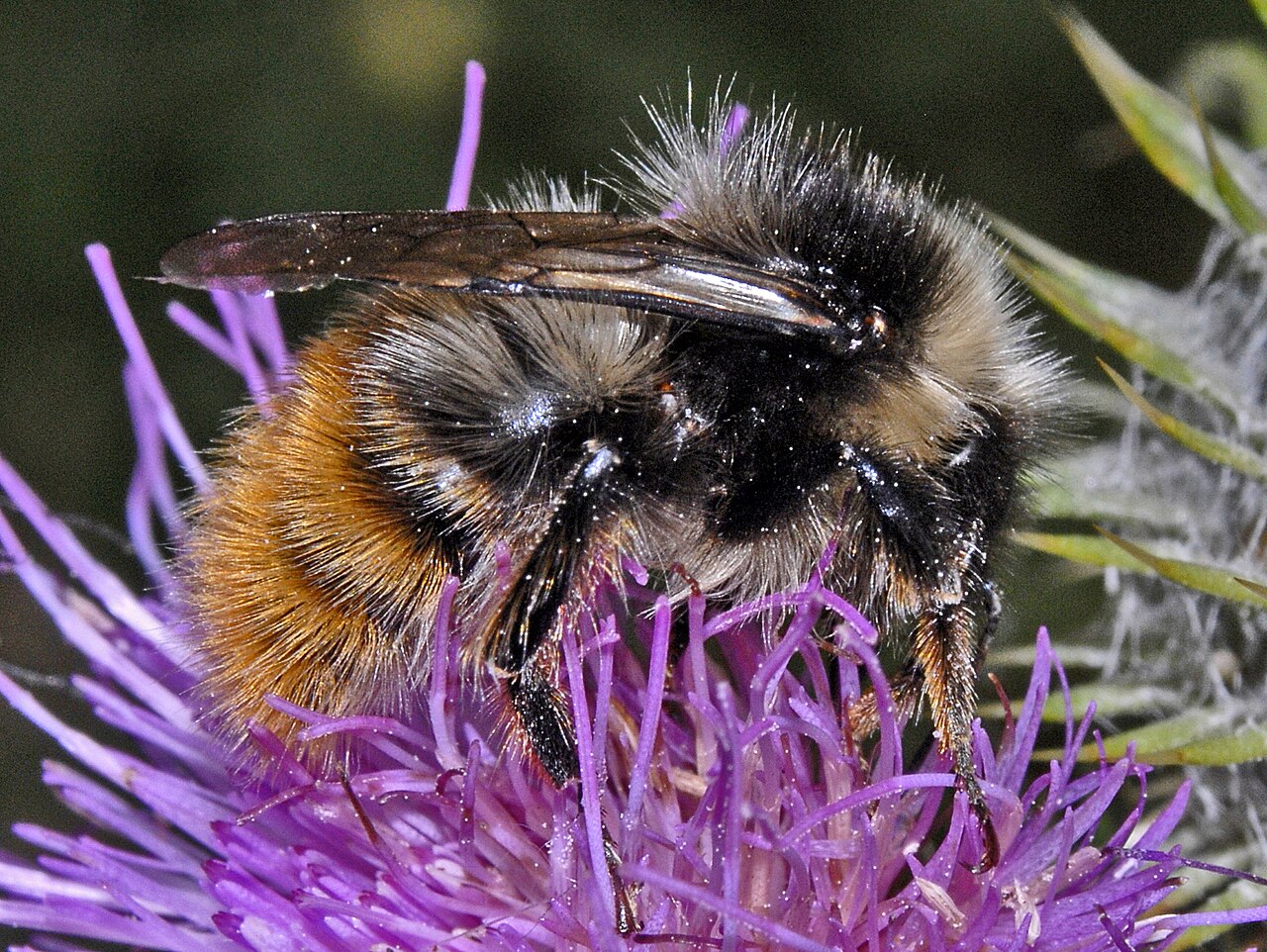
Bombus pyrenaeus
Pyrenean BumblebeeA small alpine bumblebee (10–15 mm) with a black body, yellow collar and scutellum, and a white tail. It has a short face and tongue. It occurs at high elevations (1500–3000 m) in the Alps, foraging on alpine flowers such as thyme, clovers, and asters. It nests underground in abandoned rodent burrows, with small colonies of fewer than 60 workers. In Switzerland it is locally common in alpine meadows above treeline and is classified as Least Concern. Swiss Red List: Least Concern (LC).
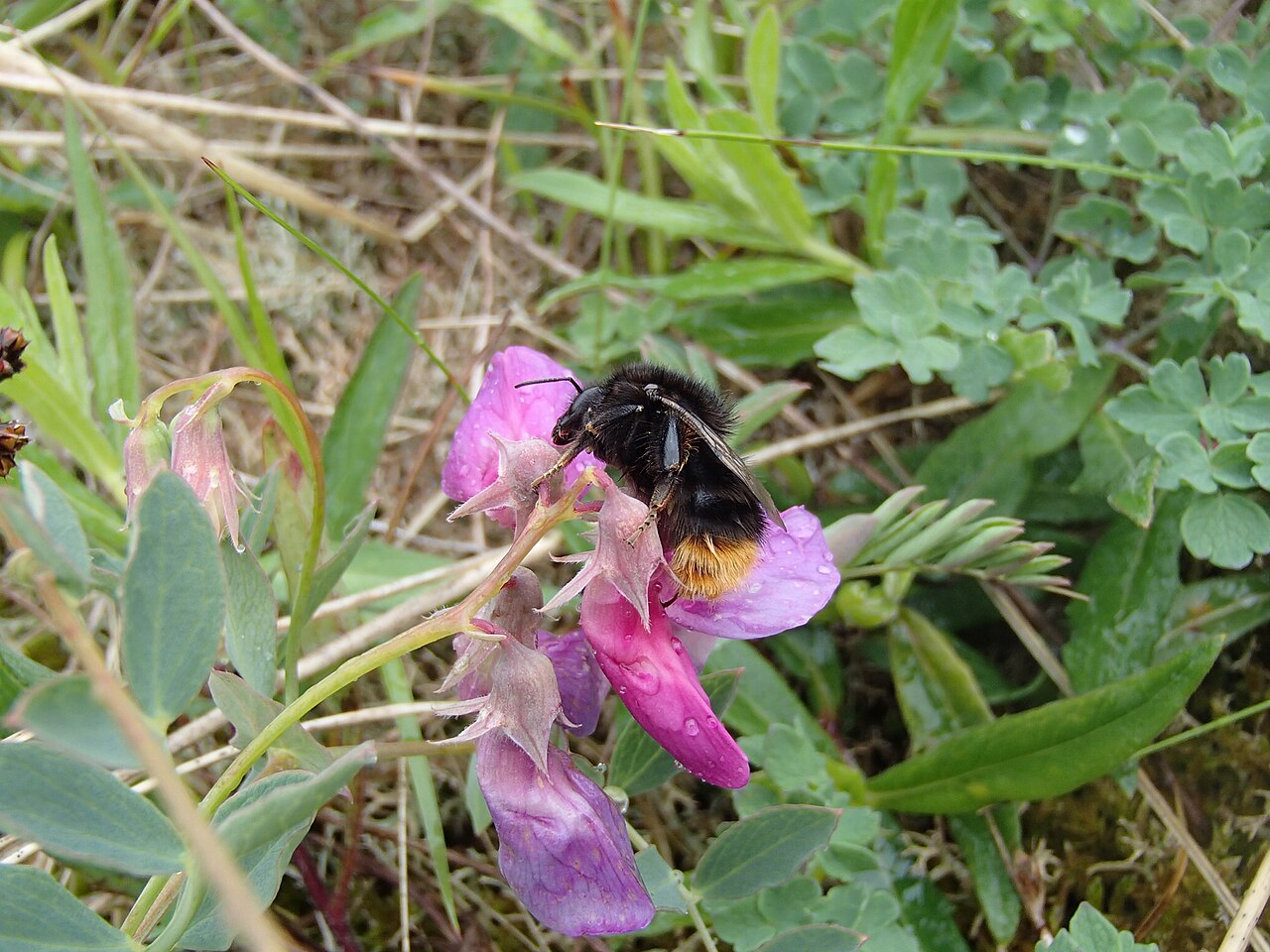
Bombus ruderarius
Red-shanked Carder BeeA medium-sized carder bumblebee (14–17 mm) with a black body, a bright orange-red tail, and distinctive orange-red hairs on the hind leg pollen basket (corbicula), which distinguishes it from the similar Bombus lapidarius which has black corbicular hairs. The face and tongue are relatively long. It nests on or just below ground level in grass tussocks or moss, carding together nesting material. Colonies have 50–100 workers. It forages on clovers, vetches, dead-nettles, and other deep flowers. In Switzerland it occurs in flower-rich meadows, grasslands, and gardens from lowlands to montane elevations, but has declined due to agricultural intensification. A nest was documented near Splügen (Grisons) at 1750 m. Swiss Red List: Least Concern (LC).
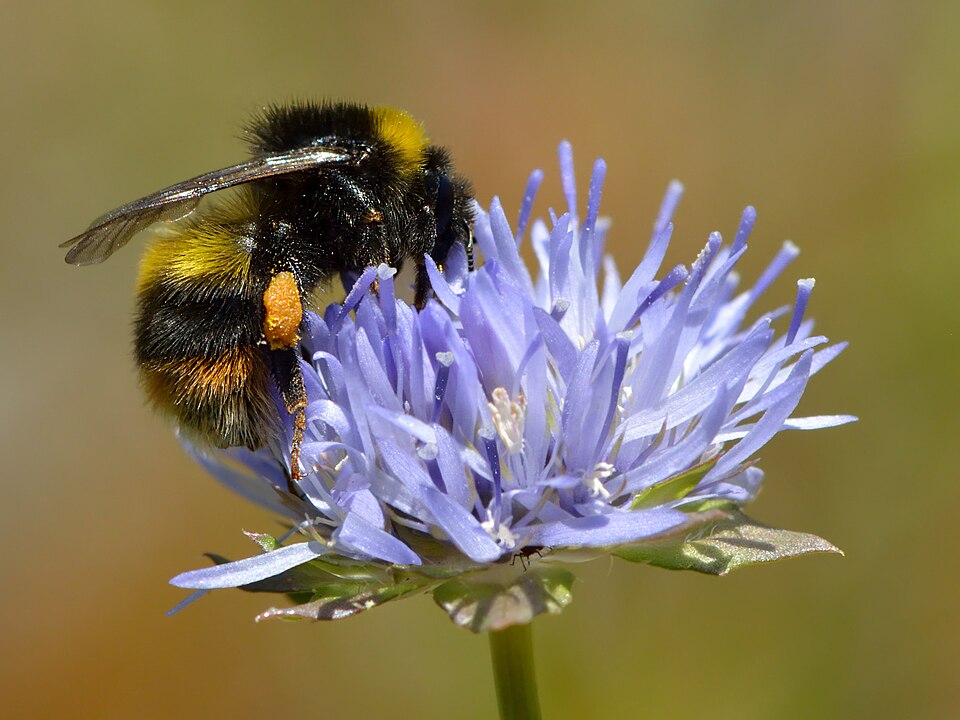
Bombus soroeensis
Broken-belted BumblebeeA small bumblebee (14–16 mm) with a relatively oblong face and medium-length tongue. The body is black with two yellow bands (collar and second tergite), with the abdominal band often interrupted by black hairs in the middle, giving it the broken-belted appearance. The tail is white, often mixed with orange-yellow hairs. It nests underground in abandoned rodent burrows, with colonies of 80–150 workers. It favours grasslands, heaths, and mountain meadows, foraging on clovers, harebell, scabious, and bird's-foot trefoil. In Switzerland it occurs in the Alps and Jura mountains in montane to alpine meadows, found from about 1000 m to over 2500 m. Swiss Red List: Least Concern (LC).
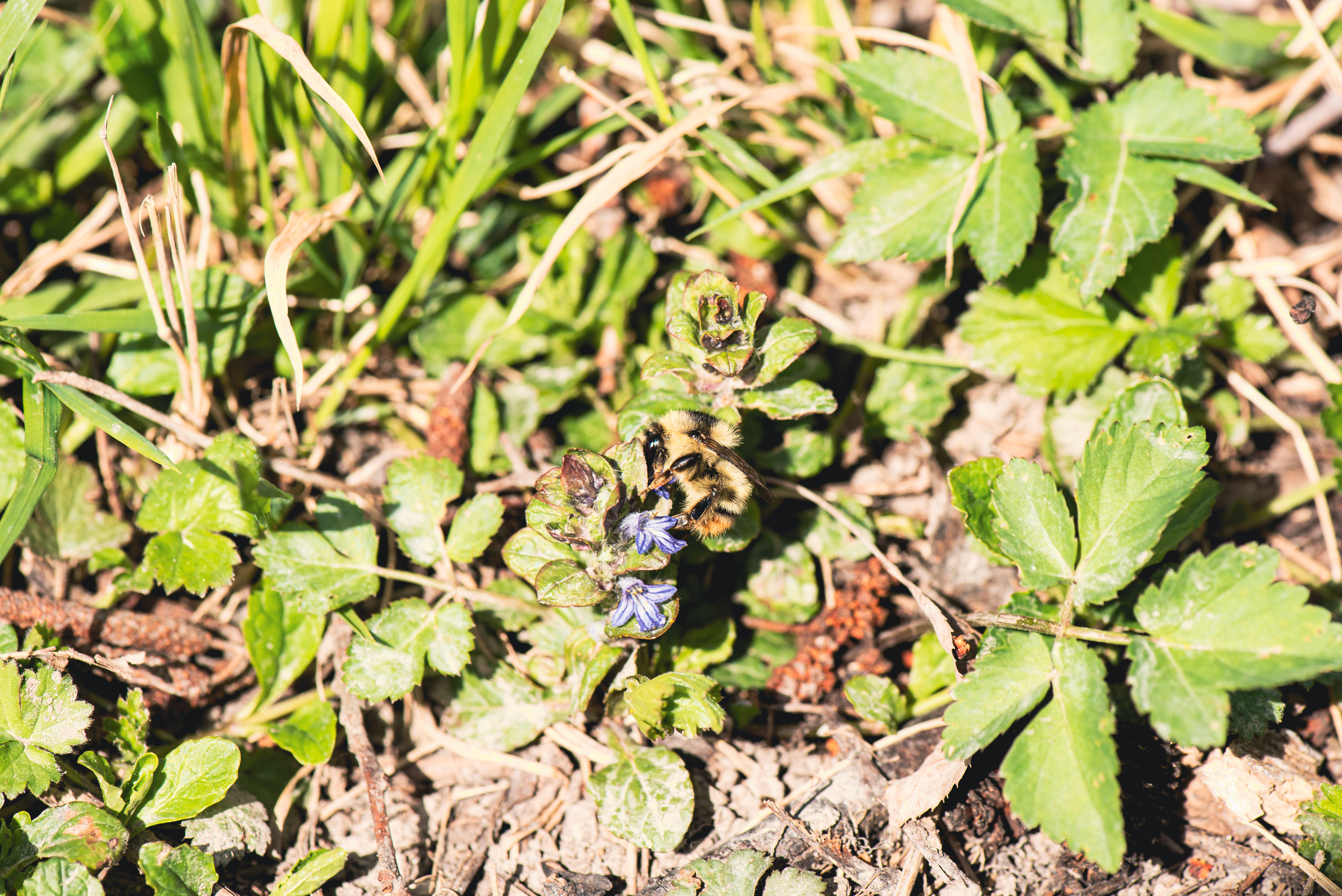
Bombus sylvarum
Shrill Carder BeeA medium-sized, distinctively coloured bumblebee with a mix of yellow, brown, and orange hairs on the thorax, a dark band across the back, and an orange-red tail. It has a long tongue and favours deep flowers like clovers and vetches. It nests both above and below ground in grass tussocks, moss, or old rodent burrows. In Switzerland it occurs in species-rich meadows and grasslands up to 1400 m, but is classified as vulnerable due to habitat loss.
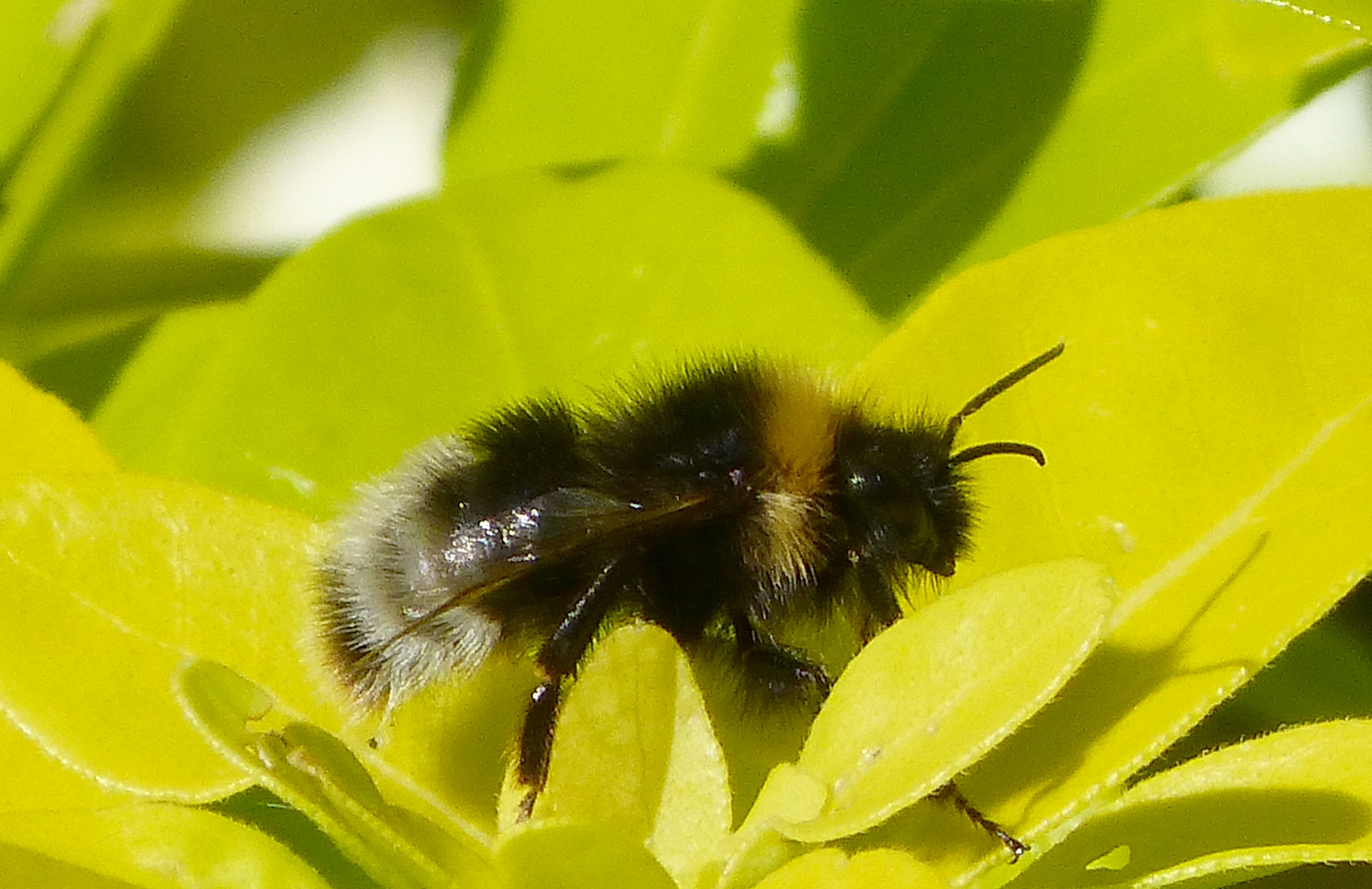
Bombus sylvestris
Forest Cuckoo BumblebeeA medium-sized cuckoo bumblebee (12–16 mm) with a black body, bright yellow collar and shoulder patches, white tail, and noticeably dark wings. It has no pollen-collecting apparatus and produces no workers. It parasitises the nests of Bombus pratorum and Bombus monticola, invading the host nest, killing or subduing the resident queen, and forcing host workers to rear its offspring. In Switzerland it occurs in woodlands, gardens, and alpine meadows from lowlands to high elevations, flying from April to August. Swiss Red List: Least Concern (LC).
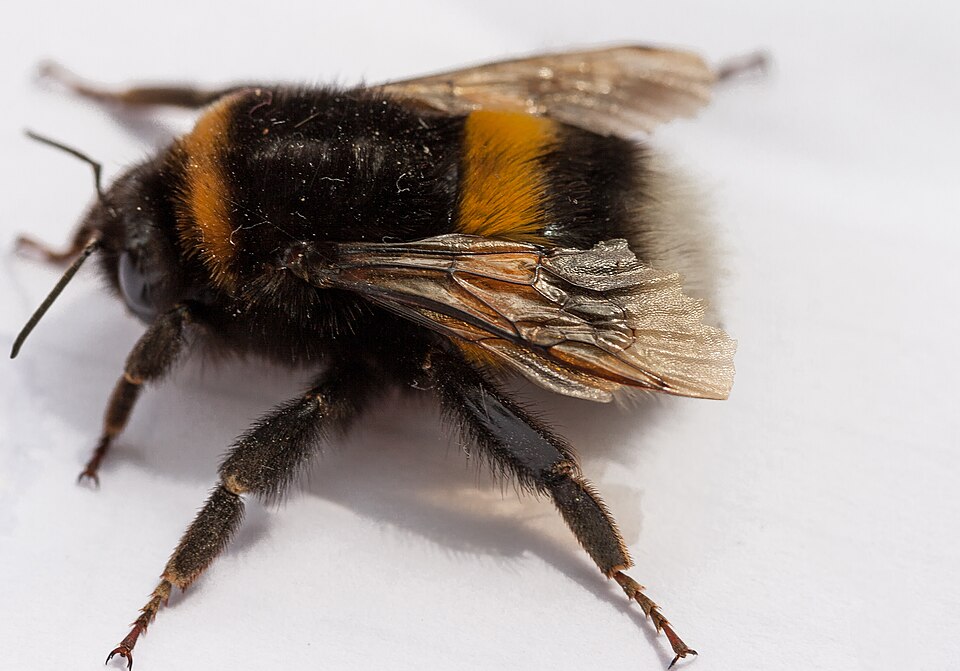
Bombus terrestris
Buff-tailed BumblebeeThe Buff-tailed Bumblebee is one of the most common and widespread bumblebees in Switzerland, found from lowland gardens to 1950 m in the Alps. Queens are large with a black body, two yellow bands, and a distinctive buff (brownish-yellow) tail. Colonies can reach several hundred workers and nest underground in abandoned rodent burrows. It is a generalist forager visiting a vast range of flowers and is widely used commercially for greenhouse pollination. In Switzerland it occurs throughout all regions. Swiss Red List: Least Concern (LC).
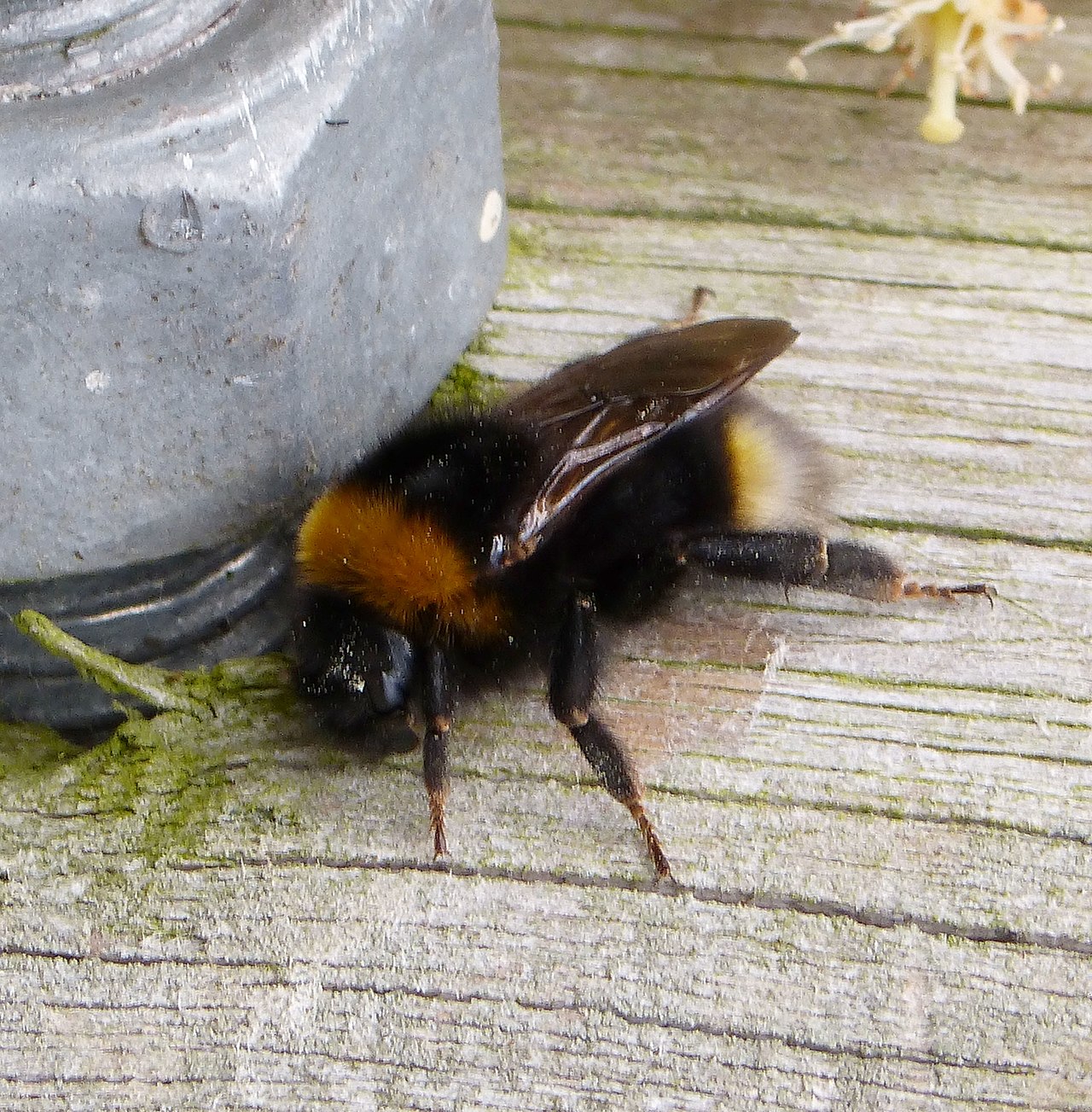
Bombus vestalis
Vestal Cuckoo BumblebeeA large cuckoo bumblebee (queen up to 21 mm) belonging to the subgenus Psithyrus, with no worker caste and no pollen-collecting apparatus. It is predominantly black with an orange-yellow collar, a patch of yellow hairs on the third tergite, and white hairs on the fifth tergite. The wings are distinctly dark-tinted. It is a brood parasite of Bombus terrestris (Buff-tailed Bumblebee): the female invades a host nest, kills or subdues the resident queen, and forces the host workers to rear her offspring. It occurs across most of Europe and in Switzerland is widespread from lowlands to montane elevations wherever its host is found, flying from March to September. It is classified as Least Concern (LC).
Bombus wurflenii
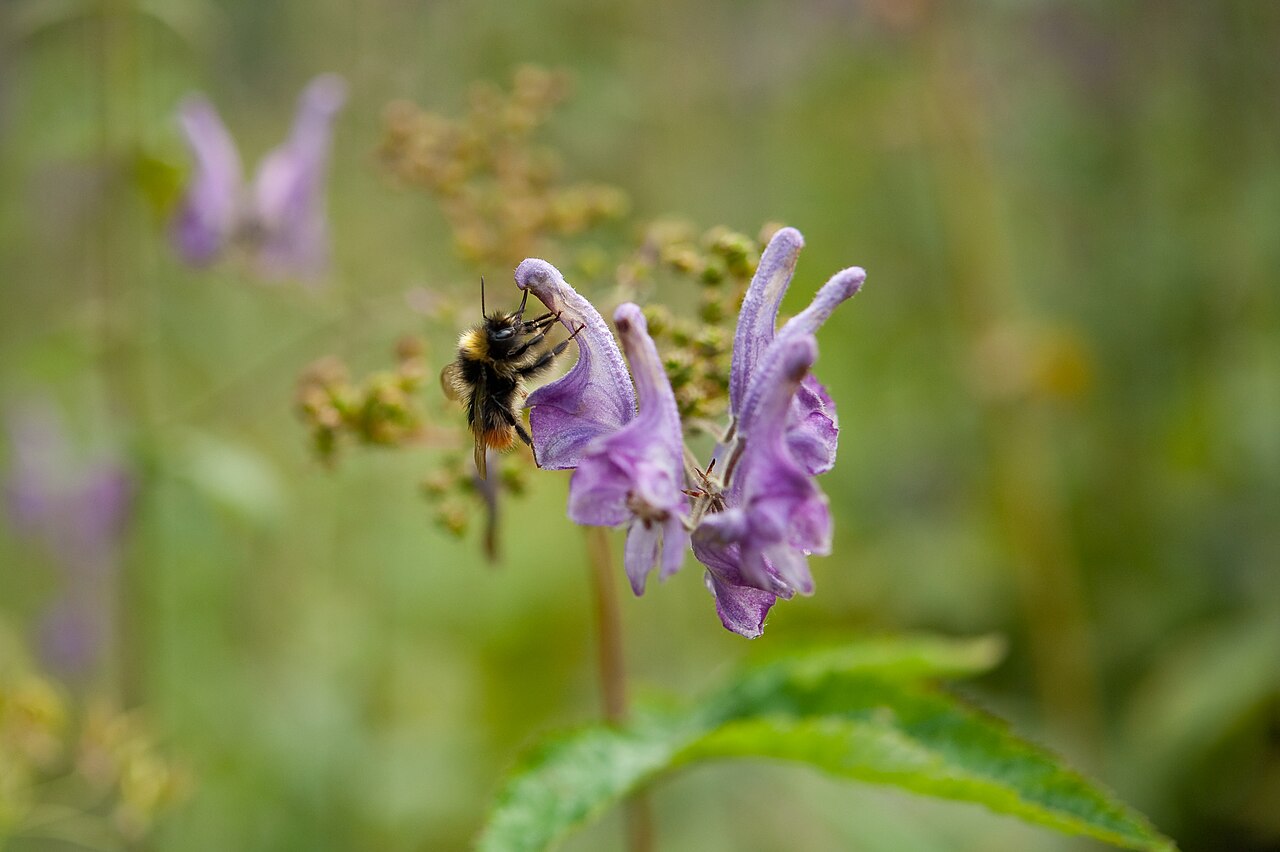
Forest BumblebeeA medium-large bumblebee (16–20 mm) with a distinctive colour pattern: the thorax is entirely orange-brown with no black band, and the abdomen is black with a broad orange-brown tip. It has a relatively short tongue. It is a montane and alpine species found in mountain forests and subalpine meadows, foraging on bilberry (Vaccinium), raspberry, rhododendron, and thistles. It nests underground in abandoned rodent burrows or cavities under moss-covered roots, forming small colonies. In Switzerland it occurs in the Alps and Jura in montane to subalpine zones from about 800 m to 2400 m, and is common in suitable habitats. It is classified as Least Concern (LC) on the Swiss Red List.
Ceratina cyanea
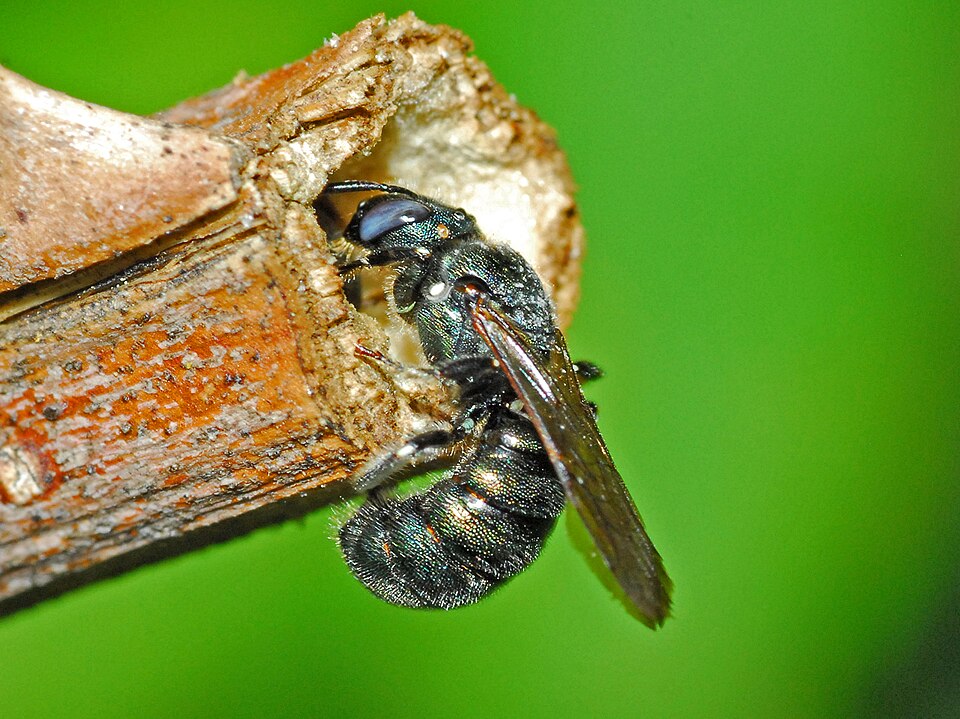
Blue Carpenter BeeA very small carpenter bee (5-7 mm) with a striking metallic blue-green body and clubbed antennae. It nests by gnawing tunnels into the pith of dead plant stems such as bramble, elder, and thistles. Both sexes overwinter in hollow stems and emerge in April. It is polylectic, visiting a wide variety of flowers. In Switzerland it is common from lowlands up to 1600 m in gardens, forest edges, and ruderal areas. Swiss Red List: Least Concern (LC).
Chelostoma campanularum
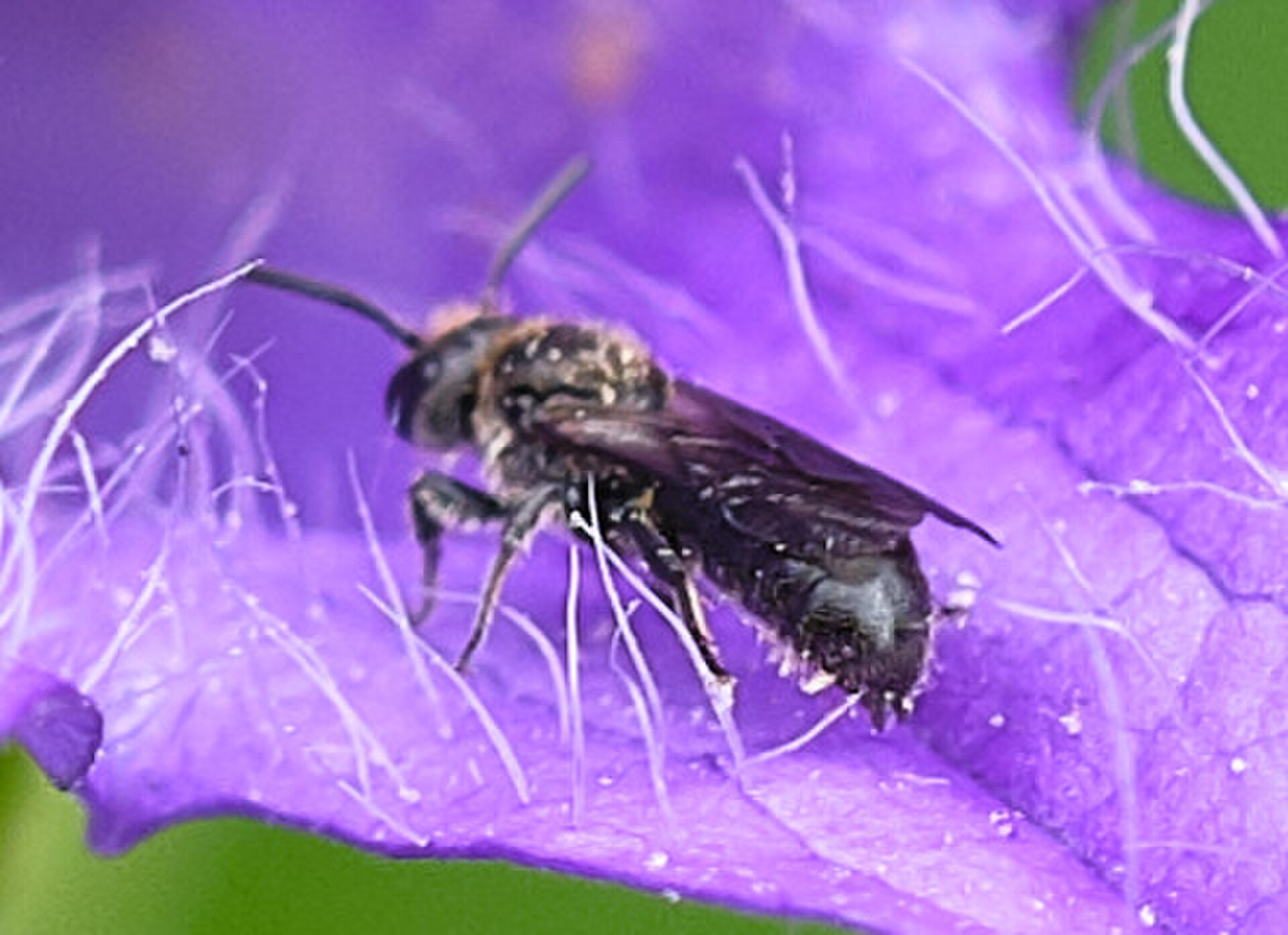
Harebell Carpenter BeeA very slender, entirely black bee (5-7 mm) with a narrow cylindrical abdomen adapted for nesting in small beetle burrows in dead wood. It is oligolectic on Campanula (bellflower) pollen. Males sleep inside bellflower blossoms, gripping the petals with their modified terminal segments. It is univoltine, flying from June to August. In Switzerland it occurs in gardens, meadows, and forest edges with abundant Campanula flowers. Swiss Red List: Least Concern (LC).
Chelostoma rapunculi
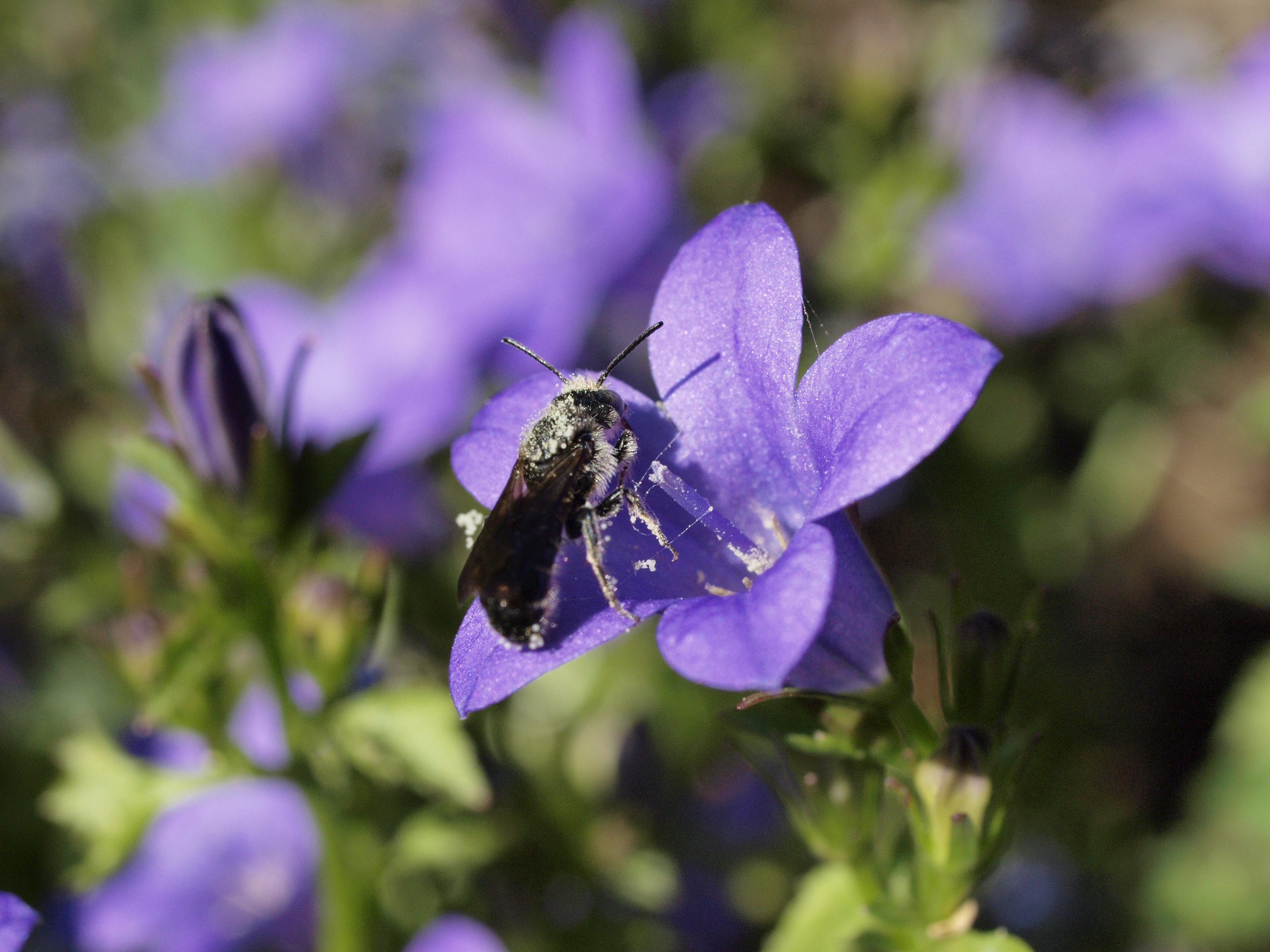
Rampion Scissor BeeA medium-sized, entirely black bee (8-10 mm) with a narrow cylindrical abdomen. Females collect pollen exclusively from Campanula (bellflower) species (oligolectic) and carry it on the scopa on the underside of the abdomen. They nest in pre-existing cavities in dead wood, using mud mixed with small pebbles for cell partitions and nest plugs. The typus locality is Nyon, Switzerland. It is widespread across Switzerland from lowlands to over 2600 m in the Alps, making it one of the highest-nesting bee species in Europe. Swiss Red List: Least Concern (LC).
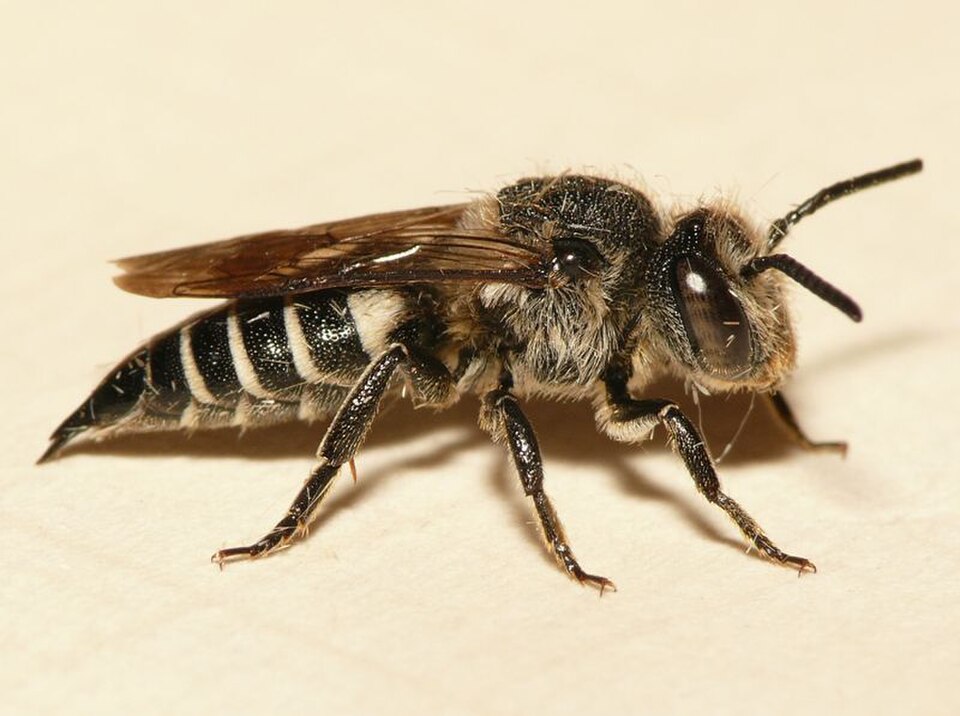
Coelioxys inermis
Shiny-vented Sharp-tail BeeA cleptoparasitic (cuckoo) bee that lays its eggs in the nests of leafcutter bees, particularly Megachile species. It has a distinctive sharply pointed abdomen (female) with the ventral surface shagreened rather than polished. The body is black with sparse white hair bands on the abdomen and a moderately punctate scutum. It has no pollen-collecting apparatus. In Switzerland it is recorded from scattered locations including Schaffhausen, Lake Neuchâtel area, and the Alps south to Ticino. Swiss Red List: Least Concern (LC).
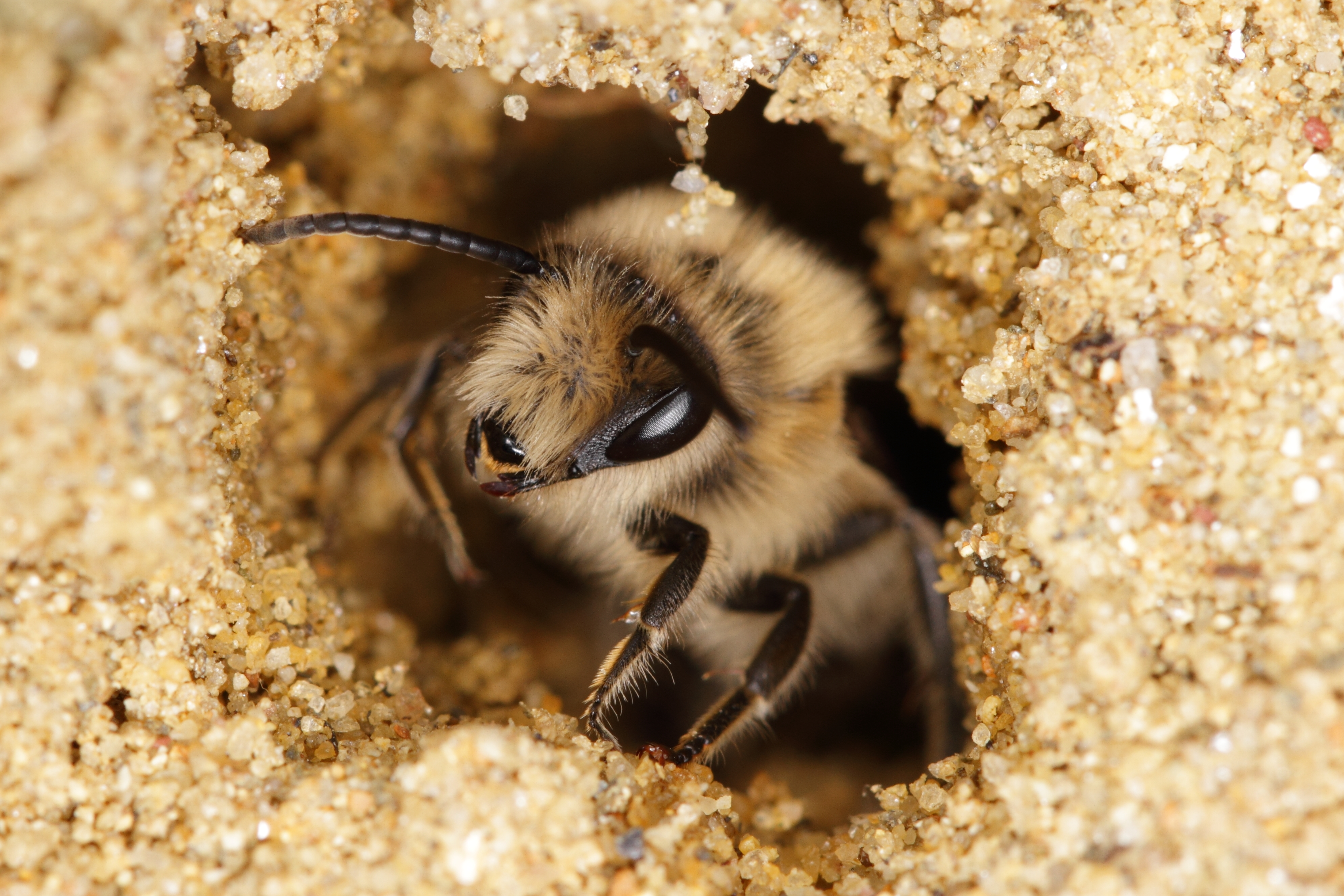
Colletes cunicularius
Spring ColletesThe earliest-flying Colletes species in Central Europe, appearing from late February to May. Females and males are densely covered with golden-brown hairs on the head, thorax, and abdomen, giving them a foxy appearance reminiscent of a small bumblebee. Unlike other Colletes species, it lacks distinct pale hair bands on the abdomen. The tongue is characteristically short and bilobed. It nests in large aggregations in sandy or loose soils, digging burrows up to 30 cm deep with a single vertical tunnel and several lateral brood cells. It is strictly oligolectic on willow (Salix) pollen, though adults also visit other flowers for nectar. The cuckoo bee Sphecodes albilabris is its specialist brood parasite. Males pollinate several Ophrys orchid species through sexual deception. In Switzerland it is widespread in sandy habitats, gravel pits, and riverbanks, and is classified as Least Concern (LC) on the national Red List. A well-studied population occurs in northern Switzerland.
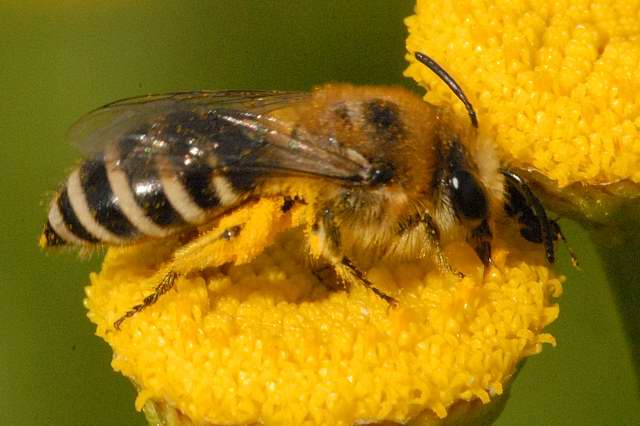
Colletes daviesanus
Davies' ColletesA medium-small plasterer bee (7–9 mm) with dense brownish hairs on the thorax, a shiny black abdomen with broad pale marginal hair bands, and a characteristically short, bilobed tongue. The first tergite is notably sparsely punctate and glossy, a key distinguishing feature among banded Colletes. It is an oligolectic specialist on Asteraceae, gathering pollen almost exclusively from flowers such as tansy (Tanacetum vulgare), yarrow (Achillea millefolium), oxeye daisy (Leucanthemum vulgare), and chamomiles. It nests in large aggregations within vertical earth faces, soft sandstone cliffs, loess walls, and even mortar joints of old buildings, earning it notoriety as a minor structural pest where it occurs in high densities. It is a synanthropic species that has adapted well to human settlements. In Switzerland it is widespread and common in sand pits, quarries, vineyards, ruderal areas, and villages. The cleptoparasitic bee Epeolus variegatus attacks its nests. Flight period is univoltine from mid-June to late August. Swiss Red List: Near Threatened (NT).
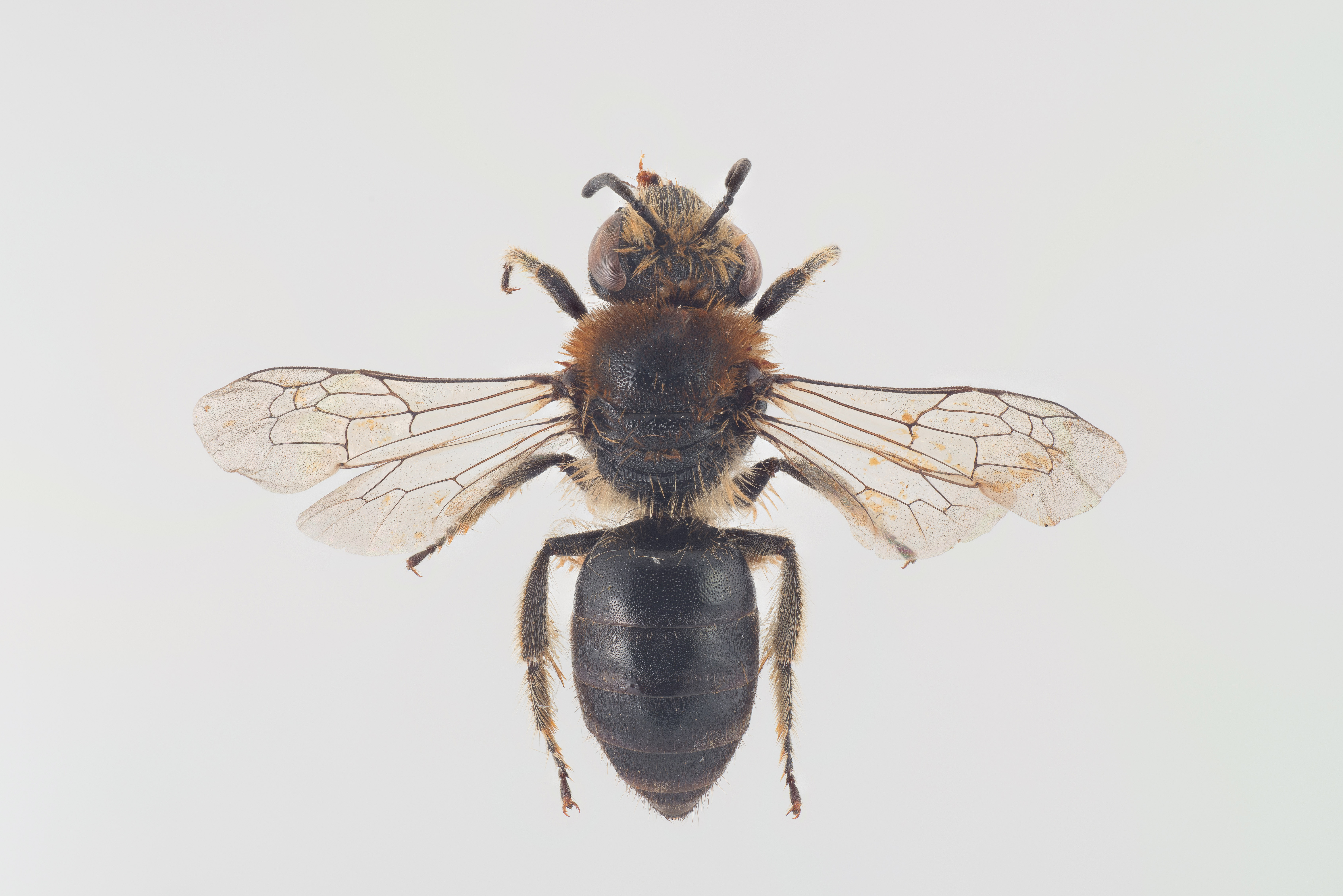
Colletes floralis
Northern ColletesA medium-sized plasterer bee with narrow greyish-white abdominal bands and distinctive tawny-brown hairs on the thorax. The first tergite is notably shiny and sparsely punctate. It nests in aggregations in sandy soils in warm, dry locations. In Switzerland it occurs in the Alps in montane to alpine meadows, foraging mainly on umbellifers and Asteraceae. Swiss Red List: Vulnerable (VU).
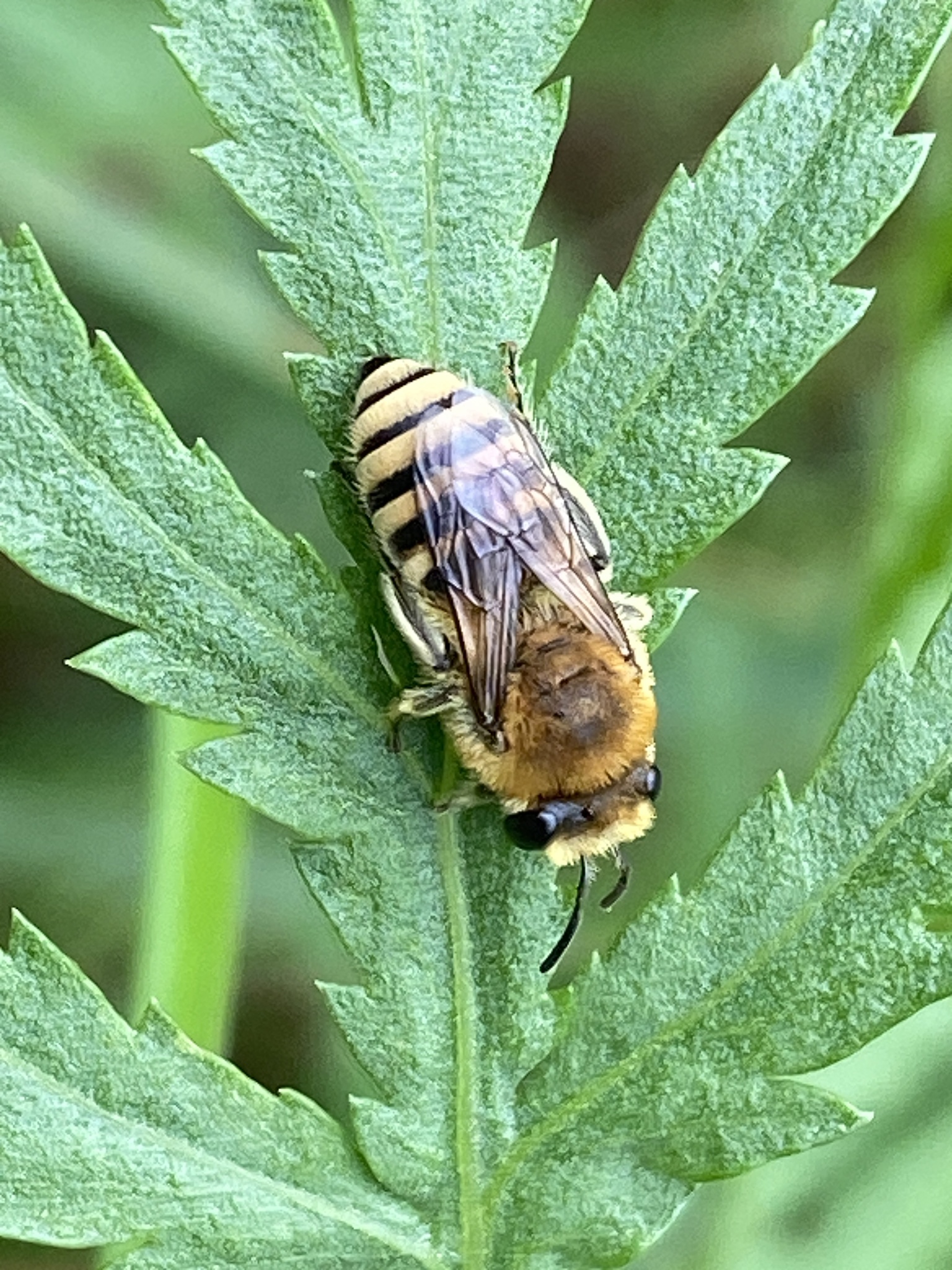
Colletes fodiens
Hairy-saddled ColletesA medium-sized plasterer bee (9-11 mm) with dense brownish hairs on the thorax and unusually broad, felt-like white hair bands on the abdomen. It is oligolectic on Asteraceae, particularly tansy (Tanacetum vulgare) and yarrow (Achillea millefolium). It nests in aggregations in sandy soils in warm, dry locations. In Switzerland it is found in ruderal areas, sand pits, and dry meadows in the lowlands and valleys. Swiss Red List: Endangered (EN).
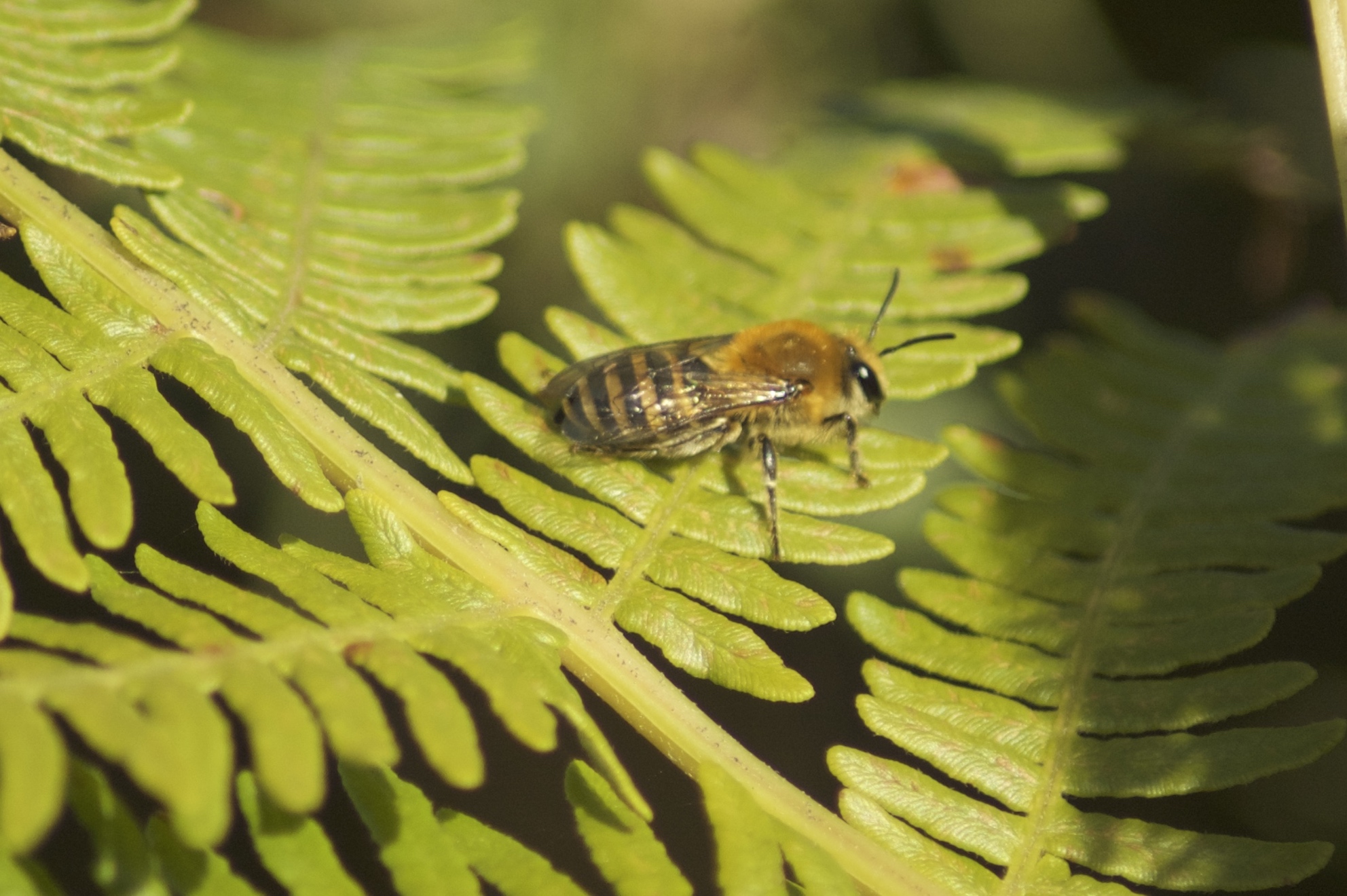
Colletes hederae
Ivy BeeA medium-sized plasterer bee (9-14 mm) with dense rust-red hairs on the thorax and brownish abdominal hair bands. It is famous for its autumnal flight period (September to November) timed to coincide with ivy (Hedera helix) flowering, on which it is strongly specialised. First described as a species in 1993, it has expanded rapidly northwards from southern Europe. In Switzerland it is now widespread in warm lowland areas. Swiss Red List: Least Concern (LC). It nests in large aggregations in bare, well-drained soil. The oil beetle Stenoria analis has caused local population declines in Switzerland.
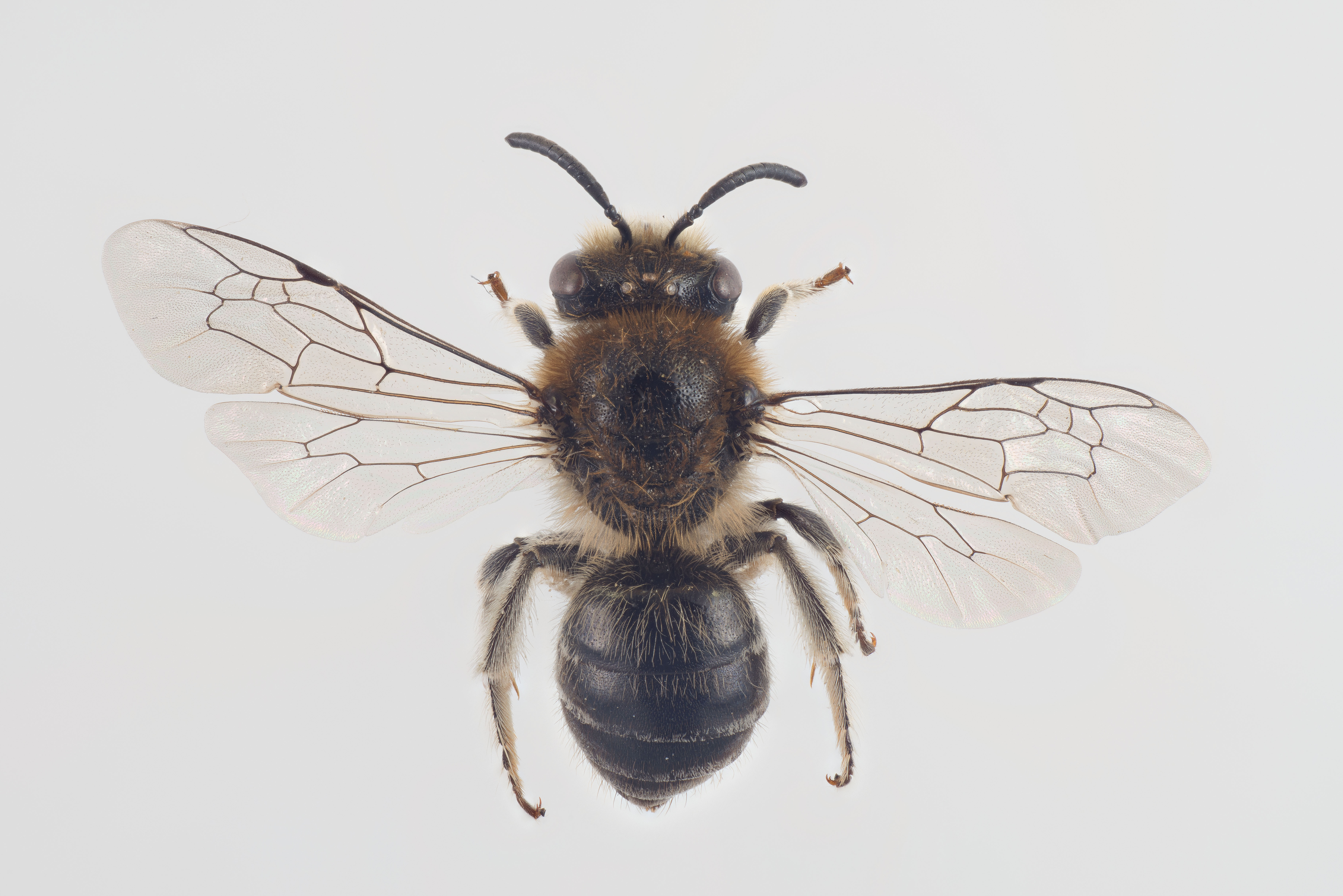
Colletes impunctatus
Impunctate Cellophane BeeA small high-altitude plasterer bee (7-9 mm) with dense brownish hairs, a distinctly shiny and sparsely punctate first tergite, and greyish-white abdominal hair bands. It is a specialist of alpine and boreal regions, nesting in sandy soils in mountain meadows. In Switzerland it occurs in the Alps from about 1800 m to over 2300 m, foraging on Asteraceae and other alpine flowers. It is classified as Vulnerable on the European Red List due to its restricted montane habitat.
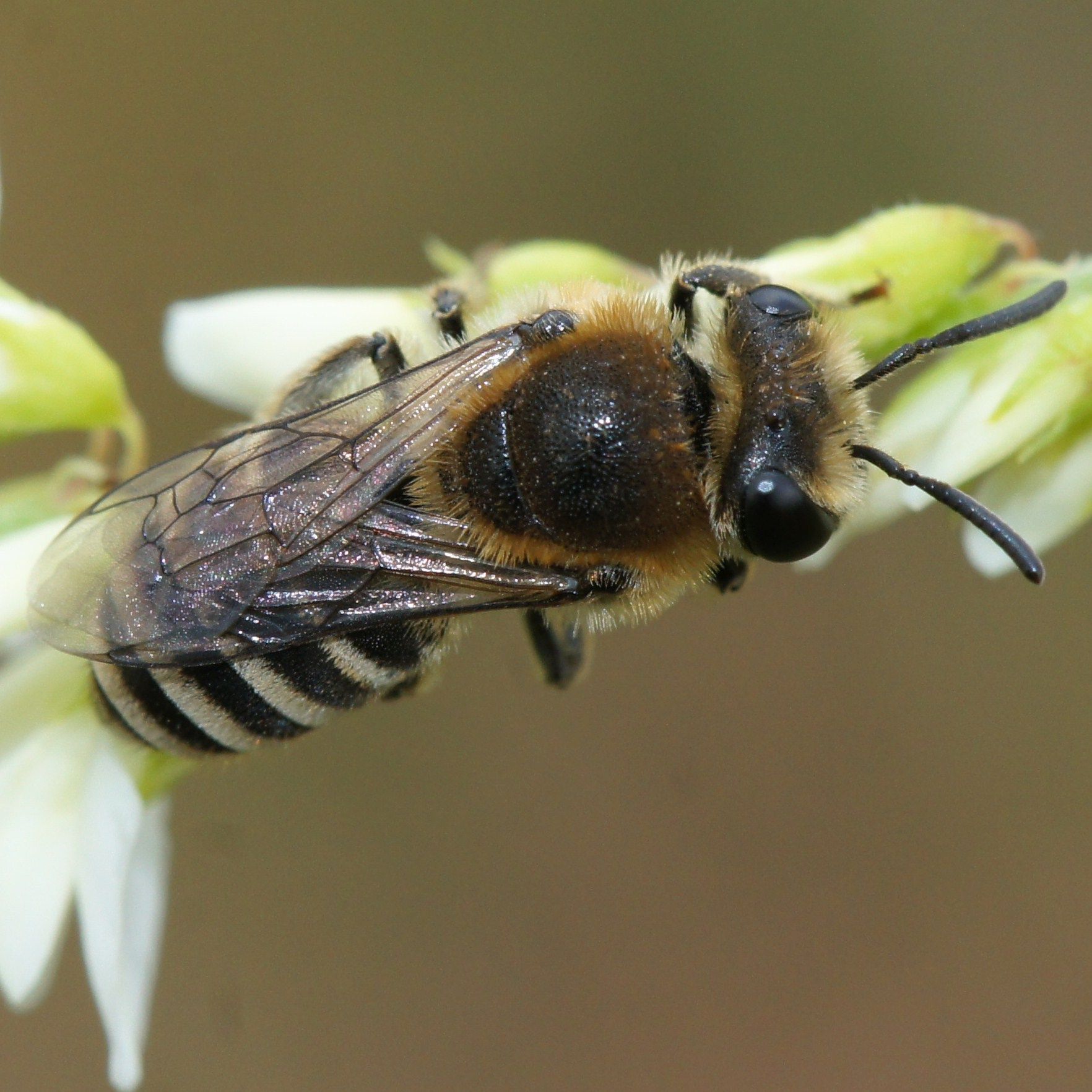
Colletes marginatus
Margined ColletesA small plasterer bee (7-9 mm) with a black body, narrow white abdominal hair bands, and a densely punctate first tergite. It is oligolectic on Fabaceae (legumes), particularly clovers and vetches. It nests solitarily or in small aggregations in sandy soils in warm, dry habitats. In Switzerland it is known from scattered localities in the lowlands and inner Alpine valleys, particularly in sandy ruderal areas and dry grasslands. Swiss Red List: Endangered (EN).
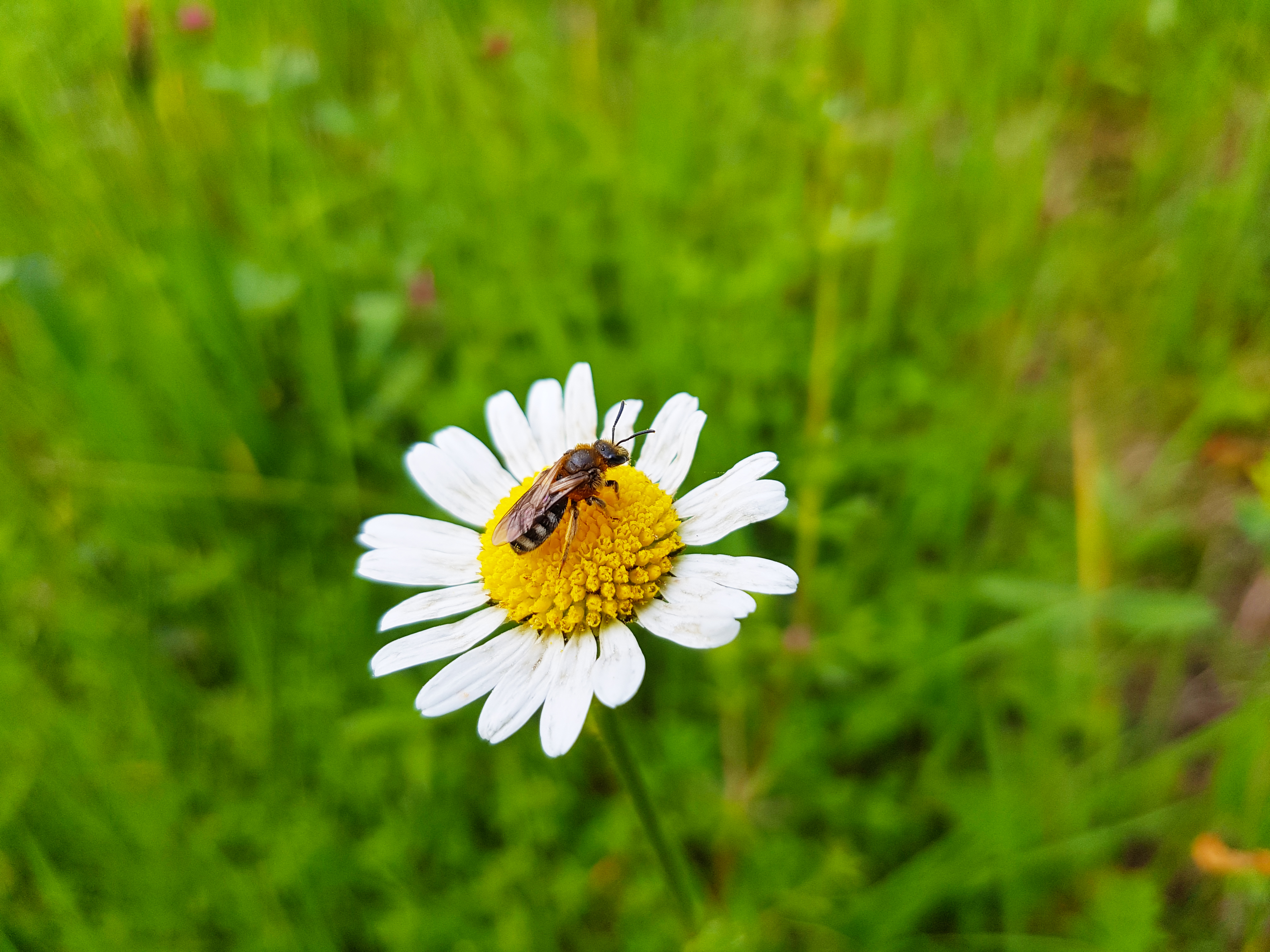
Colletes similis
Bare-saddled ColletesA medium-small plasterer bee (8-11 mm) resembling Colletes daviesanus but slightly larger with denser thoracic hairs and broader white abdominal bands. The first tergite has a distinctive angular lateral hair band that is interrupted in the middle. It is oligolectic on Asteraceae, especially tansy (Tanacetum vulgare) and yarrow (Achillea millefolium). It nests in self-dug burrows in steep earth banks and sparsely vegetated flat ground. Swiss Red List: Least Concern (LC).
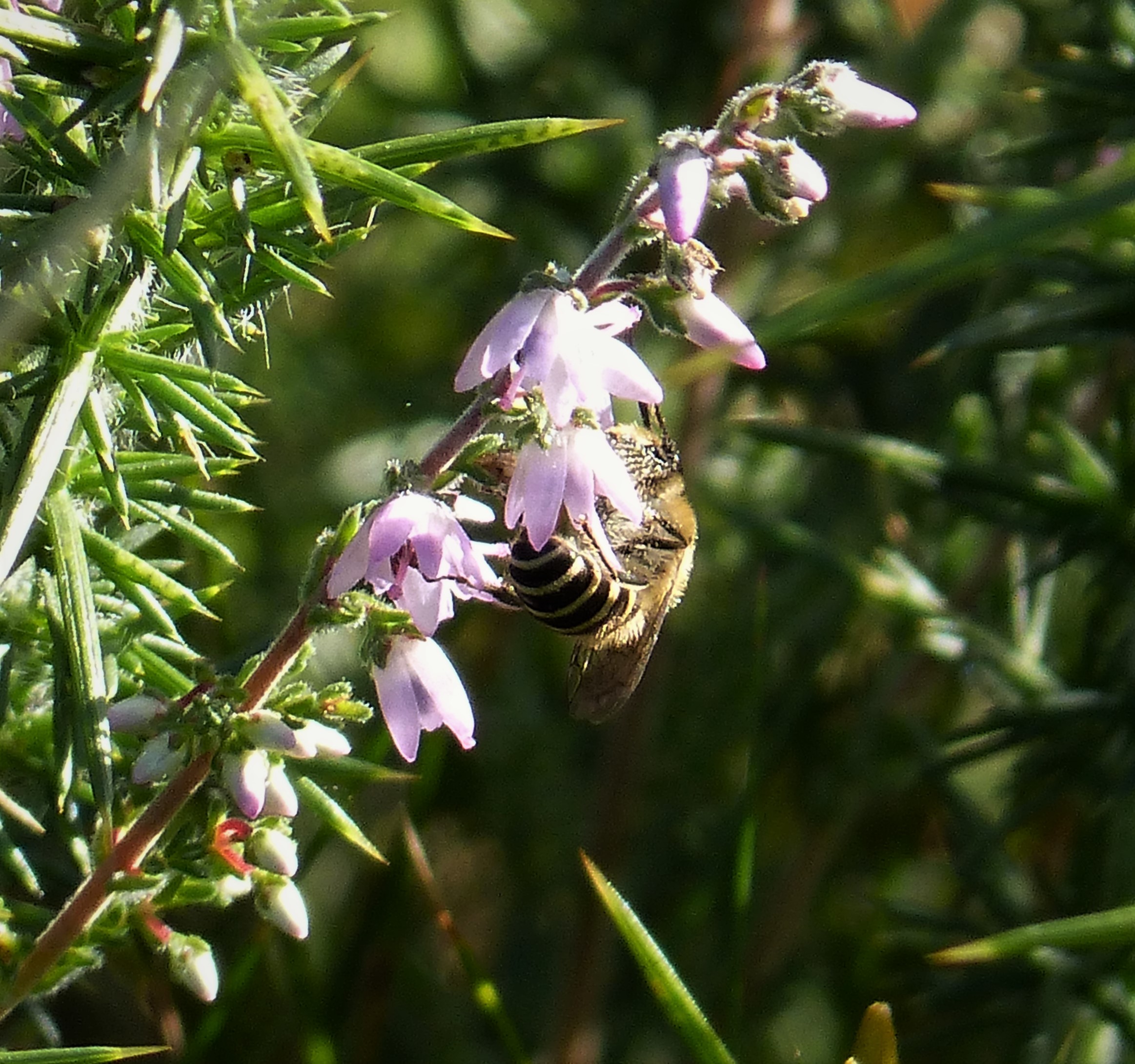
Colletes succinctus
Heather ColletesA medium-sized plasterer bee (10-12 mm) with pale hairs on the clypeus, orange-transparent bands on the first tergite, and broad white hair bands. It is strongly associated with heathland and moorland, where it specialises on heather (Ericaceae) pollen. It nests in aggregations in sandy soils, sometimes forming enormous colonies of over 60,000 nests. It is univoltine, flying from mid-July to late September. In Switzerland it occurs locally in the Alps and Jura mountains on heathland and in areas with Calluna vulgaris. Swiss Red List: Vulnerable (VU).
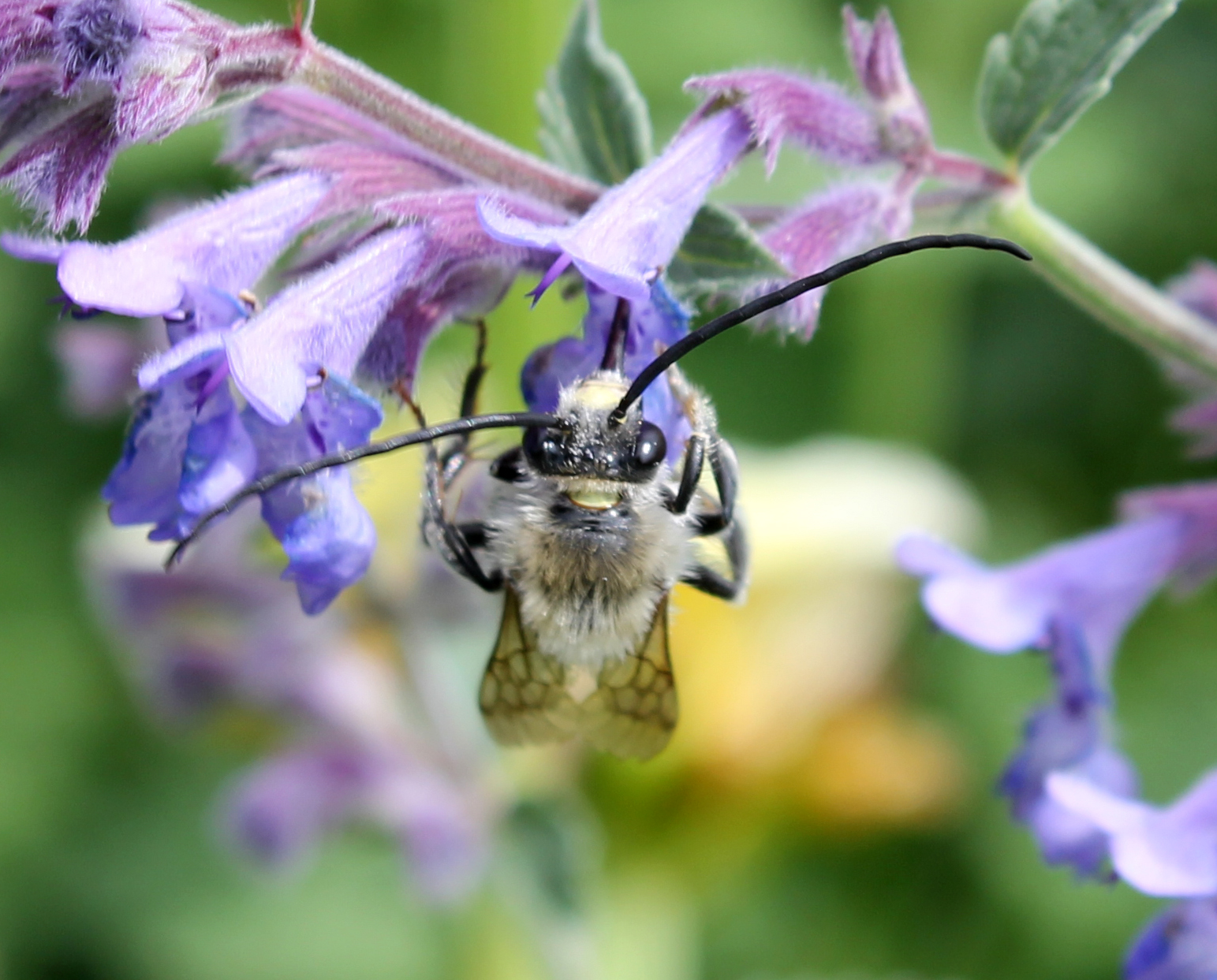
Eucera longicornis
Common Long-horned BeeA medium-sized solitary bee (12-15 mm) named for the extremely long antennae of males, which can reach body length. Males also have a distinctive yellow face mask. Females have brown thoracic hairs and a white scopa on the hind legs. It is oligolectic on Fabaceae (legumes), visiting vetches, clovers, and meadow vetchling. It nests in self-dug burrows in sandy or loamy soils in warm, dry meadows and ruderal areas. In Switzerland it is widespread below 1000 m and classified as Least Concern. Males are important pollinators of Ophrys orchids through pseudocopulation.
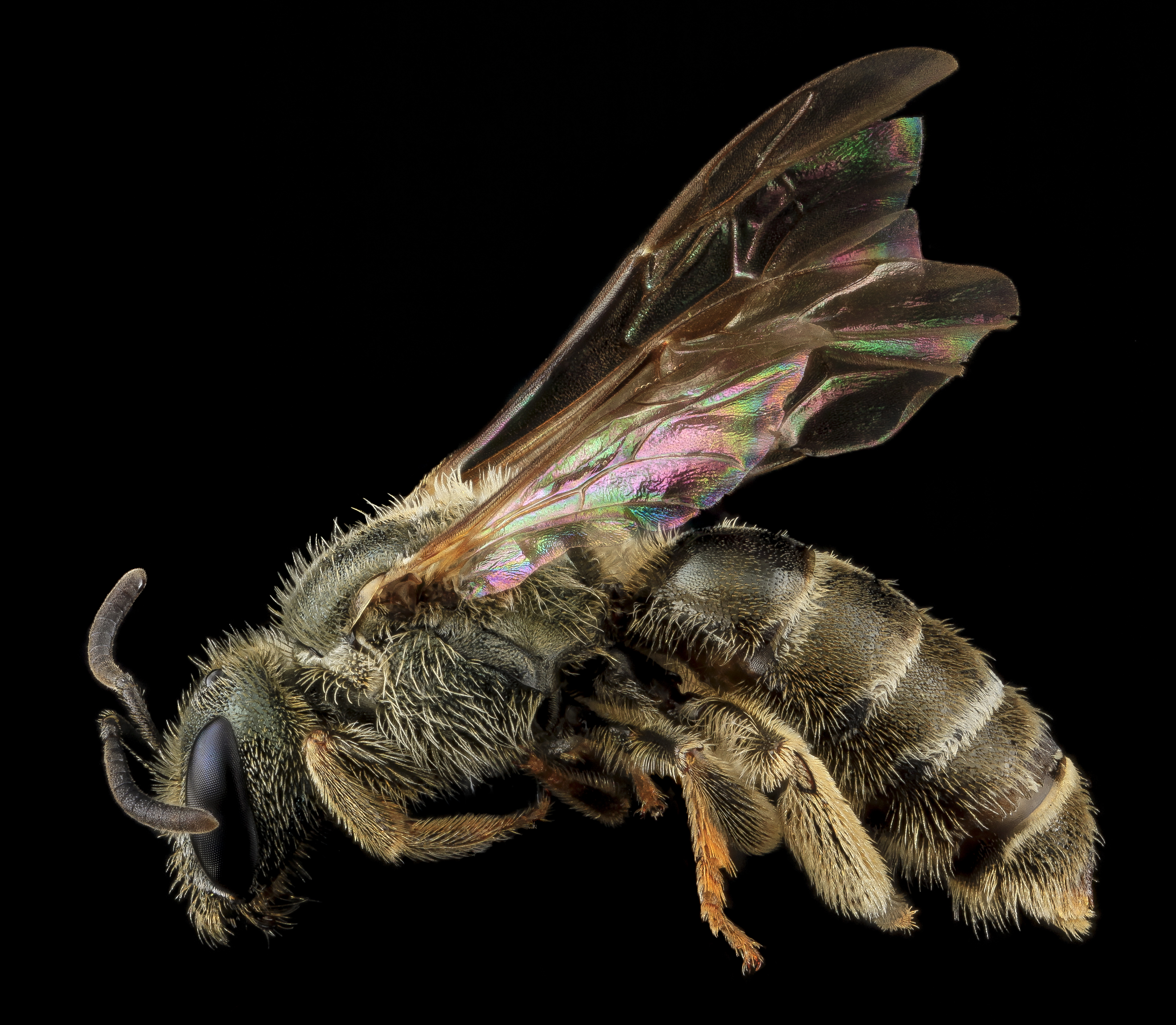
Halictus confusus
Confusing Furrow BeeA small sweat bee with a metallic greenish head and thorax and a black abdomen with narrow white hair bands. It is widespread across Switzerland in gardens, meadows, and ruderal areas from lowlands to montane elevations, and is a generalist forager visiting flowers from at least 10 plant families. It nests in self-excavated burrows in bare or sparsely vegetated soil, often in small aggregations on sunny banks and paths. Swiss Red List: Near Threatened (NT).
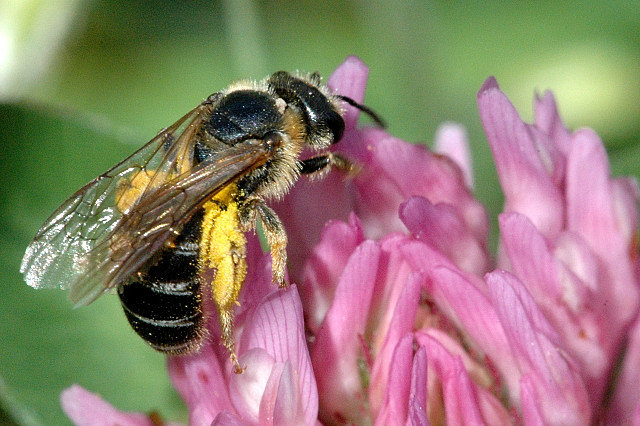
Halictus maculatus
Spotted Furrow BeeA small metallic sweat bee with a dark green head and thorax and a black abdomen with interrupted white hair bands. It is a primitively eusocial species that nests in bare soil and is common in Swiss lowlands, visiting a wide range of wildflowers. Females excavate their nests in bare soil, often in sunny banks, paths, and ruderal areas, and the species is an important generalist pollinator in Swiss lowlands. Swiss Red List: Least Concern (LC).
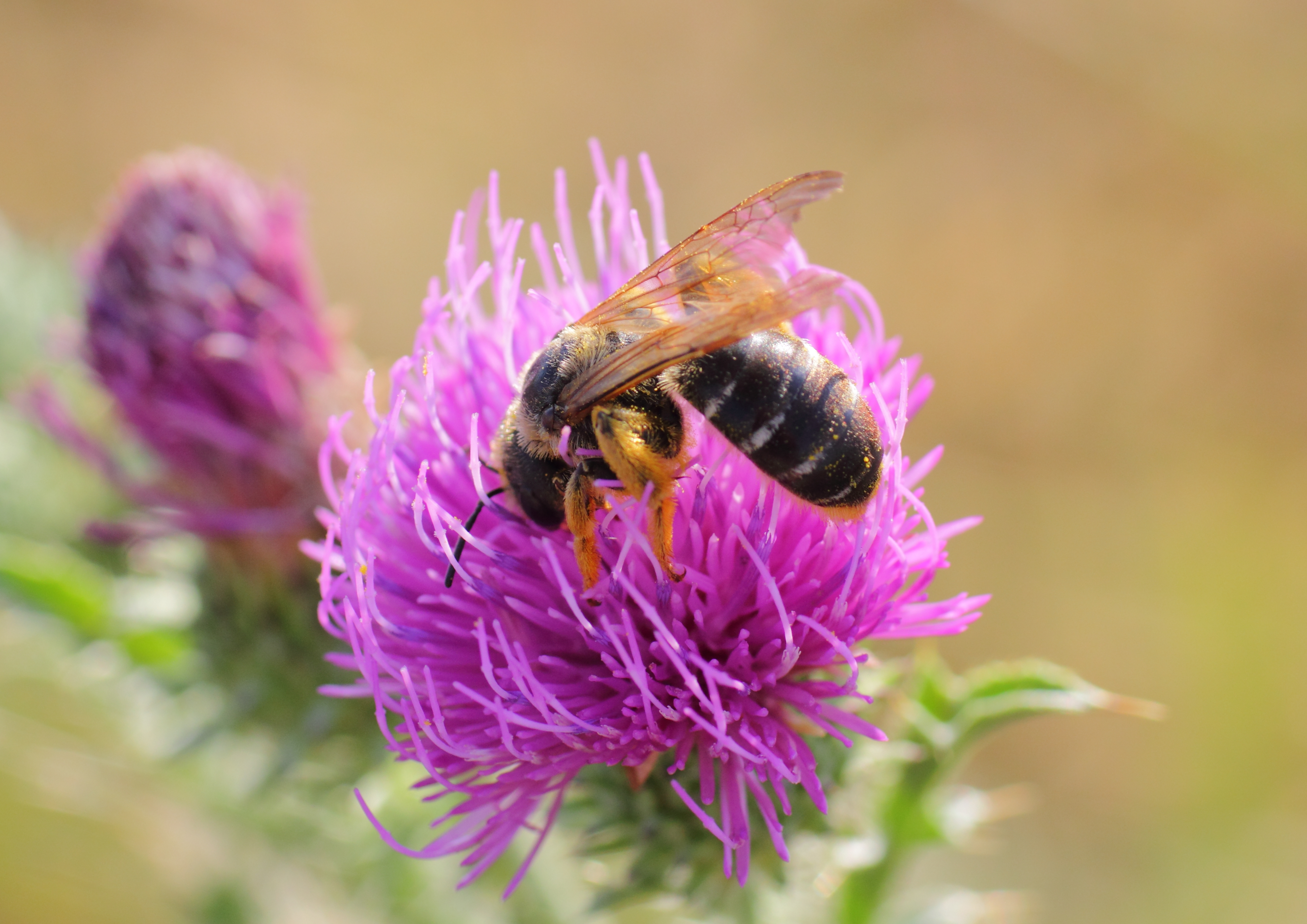
Halictus quadricinctus
Giant Furrow BeeThe largest Halictus in Central Europe with a black-brown body and four narrow white hair bands often interrupted in the middle. It has rufous-yellow thoracic hair and a robust, powerful flight. Its nest architecture is unique: it builds a freestanding earthen comb in an underground chamber. Females live long enough to cohabit with offspring. In Switzerland it occurs in warm lowlands and valleys. Swiss Red List: Vulnerable (VU).
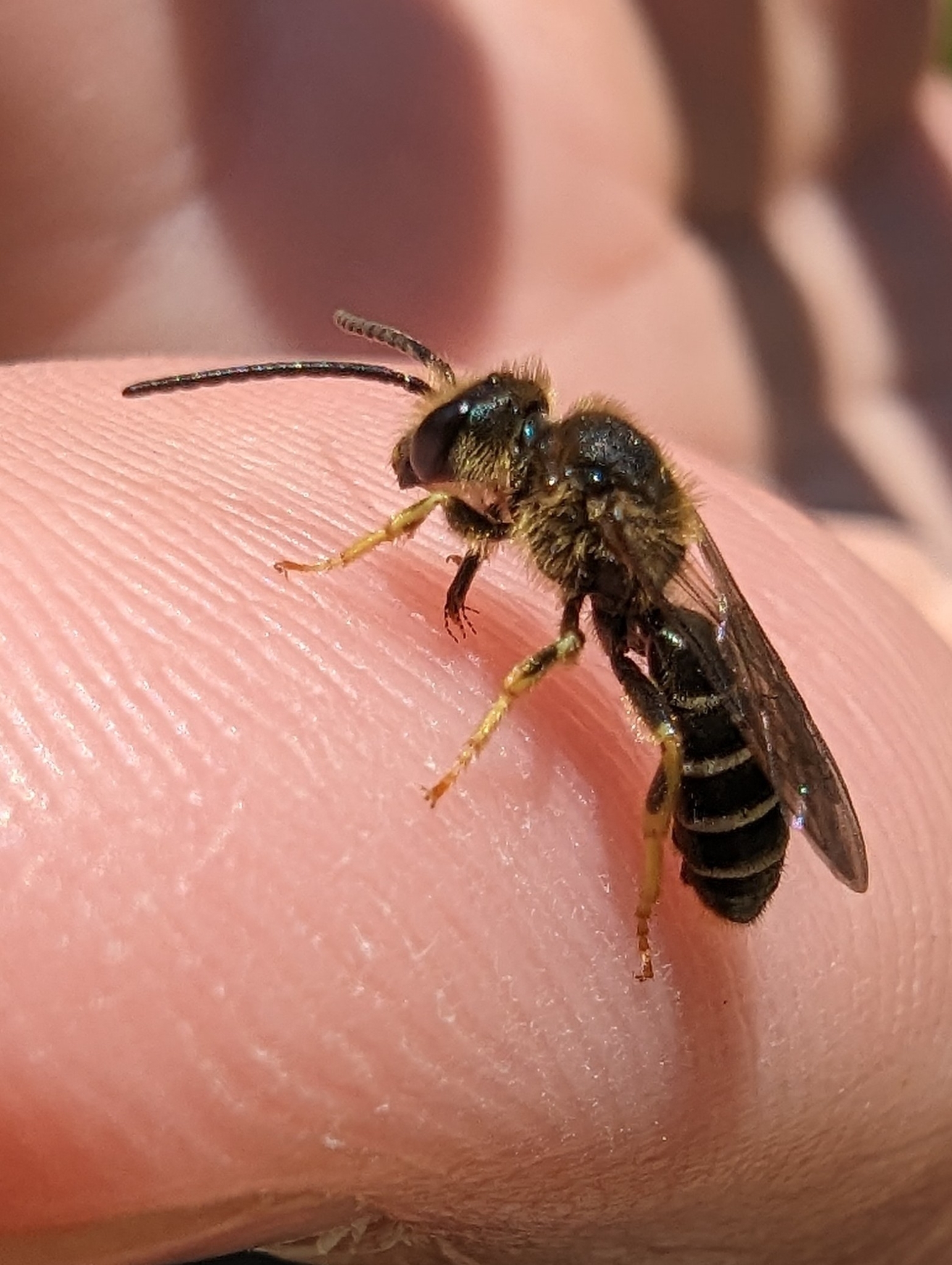
Halictus rubicundus
Orange-legged Furrow BeeA medium-sized halictid bee characterised by reddish-brown abdominal hair bands and a metallic green head and thorax. It nests solitarily in self-excavated burrows in open soil and is common across Switzerland in meadows and gardens. It is an important pollinator of wildflowers in meadows and gardens during early summer, foraging on a wide range of plant species. Swiss Red List: Least Concern (LC).
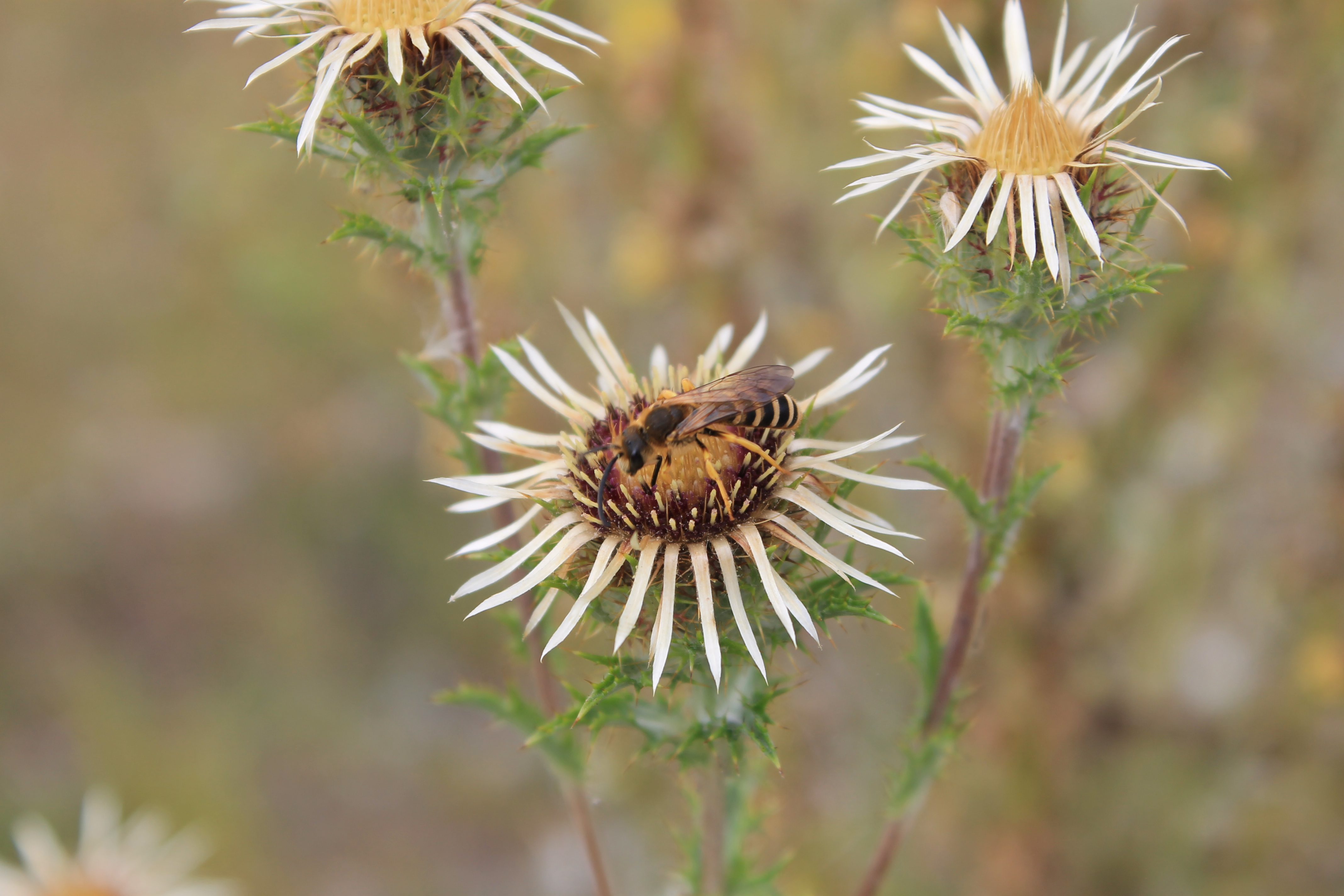
Halictus scabiosae
Great Banded Furrow BeeA medium-sized sweat bee (12–15 mm) with distinctive ochre-yellow hair bands on the abdomen and a conspicuous felt-like patch of hairs at the base of each tergite. The head and thorax have sparse brownish hairs. It is a primitively eusocial species with a remarkable life cycle: inseminated females overwinter together in the natal nest, and in spring one dominant female becomes the egg-laying queen while the others serve as workers, provisioning brood cells. Before the first workers emerge, the queen expels the helper females, who then dig their own nests or take over nests of other bees, sometimes even appropriating already-provisioned cells. It nests in self-excavated burrows in bare or sparsely vegetated, level to gently sloping soil, often in large colonies. It is a generalist forager with a strong preference for Asteraceae such as Centaurea, Cirsium, and Cichorium. In Switzerland it is found in all regions, occurring in warm, dry habitats like ruderal areas, gravel pits, vineyards, and railway embankments, and is expanding its range due to climate warming. It is listed on the Swiss Red List of threatened bees.
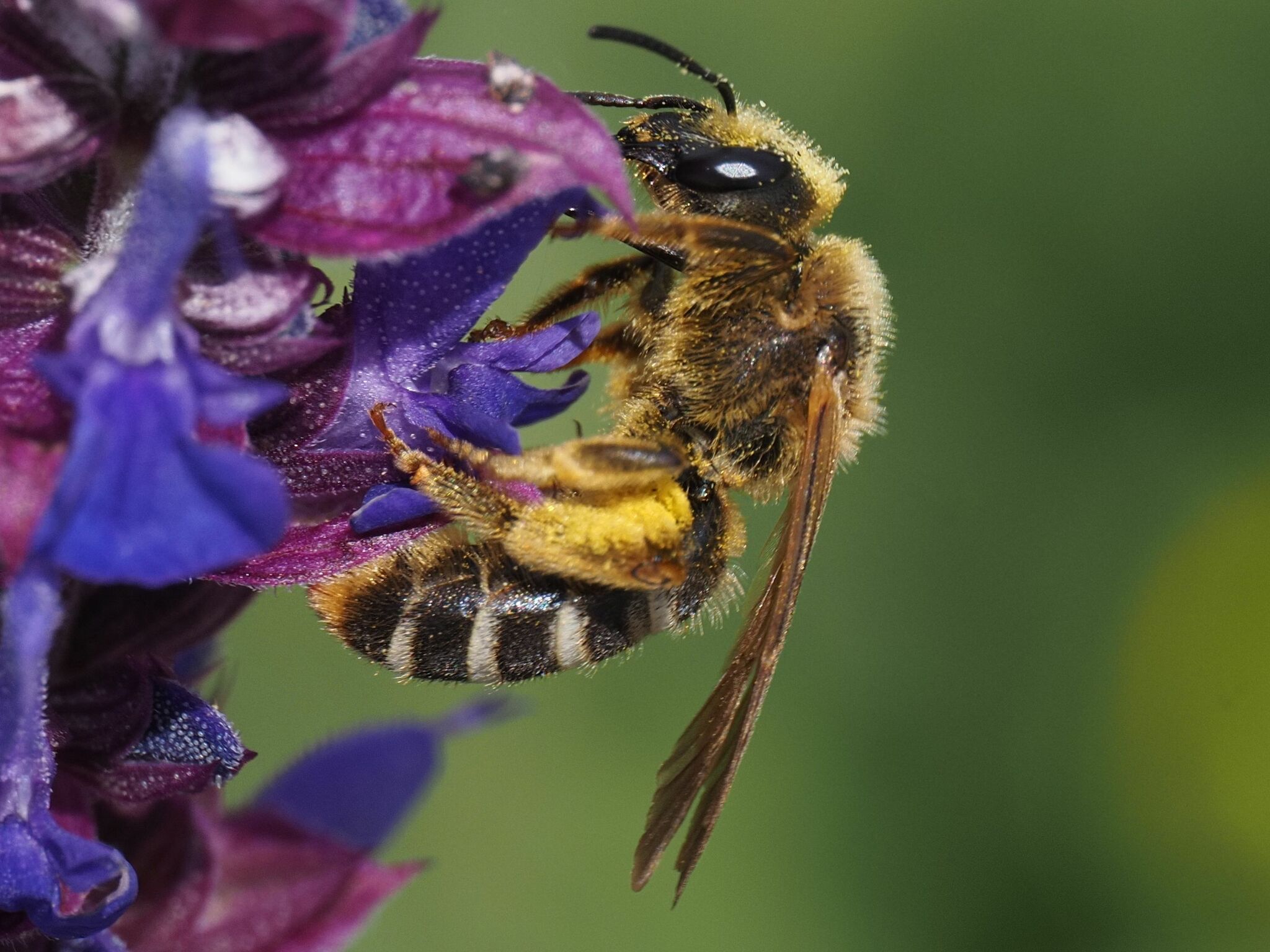
Halictus sexcinctus
Six-banded Furrow BeeA large Halictus with six distinct ochre-yellow hair bands on the abdomen and a broad head. It is a warmth-loving species found in dry meadows, vineyards, and ruderal areas in Swiss lowland valleys, especially in the Valais and Ticino. It prefers dry, warm habitats with open soil patches for nesting and is associated with flower-rich ruderal areas, vineyards, and extensively managed grasslands. Swiss Red List: Near Threatened (NT).
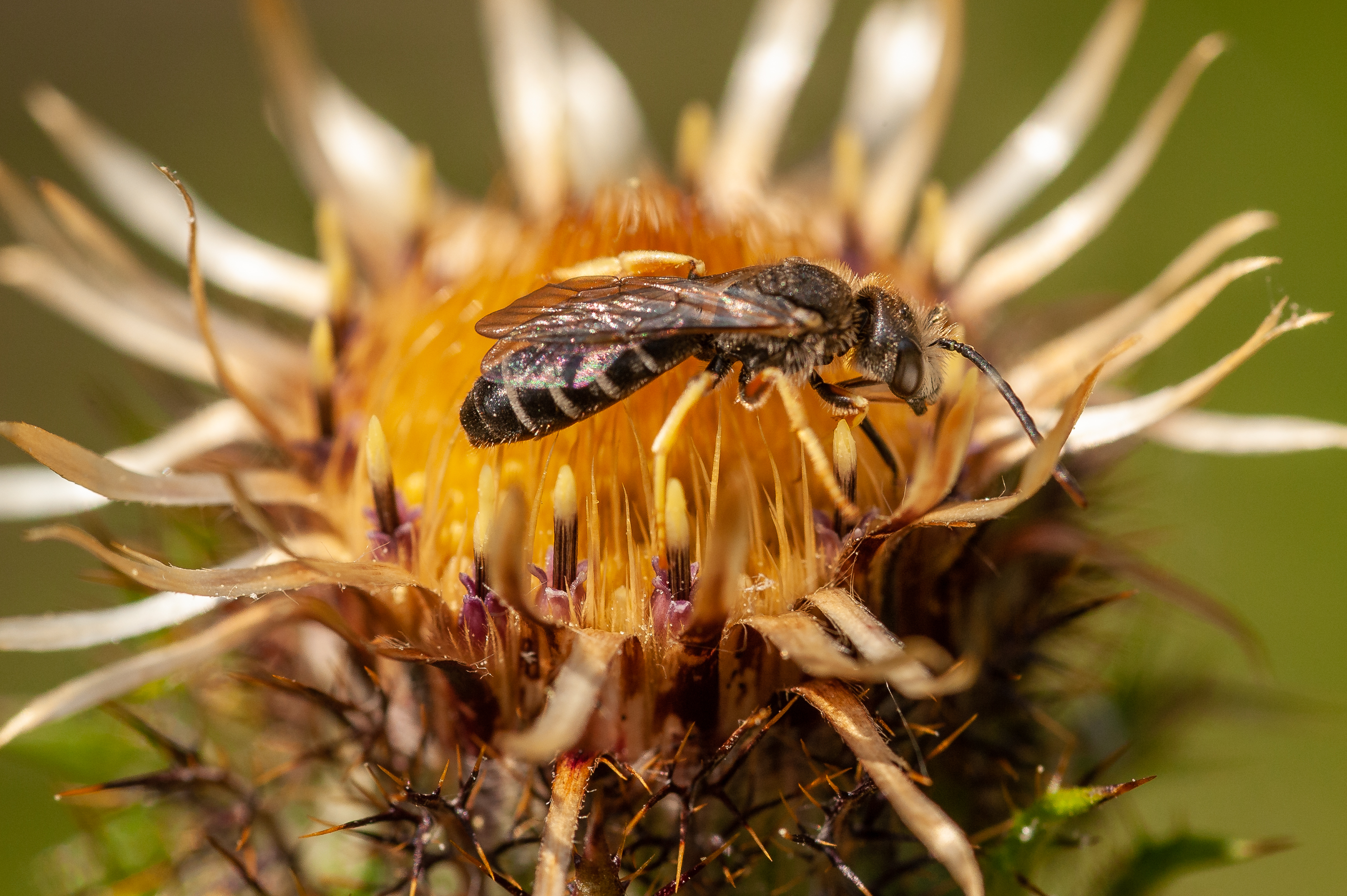
Halictus simplex
Common Furrow BeeA medium-sized sweat bee (9–11 mm) with distinct white hair bands on the abdomen tergites. It nests in self-excavated burrows in the ground, often forming small aggregations, and sometimes multiple females share a common nest entrance. It is polylectic and visits flowers from many families, particularly Asteraceae and Dipsacaceae. The females overwinter after emerging in July and start nesting the following spring. Swiss Red List: Least Concern (LC).
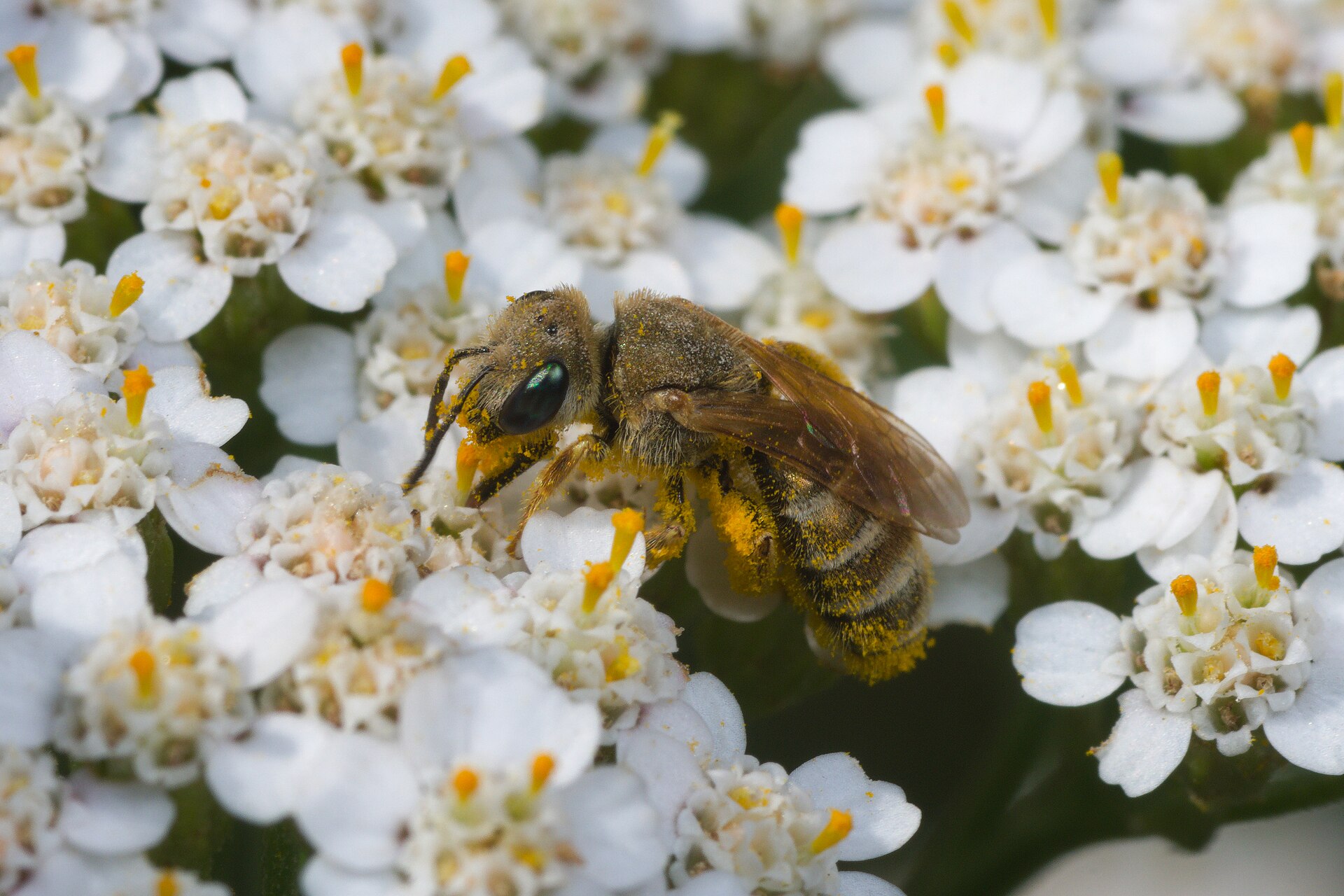
Halictus subauratus
Golden Furrow BeeA small, brilliantly metallic golden-green sweat bee with a black abdomen that has narrow white hair bands. It is one of the most metallic Halictus species and is common in Swiss lowlands, nesting in bare soil in warm, dry locations. Females forage on a variety of wildflowers and the species plays an important role as a pollinator in warm, dry habitats, often in large nesting aggregations. Swiss Red List: Least Concern (LC).
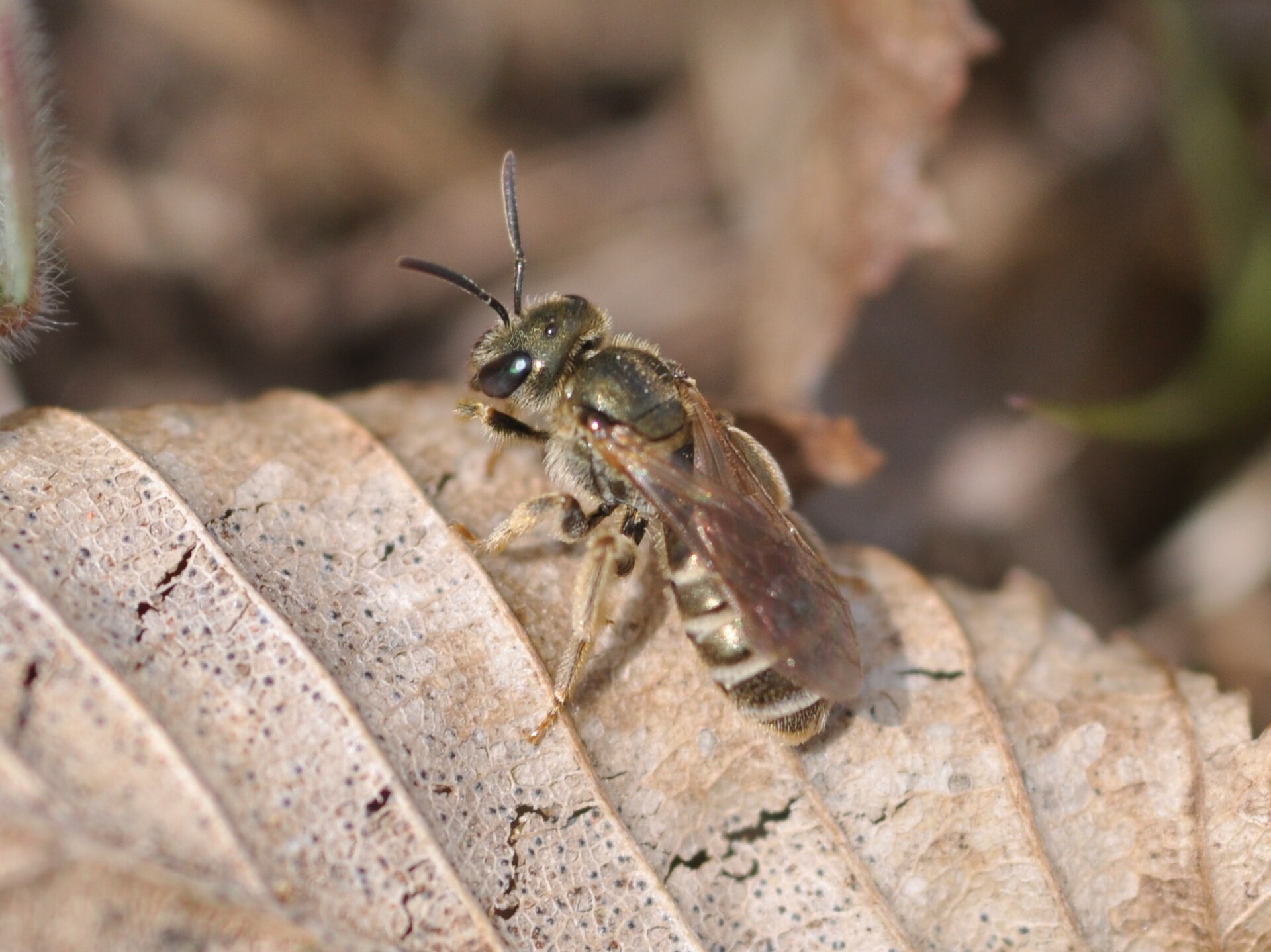
Halictus tumulorum
Bronze Furrow BeeA small (7–9 mm), metallic-green sweat bee with a striking golden-brassy sheen on the head and thorax and a black abdomen with narrow white hair bands. It is one of the most common and widespread halictid bees in Central Europe, found from lowland gardens up to 2200 m in the Alps. It is primitively eusocial: overwintered females cohabit in the natal nest, with one dominant egg-layer and the others acting as workers. It nests in self-excavated burrows in bare or sparsely vegetated, level to gently sloping soil, often in small aggregations. It is broadly polyleptic, visiting at least 14 plant families including Asteraceae, Brassicaceae, Fabaceae, and Rosaceae. It is an important pollinator of the rare Lady's Slipper Orchid (Cypripedium calceolus). Its brood parasite is the blood bee Sphecodes gibbus. In Switzerland it is classified as Least Concern and is very common in meadows, gardens, field margins, and ruderal sites from the lowlands to alpine elevations.
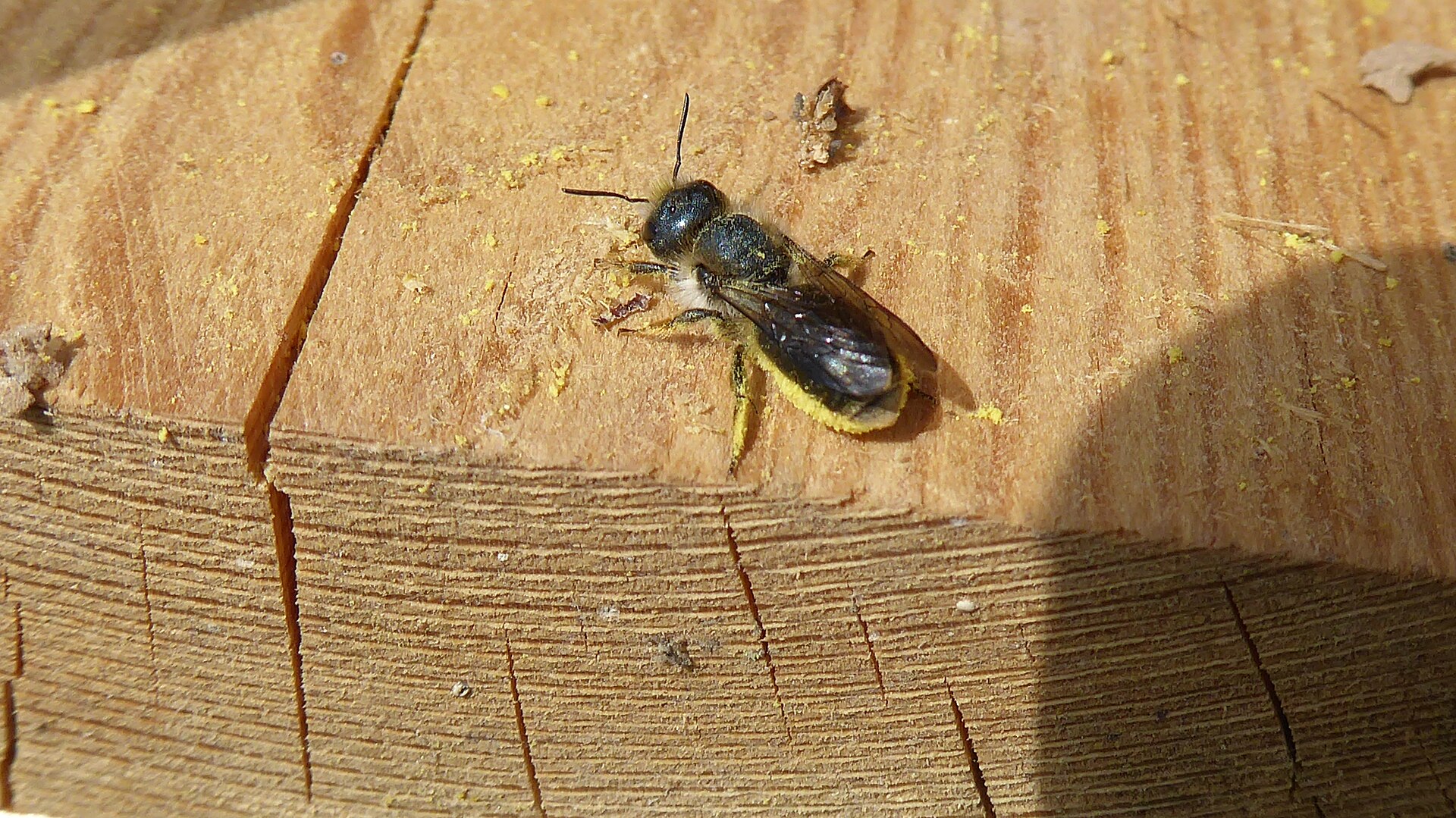
Heriades truncorum
Large-headed Resin BeeA very small, entirely black resin bee with a distinctly broad head and dense white hair bands on the abdomen. It nests in pre-existing cavities in dead wood, hollow stems, and bee hotels, sealing cells with plant resin. It is common in Swiss gardens and forest edges. Swiss Red List: Least Concern (LC).
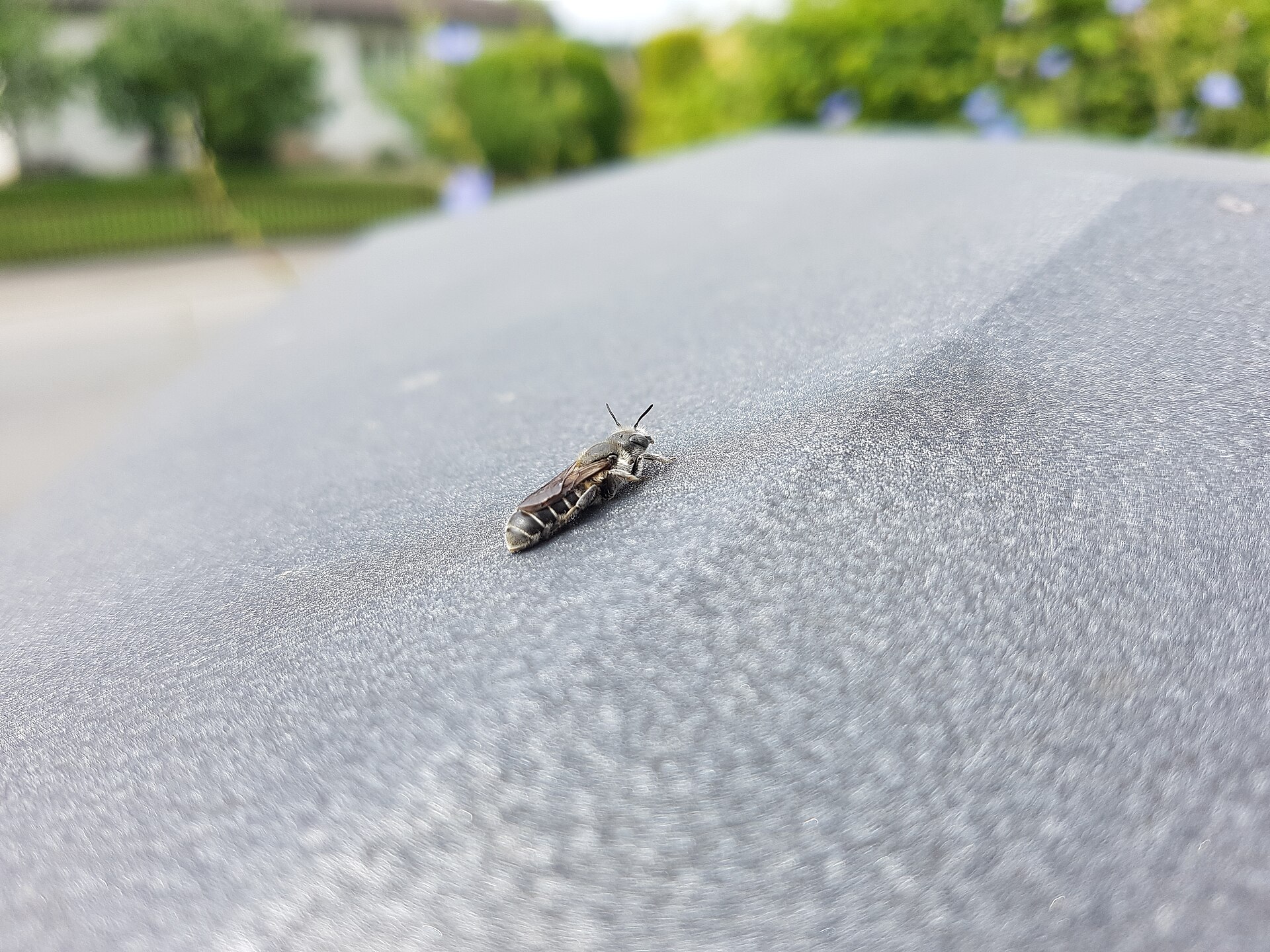
Hoplitis adunca
Viper's Bugloss Mason BeeA medium-sized mason bee (8–13 mm) with a black body, white ventral scopa, and narrow white hair bands on the tergites. Males are initially densely rust-red haired, fading to grey. It is strictly oligolectic on Echium (viper's bugloss, Boraginaceae), collecting the distinctive grey-blue pollen exclusively from these plants. It nests in pre-existing cavities such as beetle burrows in dead wood, hollow stems, and abandoned nests of other bees, as well as bee hotels, sealing cells with a hard mortar of sand and small pebbles mixed with saliva. In Switzerland it occurs in warm, dry habitats with Echium stands, such as vineyards, quarries, railway embankments, and ruderal areas up to 2100 m in the Alps. Swiss Red List: Least Concern (LC).
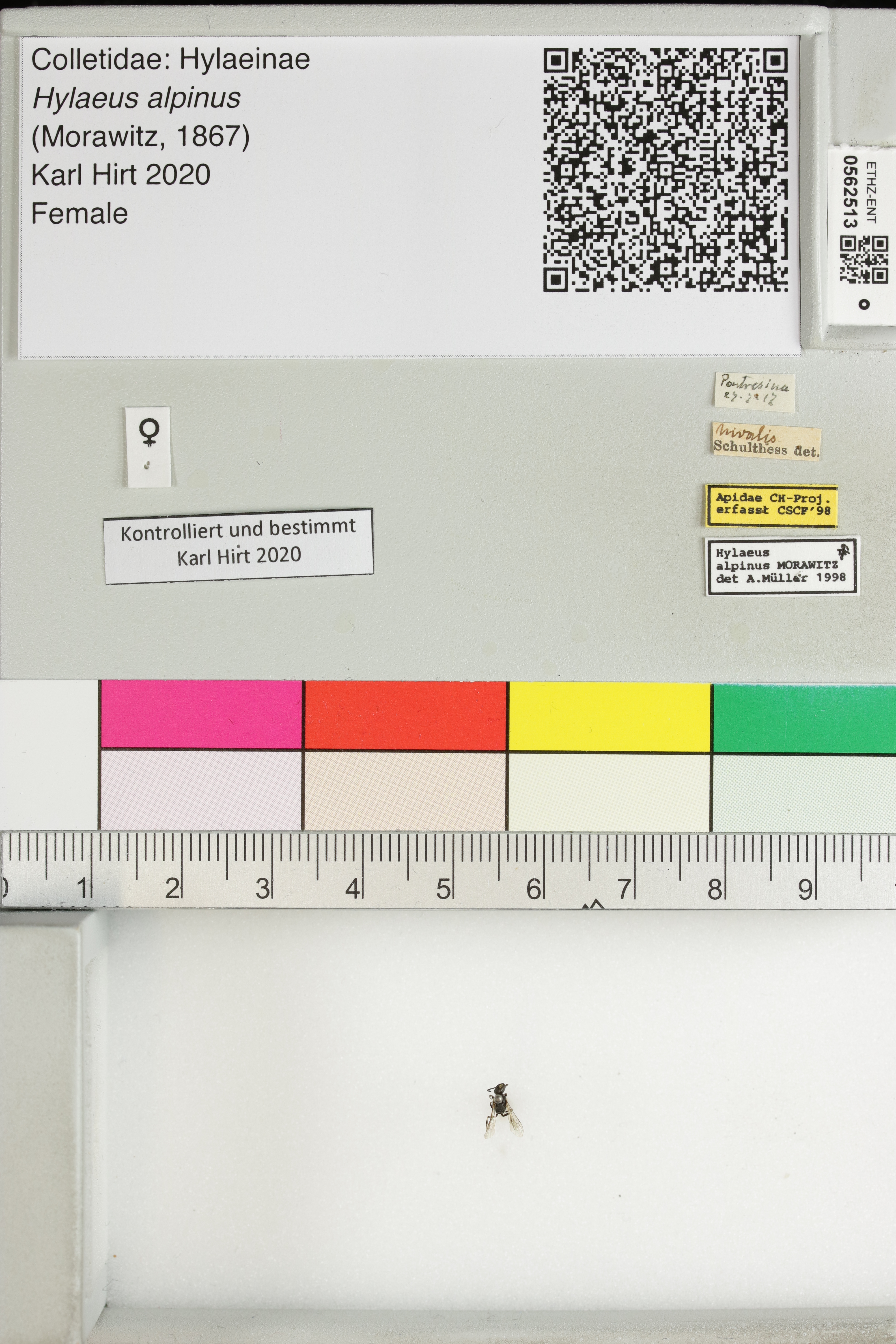
Hylaeus alpinus
Alpine Yellow-face BeeA small high-altitude masked bee (5–7 mm) found in the Swiss Alps, adapted to cold mountain conditions. It nests in cavities in dead wood or plant stems and carries pollen internally. Its flight period is short, from June to August, timed with the brief alpine summer. It visits a range of alpine flowers and is typically found above 1500 m elevation. Swiss Red List: Least Concern (LC).
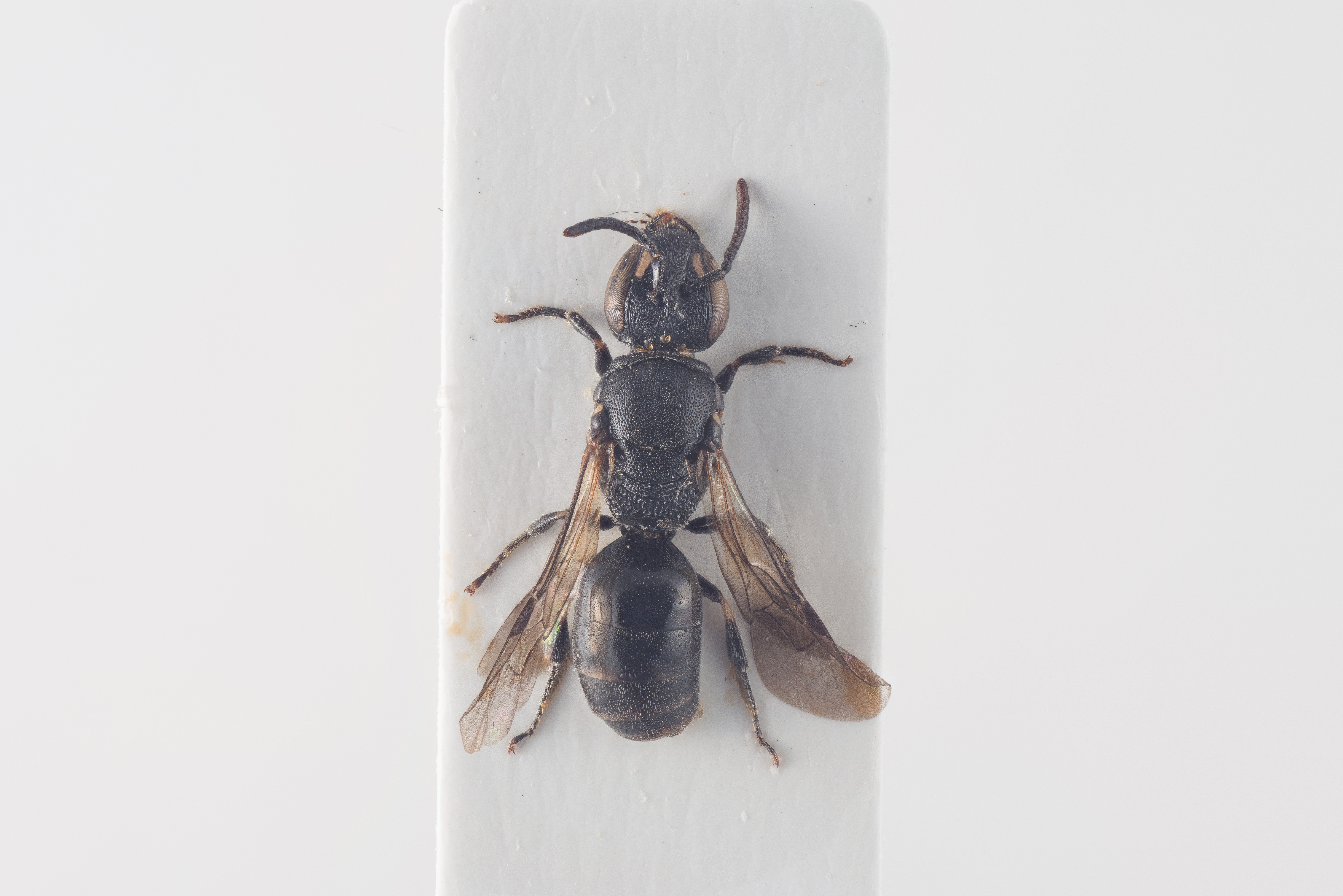
Hylaeus angustatus
Narrow Yellow-face BeeA small, slender masked bee (5–6 mm) with black body and white or yellow facial markings. Unlike most bees, it carries pollen internally in its crop instead of externally on its legs. It nests in hollow plant stems and beetle burrows in dead wood, lining its brood cells with a cellophane-like secretion. It is polylectic and visits a wide range of flowers from May to August. Swiss Red List: Near Threatened (NT).
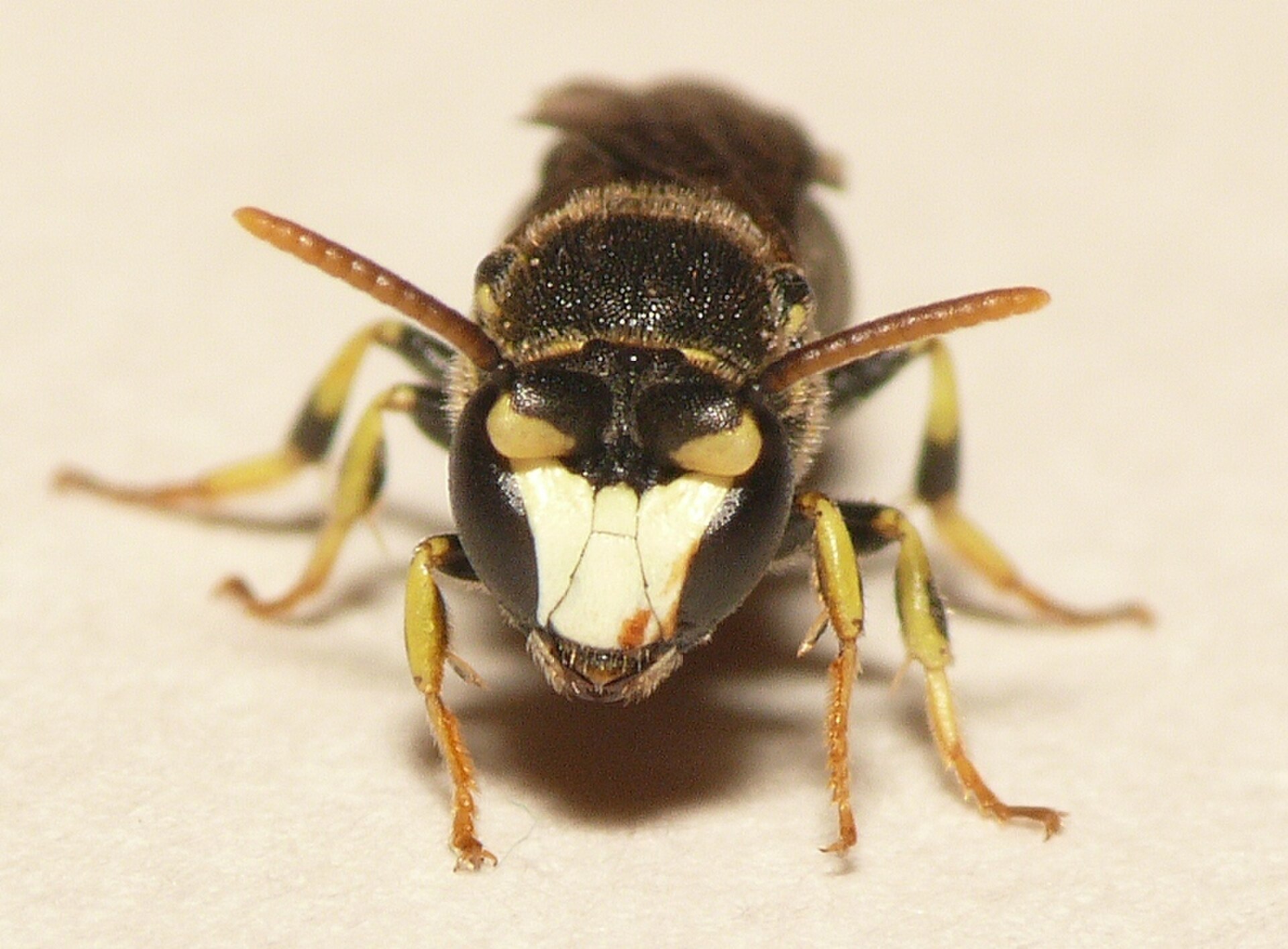
Hylaeus annularis
Annular Yellow-face BeeA small yellow-face bee (6–7 mm) with a black body and white facial markings. Males have a large white face mask, while females have two small white spots. It can be distinguished from similar Hylaeus species by the white markings on the pronotal lobes and the detailed shape of the male facial mask. It nests in hollow stems, beetle burrows in dead wood, and artificial cavities, lining cells with a cellophane-like secretion. It is a generalist forager visiting a wide range of wildflowers from several families. In Switzerland it is widespread from lowlands to montane elevations in dry meadows, vineyards, gardens, and ruderal areas, flying from May to August. Swiss Red List: Least Concern (LC).
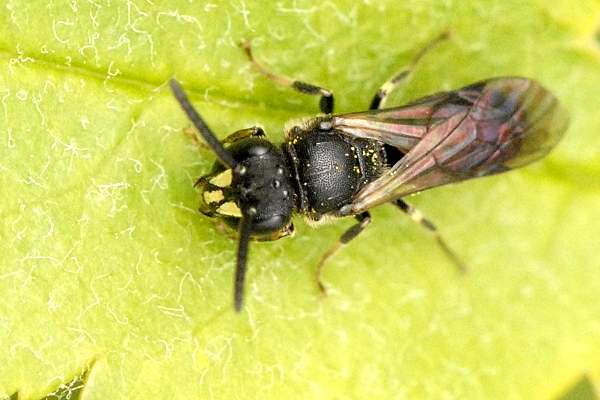
Hylaeus communis
Common Yellow-face BeeThe most common Hylaeus species in Central Europe, with a black body and white facial markings. Females have two small white spots on the face, while males have a large white mask. It nests in hollow stems and beetle burrows in dead wood, and is abundant in Swiss gardens, parks, and ruderal areas. Swiss Red List: Least Concern (LC).
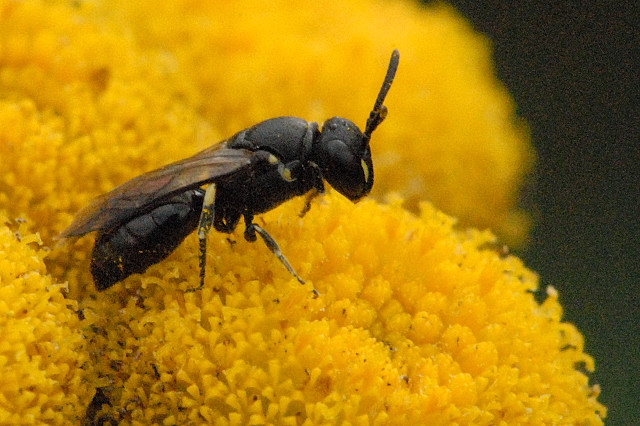
Hylaeus confusus
Confusing Yellow-face BeeA small yellow-face bee with a black body and white facial markings, very similar to Hylaeus communis but distinguished by details of the male genitalia and the shape of the facial mask. It nests in hollow stems and cavities in dead wood and is widespread in Switzerland from lowlands to montane elevations. A generalist forager visiting a wide range of wildflowers, it is common in gardens, meadows, and forest edges. Flight period from May to September with one generation per year. Swiss Red List: Least Concern (LC).
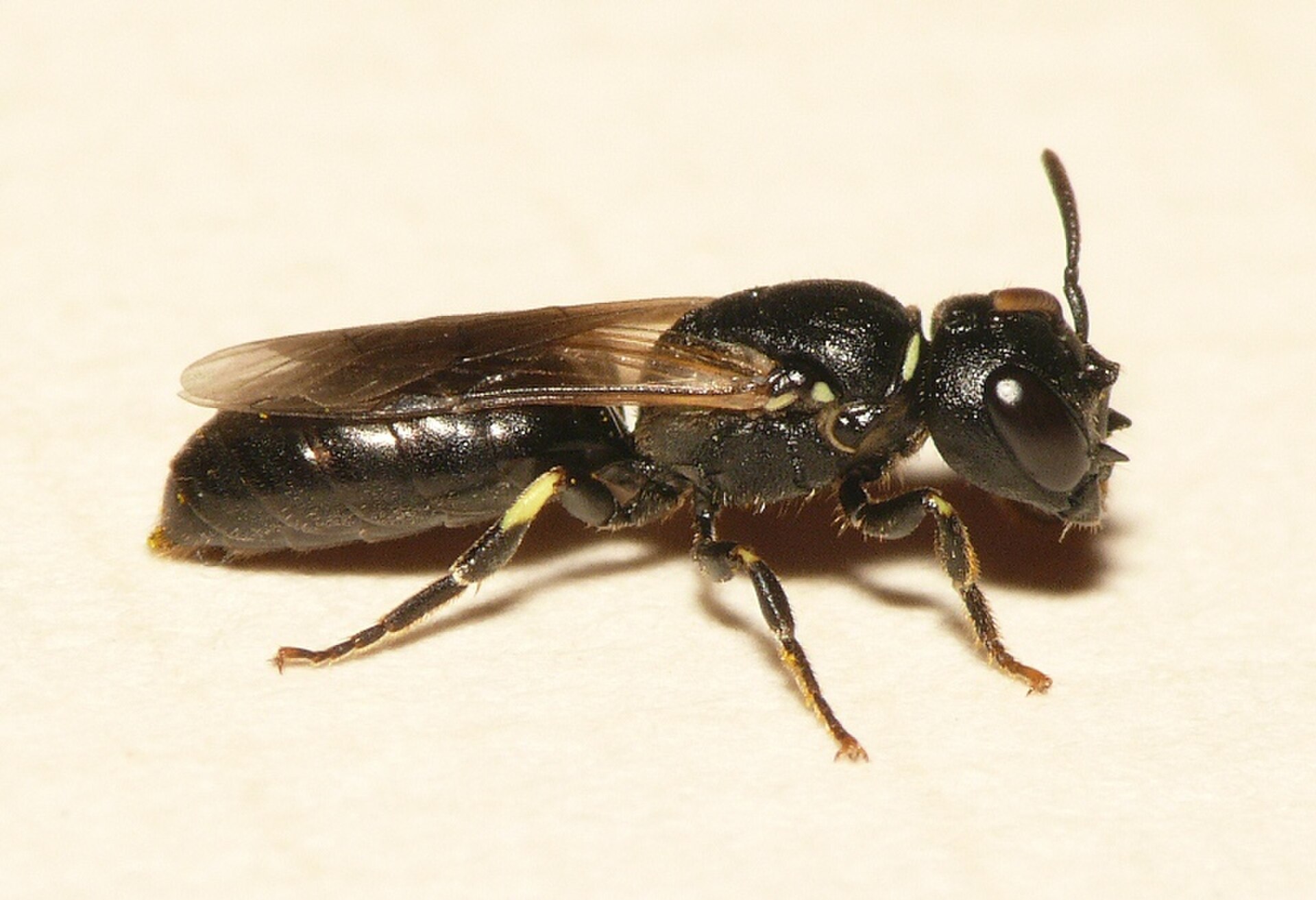
Hylaeus cornutus
Horned Yellow-face BeeA small, slender, entirely black bee (7–8 mm) with a conspicuously expanded and flattened antennal scape in males (the 'horn' that gives the species its name). Both sexes have white facial markings. It carries pollen internally in the crop. It nests in pre-existing cavities in dead wood, hollow stems, and beetle burrows. It is a generalist forager visiting a wide range of flowers. In Switzerland it occurs in warm lowlands and valleys, particularly in the Valais and Ticino. Swiss Red List: Least Concern (LC).
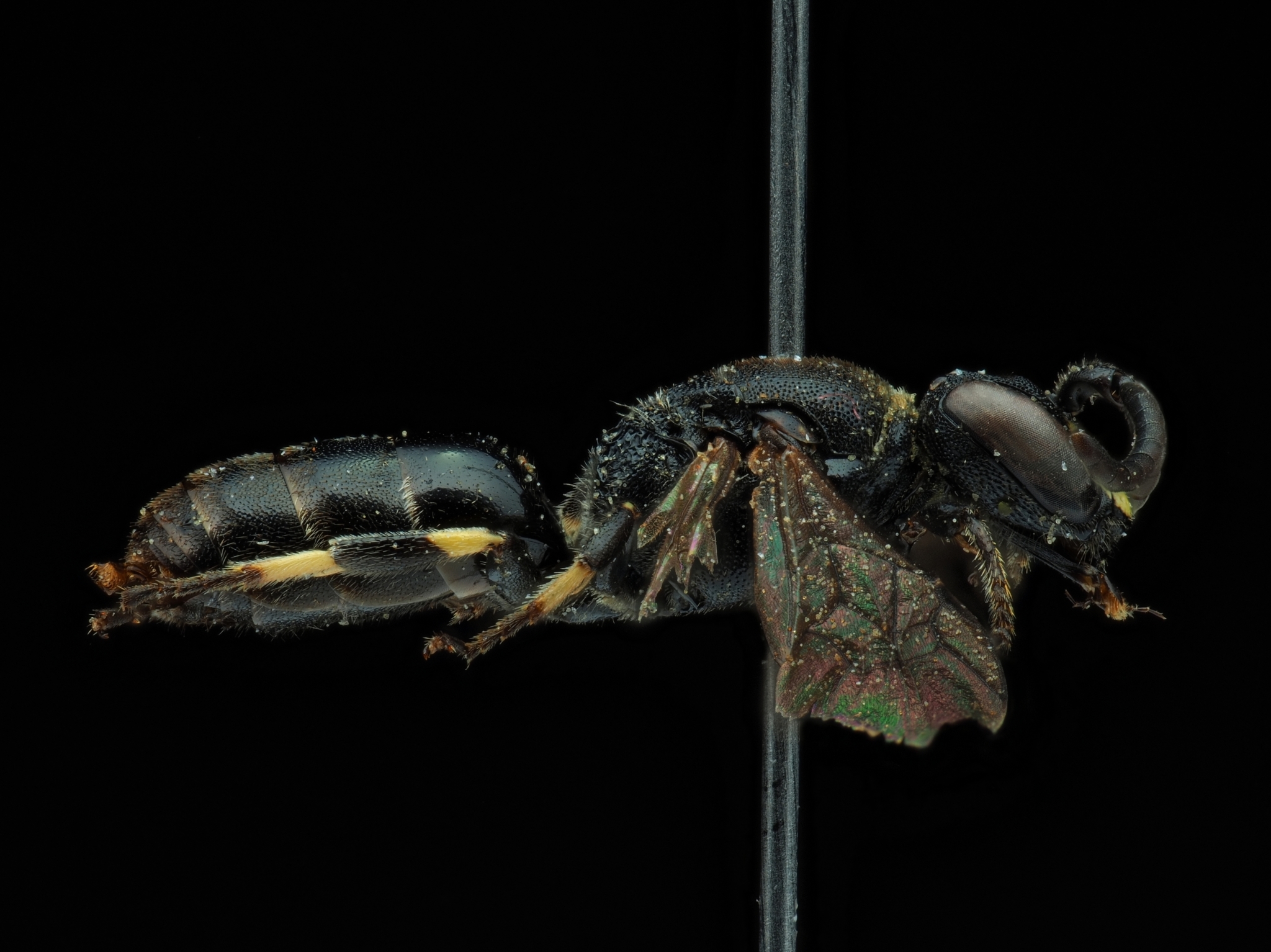
Hylaeus difformis
Variable Yellow-face BeeA slender, mostly black masked bee (6–7 mm) with characteristic white facial markings. Like all Hylaeus, it transports pollen in its crop and nests in pre-existing cavities such as hollow stems and beetle holes. It is polylectic and has a flight period from June to September, visiting a variety of wildflowers. It occurs in Switzerland in warm lowland areas. Swiss Red List: Least Concern (LC).
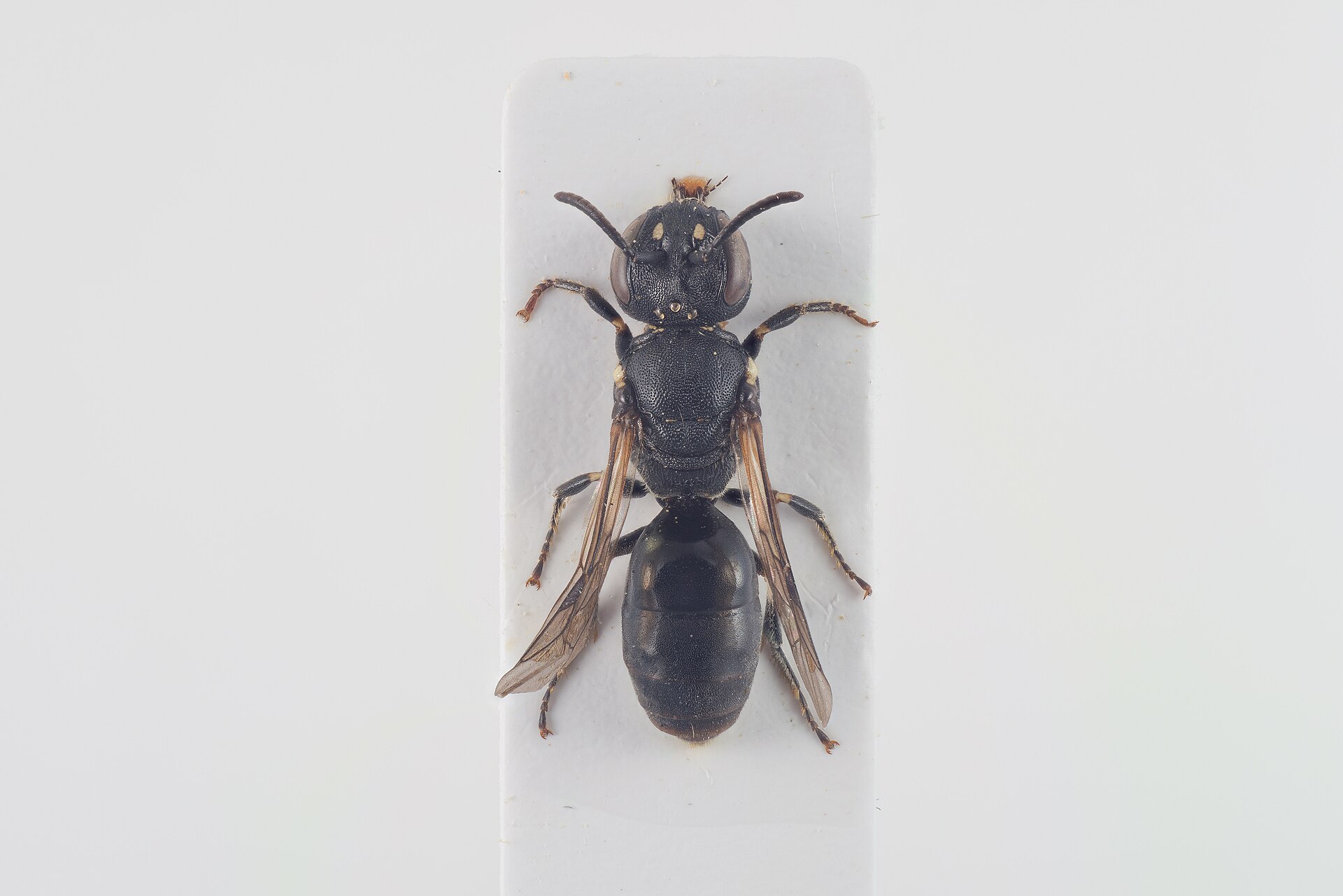
Hylaeus dilatatus
Broad-faced Yellow-face BeeA small yellow-face bee distinguished by the broadened face of the male, which has extensive white markings. It nests in hollow stems and beetle burrows in dead wood. In Switzerland it occurs in warm, dry habitats such as dry meadows, vineyards, and ruderal areas in the lowlands and inner Alpine valleys. Swiss Red List: Least Concern (LC).
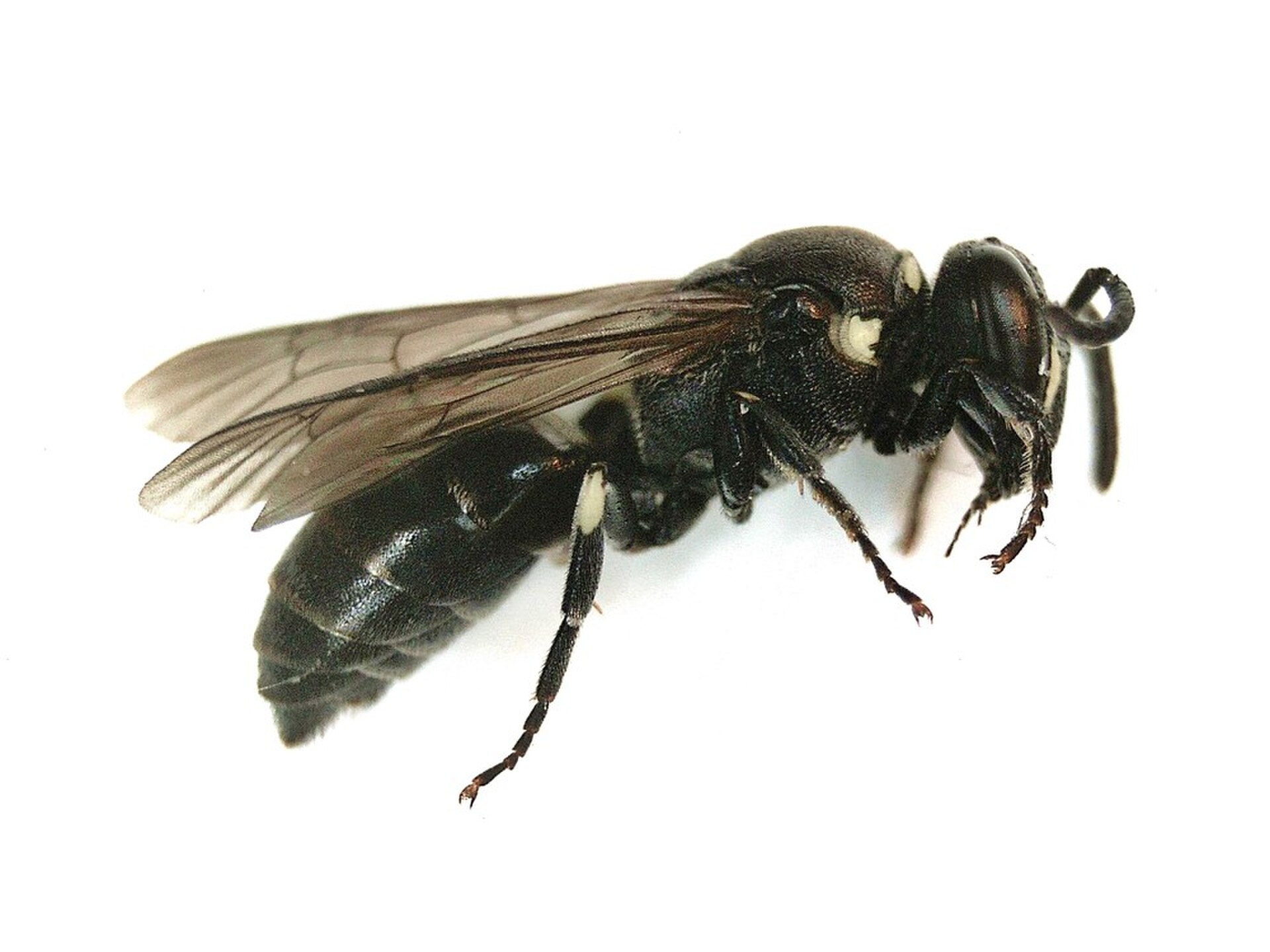
Hylaeus gibbus
Gibbus Yellow-face BeeA small black yellow-face bee with white facial markings in both sexes and a somewhat humpbacked appearance to the thorax. It nests in hollow stems and cavities. In Switzerland it is found in warm, dry habitats such as vineyards, dry meadows, and ruderal areas, visiting a variety of wildflowers including umbellifers and composites. Swiss Red List: Least Concern (LC).
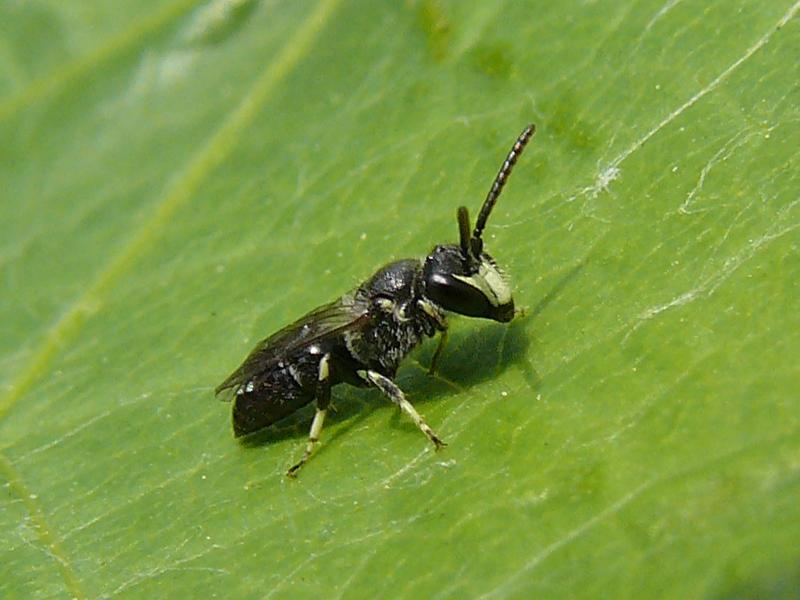
Hylaeus hyalinatus
Translucent Yellow-face BeeA small yellow-face bee with black body and white facial markings, notably with the apical margins of the abdominal tergites appearing translucent reddish-brown. It nests in hollow stems and cavities in dead wood and is widespread in Switzerland in gardens, meadows, and ruderal areas, favouring warmer sites. A generalist forager visiting flowers from many plant families, it is common in settlements and agricultural landscapes. Flight period from May to September. Swiss Red List: Least Concern (LC).
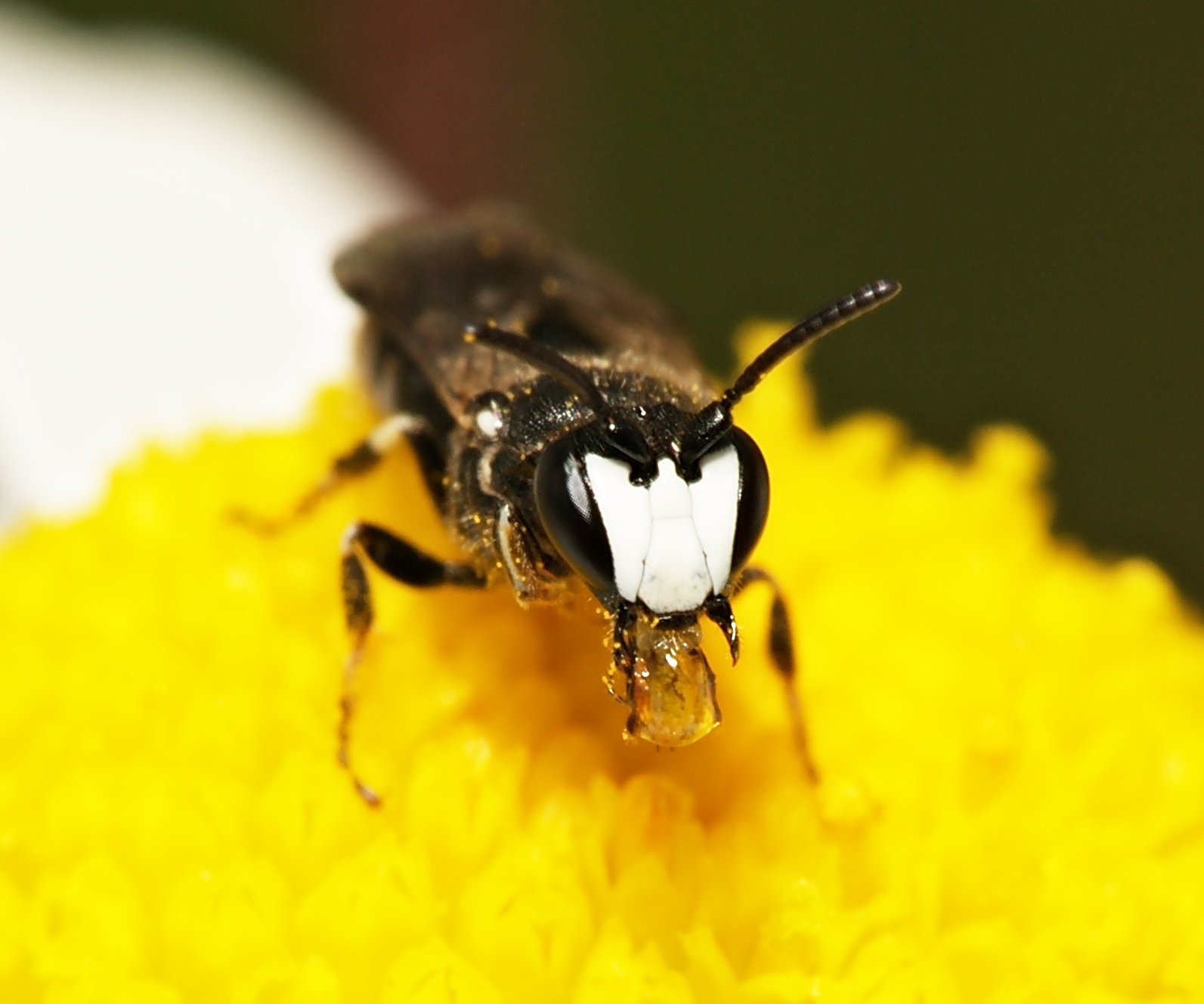
Hylaeus nigritus
Black Yellow-face BeeA robust yellow-face bee with a black body that is one of the darkest Hylaeus species, with males having only small white facial spots. It nests in hollow stems and beetle burrows in dead wood. In Switzerland it is common in meadows, gardens, and forest edges from lowlands to alpine elevations. Swiss Red List: Least Concern (LC).
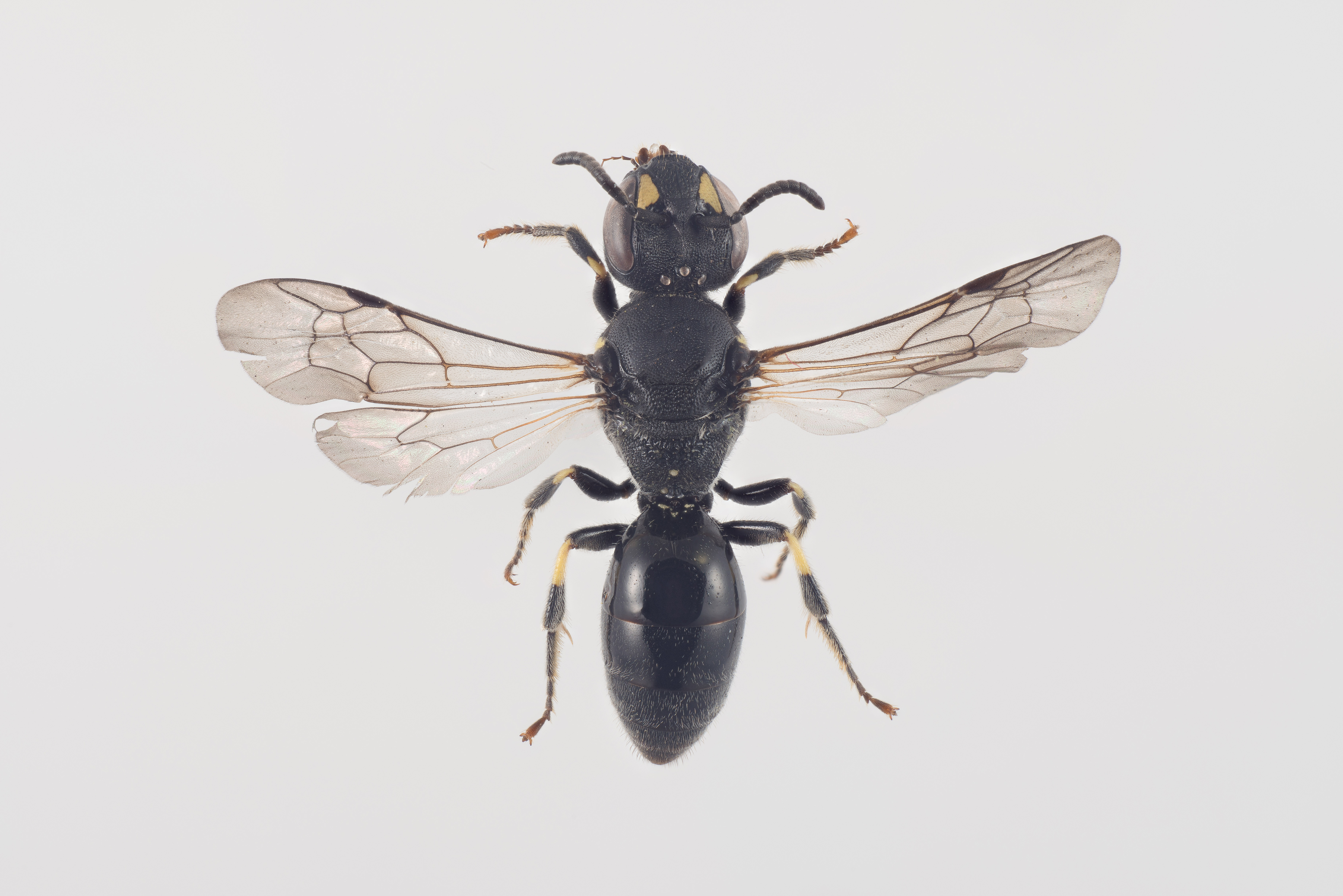
Hylaeus pectoralis
Reed Yellow-face BeeAn ecologically distinctive yellow-face bee that nests exclusively in old galls of the Lipara lucens fly on common reed. The body is black with white facial markings. It is a wetland obligate, found only in reed beds and marshlands. In Switzerland it occurs in scattered records around lakes and wetlands where Phragmites reed grows. Swiss Red List: Vulnerable (VU).
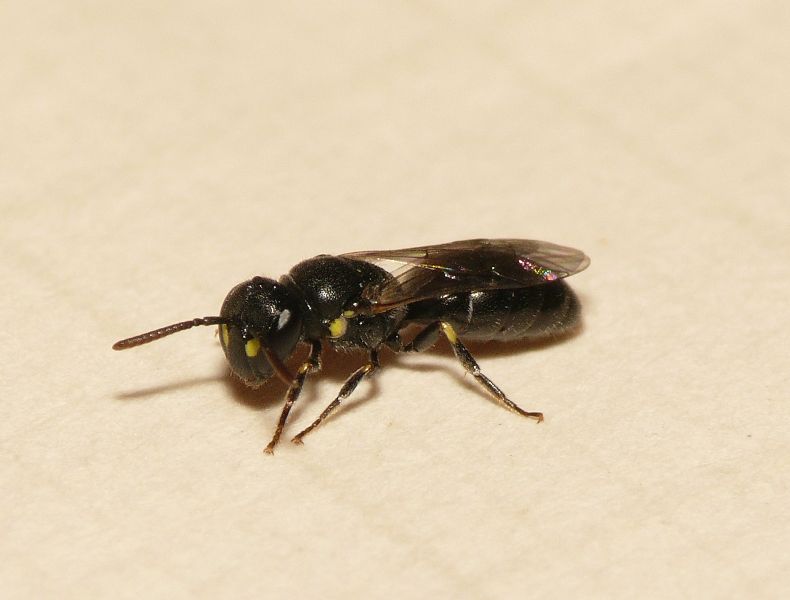
Hylaeus pictipes
Painted Yellow-face BeeA small yellow-face bee with distinctive red or pale markings on the legs and a black body with white facial markings. It nests in hollow stems and cavities in dead wood. In Switzerland it occurs in warm, dry habitats including dry meadows, vineyards, and ruderal areas in lowland valleys. Swiss Red List: Least Concern (LC).
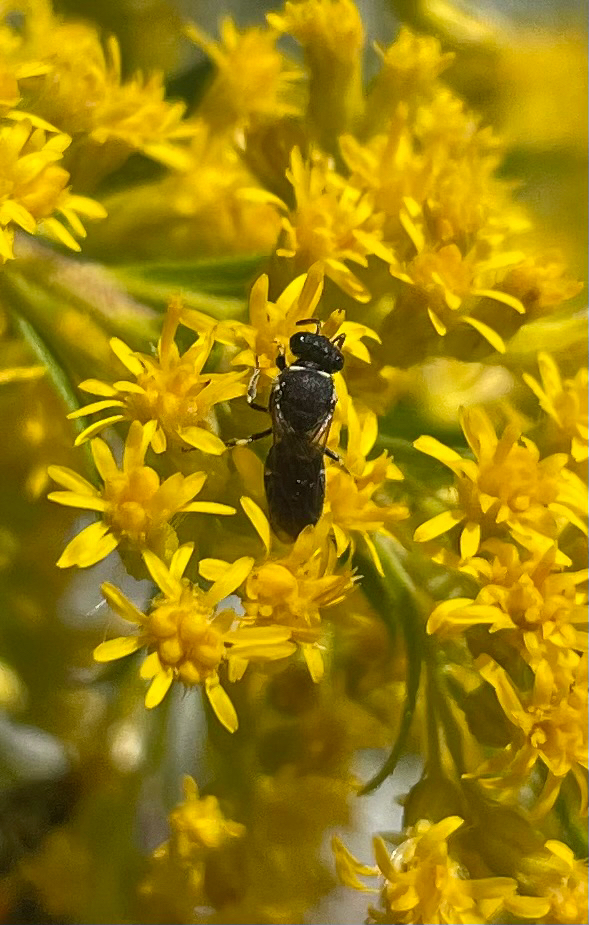
Hylaeus punctatus
Punctate Yellow-face BeeA small yellow-face bee with a black body and white facial markings, characterized by fine, dense punctuation on the scutum. Females have two small white face spots while males have a full white face mask. It nests in hollow stems and beetle burrows in dead wood. In Switzerland it occurs in warm, dry habitats such as dry meadows, vineyards, and ruderal areas from lowlands to montane elevations. Swiss Red List: Least Concern (LC).
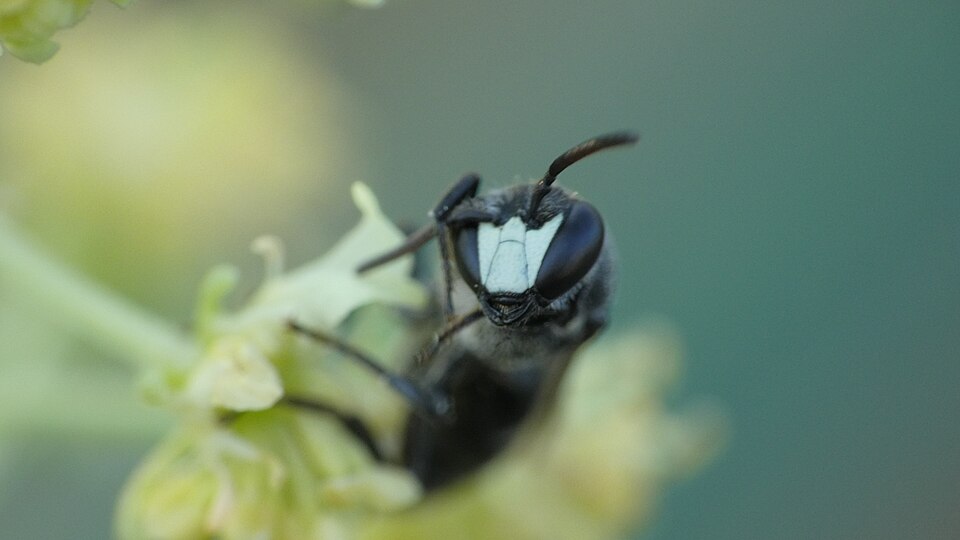
Hylaeus signatus
Large Yellow-face BeeA relatively large Hylaeus species (7–9 mm) with a black body and extensive white facial markings that extend broadly up the frons in males. It is closely associated with Asteraceae flowers, especially Centaurea and Cirsium species, from which it collects both pollen and nectar. It nests in hollow stems and beetle burrows in dead wood and is widespread in Switzerland in dry meadows, ruderal areas, and field margins. Swiss Red List: Least Concern (LC).
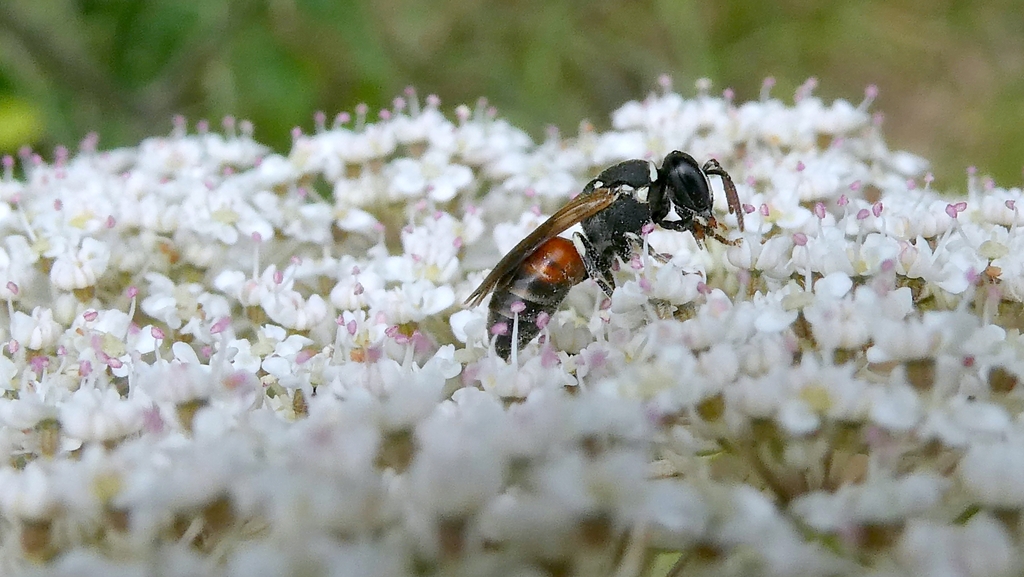
Hylaeus variegatus
Variegated Yellow-face BeeA small yellow-face bee with white facial markings and distinctive pale whitish-yellow spots on the pronotal lobes. Females have two longitudinal yellow stripes on the clypeus; males have a full white face mask. It nests in hollow stems and beetle borings in dead wood. In Switzerland it occurs in warm, dry habitats such as vineyards, dry meadows, and ruderal sites, mainly in lowland valleys including the Valais and Ticino. Swiss Red List: Vulnerable (VU).
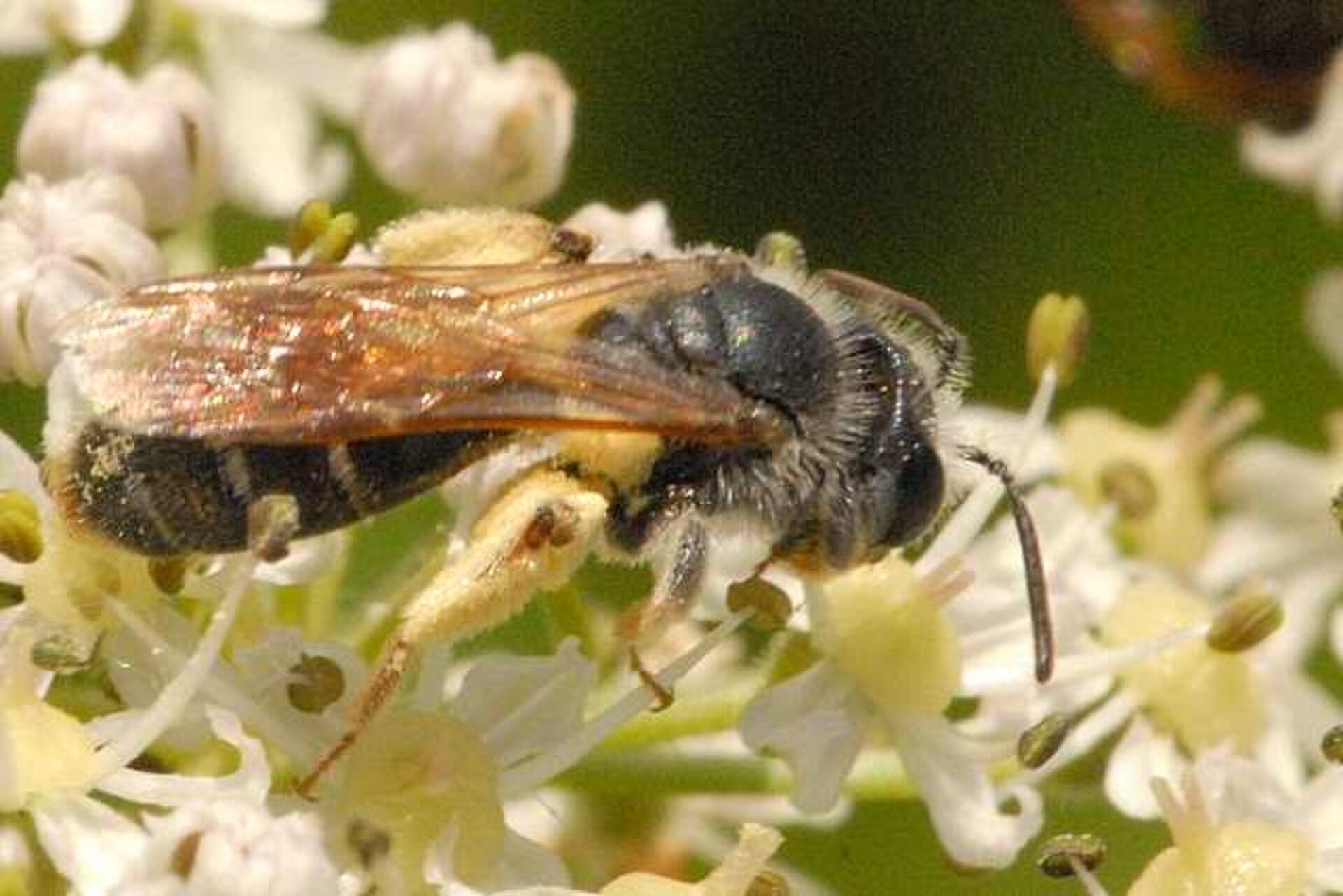
Lasioglossum albipes
White-legged Furrow BeeA medium-sized sweat bee (6–8 mm) with a metallic green head and thorax, a black abdomen with narrow white hair bands, and distinctly pale hind tibiae in females. It is a primitively eusocial species forming small annual colonies, and a generalist forager visiting flowers from multiple plant families. In Switzerland it is common and widespread from lowland gardens to alpine meadows. Swiss Red List: Least Concern (LC).
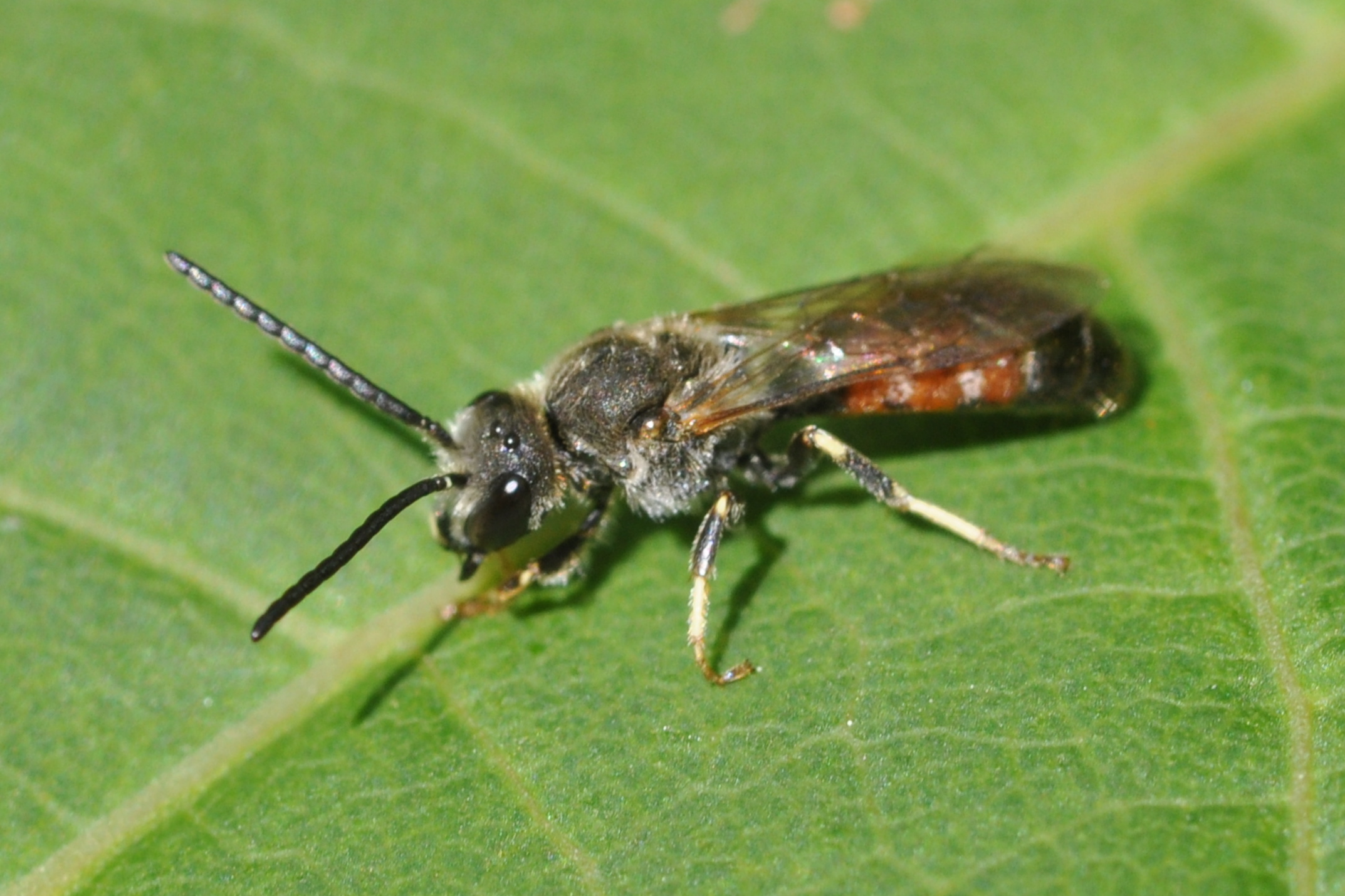
Lasioglossum calceatum
Common Furrow BeeOne of the most widespread Lasioglossum species in Europe. Females (7–9 mm) have a metallic green head and thorax, a black abdomen with broad white hair bands, and reddish-brown hind tarsi. It is primitively eusocial with small annual colonies and a generalist forager. In Switzerland it occurs in gardens, meadows, and ruderal areas from lowlands to subalpine elevations . Swiss Red List: Least Concern (LC).
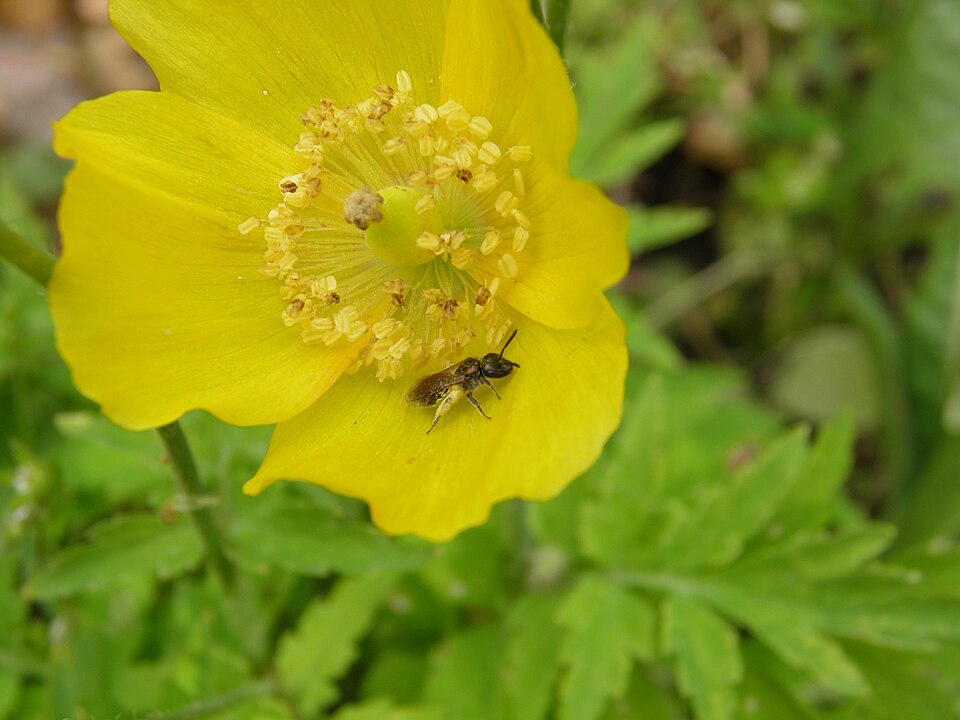
Lasioglossum cupromicans
Brassy Furrow BeeA medium-sized Lasioglossum (7–9 mm) with a distinctive coppery-bronze metallic sheen on the head and thorax, setting it apart from the more common greenish species. The abdomen is black with narrow white hair bands. It nests solitarily in self-dug burrows in bare soil. In Switzerland it occurs in warm, dry habitats such as dry meadows, vineyards, and ruderal areas in lowland and colline zones. Swiss Red List: Vulnerable (VU).
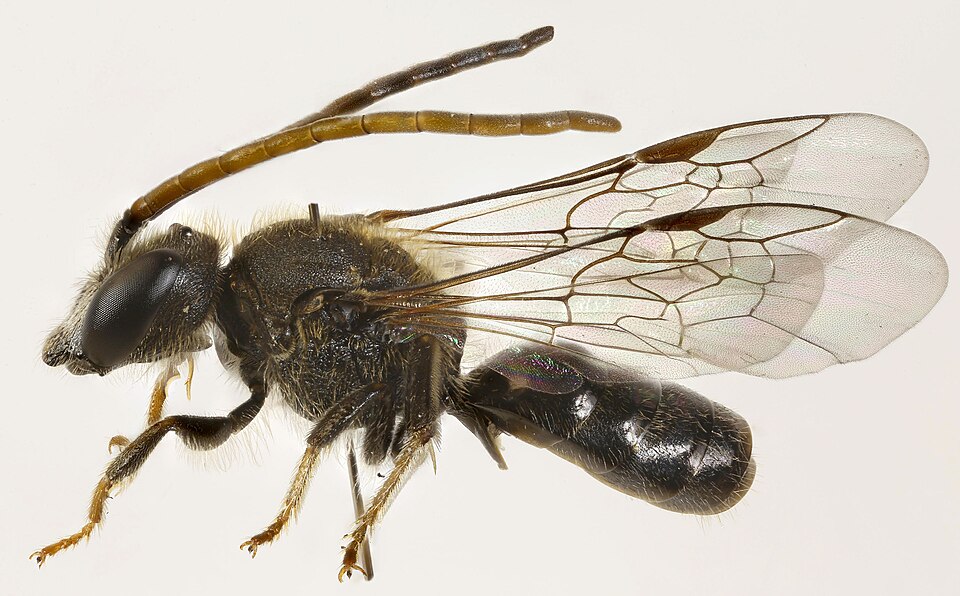
Lasioglossum fratellum
Brotherly Furrow BeeA small sweat bee (6–8 mm) with a metallic green to bronze head and thorax and a black abdomen with narrow white hair bands. The scutum is densely and finely punctate with a dull surface. It is a generalist (polylectic) forager visiting flowers from several plant families including Asteraceae and Rosaceae. The nesting biology is not fully understood but it is believed to nest in self-excavated burrows in bare soil, possibly in small aggregations. It is found in forests, forest edges, and mountain meadows. In Switzerland it occurs from montane to alpine elevations in the Alps and Jura, flying from May to September. Swiss Red List: Least Concern (LC).
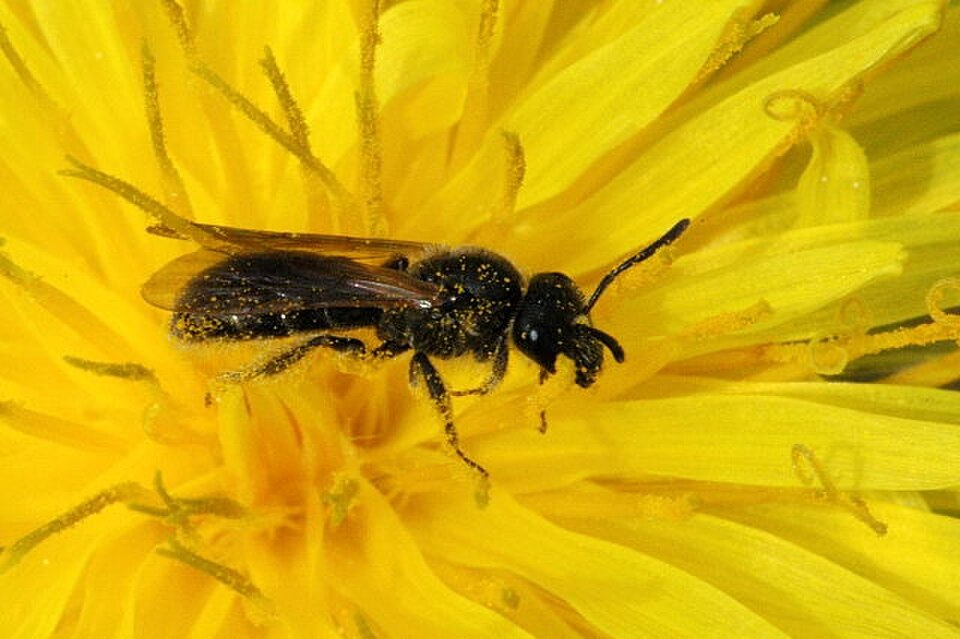
Lasioglossum fulvicorne
Hairy-legged Furrow BeeA small sweat bee (6–8 mm) with a metallic green head and thorax and a black abdomen with narrow white hair bands. Females have distinctly reddish-brown antennae (fulvicorne means red-horned) and pale yellowish-brown hind tibiae. It is a generalist forager visiting a wide range of wildflowers. It nests in self-excavated burrows in bare or sparsely vegetated sandy or loamy soils, often in small aggregations in warm, sunny locations. In Switzerland it is widespread from lowlands to montane elevations in dry meadows, vineyards, ruderal areas, and forest edges, flying from April to September. Swiss Red List: Least Concern (LC).
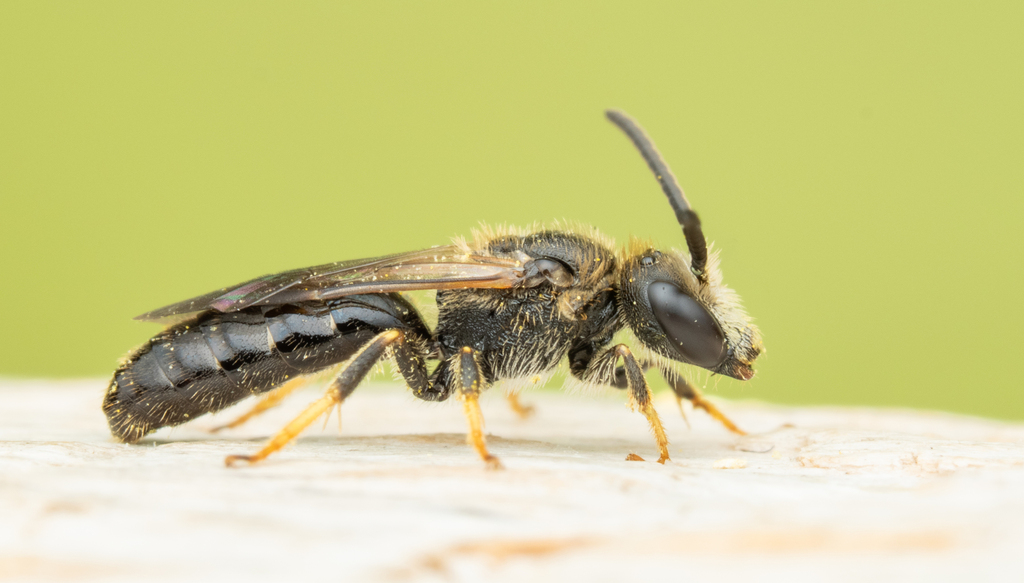
Lasioglossum laeve
Shiny-gastered Furrow BeeA small, slender, shiny black sweat bee (6–8 mm) with sparse white hair bands on the abdomen. It is a generalist forager visiting Asteraceae, Apiaceae, and Caprifoliaceae. It nests in self-excavated burrows in sparsely vegetated soil in dry meadows and ruderal areas. In Switzerland it is classified as endangered (EN) and is found in scattered localities in warm lowland areas, particularly in dry grasslands and fallow vineyards.
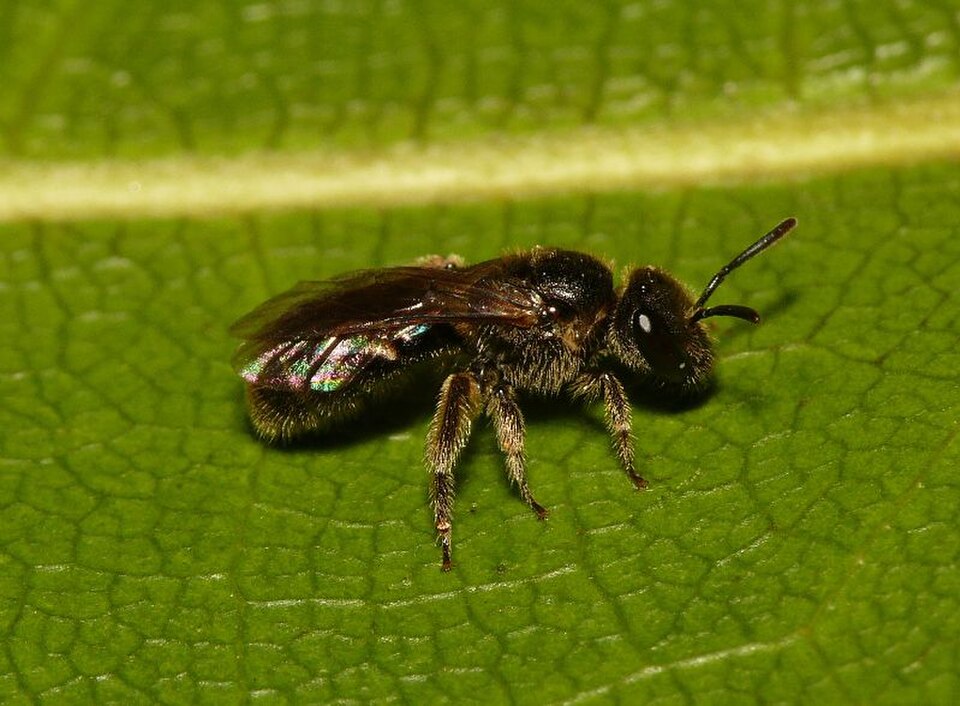
Lasioglossum laticeps
Broad-headed Furrow BeeA very small sweat bee (6–7 mm) with a black non-metallic body and a characteristically broad, short face in females. It is a generalist (polylectic) forager visiting flowers from at least 7 plant families including Apiaceae, Asteraceae, Brassicaceae, and Rosaceae. It is primitively eusocial, forming small annual colonies. It nests in self-excavated burrows in loamy soil, cracks in dry stone walls, mortar joints, and between paving stones, often forming large colonies. It is common and widespread in Switzerland from lowlands to montane elevations, found in vineyards, forest edges, meadows, ruderal areas, and settlements. Its brood parasite is the blood bee Sphecodes ephippius. Swiss Red List: Least Concern (LC).
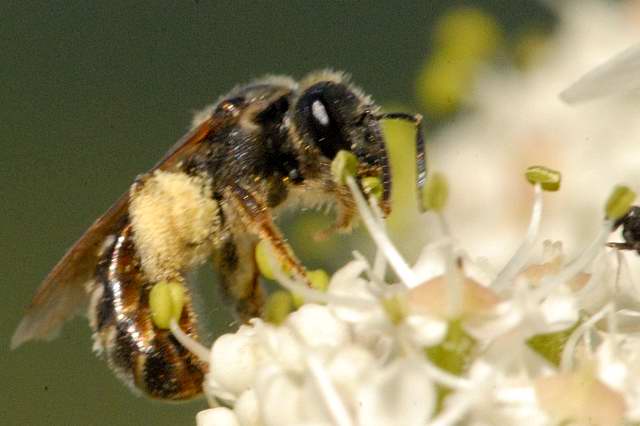
Lasioglossum leucozonium
White-zoned Furrow BeeA medium-sized sweat bee (8–10 mm) with a metallic blue-green head and thorax and a black abdomen with a distinctive broad white hair band on the first tergite, with narrower bands on subsequent segments. It is a solitary ground-nesting bee that excavates burrows in bare or sparsely vegetated sandy or loamy soils. In Switzerland it is widespread in warm, dry habitats from lowlands to montane elevations. Swiss Red List: Least Concern (LC).
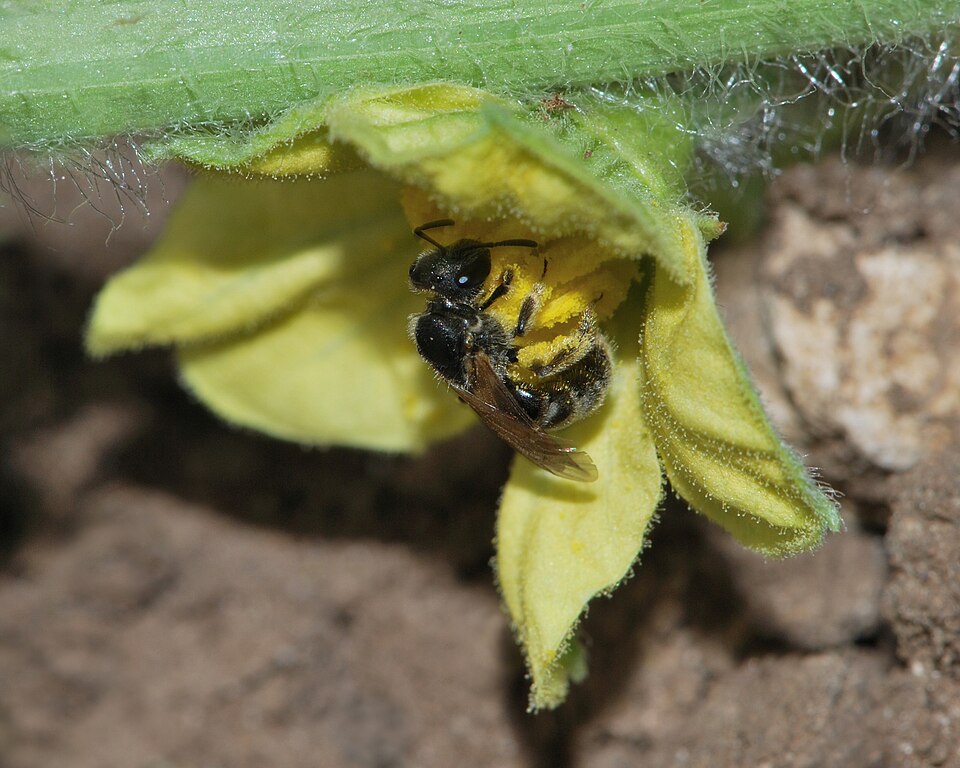
Lasioglossum malachurum
Bronze Furrow BeeA small, primitively eusocial sweat bee (6–8 mm) with a metallic green to brassy head and thorax and a black abdomen with narrow white hair bands. It nests in large aggregations in bare, compacted soil, often forming colonies of hundreds of nests in paths, field margins, and lawns. Queens dominate workers and produce two broods per year. In Switzerland it is one of the most common Lasioglossum species in agricultural landscapes of the lowlands. Swiss Red List: Least Concern (LC).
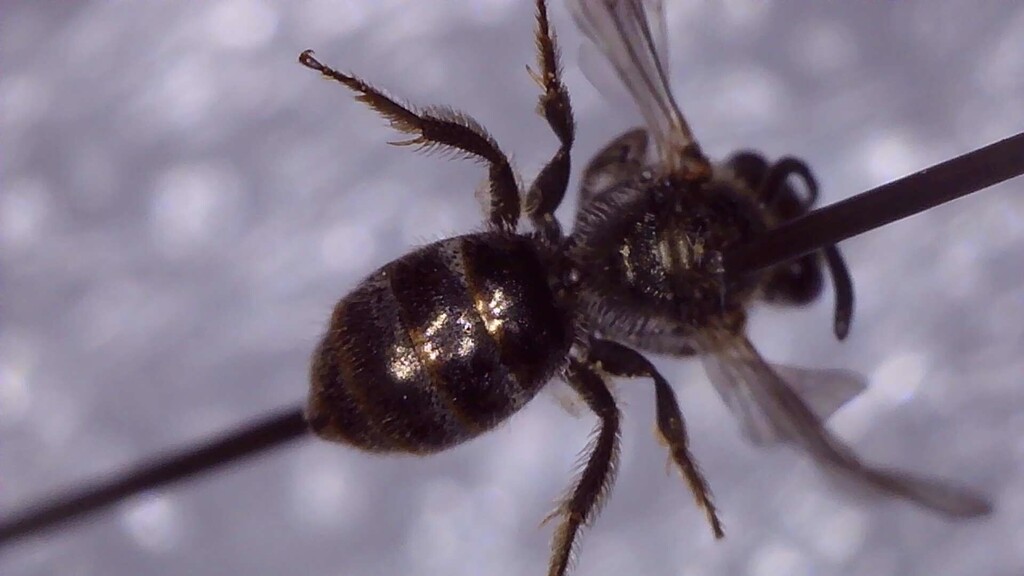
Lasioglossum morio
Green Furrow BeeA very small sweat bee (5–8 mm) with a distinctive dark metallic green to brassy sheen on the head and thorax, and a black abdomen with narrow white hair bands. The scutum is densely punctate with a dull, micro-sculptured surface that distinguishes it from similar species. It is one of the most common Halictidae in Europe, found in an extraordinarily wide range of habitats from gardens and parks to roadsides and ruderal areas. It nests in self-dug burrows in bare soil, as well as in loam walls, mortar joints, and old timber-framed buildings, often in small aggregations. It is polyleptic, visiting flowers from at least nine plant families including Asteraceae, Rosaceae, Ranunculaceae, and Brassicaceae. In Switzerland it is recorded from 570 m up to 2200 m in the Alps. Swiss Red List: Least Concern (LC).
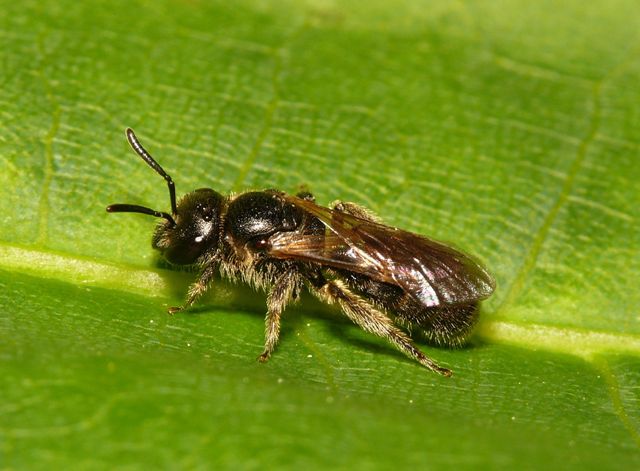
Lasioglossum pauxillum
Lobe-spurred Furrow BeeA very small sweat bee with a metallic greenish sheen on the head and thorax and a black abdomen with narrow white hair bands. It is primitively eusocial, forming small colonies in self-dug burrows in bare soil. It is a common and widespread species in Switzerland, found in gardens, meadows, field margins, and ruderal areas from the lowlands to montane elevations. Swiss Red List: Least Concern (LC).
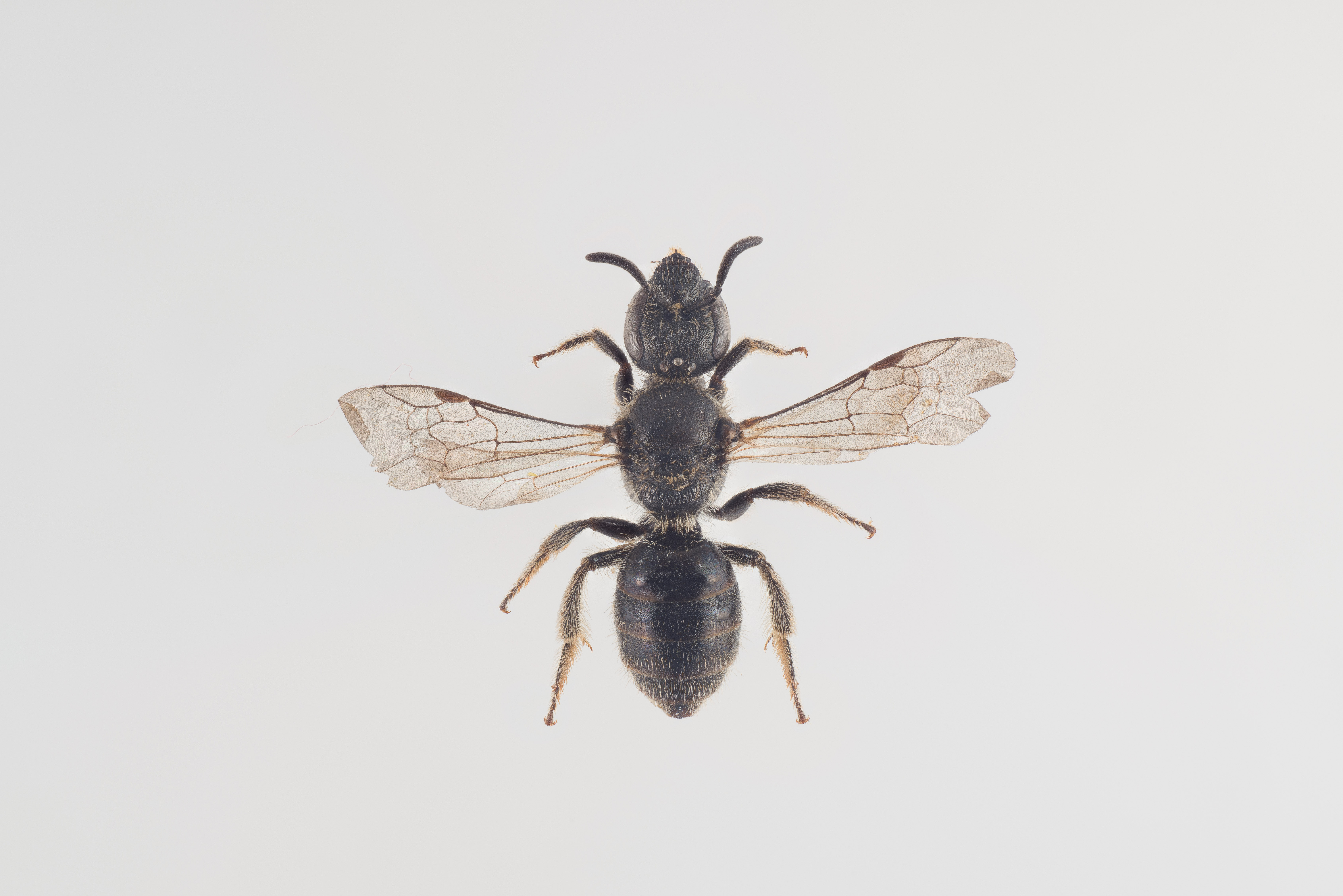
Lasioglossum punctatissimum
Long-faced Furrow BeeA very small sweat bee (5–6 mm) with a long, narrow face, a black non-metallic body, and densely punctate tergites. It is one of the smallest Lasioglossum species in Switzerland. It is bivoltine with two generations per year, flying from April to September. It nests in self-excavated burrows in sparsely vegetated soil, often in steep banks and loess walls. It is broadly polylectic, visiting flowers from Rosaceae, Asteraceae, and other families. In Switzerland it is widespread in vineyards, dry meadows, and ruderal areas in warm lowland regions. Swiss Red List: Least Concern (LC).
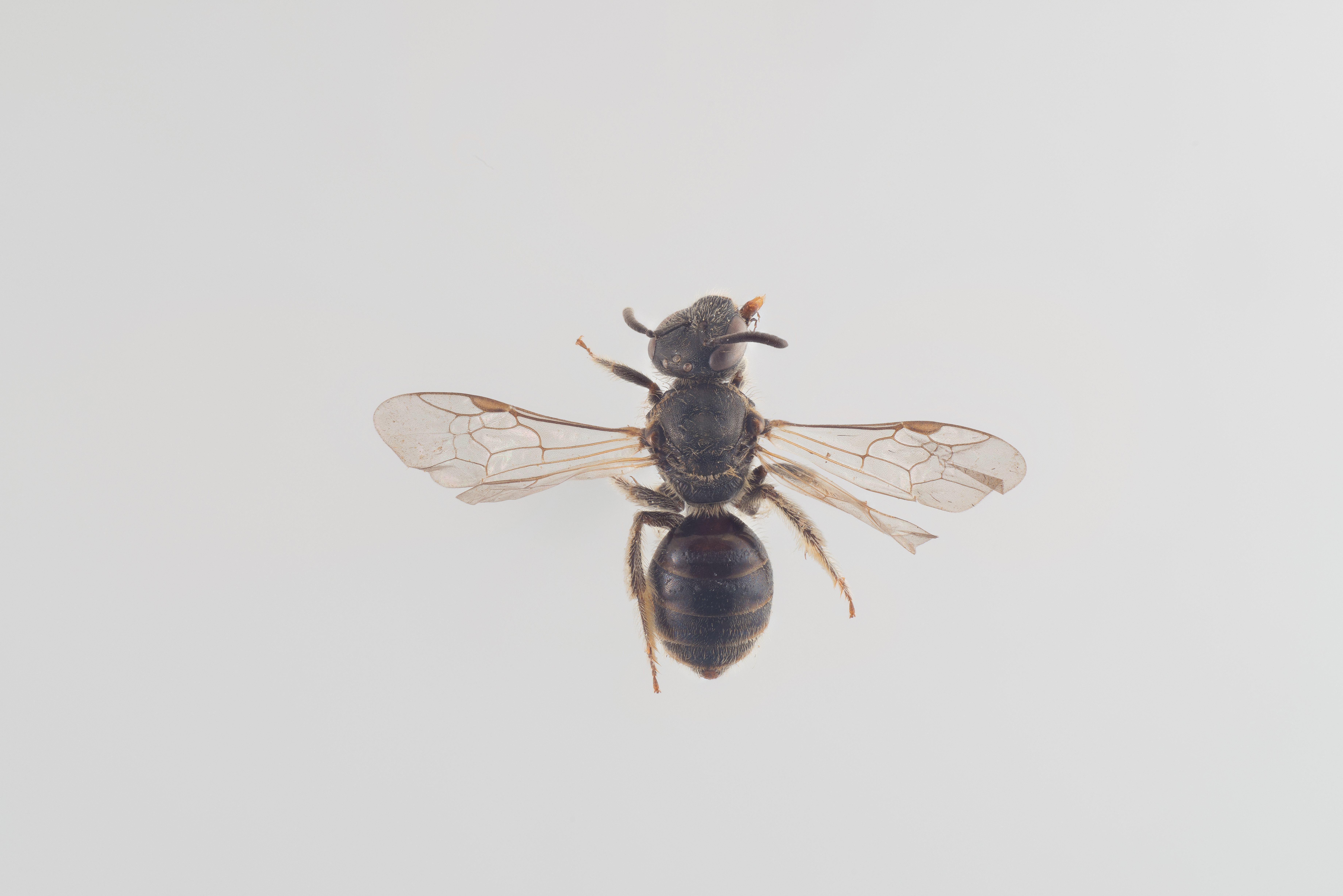
Lasioglossum sexstrigatum
Six-grooved Furrow BeeA very small Lasioglossum (5–6 mm) with a metallic green head and thorax and a black abdomen with six distinct narrow white hair bands — the species name refers to these six bands. It is a solitary ground-nesting bee that prefers sandy soils in warm, sunny locations. In Switzerland it is widespread in dry meadows, sand pits, and ruderal areas from lowlands to montane elevations. Swiss Red List: Least Concern (LC).
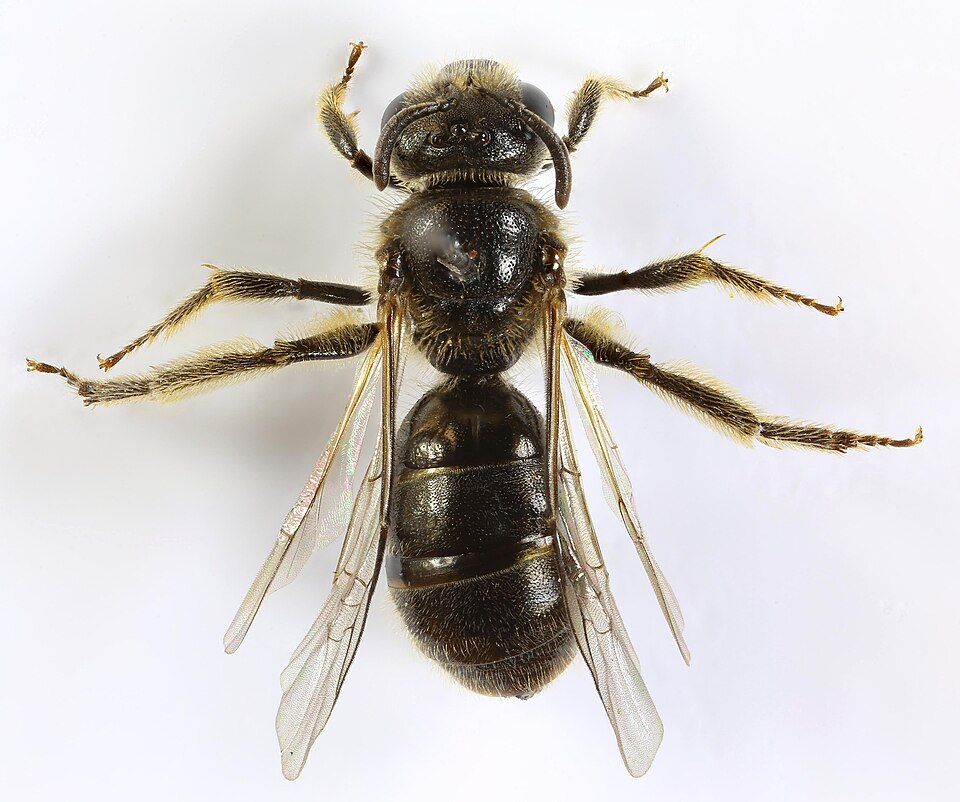
Lasioglossum villosulum
Shaggy Mining BeeA small sweat bee (6–7 mm) with a metallic green head and thorax, a black abdomen with narrow white hair bands (often absent), and distinctly pale hind tibiae in females. It is bivoltine, flying from March to October. It nests solitarily in self-excavated burrows in bare soil, sometimes in small aggregations. In Switzerland it is common and widespread from lowland gardens and meadows to montane elevations. It has a broad diet, visiting flowers from many families including Ranunculaceae, Asteraceae, Rosaceae, and Apiaceae. Swiss Red List: Least Concern (LC).
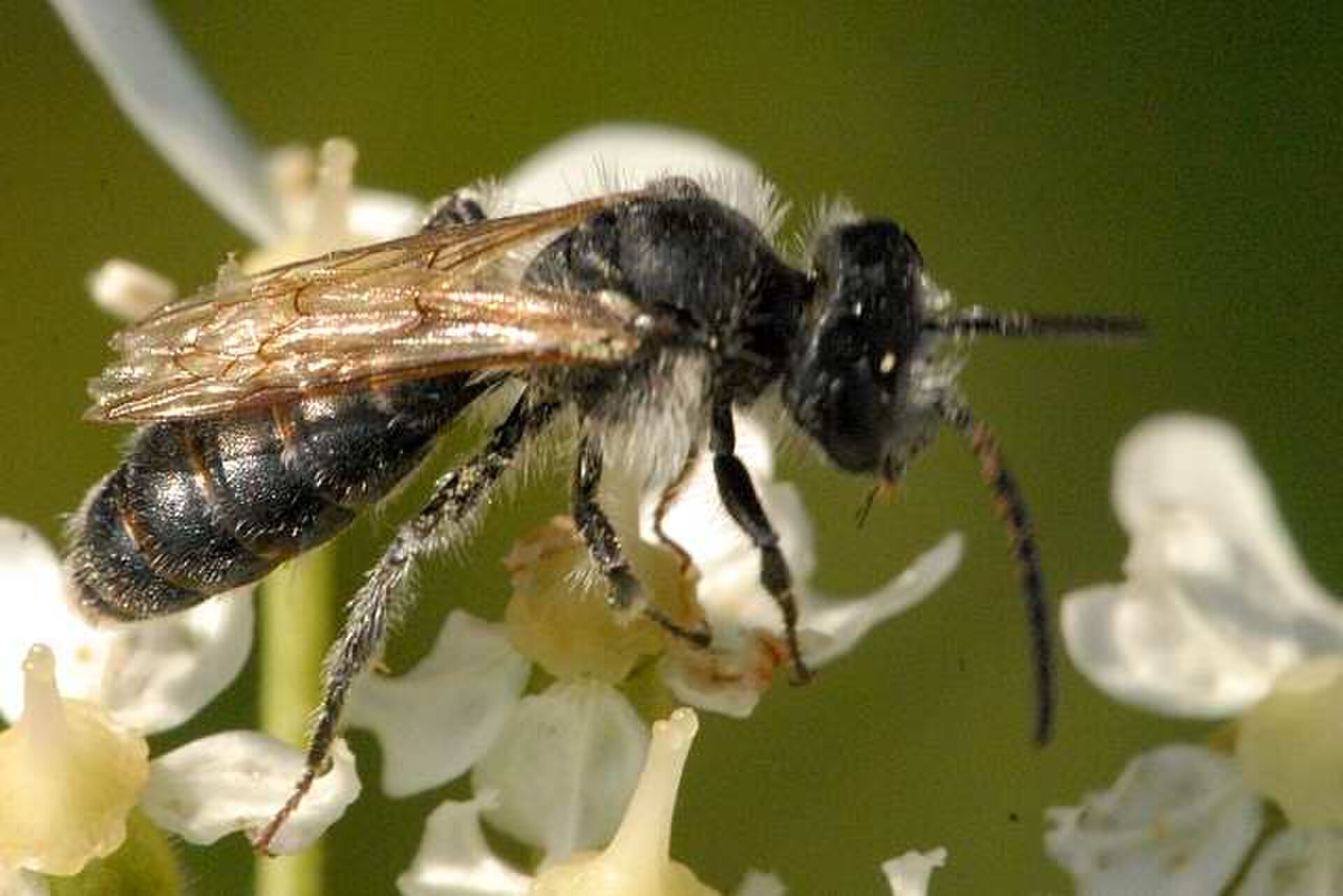
Lasioglossum zonulum
Banded Furrow BeeA relatively large Lasioglossum (8–10 mm) with a metallic blue-green head and thorax and a black abdomen with broad, dense white hair bands that are notably wide on the first three tergites. It nests solitarily in self-dug burrows in bare soil and is a generalist forager with a preference for Asteraceae. In Switzerland it occurs in warm, dry lowland habitats, especially in the Valais, Ticino, and the Basel region. Swiss Red List: Least Concern (LC).
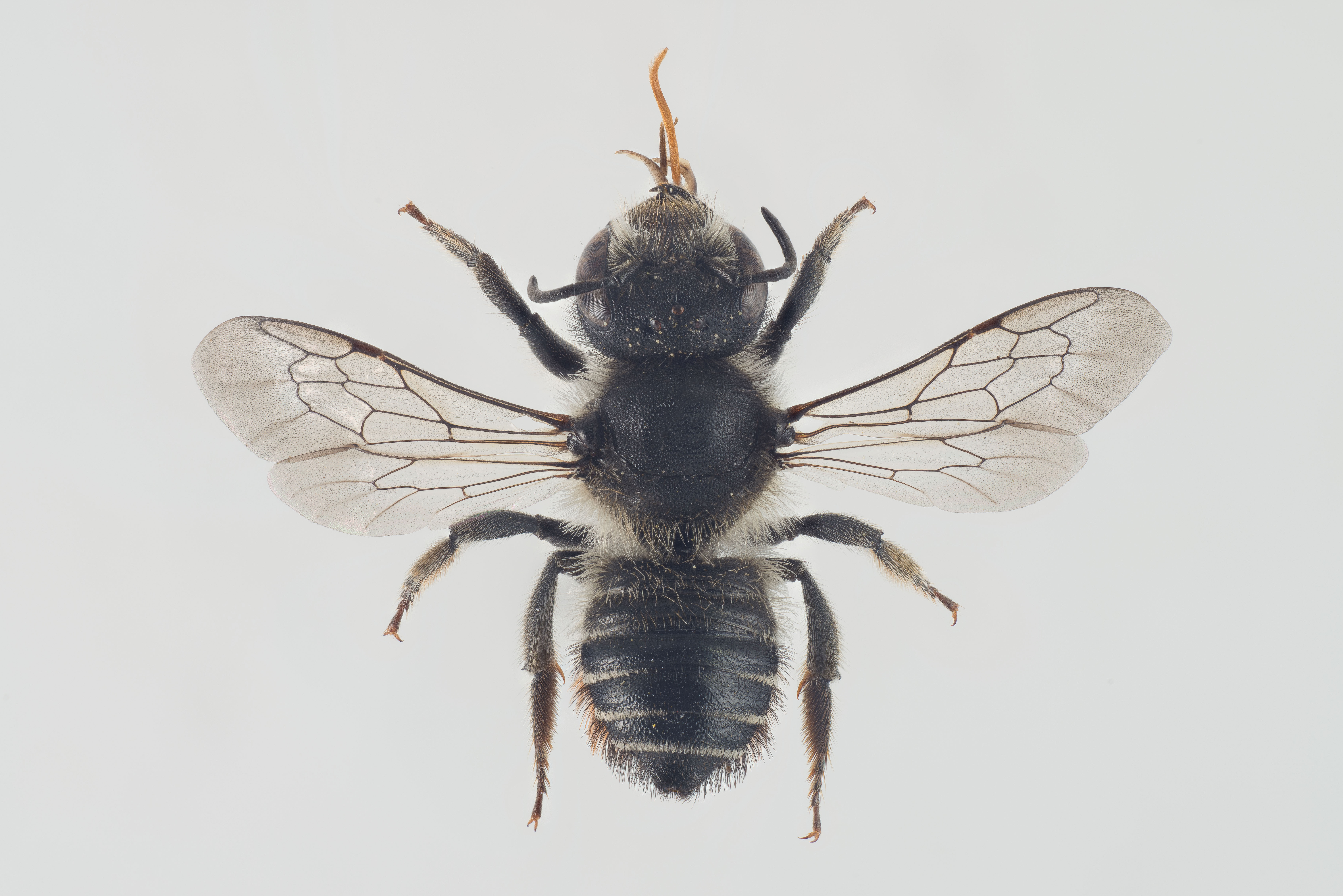
Megachile alpicola
Alpine Leafcutter BeeA very small leafcutter bee (7–10 mm), one of the smallest Megachile species. Females have a black body with white abdominal hair bands and carry pollen on the underside scopa. It nests in pre-existing beetle tunnels in dead wood and hollow plant stems, lining brood cells with cut pieces of leaves. It is a generalist forager visiting Asteraceae, Fabaceae, and Lamiaceae. In Switzerland it occurs up to 2600 m in the Alps, nesting in sun-exposed dead wood at forest edges and in clearings. Swiss Red List: Least Concern (LC).
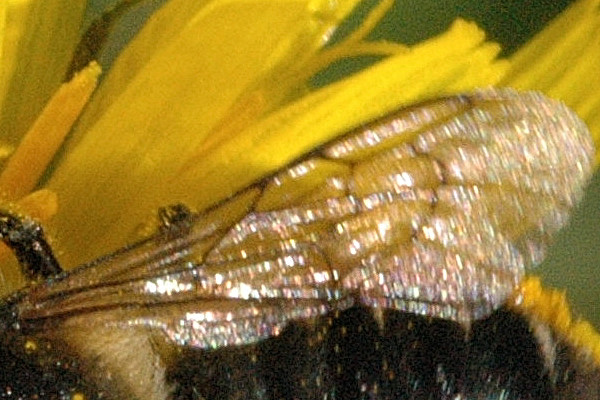
Megachile centuncularis
Common Leafcutter BeeA medium-sized leafcutter bee (9–12 mm) with a black body, dense yellowish-brown hair on the thorax, and a bright orange ventral scopa in females. It cuts circular pieces from leaves of roses, birches, and other plants to line its nest cavities. It nests in pre-existing cavities in dead wood, hollow stems, and bee hotels. In Switzerland it is widespread in gardens, parks, and settlements from lowlands to montane elevations. Swiss Red List: Least Concern (LC).
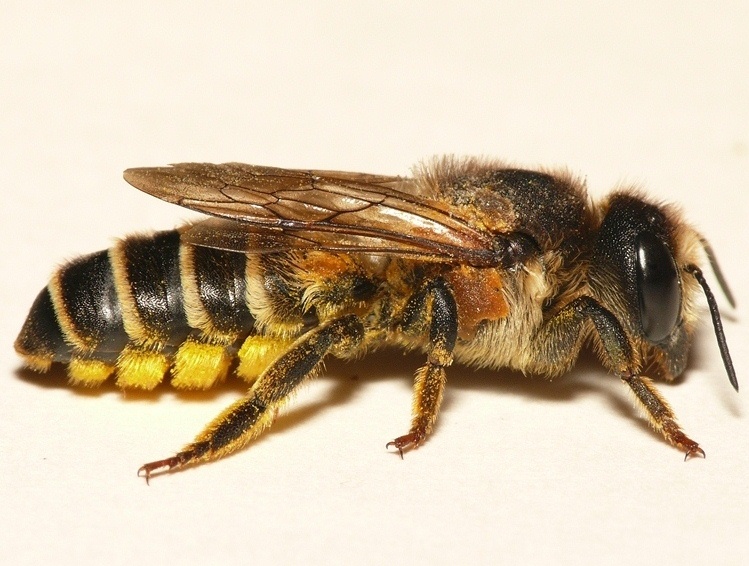
Megachile ericetorum
Heather Leafcutter BeeA medium-sized leafcutter bee (10–12 mm) with a black body, dense brownish hair on the thorax, white ventral scopa, and narrow white abdominal hair bands. It is oligolectic on Fabaceae (legumes), especially Lotus, Medicago, and Trifolium species. It nests in self-dug burrows in sandy or loamy soils, lining brood cells with chewed leaf pieces. In Switzerland it occurs in dry meadows, ruderal areas, and field margins in warm lowland regions. Swiss Red List: Least Concern (LC).
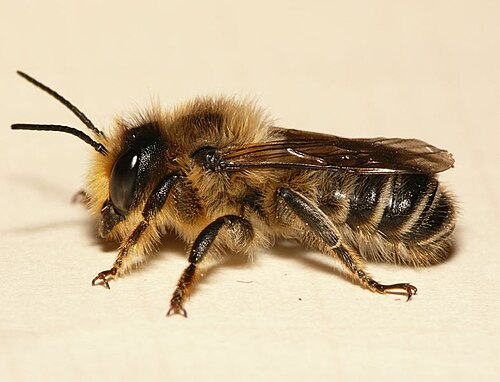
Megachile ligniseca
Wood-carving Leafcutter BeeA large leafcutter bee (12–14 mm) with a black body, dense brownish hair on the thorax, and buff-coloured ventral scopa with black hairs on the final two sternites. It nests in aerial cavities in dead wood, fence posts, and artificial cavities, lining brood cells with cut leaf pieces. It is univoltine, visiting thistles, bramble, and Himalayan balsam. In Switzerland it occurs in woodlands, scrub, gardens, and post-industrial sites across lowland and montane regions. Swiss Red List: Near Threatened (NT).
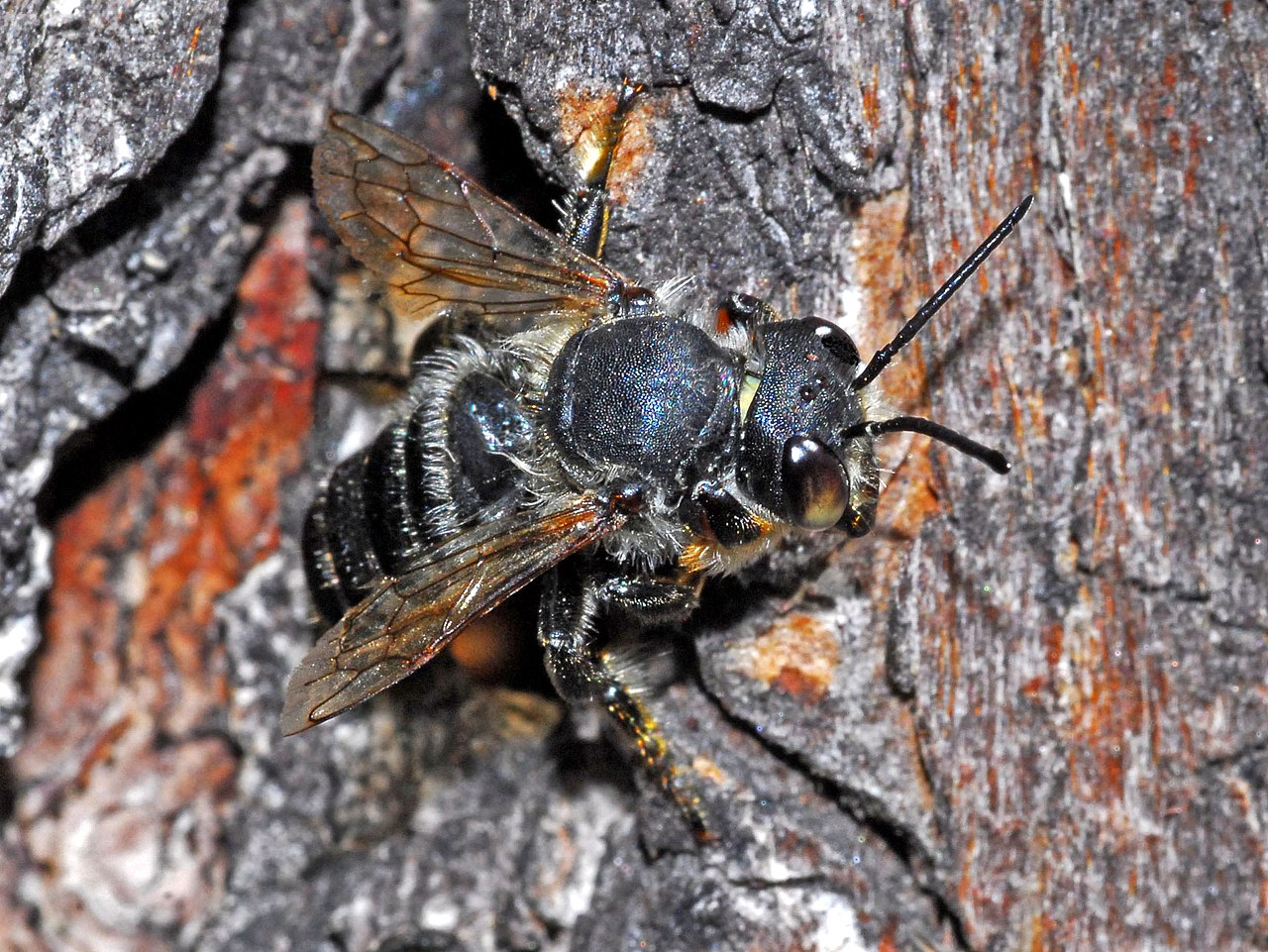
Megachile maritima
Coast Leafcutter BeeA large leafcutter bee (14–15 mm) with a yellow-brown hairy thorax, the first two tergites yellow-brown and tergites 3–6 black-haired. Females have a distinctive tri-coloured ventral scopa: white at the front, red in the middle, and black at the tip. Males have greatly expanded whitish front tarsi. It is a generalist (polylectic) forager visiting Asteraceae, Fabaceae, and other families. It nests in self-excavated burrows in sandy soil, often among grass roots, with only 1–2 brood cells lined with cut leaf pieces. It is univoltine, flying from June to August/September. In Switzerland it is rare and classified as endangered, occurring only in sandy habitats such as inland dunes, sand pits, and sandy ruderal areas in warm lowlands. Its brood parasite is Coelioxys conoidea.
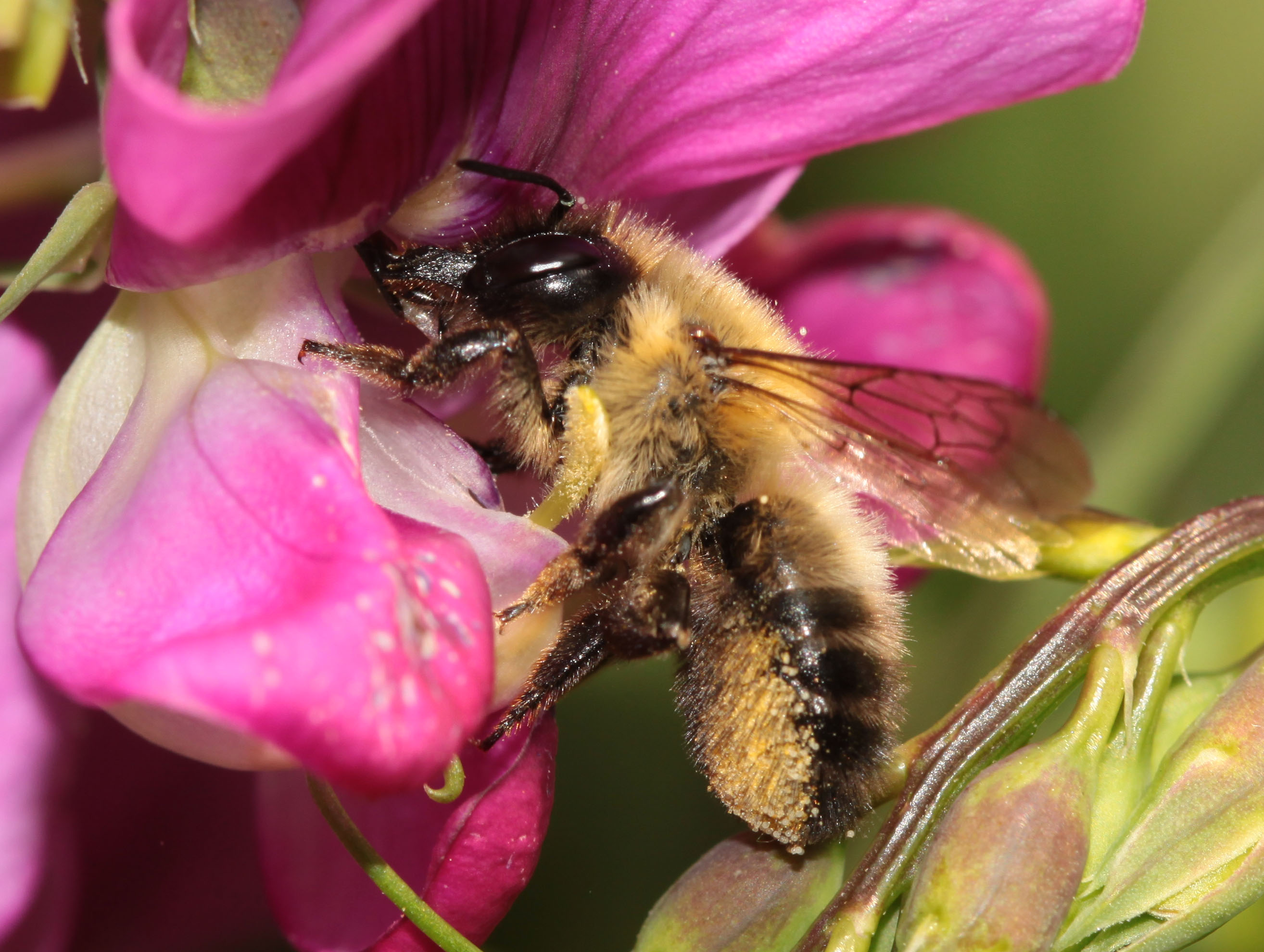
Megachile nigriventris
Black-brushed Leafcutter BeeA medium-sized leafcutter bee (10–12 mm) with a black scopa (pollen brush) on the underside of the abdomen, which distinguishes it from many other Megachile species. It nests in dead wood, excavating tunnels in rotting timber or using existing beetle burrows. It lines its brood cells with cut leaf pieces. It is polylectic and flies from June to August in forests, forest edges, and orchards. Swiss Red List: Least Concern (LC).
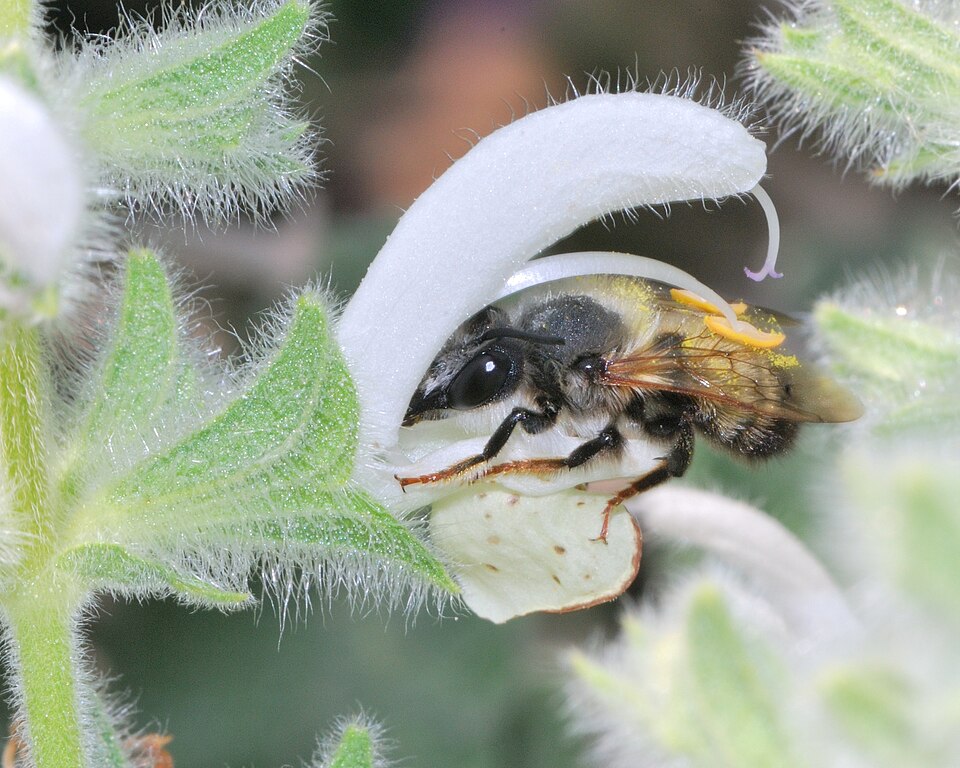
Megachile parietina
Black Mud BeeA robust black leafcutter bee (11–13 mm) with dark smoky wings and dense velvety black hair. Unlike most Megachile species, it builds exposed mud nests on sunny stone walls and rocks, mixing sand and saliva into a hard mortar-like material. Females are entirely jet-black; males have brownish-grey hair. It is polylectic with a preference for legumes and aromatic herbs like lavender. In Switzerland it occurs in warm lowland areas on south-facing stone walls and rocky outcrops. Swiss Red List: Vulnerable (VU).
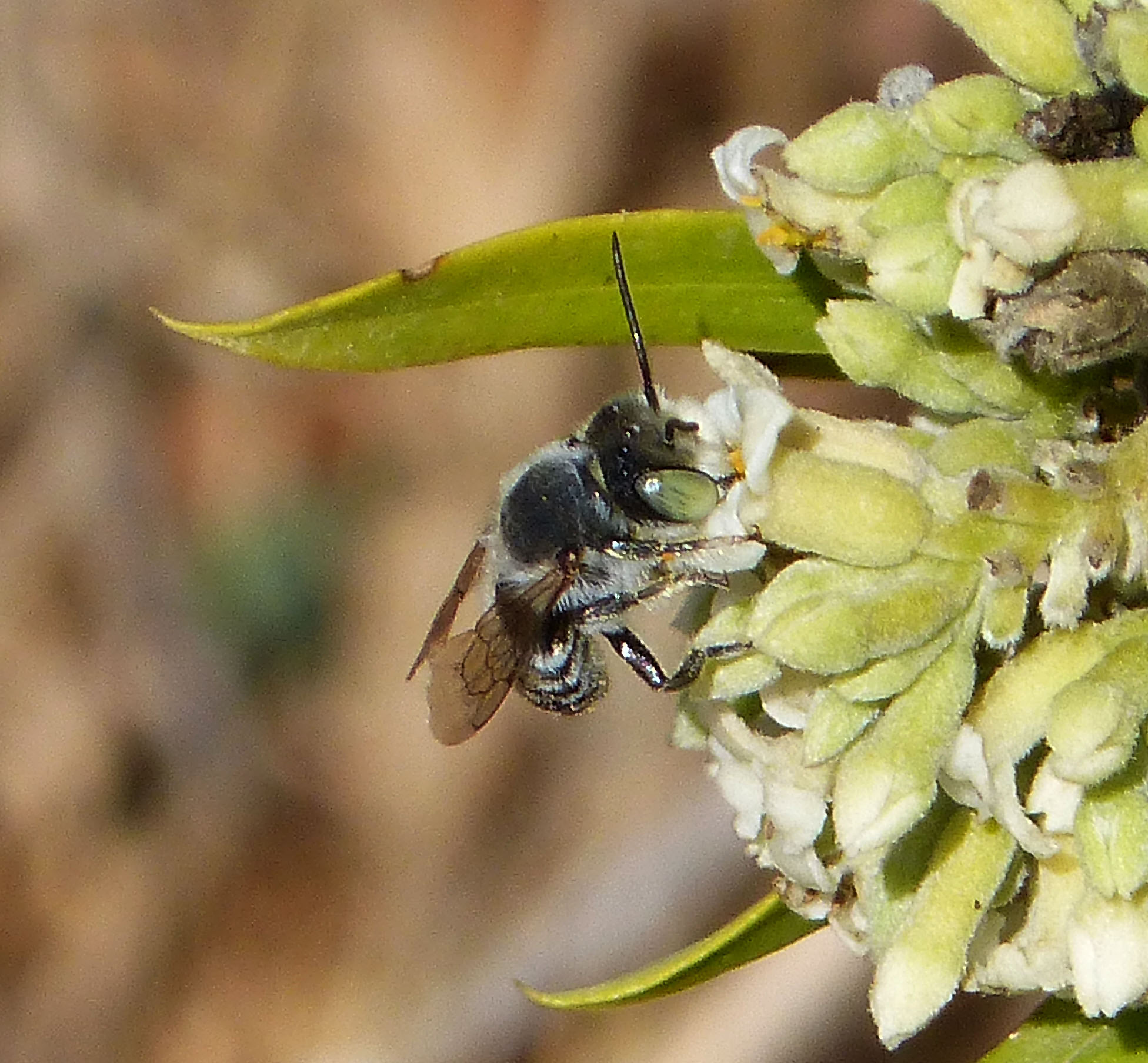
Megachile pilidens
Hairy-toothed Leafcutter BeeA medium-sized leafcutter bee (9–11 mm) that nests in pre-existing cavities under stones, in rock crevices, and in dry stone walls. It cuts circular pieces from leaves to construct its brood cells. It prefers Fabaceae flowers but is broadly polylectic. In Switzerland it is mainly found in the warm Valais region, flying from June to August in dry meadows, vineyards, and gravel pits. Swiss Red List: Vulnerable (VU).
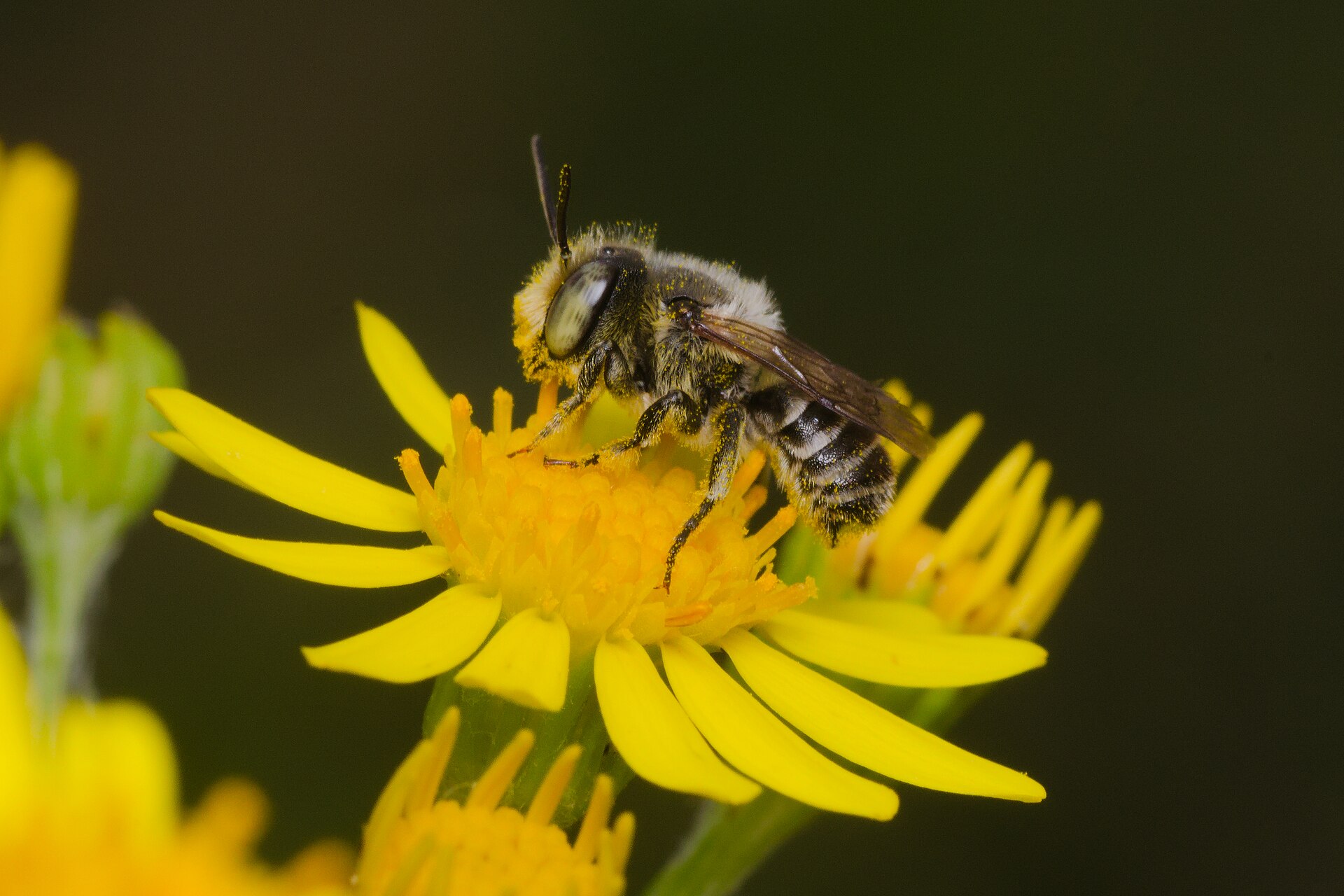
Megachile rotundata
Alfalfa Leafcutter BeeThe smallest leafcutter bee in Switzerland (6–9 mm), dark grey with white abdominal hair bands and white ventral scopa in females. It is commercially the most important leafcutter bee worldwide, widely managed for alfalfa pollination. It nests in pre-existing cavities, lining cells with oval-cut leaves. In Switzerland it is introduced and naturalised in agricultural areas, gardens, and parks in warm lowland regions, with one to two generations per year. Swiss Red List: Least Concern (LC).
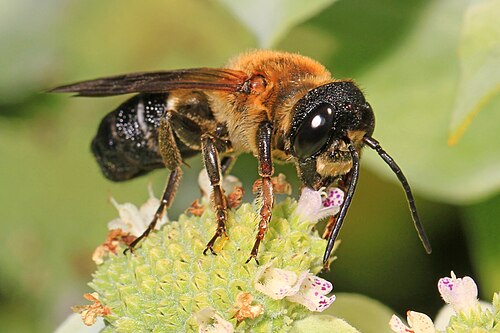
Megachile sculpturalis
Giant Resin BeeThe largest Megachilidae in Europe, measuring 19–25 mm. It has a shiny black abdomen, dense yellowish-brown hair on the thorax, and massive four-toothed mandibles. Native to East Asia, it was introduced to Europe and has spread rapidly including to Switzerland, where it is now found in urban areas of Geneva, Zurich, Ticino, and Valais. It nests in pre-existing cavities, sealing cells with resin. Swiss Red List: Not Evaluated (NE).
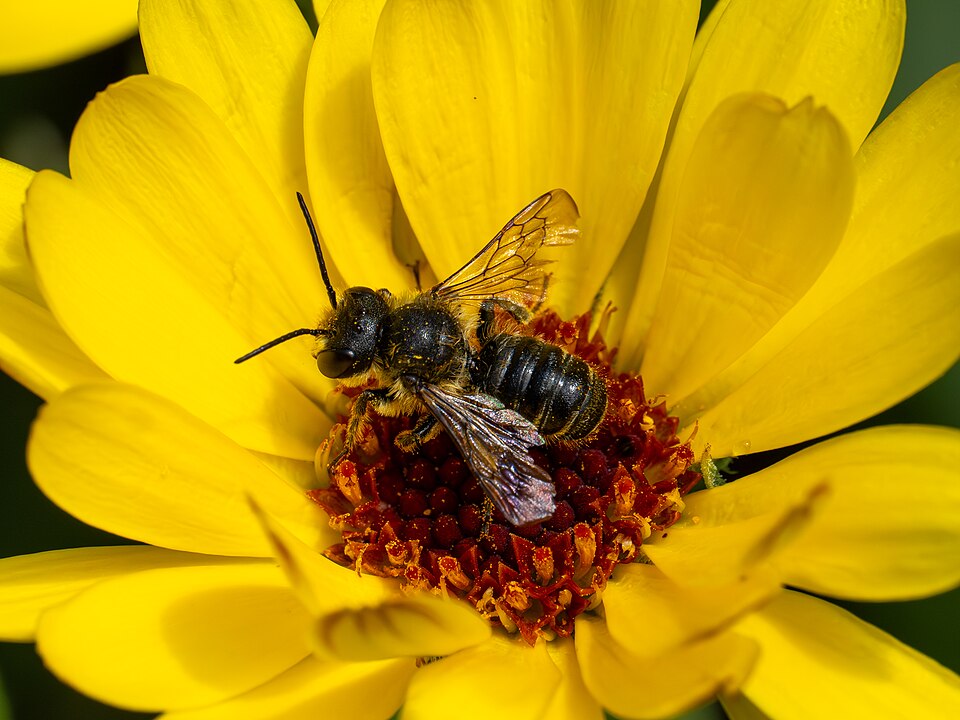
Megachile versicolor
Brown-footed Leafcutter BeeA medium-sized leafcutter bee (10–12 mm) with a black body, dense brownish hair on the thorax, and a white ventral scopa tinged brownish. Females have distinctly pale brown tarsi, giving the species its common name. It nests in pre-existing cavities in dead wood, hollow stems, and fence posts, constructing brood cells from neatly cut oval leaf pieces. It is polylectic, visiting Asteraceae and Fabaceae flowers including thistles, bird's-foot-trefoil, and bramble. In Switzerland it occurs in gardens, woodland edges, ruderal areas, and vineyards from lowlands to montane elevations. Swiss Red List: Least Concern (LC).
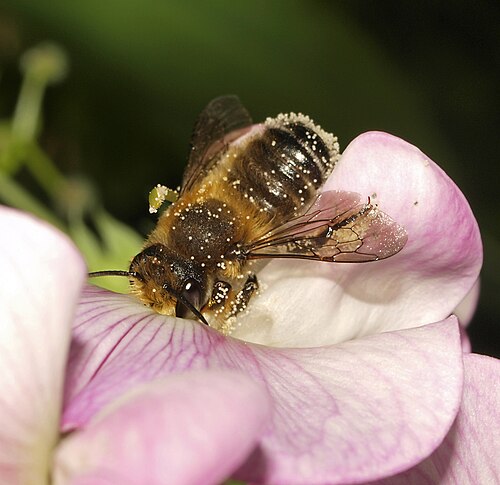
Megachile willughbiella
Willughby's Leafcutter BeeA common medium-sized leafcutter bee (11–13 mm) with a black body, dense brownish hair on the thorax, and a pale orange ventral scopa. It nests either in self-dug burrows in soil or in cavities in wood, constructing brood cells from cut leaves. It has a preference for Campanulaceae (bellflowers) in addition to Asteraceae and Fabaceae. In Switzerland it is widespread in gardens, parks, woodland edges, and brownfield sites from lowlands to montane elevations. Swiss Red List: Least Concern (LC).
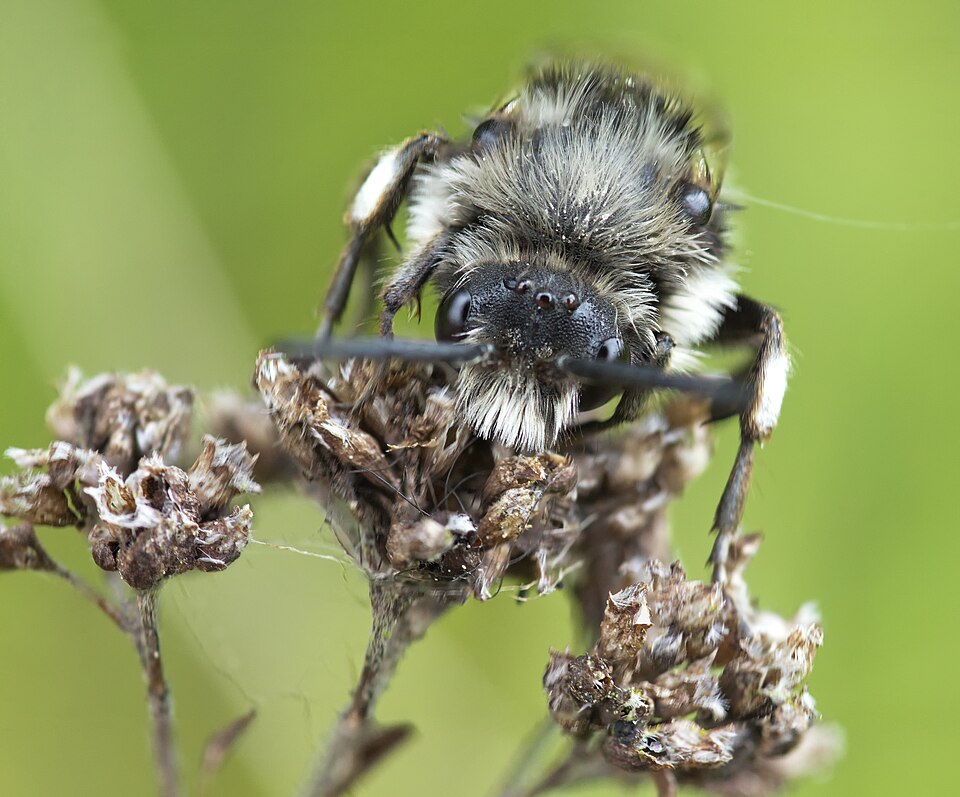
Melecta albifrons
Common Mourning BeeA striking cuckoo bee with a jet-black body and two distinctive cream-beige patches on each side of the abdomen. The head and thorax have brownish-yellow hair, and the wings are dark-tinted. It has no pollen-collecting apparatus, as it lays its eggs in the nests of Anthophora plumipes. In Switzerland it follows its host in gardens, parks, and warm slopes with loess walls. Swiss Red List: Least Concern (LC).
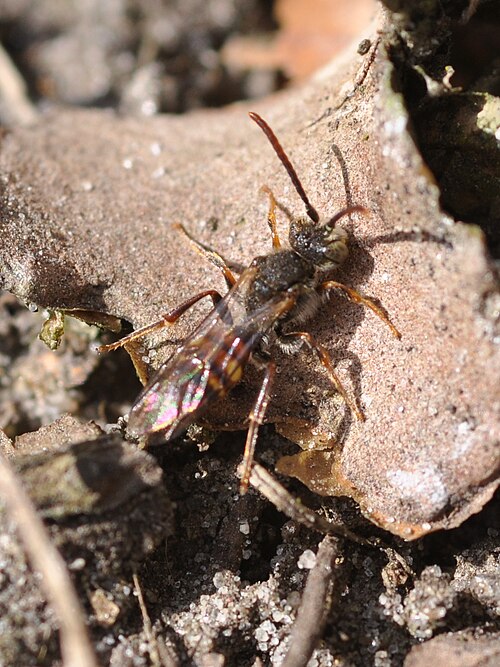
Nomada flavoguttata
Small Nomad BeeOne of the smallest Nomada species (5–7 mm), with a black and yellow wasp-like body, orange-red legs, and small yellow spots on the abdomen (flavoguttata means yellow-spotted). It has no pollen-collecting apparatus. It is a cleptoparasite (cuckoo bee) of small Andrena mining bees, especially Andrena minutula and other small Andrena species. Females search for host nests in bare soil, laying eggs in the brood cells where the larva consumes the host's pollen provision. It is bivoltine with two generations per year. In Switzerland it is widespread and common from lowlands to montane elevations in gardens, meadows, and ruderal areas wherever its small Andrena hosts nest, flying from April to September. Swiss Red List: Least Concern (LC).
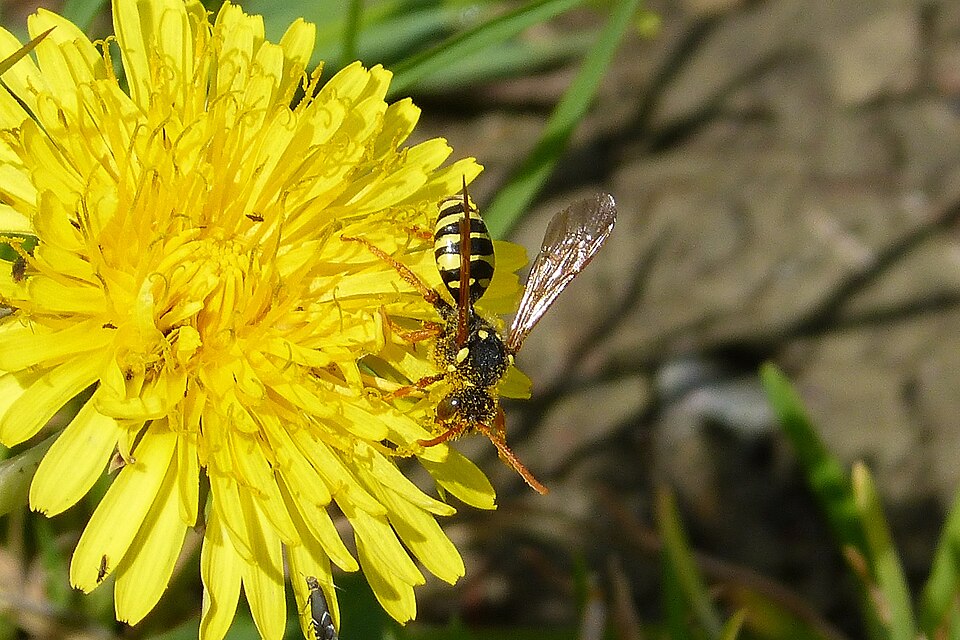
Nomada goodeniana
Gooden's Nomad BeeA large and brightly coloured black-and-yellow cuckoo bee (10–14 mm) with orange-red legs, one of the largest Nomada species. It has no pollen-collecting apparatus: it lays its eggs in the nests of Andrena mining bees of the nigroaenea-group. It is widely distributed across Europe and common in Switzerland in sunny habitats wherever its hosts nest, flying from April to June (sometimes partially again in August). Swiss Red List: Least Concern (LC).
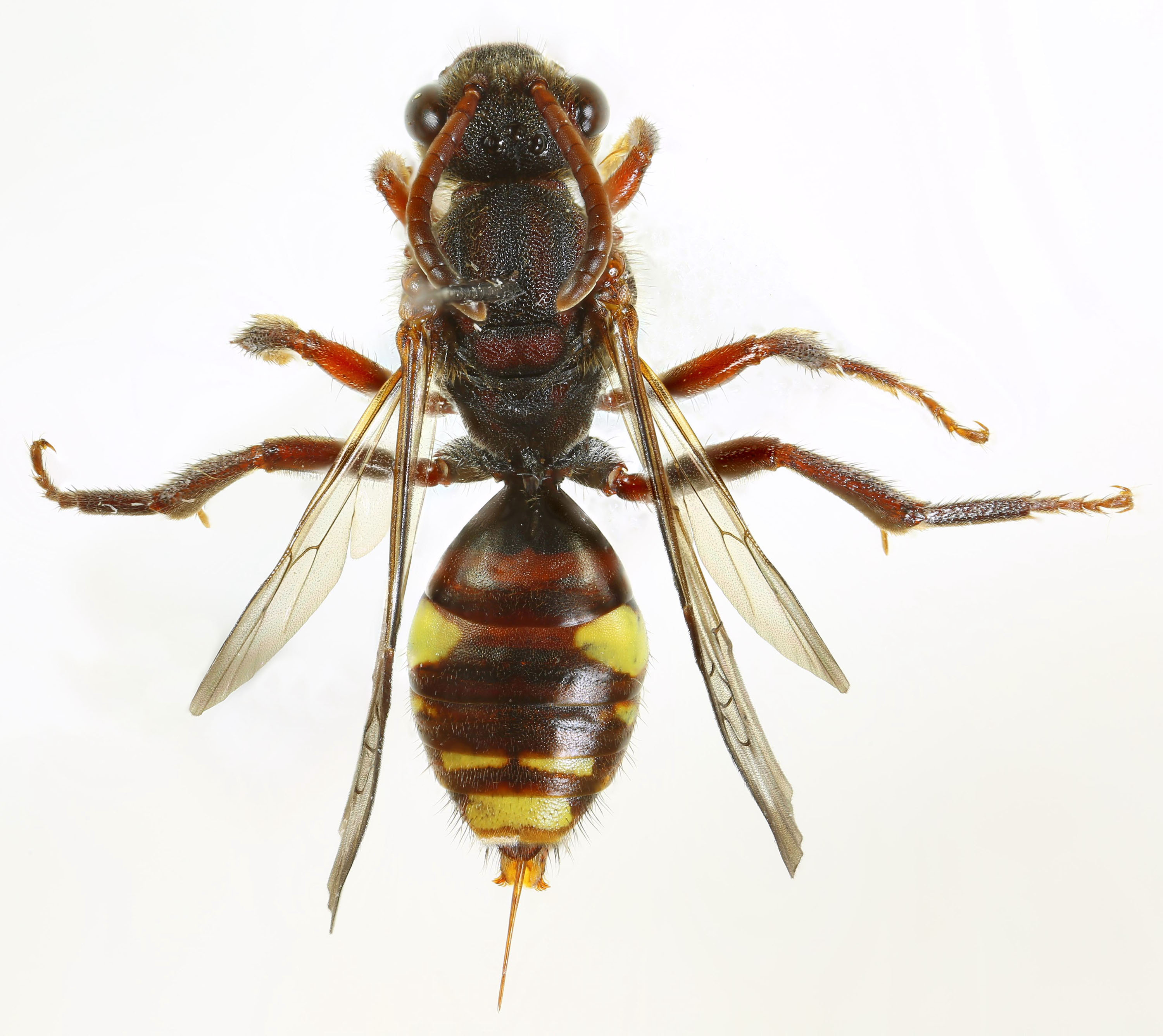
Nomada panzeri
Panzer's Nomad BeeA medium-sized nomad bee (9–11 mm) with a black and yellow wasp-like body, orange-red legs, and red markings on the abdomen. It closely resembles Nomada flava but females have black erect hairs on the clypeus (pale in N. flava) and darker wing margins. It has no pollen-collecting apparatus. It is a cleptoparasite of spring-flying Andrena species, especially Andrena fucata and Andrena helvola, whose nests it targets in woodland clearings and forest edges. It is univoltine, flying from March to July. In Switzerland it is common in forests and woodland edges from lowlands to montane elevations, classified as Least Concern (LC) on the Swiss Red List.
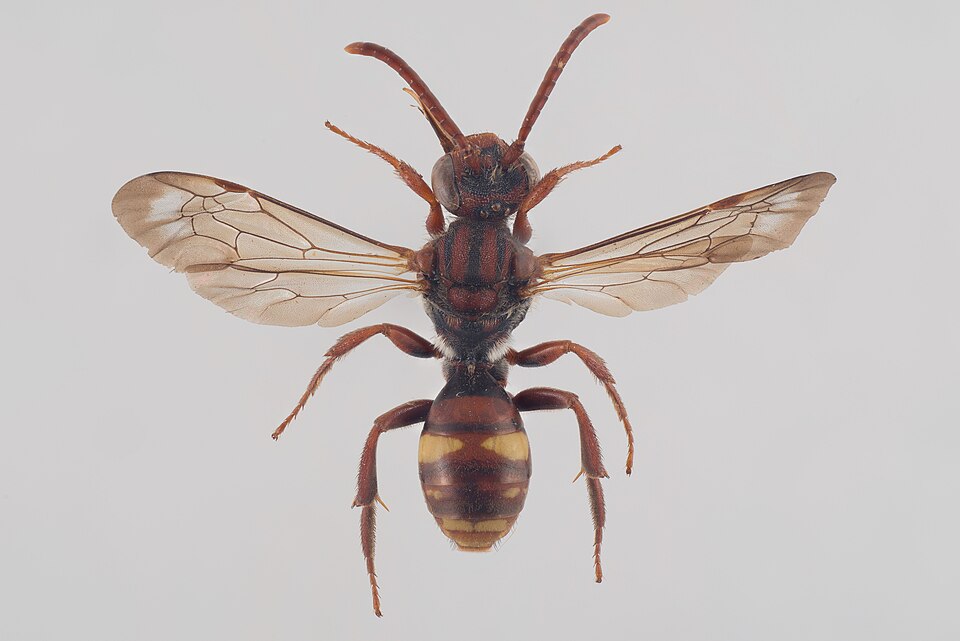
Nomada ruficornis
Fork-jawed Nomad BeeA medium-sized cleptoparasitic (cuckoo) bee (8–11 mm) with a brown and yellow-striped wasp-like body, orange legs, and distinctive bifid (forked) mandibles. It has no pollen-collecting apparatus. It parasitises the nests of Andrena haemorrhoa, and is also associated with other spring-flying Andrena species. Females search for host nests in bare soil, laying their eggs in the brood cells where the larva consumes the host's pollen provision. In Switzerland it is widespread in gardens, meadows, and forest edges wherever its hosts nest, flying from April to June. Swiss Red List: Least Concern (LC).
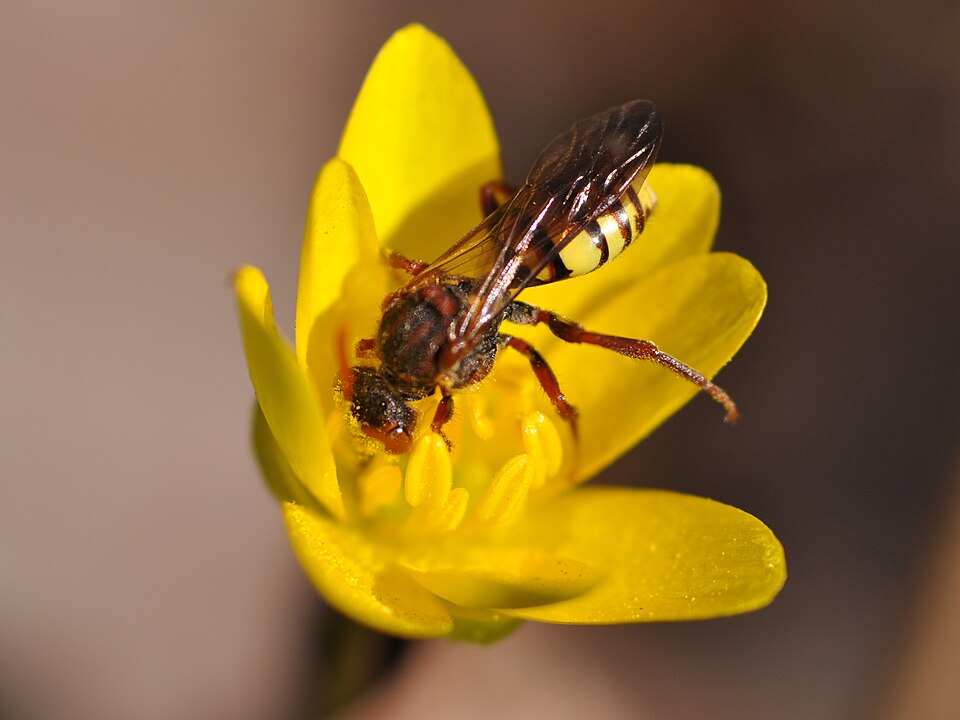
Nomada signata
Broad-banded Nomad BeeA medium-sized cuckoo bee (10–14 mm) with a black and yellow wasp-like body, orange legs, and no pollen-collecting apparatus. It closely resembles Nomada flava. It is a specialist brood parasite (cleptoparasite) of Andrena fulva (Tawny Mining Bee), laying its eggs in the host's brood cells where the larva consumes the pollen provision. It is univoltine, flying from March to June, coinciding with its host's flight period. In Switzerland it occurs in gardens, parks, meadows, and open woodlands wherever its host nests, from lowlands to montane elevations. It is widespread but local. Swiss Red List: Least Concern (LC).
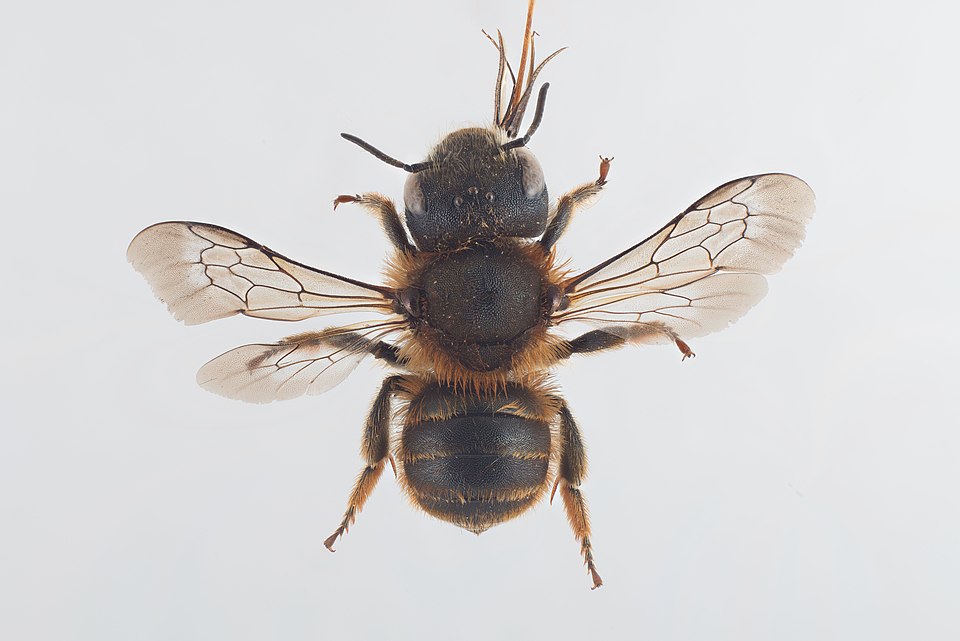
Osmia aurulenta
Gold-fringed Mason BeeA distinctive mason bee with a striking golden-red coat of hairs on the thorax and a black abdomen with sparse golden hair fringes. It is famous for nesting in empty snail shells, sealing the opening with chewed leaf pulp. It occurs in dry, sunny habitats such as calcareous grasslands, dry meadows, and rocky slopes. In Switzerland it is found in warm valleys and the Jura mountains. Swiss Red List: Least Concern (LC).
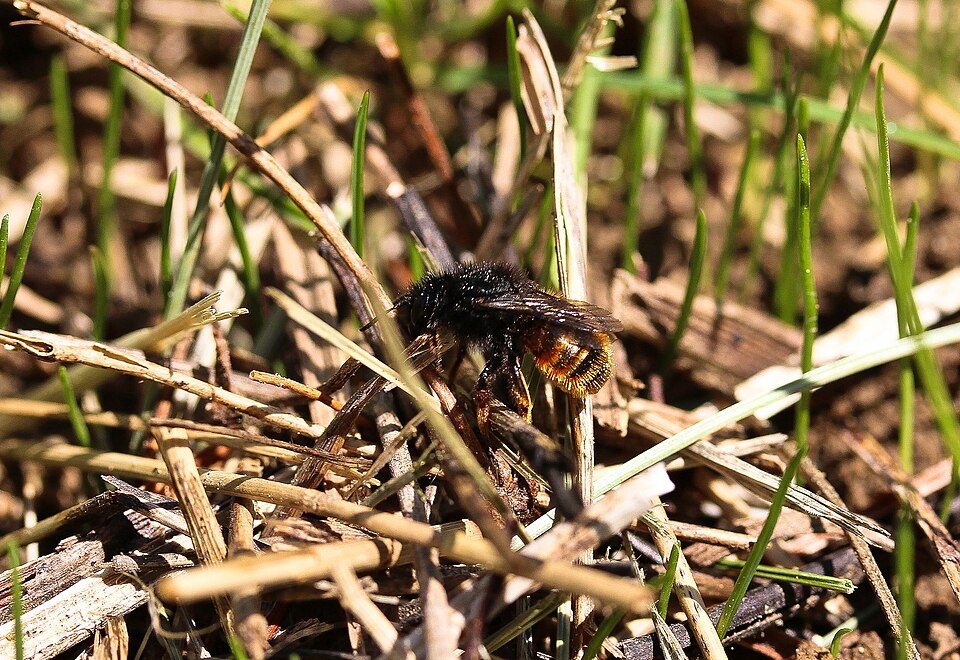
Osmia bicolor
Red-tailed Mason BeeA striking mason bee (9–12 mm) with a black head and thorax and a bright orange-red hairy abdomen. It is famous for nesting in empty snail shells, covering them with pine needles or grass for camouflage. It is one of the earliest bees to emerge in spring, flying from April to July. In Switzerland it occurs in dry, sunny habitats such as calcareous grasslands, rocky slopes, and warm forest edges, widespread from lowlands to montane elevations. Swiss Red List: Least Concern (LC).
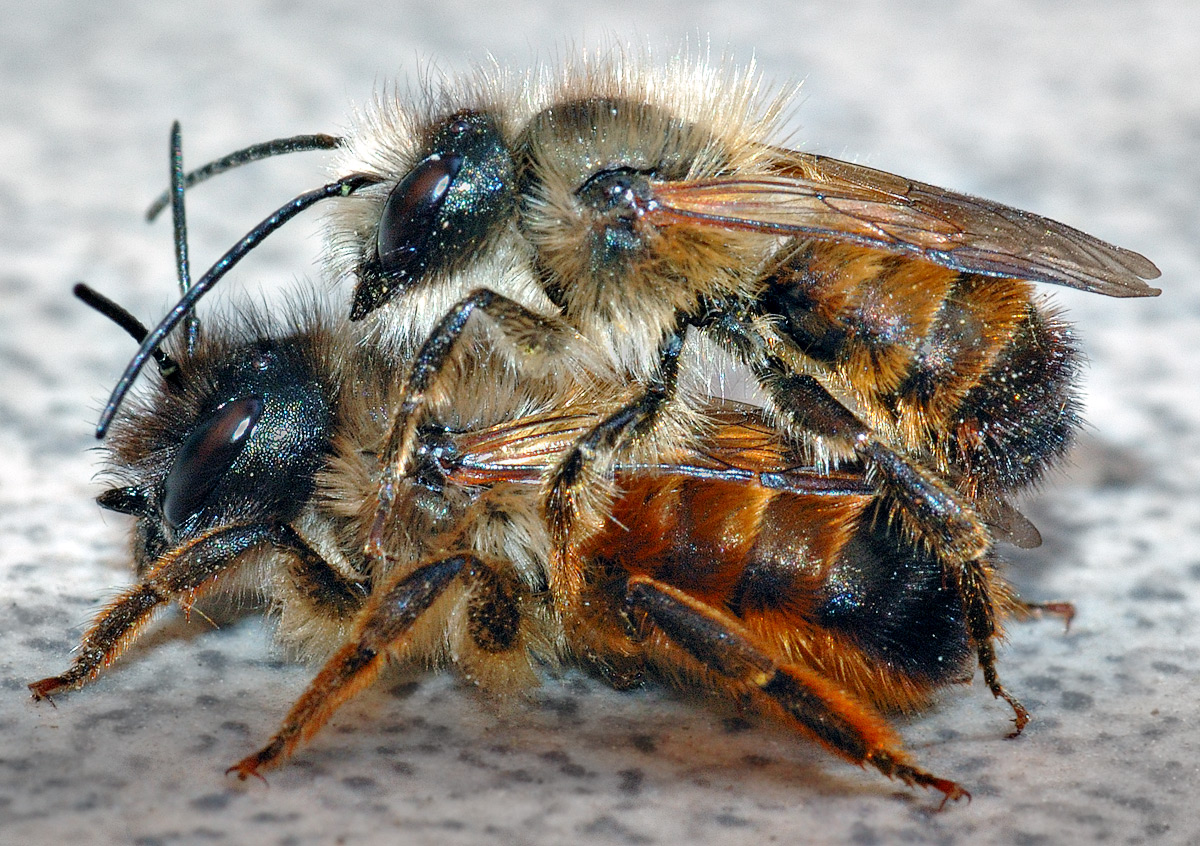
Osmia bicornis
Red Mason BeeOne of the most familiar and widespread solitary bees in Europe, the Red Mason Bee was voted Insect of the Year 2019 for Germany, Austria, and Switzerland. Females (10–12 mm) have a robust black body with a metallic blue-green shimmer, a greyish-brown hair pile on the thorax, and an orange-red-haired abdomen. Males are similar but smaller with longer antennae and abundant whitish-yellow facial hairs. Both sexes have two distinctive inwardly curved horns on the clypeus. It is a cavity nester of astonishing flexibility, occupying pre-existing holes in dead wood, hollow stems, old walls, soft mortar joints, bee hotels, and even door locks and curtain rails. Cell partitions and nest plugs are constructed from moist mud. It is broadly polyleptic, visiting flowers from 19 plant families, making it a valuable orchard pollinator, especially for almonds and cherries. In Switzerland it is very common in gardens, parks, and settlements across the lowlands and montane regions, and is classified as Least Concern on the national Red List.
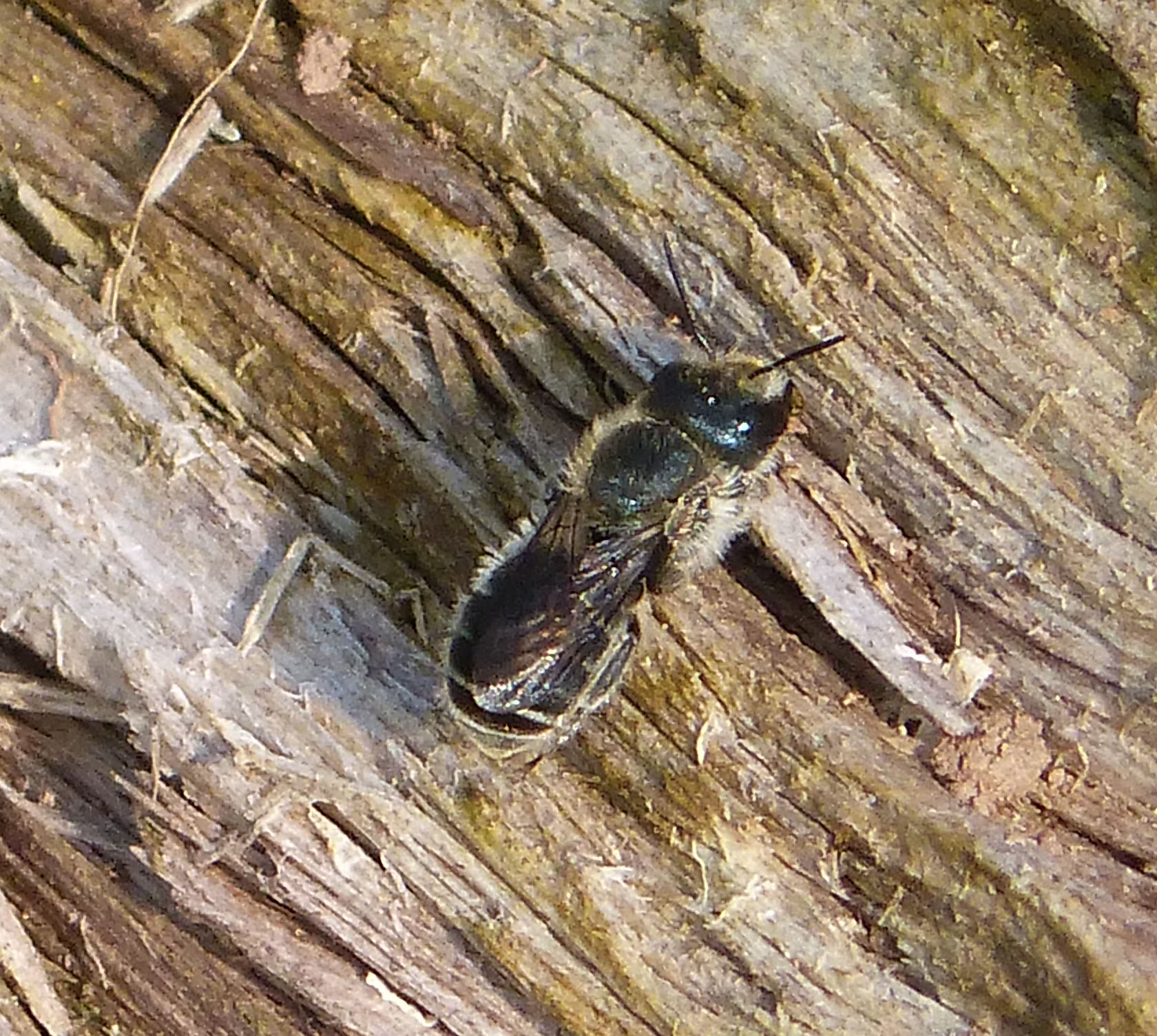
Osmia caerulescens
Blue Mason BeeA small mason bee (8–10 mm) with a metallic blue-black body, oversized box-shaped head, and black ventral scopa in females. Males are metallic green with ginger hairs. It nests in pre-existing cavities in dead wood, walls, and bee hotels, building cell partitions from leaf mastic. It is bivoltine, flying from April to July and again in August. In Switzerland it is common and widespread in gardens, parks, and woodland edges throughout the lowlands. Swiss Red List: Least Concern (LC).
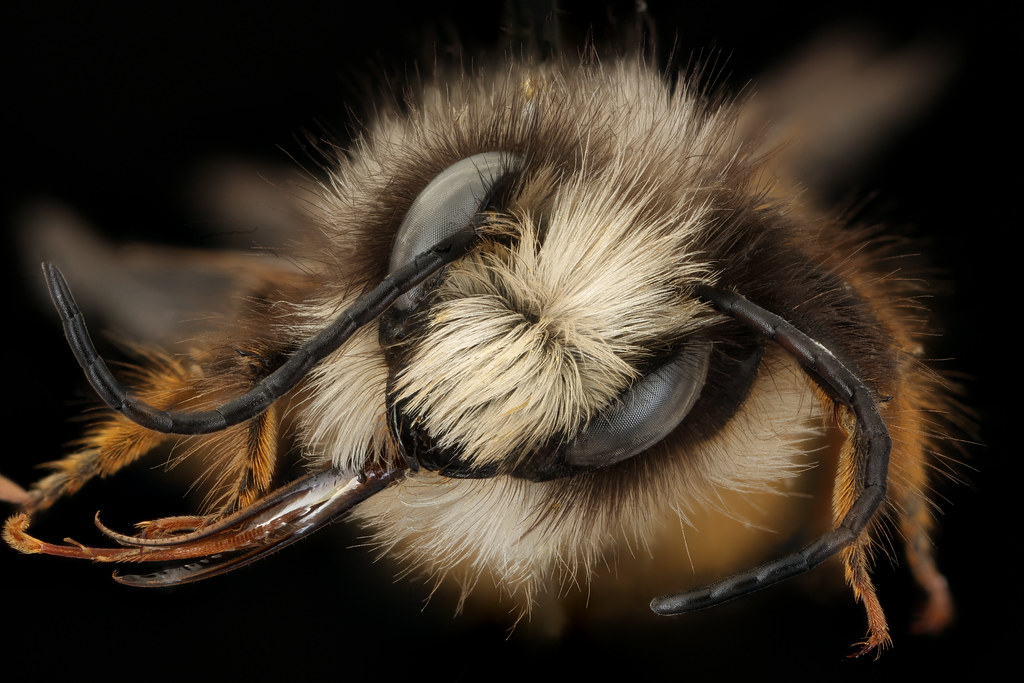
Osmia cornuta
European Orchard BeeA large and early-flying mason bee (10–15 mm) with a black head and thorax, rust-red hairy abdomen, and two small horn-like projections on the female clypeus. It is one of the first bees to emerge in late winter (February–March) and a highly effective pollinator of stone fruit and pome fruit trees. It nests in pre-existing cavities, sealing cells with mud. In Switzerland it is widespread in settlements and warm lowland areas, but absent from the main Alpine ridge. Swiss Red List: Least Concern (LC).
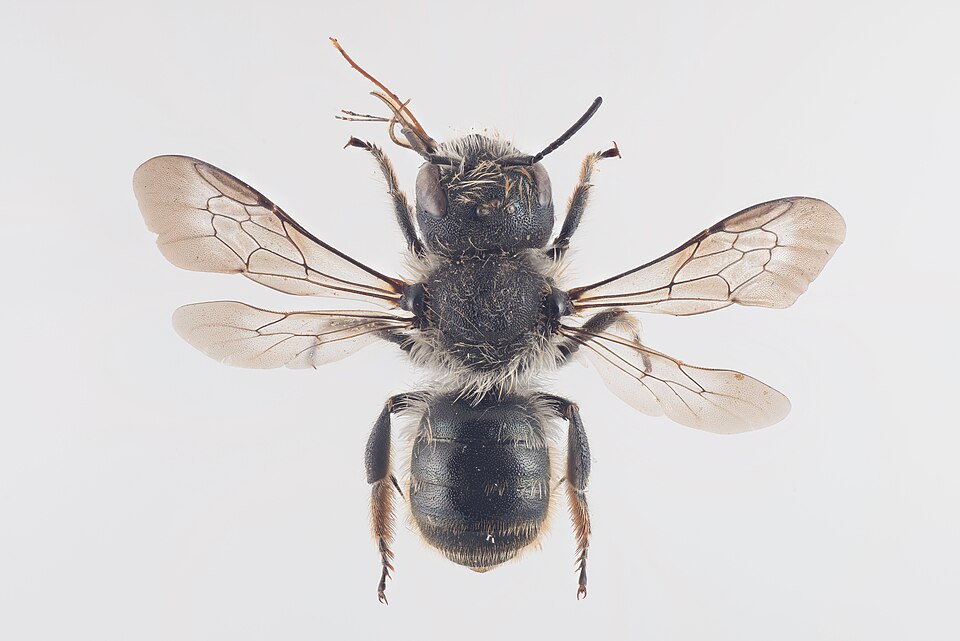
Osmia leaiana
Orange-vented Mason BeeA small mason bee (7–9 mm) with a black body and bright orange ventral scopa. Females have dense brownish hair on the thorax; males are metallic green with ginger hairs. It is oligolectic on Asteraceae, especially thistles and knapweeds. It nests in pre-existing cavities in dead wood, fence posts, and bee hotels. In Switzerland it is widespread in gardens, meadows, and woodland edges, flying from May to August. Swiss Red List: Least Concern (LC).
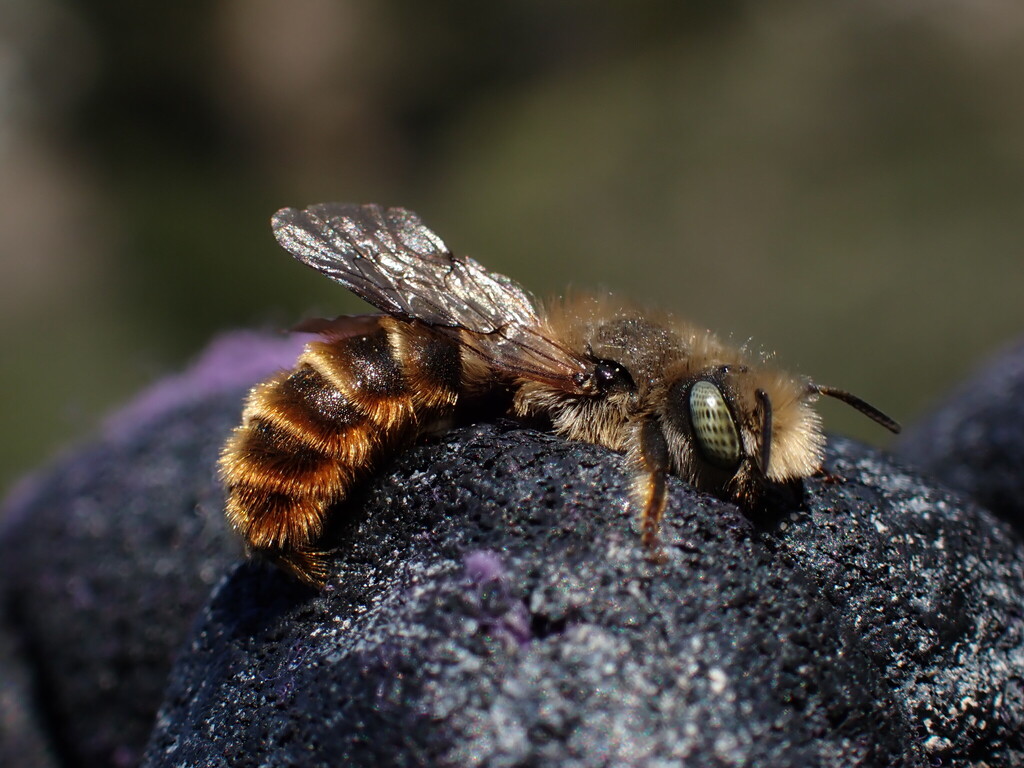
Osmia rufohirta
Red-haired Snail-shell BeeA small mason bee (8–9 mm) with distinctive reddish-fox coloured hair on the thorax and a compact body. It is a generalist (polylectic) forager but shows a preference for Fabaceae (clovers, sainfoin, bird's-foot trefoil). It is famous for its unique nesting behaviour: it builds its nest inside empty snail shells, particularly of Helicella species. The female constructs a single brood cell per shell, seals it with chewed leaf pulp mixed with small pebbles, and often hides the shell under vegetation. It is univoltine, flying from May to July. In Switzerland it occurs in dry, warm, calcareous habitats such as dry meadows, rocky slopes, old vineyards, and ruderal areas in the lowlands and Jura mountains. It is classified as vulnerable on the Swiss Red List.
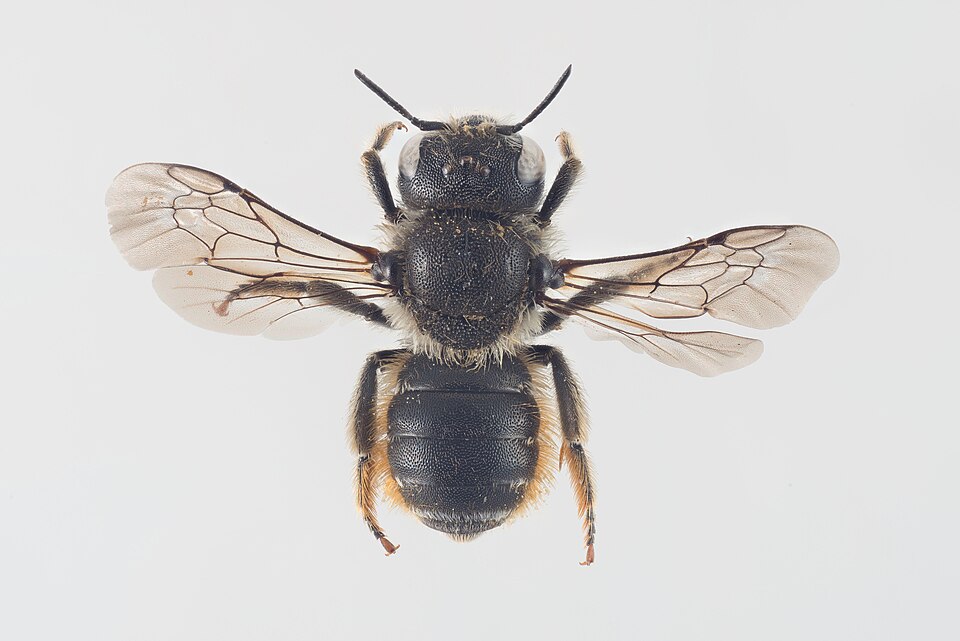
Osmia spinulosa
Spined Mason BeeThe smallest Osmia species in Switzerland (5–7 mm), with a black body, white ventral scopa, and distinctive sharp spines on the sides of the scutellum in females. Males have pale hair on the face and a less armoured scutellum. It is oligolectic on Asteraceae, especially thistles and knapweeds (Cirsium, Centaurea). It nests in pre-existing cavities in dead wood, hollow stems, and snail shells, sealing cells with chewed leaf pulp mixed with resin. In Switzerland it occurs in dry, warm habitats such as calcareous grasslands, dry meadows, and rocky slopes from lowlands to montane elevations. Swiss Red List: Vulnerable (VU).
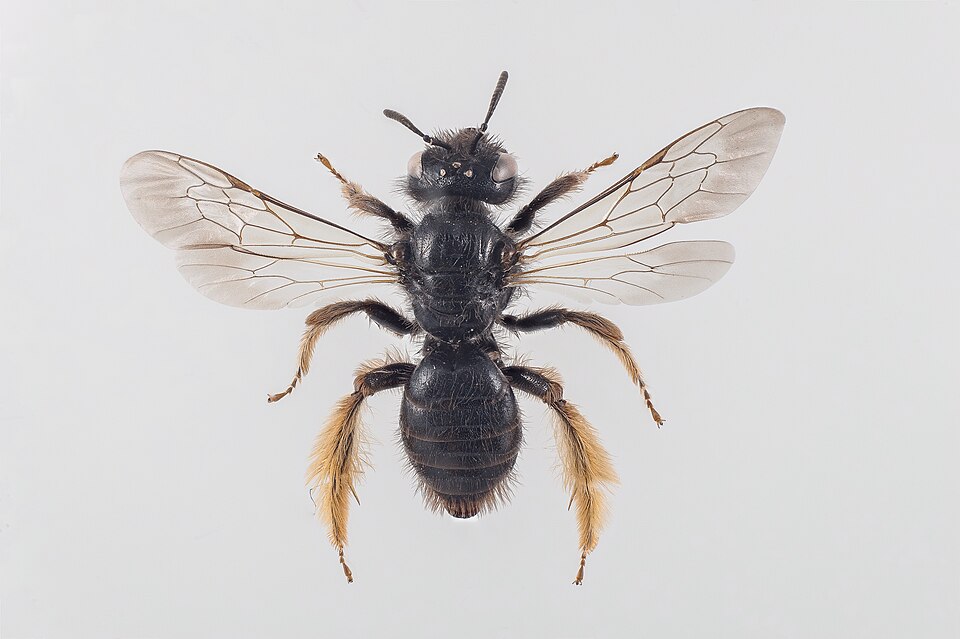
Panurgus banksianus
Large Shaggy BeeA medium-sized shaggy bee (10–12 mm), entirely black with sparse hair and long yellowish hind-leg brushes (females). Males have a large, angular head. It is oligolectic on Asteraceae, particularly Cichorioideae such as hawk's-beard (Picris hieracioides), hawkweeds (Hieracium), and chicory (Cichorium intybus). It nests in self-excavated burrows 6–14 cm deep in sparsely vegetated or bare sandy soil, often in aggregations. It has a remarkable nesting behaviour: each nest has two entrances — one real and one false tumulus entrance to confuse the cuckoo bee Nomada similis. It is univoltine, flying from late June to mid-August. In Switzerland it occurs in forest edges, mountain meadows, sand pits, and sandy ruderal areas from lowlands to 2000 m in the Alps. Swiss Red List: Least Concern (LC).
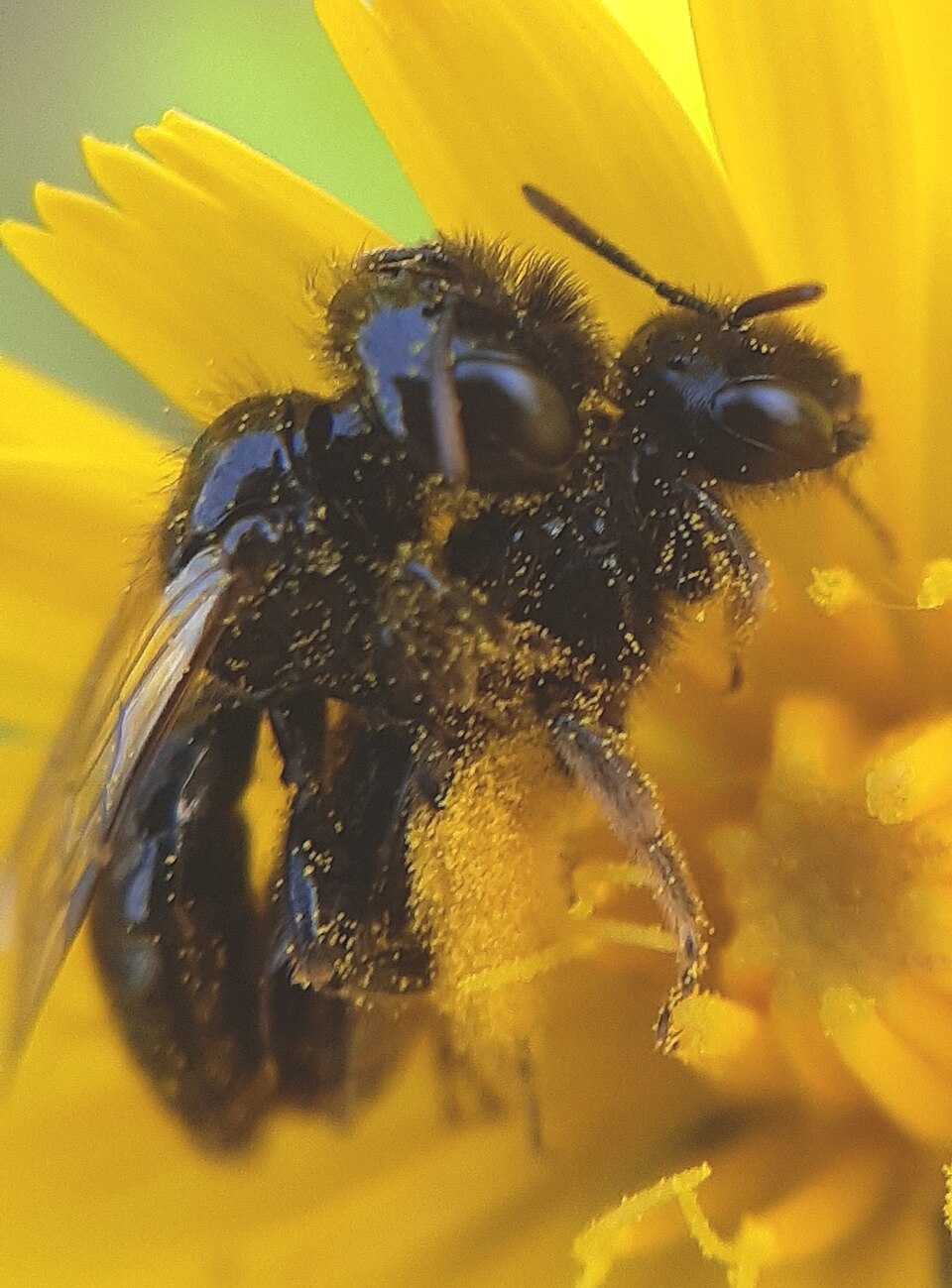
Panurgus calcaratus
Small Shaggy BeeA small shaggy bee (7–9 mm), deep black with sparse hair and long yellowish hind-leg brushes (females). Males have a large angular head. It is oligolectic on Asteraceae, especially yellow Cichorioideae such as Picris hieracioides, Hieracium pilosella, and Hieracium umbellatum. It nests in self-excavated burrows in sparsely vegetated or bare soil in sand and gravel pits, dry banks, embankments, and ruderal areas. Notably, it exhibits communal nesting: 2–10 females share a single nest entrance but each provisions her own brood cells. The main tunnel branches into 3–5 lateral tunnels each ending in a brood cell. It is univoltine, flying from June to September. In Switzerland it is widespread in warm lowland and montane zones up to 2440 m in the Alps, occurring in dry meadows, ruderal areas, and vineyards. Its brood parasite is Nomada fuscicornis. Swiss Red List: Least Concern (LC).
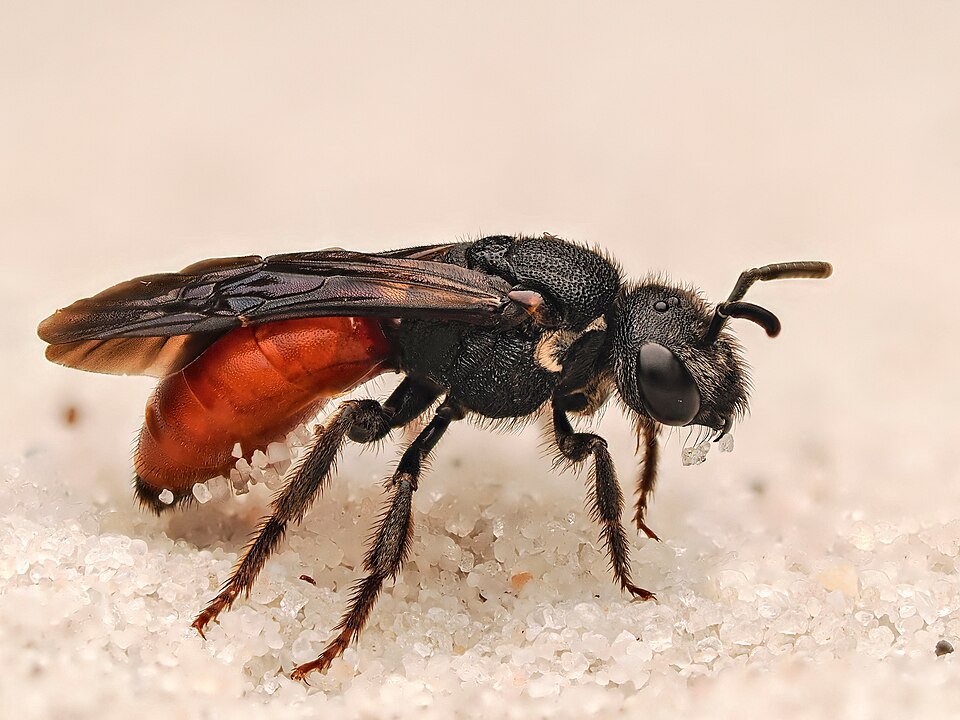
Sphecodes albilabris
Giant Blood BeeThe largest Sphecodes species (11–14 mm), with a robust black body, red abdomen extending to the tip, and dark-tinted wings. Males have distinctive white hairs on the lower face. It is a cleptoparasite of Colletes cunicularius, laying eggs in its host's nests. It occurs in sandy habitats and is found in Switzerland in warm lowland areas with sandy soils, especially along rivers and in sand pits. Females fly from March to August, males from July to October. Swiss Red List: Least Concern (LC).
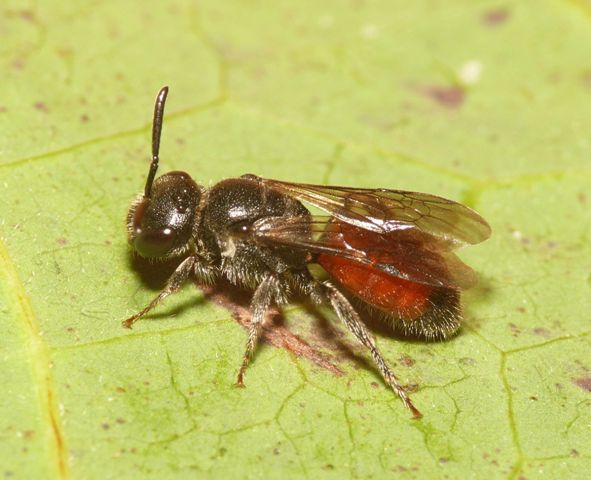
Sphecodes ephippius
Shiny-headed Blood BeeA cleptoparasitic blood bee (7–9 mm) with a distinctive red abdomen and black head and thorax. It lays its eggs in the nests of various Lasioglossum and Halictus species, where the larva consumes the host's pollen stores. The female flies from March to September searching for host nests, while males appear from July to October. It is common across Switzerland in a variety of habitats from open woodland to meadows. Swiss Red List: Least Concern (LC).
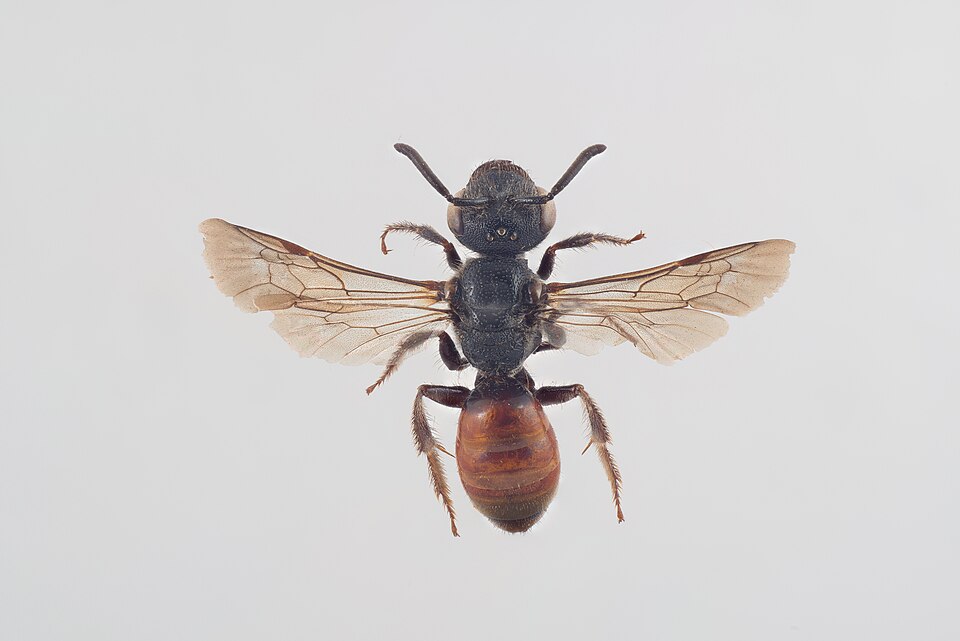
Sphecodes gibbus
Dark-winged Blood BeeA medium-sized blood bee (8–11 mm) with a black head and thorax, red abdomen, and conspicuously dark-tinted wings. It is a cleptoparasite of larger Halictus and Lasioglossum species, especially Halictus rubicundus. Females search for host nests in open habitats with bare ground. In Switzerland it is widespread in warm open habitats from lowlands to montane elevations. Females fly from April to September, males from July to September. Swiss Red List: Least Concern (LC).
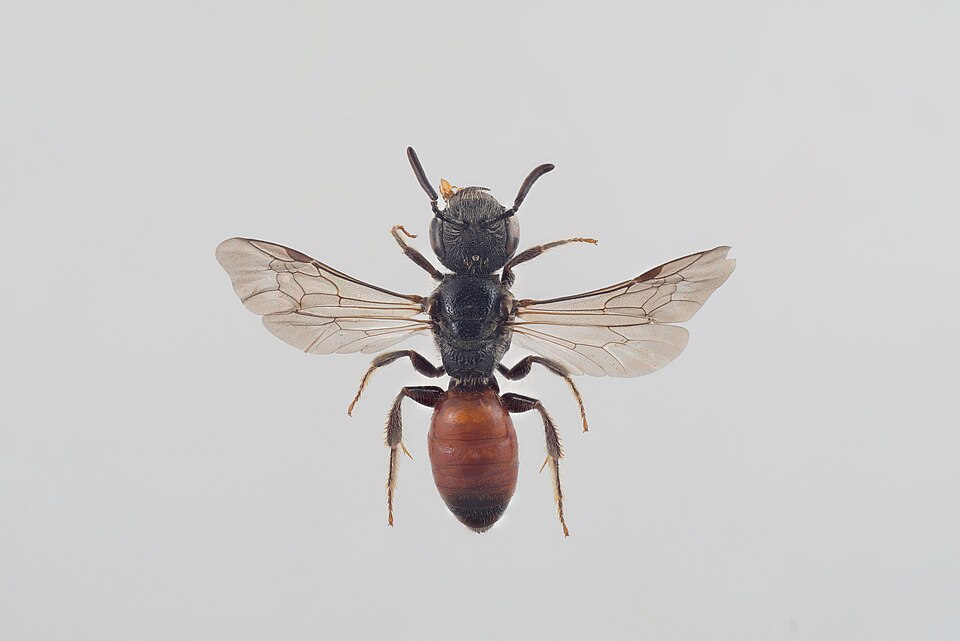
Sphecodes monilicornis
Box-headed Blood BeeA medium-sized cleptoparasitic blood bee (8–11 mm) with a black head and thorax, a red abdomen (often with darkened tergites), and a distinctive box-shaped head when viewed from above. The hind tibial hairs are whitish, distinguishing it from similar species. It is a cleptoparasite of larger Halictus species, especially Halictus rubicundus, Halictus sexcinctus, and Halictus quadricinctus. Females search for host nests in bare ground, laying eggs in the provisioned brood cells. In Switzerland it is widespread in warm open habitats from lowlands to montane elevations. Females fly from March to September, males from July to October. Swiss Red List: Least Concern (LC).
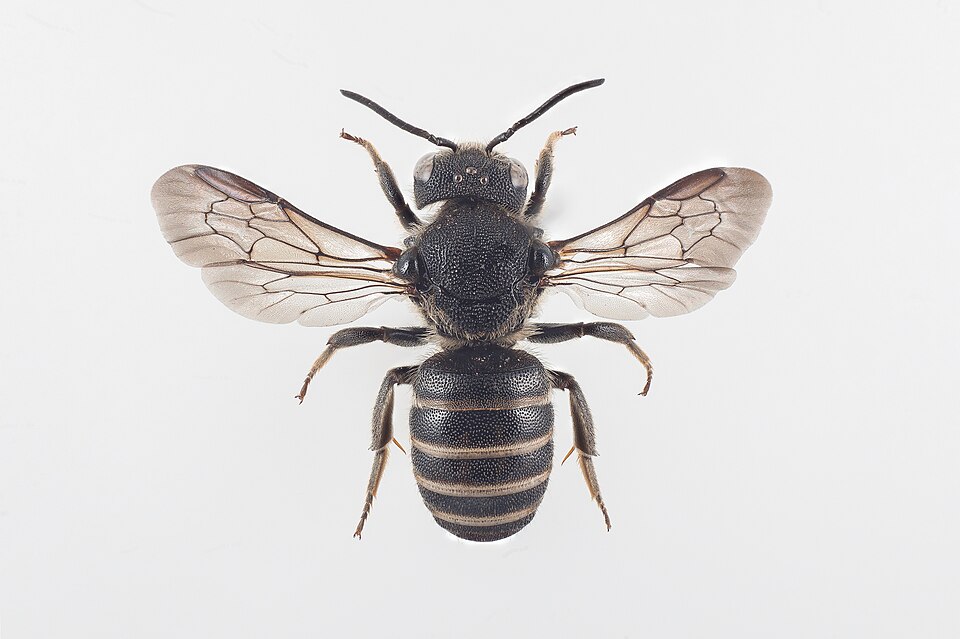
Stelis punctulatissima
Banded Dark BeeA medium-sized cleptoparasitic bee (8–11 mm) with a black body and distinctive translucent pale margins on tergites 1–4. It has no pollen-collecting scopa. It lays its eggs in the nests of Anthidium manicatum and various Osmia and Megachile species. In Switzerland it occurs in gardens, dry meadows, and warm forest edges from lowlands to montane regions and is listed as Least Concern on the national Red List. Single-brooded, flying from mid-June to late August.
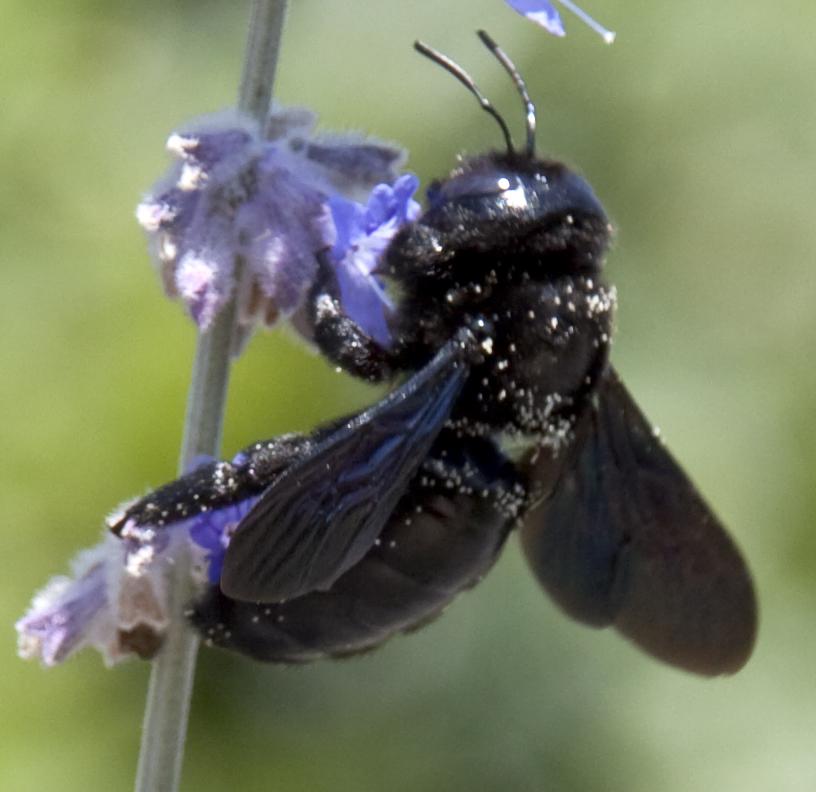
Xylocopa violacea
Violet Carpenter BeeThe Violet Carpenter Bee is the largest bee in Switzerland, reaching 20–28 mm in length, with a massive all-black body and large dark wings that shimmer iridescent blue-purple in sunlight. Despite its bumblebee-like appearance it is solitary: the female bores nesting tunnels into dead wood, rotten tree trunks, or wooden garden structures using her powerful mandibles. She provisions brood cells with a pollen-nectar paste and seals them with chewed wood pulp. It is polylectic but shows clear preferences for Fabaceae and Lamiaceae flowers. Males can be identified by their yellow-tipped antenna segments 11 and 12. Active from March to October, it is univoltine with one generation per year. In Switzerland it occurs in warm lowland areas, especially in the Valais, Ticino, Geneva, and around Zurich, in orchards, gardens, parks, and forest edges. Swiss Red List: Least Concern (LC).