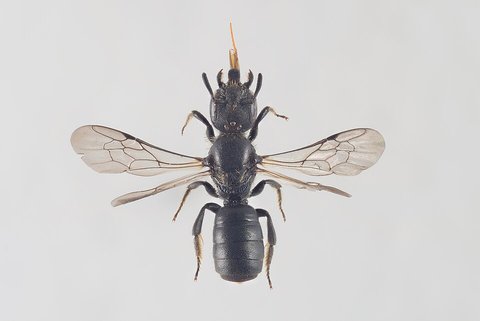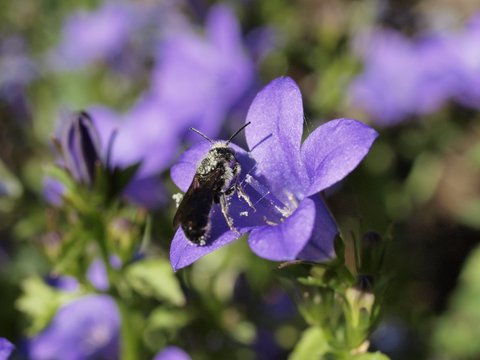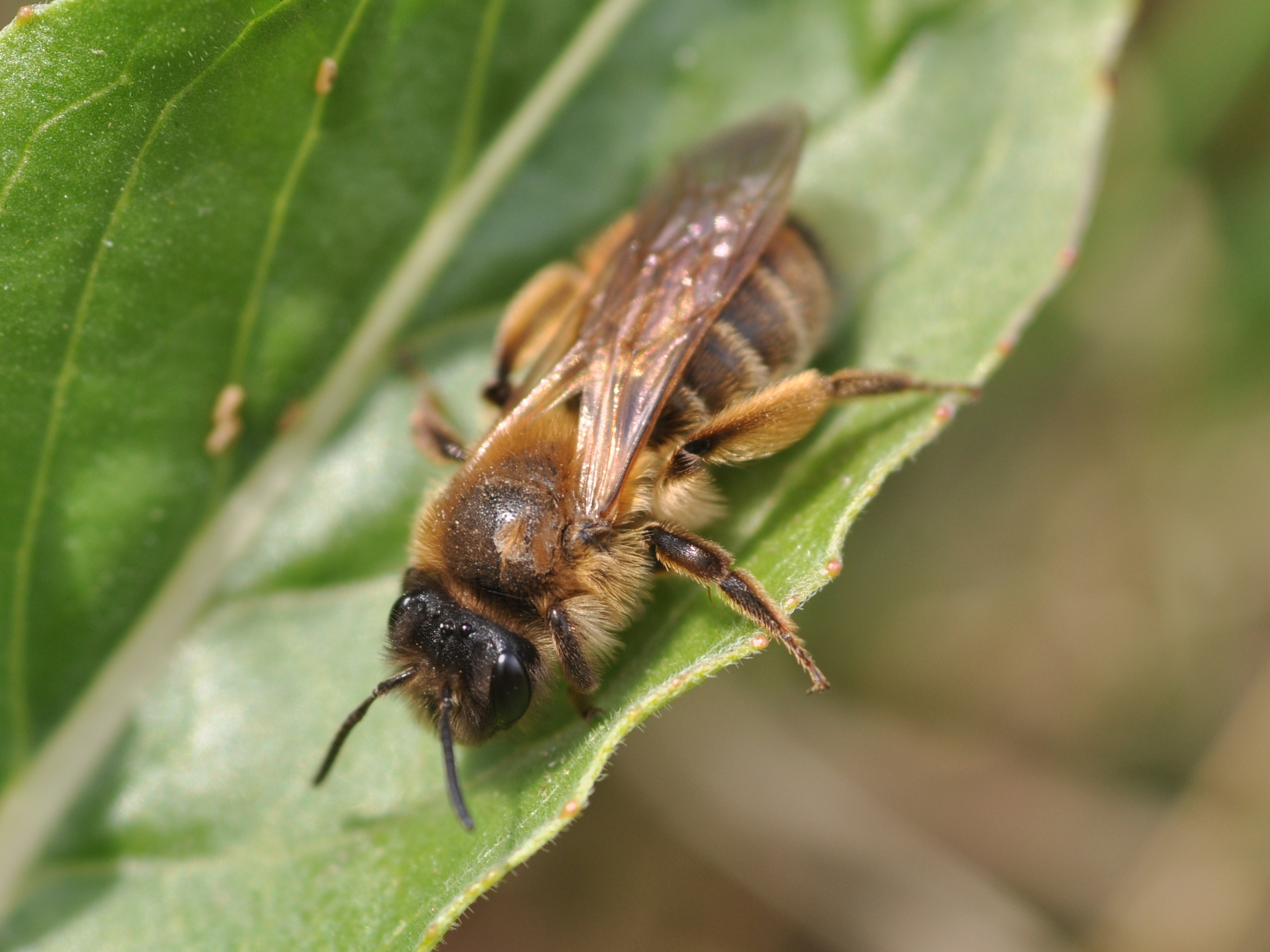
Photo: Aiwok / CC BY-SA 3.0
Andrena bimaculata
Large Gorse Mining Bee
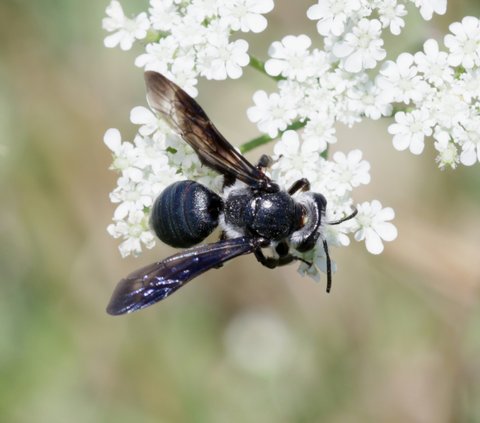
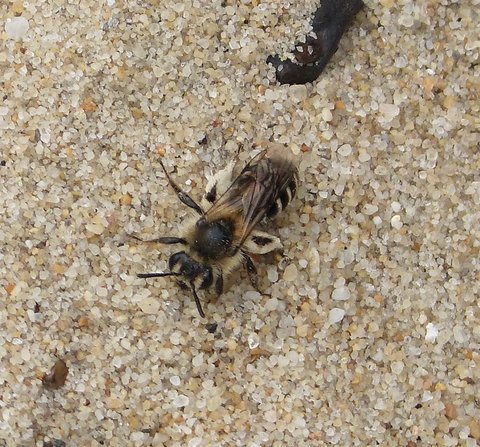
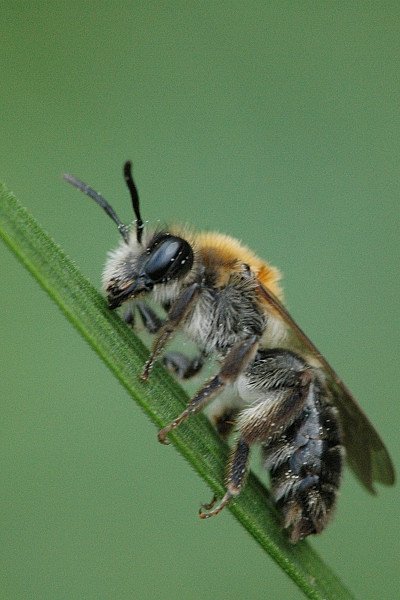
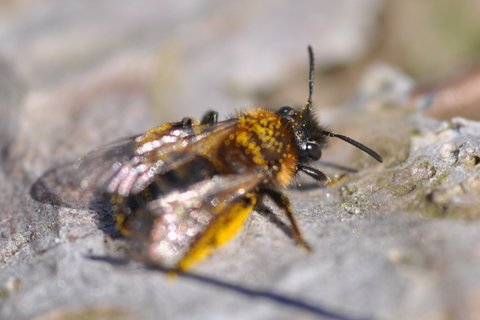
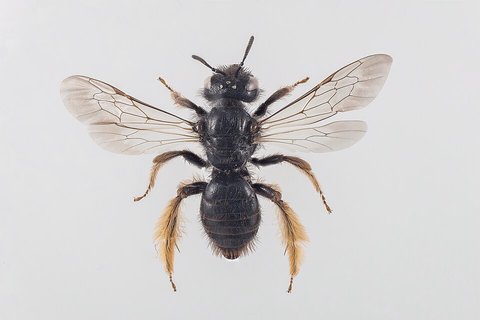
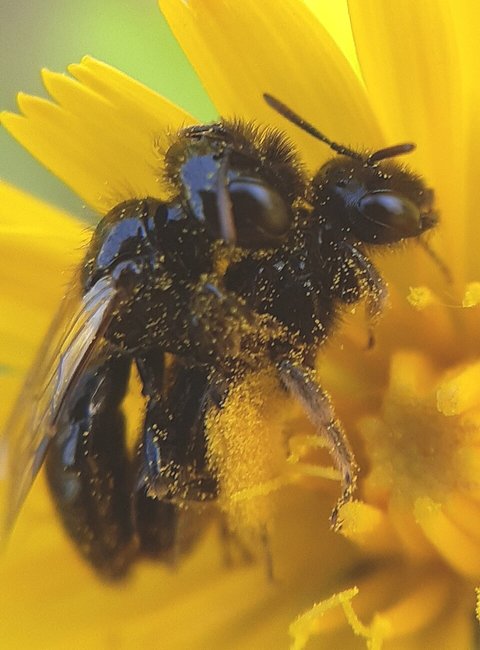
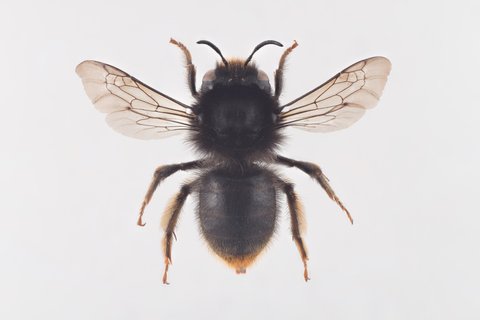
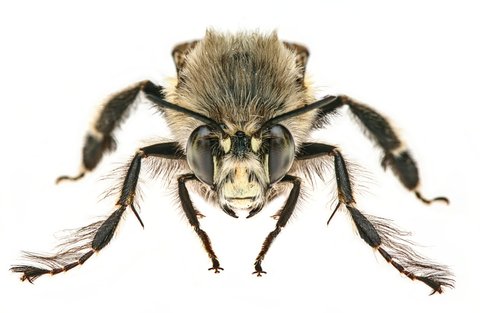
A medium-sized mining bee (11–14 mm) with completely black hind legs and two reddish spots on the underside of the abdomen. It nests solitarily in sandy soils and is bivoltine with two generations per year, visiting a wide range of flowers from spring into late summer. Females transport pollen on their hind legs and are often seen collecting pollen from willows, dandelions, and umbellifers in spring, followed by a second generation on later-flowering plants such as thistles and brambles. Its brood parasite is the cuckoo bee Nomada succincta. Swiss Red List: Least Concern (LC).
Species Facts
- Size
- 11–14 mm
- Flight Period
- April to August (bivoltine)
- Nesting
- Ground
- Specialization
- Generalist
- Abundance
- Uncommon
- Family
- Andrenidae
External Sources
This data has been cross-referenced with national sources:
Data Source & Copyright
| Category | Source / Author | License |
|---|---|---|
| Photo | Aiwok | CC BY-SA 3.0 |
| Taxonomy & Distribution | InfoFauna Switzerland | Public data |
| Global Distribution | GBIF | CC BY 4.0 |
Data Quality
Adequate Last audit: 2026-05-22
Completeness: 100%
✓Photo exists✓Traits consistent✓Description quality✓Red List referenced✓Attribution verified
Confidence: 33%
IdentifiabilityLowImage confidenceLowImage qualityMediumTrait coherenceHigh
Risk flags
Hard to identify
Difficult to identify genus (andrena)