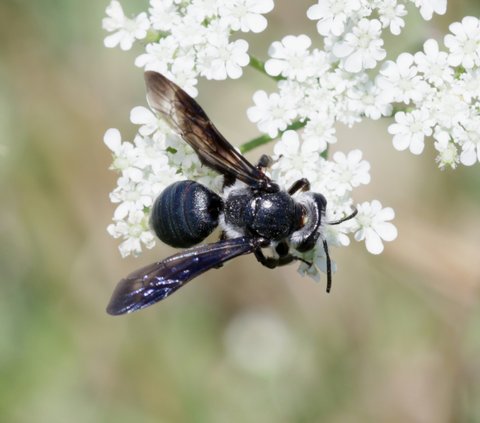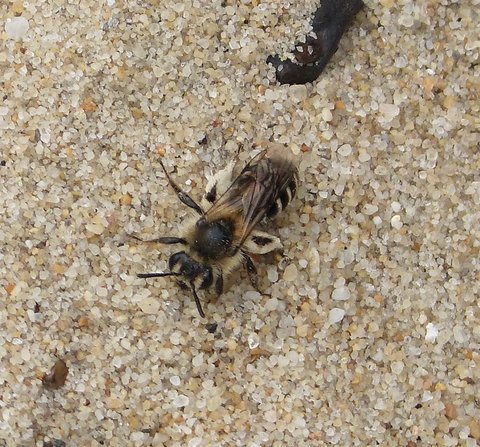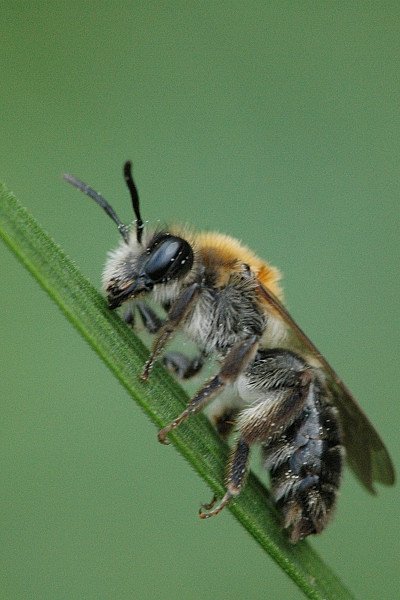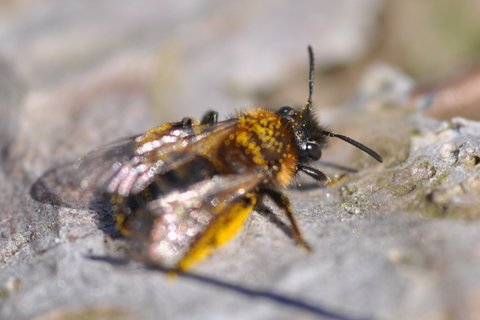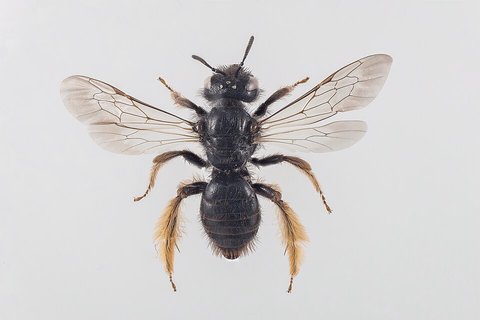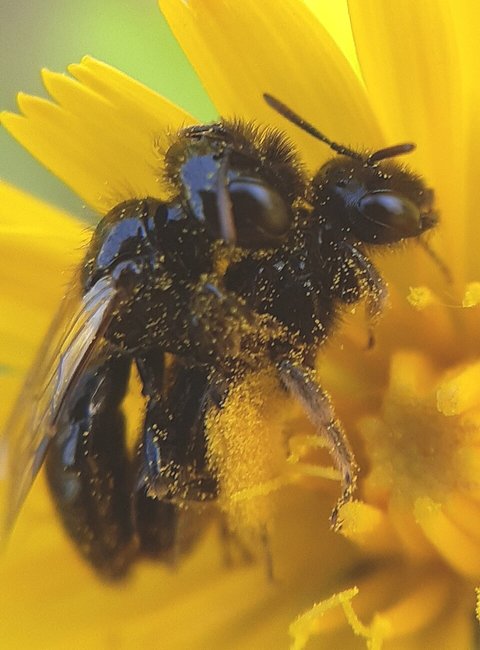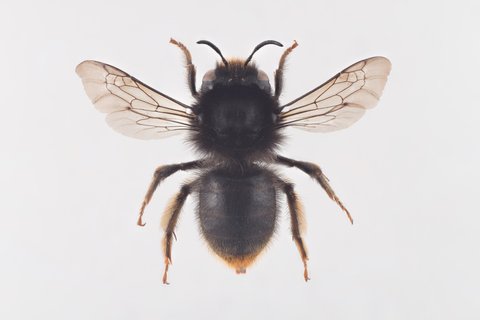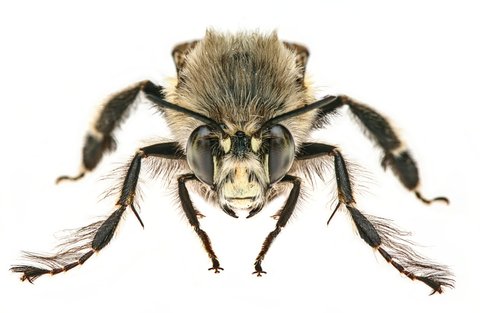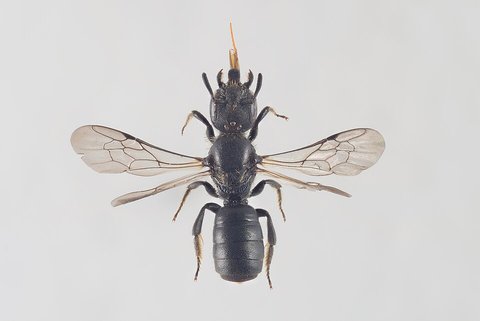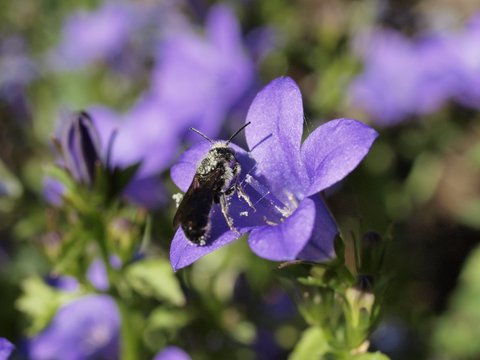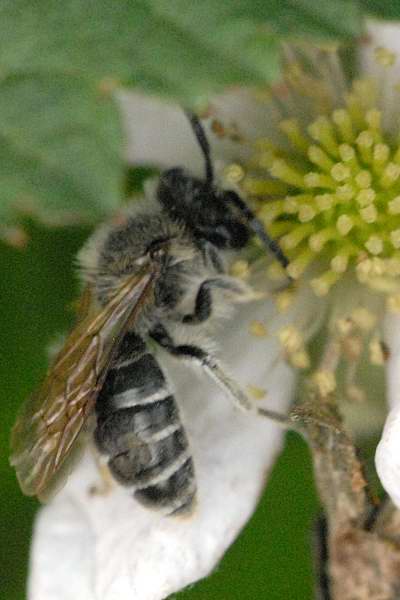
Photo: James K. Lindsey / CC BY-SA 3.0
Andrena ovatula
Small Gorse Mining Bee
A small mining bee (8–10 mm) with a black body and a brown-haired thorax. The abdomen has narrow white hair bands and the hind legs have pale scopae. It closely resembles Andrena wilkella but can be distinguished by the denser punctuation on the first tergite. It is oligolectic on Fabaceae (legumes), especially clovers (Trifolium), bird's-foot trefoil (Lotus), and medicks (Medicago). It nests in self-excavated burrows in bare or sparsely vegetated sandy or loamy soils, often in small aggregations. It is bivoltine in warmer regions, flying from April to June and again from July to September. In Switzerland it is widespread and locally common in dry meadows, field margins, ruderal areas, and vineyards from lowlands to montane elevations. It is one of the more frequent Andrena species in Central Europe. Swiss Red List: Least Concern (LC).
Species Facts
- Size
- 8–10 mm
- Flight Period
- April to September (bivoltine)
- Nesting
- Ground
- Specialization
- Fabaceae (legumes)
- Abundance
- Common
- Family
- Andrenidae
External Sources
This data has been cross-referenced with national sources:
Data Source & Copyright
| Category | Source / Author | License |
|---|---|---|
| Photo | James K. Lindsey | CC BY-SA 3.0 |
| Taxonomy & Distribution | InfoFauna Switzerland | Public data |
| Global Distribution | GBIF | CC BY 4.0 |
Data Quality
Completeness: 100%
Confidence: 33%
Difficult to identify genus (andrena)