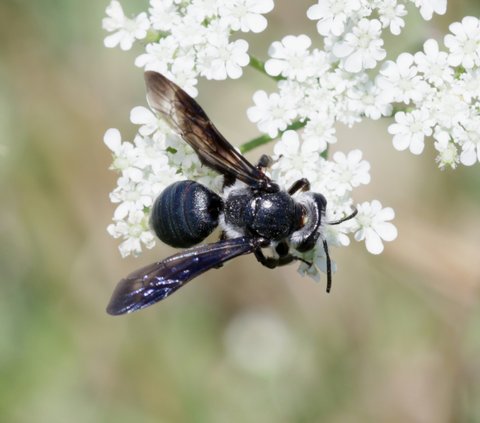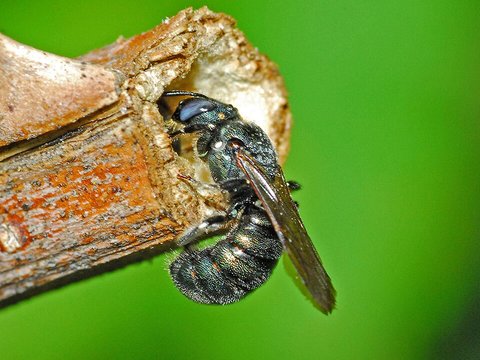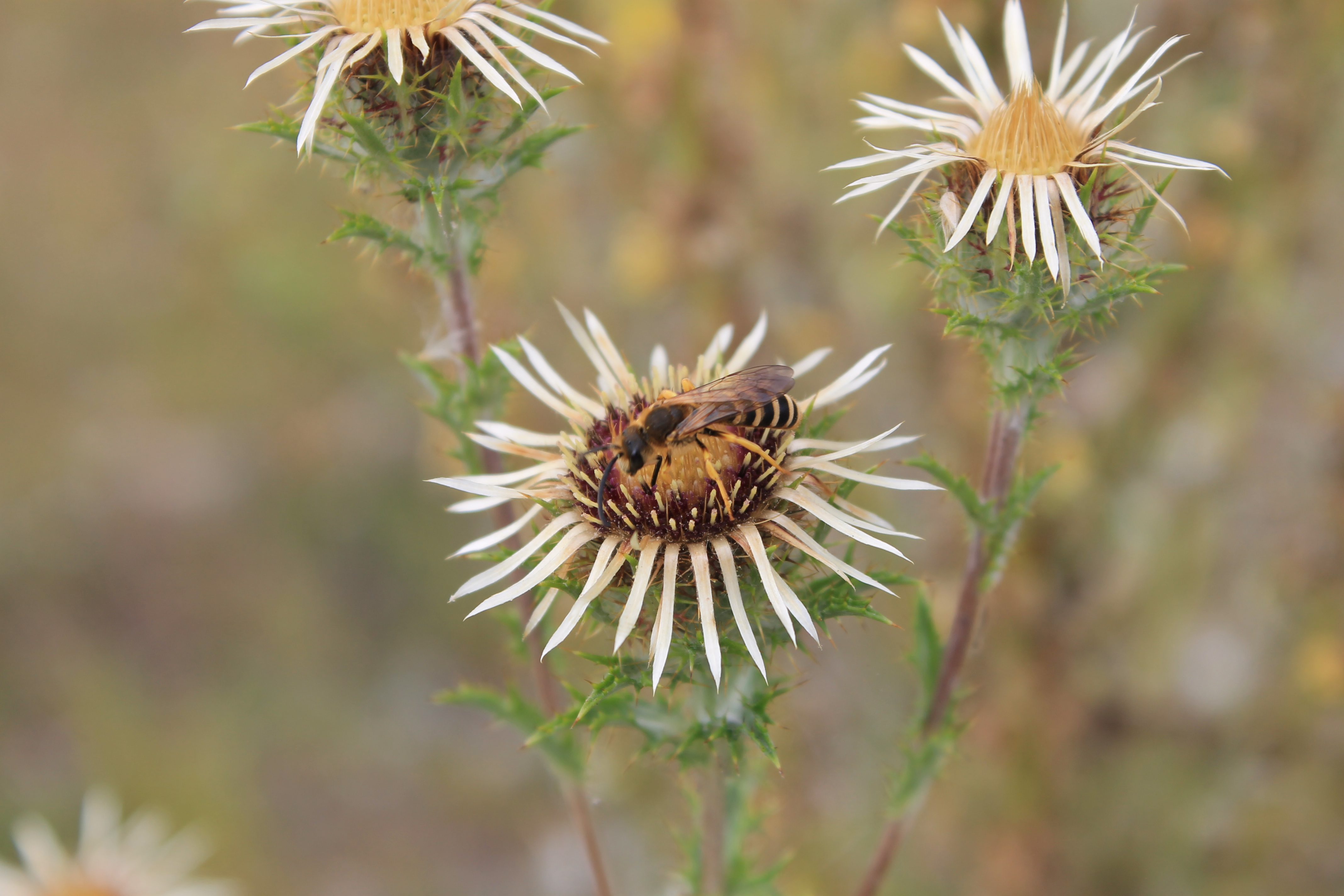
Photo: Daniel Ballmer / CC BY-SA 4.0
Halictus scabiosae
Great Banded Furrow Bee
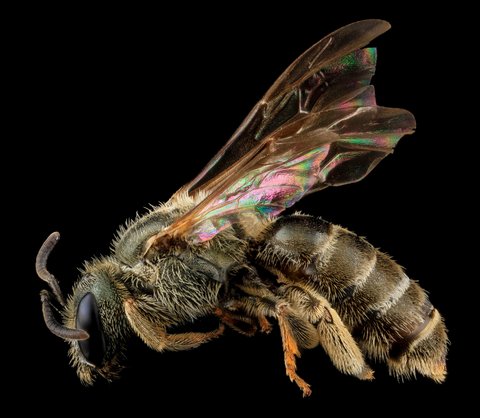
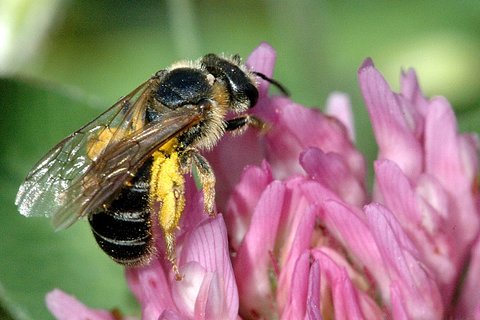
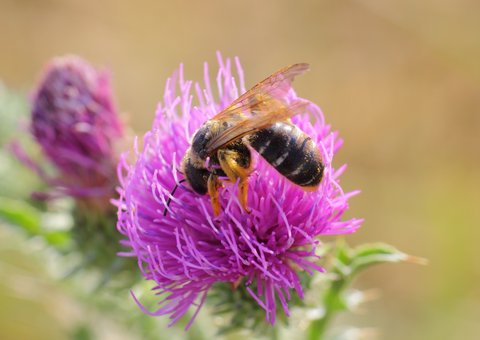
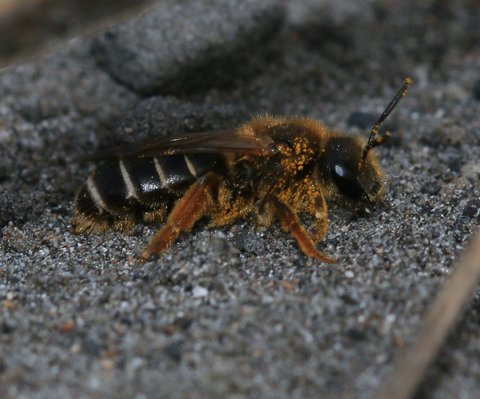
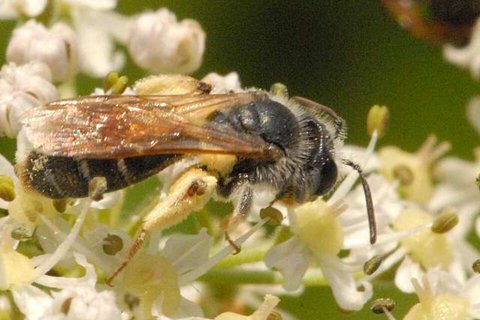
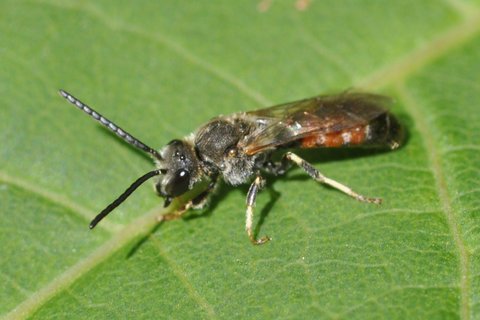
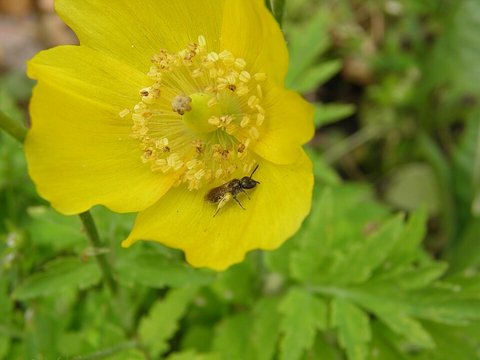
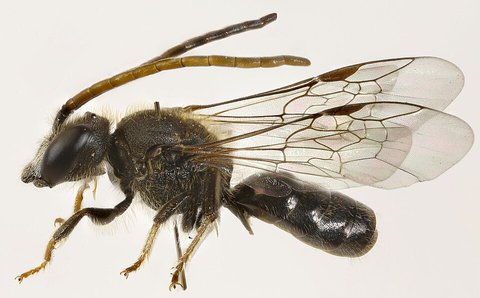
A medium-sized sweat bee (12–15 mm) with distinctive ochre-yellow hair bands on the abdomen and a conspicuous felt-like patch of hairs at the base of each tergite. The head and thorax have sparse brownish hairs. It is a primitively eusocial species with a remarkable life cycle: inseminated females overwinter together in the natal nest, and in spring one dominant female becomes the egg-laying queen while the others serve as workers, provisioning brood cells. Before the first workers emerge, the queen expels the helper females, who then dig their own nests or take over nests of other bees, sometimes even appropriating already-provisioned cells. It nests in self-excavated burrows in bare or sparsely vegetated, level to gently sloping soil, often in large colonies. It is a generalist forager with a strong preference for Asteraceae such as Centaurea, Cirsium, and Cichorium. In Switzerland it is found in all regions, occurring in warm, dry habitats like ruderal areas, gravel pits, vineyards, and railway embankments, and is expanding its range due to climate warming. It is listed on the Swiss Red List of threatened bees.
Species Facts
- Size
- 12–15 mm
- Flight Period
- April to September
- Nesting
- Ground
- Specialization
- Generalist
- Abundance
- Uncommon
- Family
- Halictidae
External Sources
This data has been cross-referenced with national sources:
Data Source & Copyright
| Category | Source / Author | License |
|---|---|---|
| Photo | Daniel Ballmer | CC BY-SA 4.0 |
| Taxonomy & Distribution | InfoFauna Switzerland | Public data |
| Global Distribution | GBIF | CC BY 4.0 |