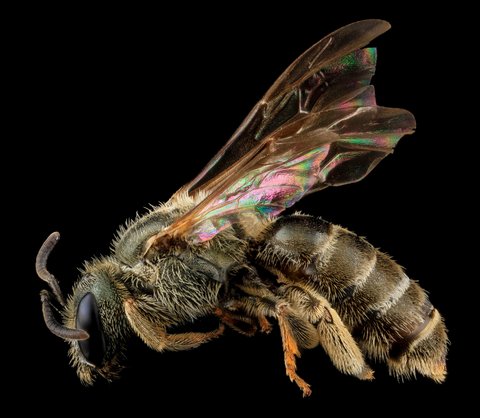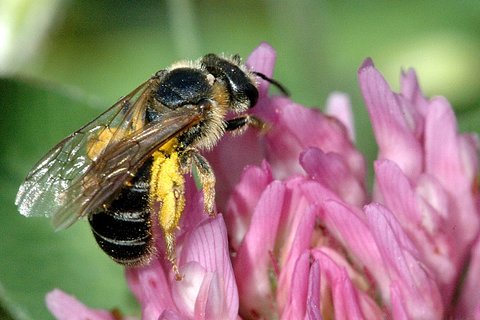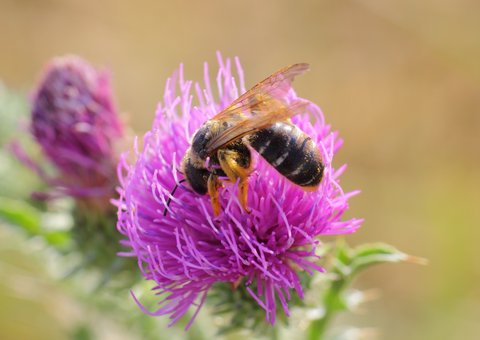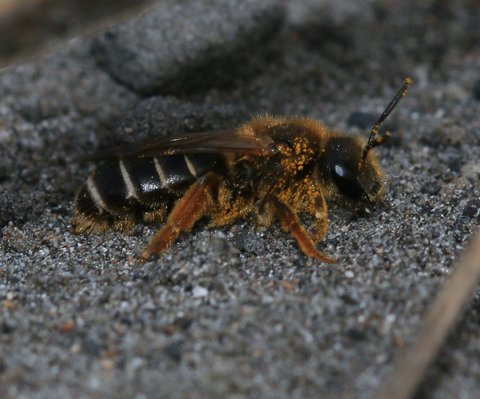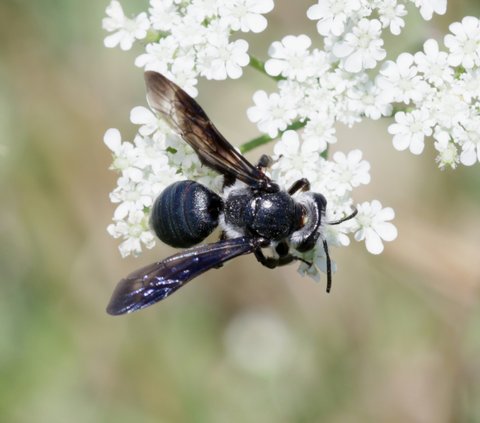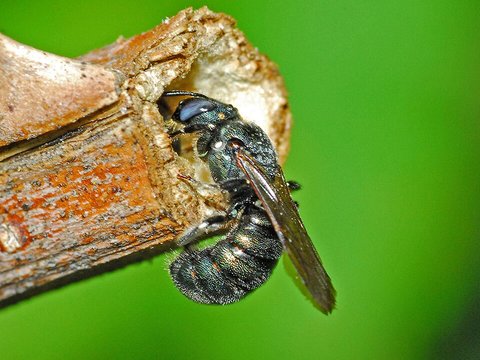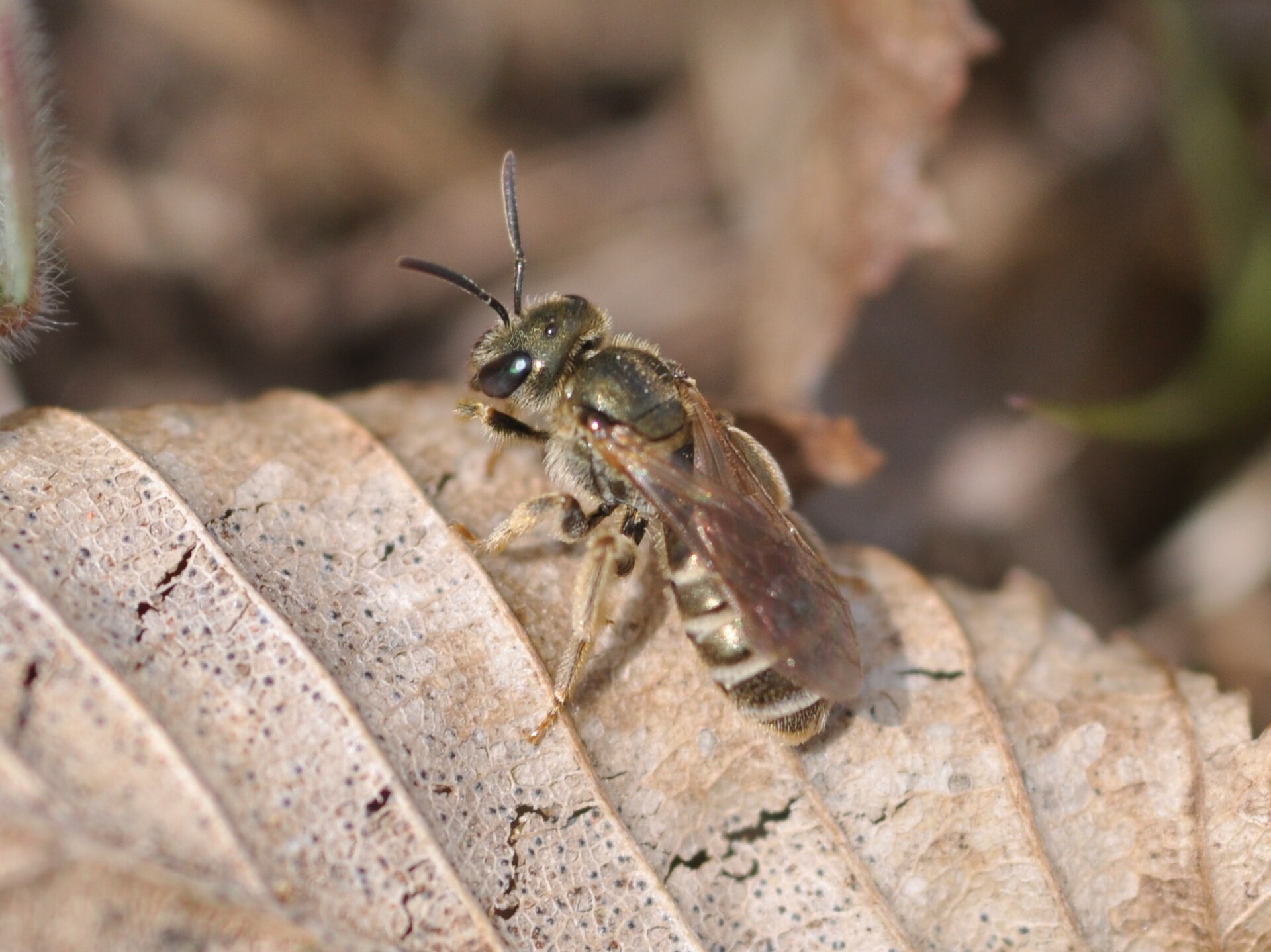
Photo: Aiwok / CC BY-SA 3.0
Halictus tumulorum
Bronze Furrow Bee
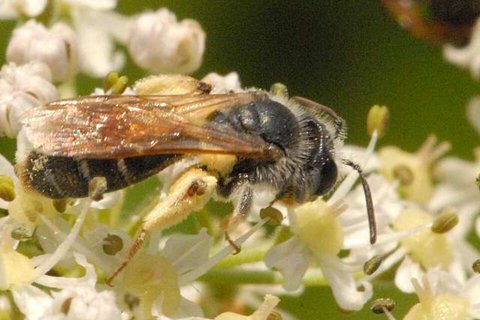
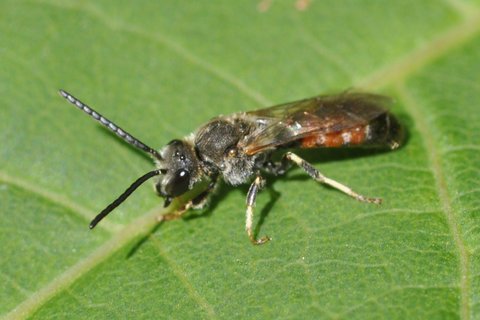
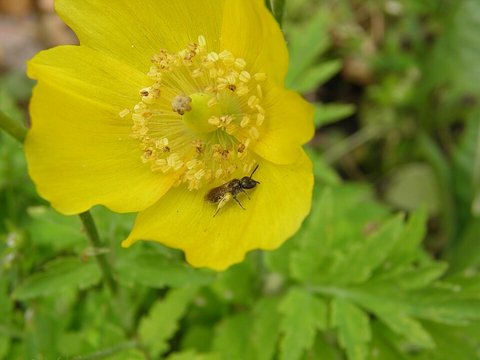
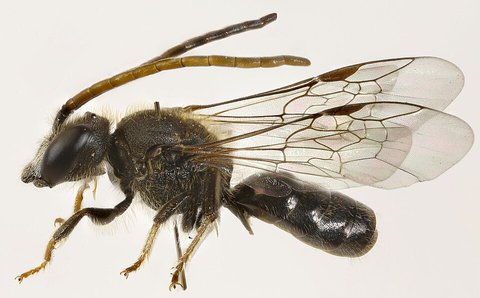
A small (7–9 mm), metallic-green sweat bee with a striking golden-brassy sheen on the head and thorax and a black abdomen with narrow white hair bands. It is one of the most common and widespread halictid bees in Central Europe, found from lowland gardens up to 2200 m in the Alps. It is primitively eusocial: overwintered females cohabit in the natal nest, with one dominant egg-layer and the others acting as workers. It nests in self-excavated burrows in bare or sparsely vegetated, level to gently sloping soil, often in small aggregations. It is broadly polyleptic, visiting at least 14 plant families including Asteraceae, Brassicaceae, Fabaceae, and Rosaceae. It is an important pollinator of the rare Lady's Slipper Orchid (Cypripedium calceolus). Its brood parasite is the blood bee Sphecodes gibbus. In Switzerland it is classified as Least Concern and is very common in meadows, gardens, field margins, and ruderal sites from the lowlands to alpine elevations.
Species Facts
- Size
- 7–9 mm
- Flight Period
- April to September
- Nesting
- Ground
- Specialization
- Generalist
- Abundance
- Very common
- Family
- Halictidae
External Sources
This data has been cross-referenced with national sources:
Data Source & Copyright
| Category | Source / Author | License |
|---|---|---|
| Photo | Aiwok | CC BY-SA 3.0 |
| Taxonomy & Distribution | InfoFauna Switzerland | Public data |
| Global Distribution | GBIF | CC BY 4.0 |
Data Quality
Completeness: 80%
Confidence: 67%
Red List status missing from description