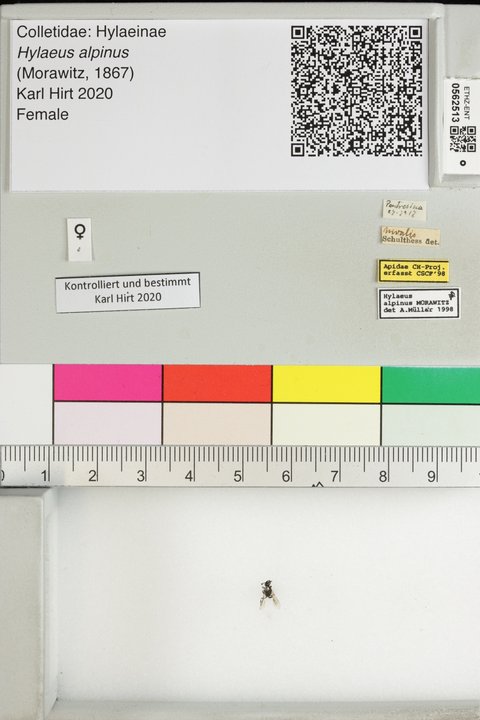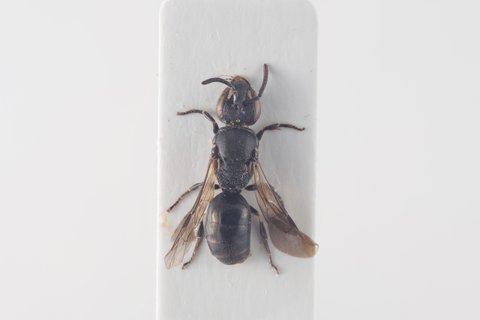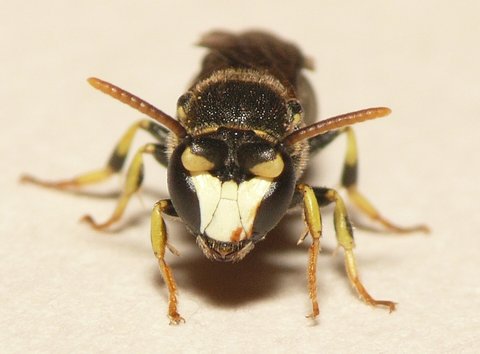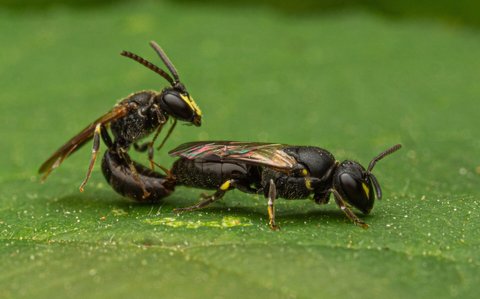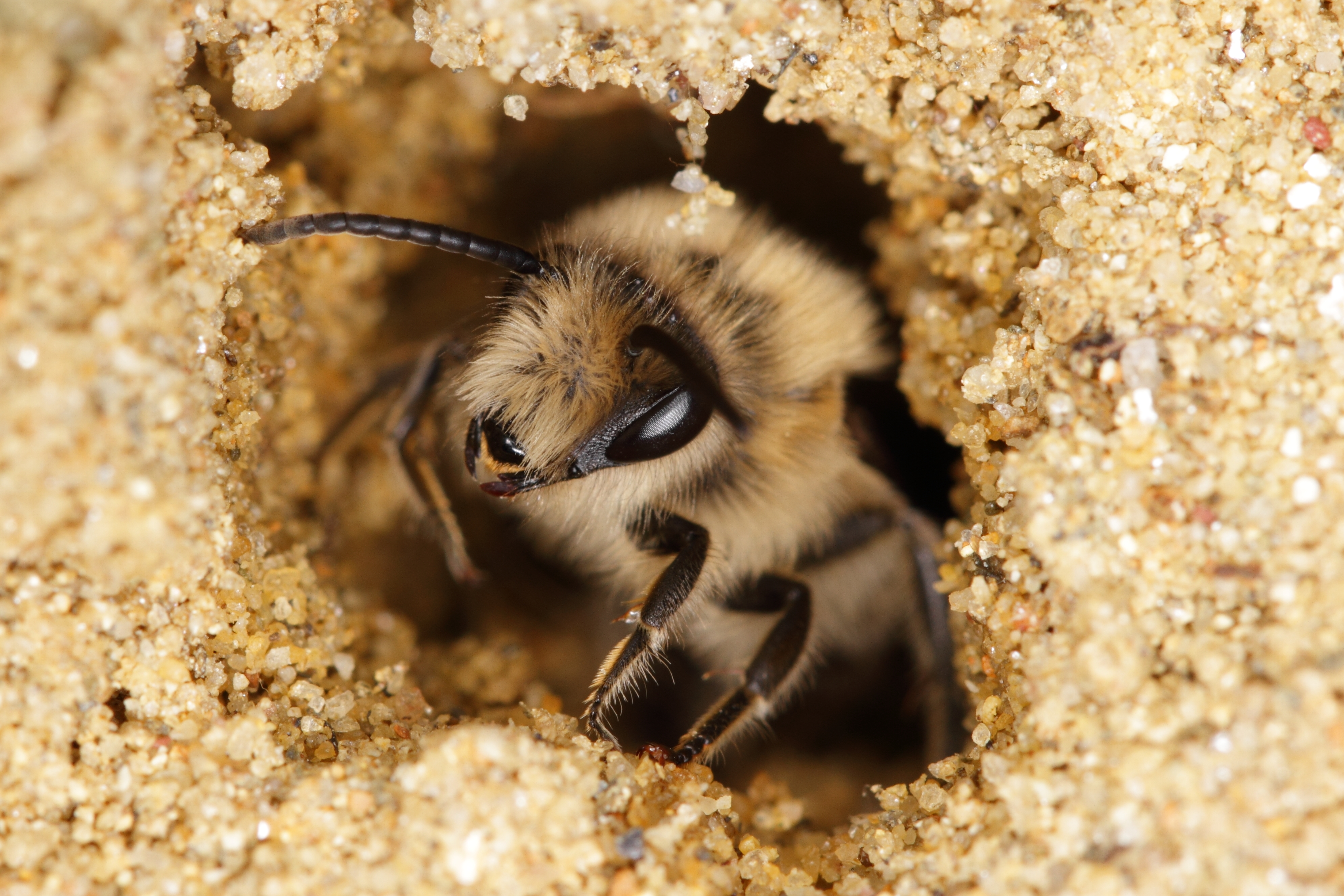
Photo: spacebirdy / CC BY-SA 3.0
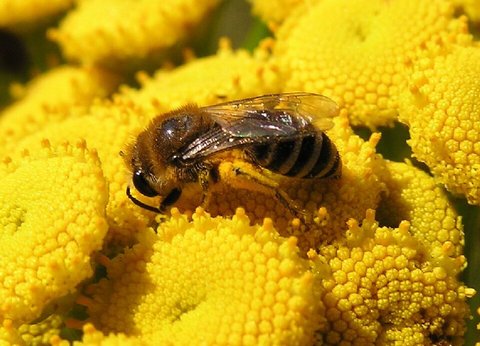
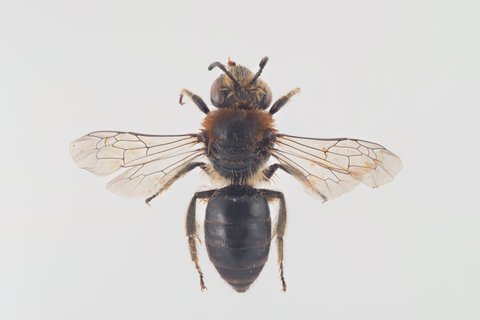
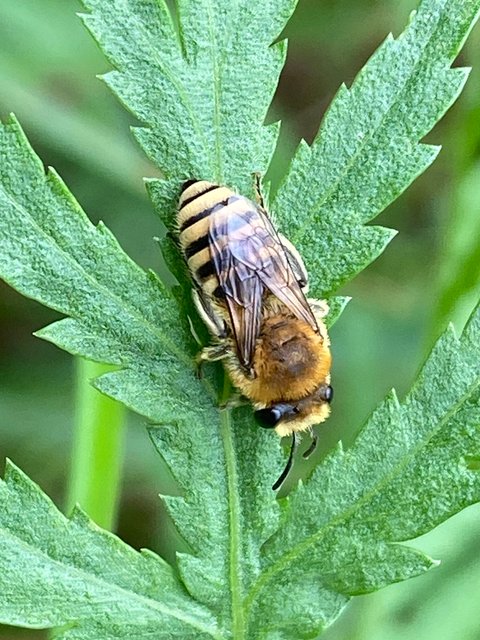
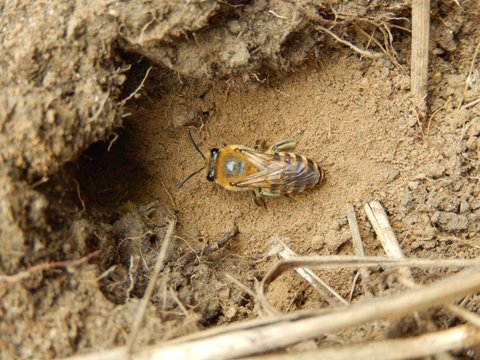
Colletes cunicularius
Spring Colletes
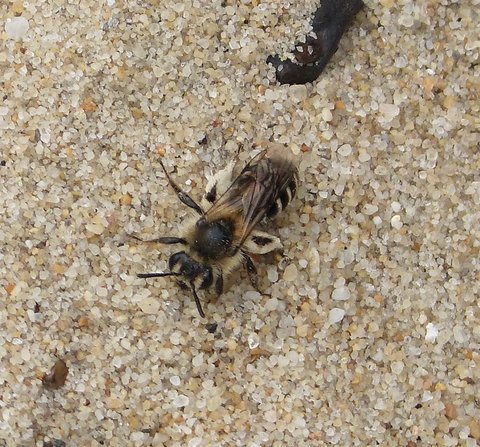
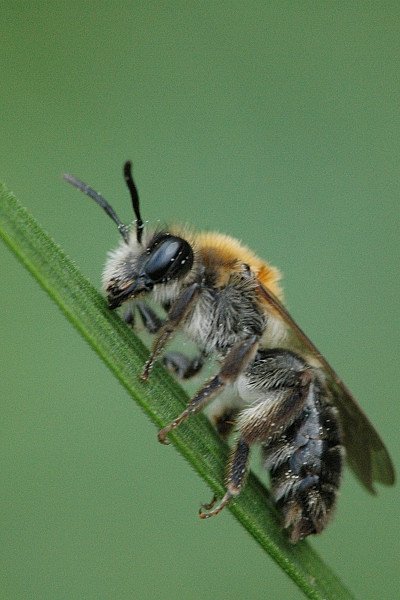
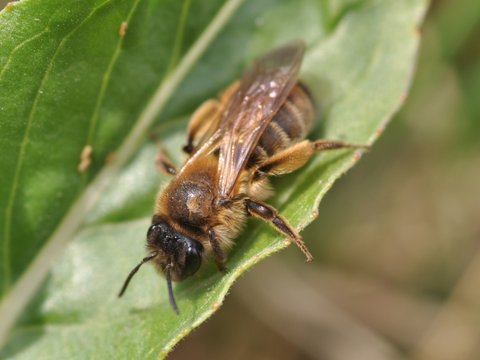
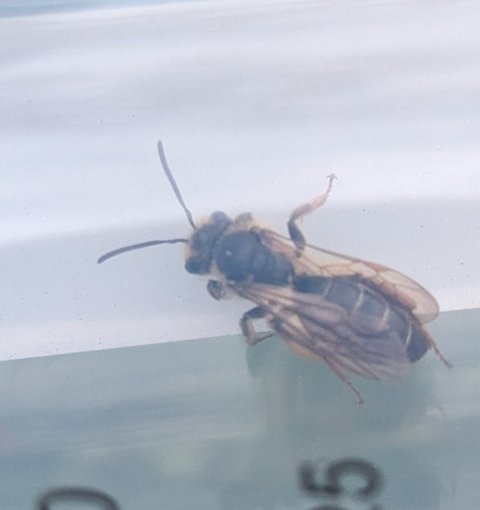
The earliest-flying Colletes species in Central Europe, appearing from late February to May. Females and males are densely covered with golden-brown hairs on the head, thorax, and abdomen, giving them a foxy appearance reminiscent of a small bumblebee. Unlike other Colletes species, it lacks distinct pale hair bands on the abdomen. The tongue is characteristically short and bilobed. It nests in large aggregations in sandy or loose soils, digging burrows up to 30 cm deep with a single vertical tunnel and several lateral brood cells. It is strictly oligolectic on willow (Salix) pollen, though adults also visit other flowers for nectar. The cuckoo bee Sphecodes albilabris is its specialist brood parasite. Males pollinate several Ophrys orchid species through sexual deception. In Switzerland it is widespread in sandy habitats, gravel pits, and riverbanks, and is classified as Least Concern (LC) on the national Red List. A well-studied population occurs in northern Switzerland.
Species Facts
- Size
- 11–14 mm
- Flight Period
- February to May
- Nesting
- Ground
- Specialization
- Willow/Salix
- Abundance
- Common
- Family
- Colletidae
External Sources
This data has been cross-referenced with national sources:
Data Source & Copyright
| Category | Source / Author | License |
|---|---|---|
| Photo | spacebirdy | CC BY-SA 3.0 |
| Taxonomy & Distribution | InfoFauna Switzerland | Public data |
| Global Distribution | GBIF | CC BY 4.0 |