Photo: S. Rae / CC BY 2.0
Anthidium manicatum
Wool Carder Bee
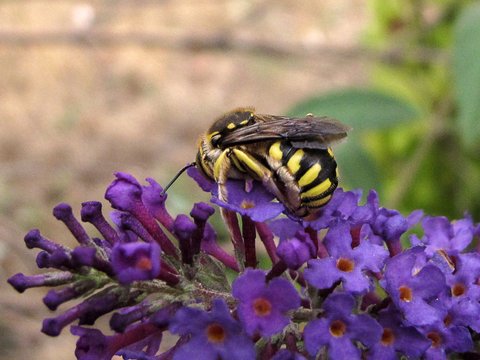
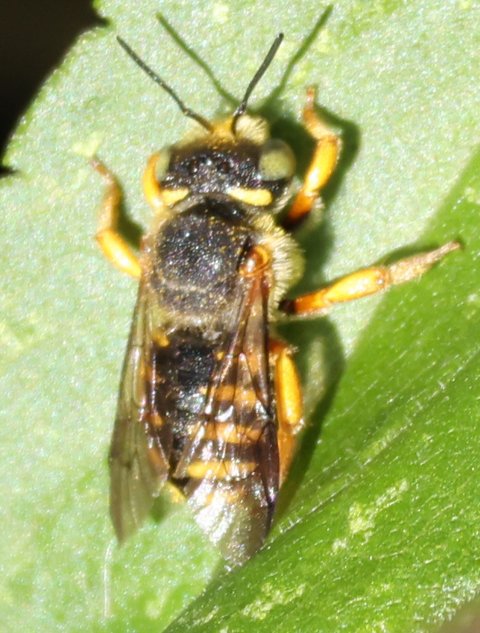
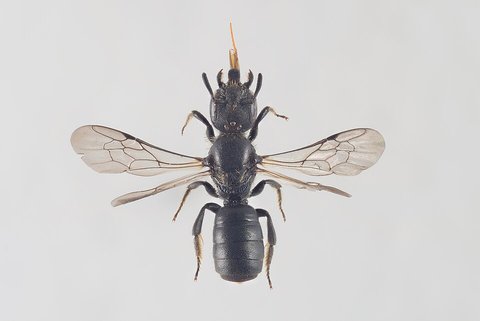
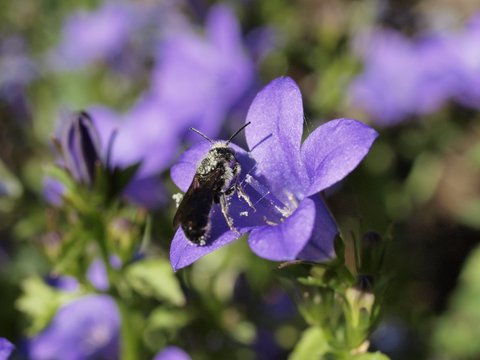
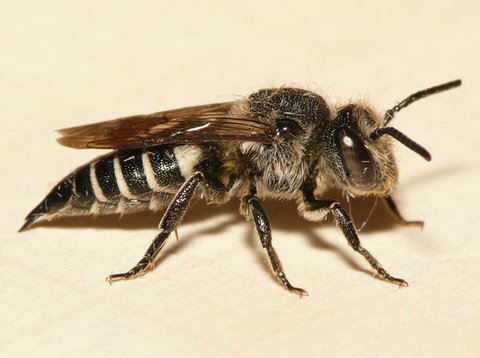
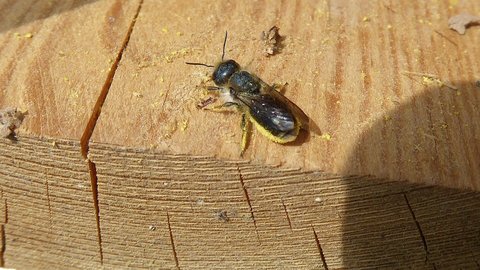
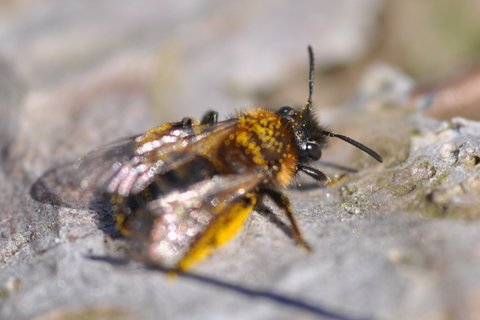
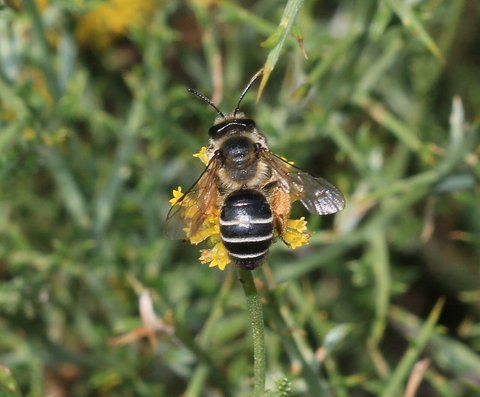
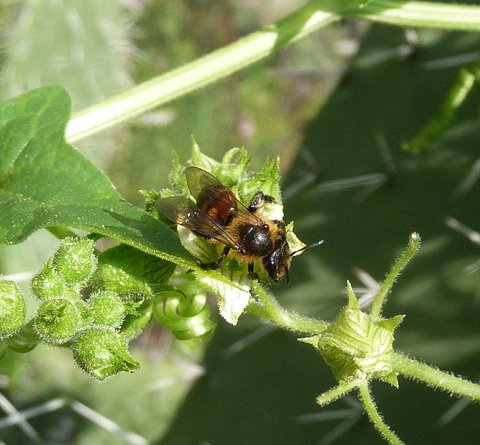
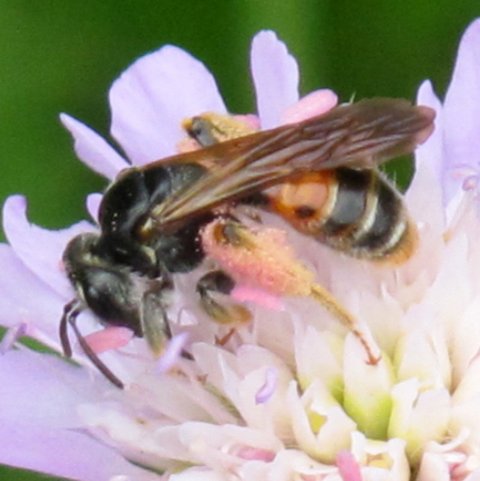
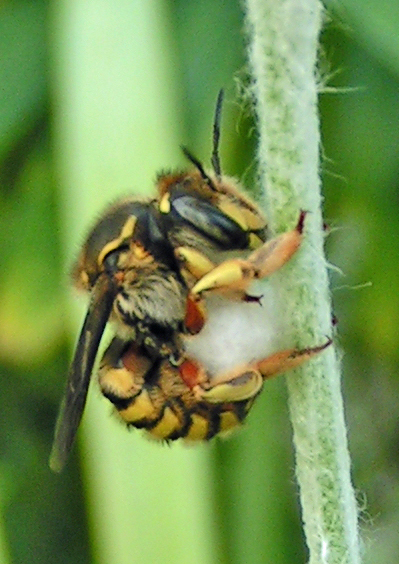
A large, strikingly patterned bee with a wasp-like black-and-yellow abdomen, robust body, and dense brownish hair on the thorax. Males (14–18 mm) are significantly larger than females (11–13 mm) and possess three sharp spines at the tip of the abdomen, which they use in fierce territorial battles to defend patches of preferred flowers. Females carry pollen on a dense brush of hairs (scopa) on the underside of the abdomen. The species nests in pre-existing cavities such as cracks in dry stone walls, gaps in masonry, abandoned burrows in the ground, or hollow plant stems. The brood cells are lined with plant fibres ('wool') scraped from hairy leaves of plants like Stachys byzantina, Verbascum, and quince, then sealed with resinous secretions. It forages primarily on Fabaceae and Lamiaceae, visiting species like Stachys, Ononis, Leonurus, and Digitalis. It is widespread and often common in gardens, parks, and settlements across Switzerland, less frequent outside urban areas. On the Swiss Red List it is classified as Least Concern (LC).
Species Facts
- Size
- 11–13 mm (♀), 14–18 mm (♂)
- Flight Period
- June to September
- Nesting
- Cavities
- Specialization
- Generalist
- Abundance
- Common
- Family
- Megachilidae
External Sources
This data has been cross-referenced with national sources:
Data Source & Copyright
| Category | Source / Author | License |
|---|---|---|
| Photo | S. Rae | CC BY 2.0 |
| Taxonomy & Distribution | InfoFauna Switzerland | Public data |
| Global Distribution | GBIF | CC BY 4.0 |